Long before cryptocurrencies existed, many of us witnessed a technology that was destined for greatness. Those who are old enough to remember the early days of the internet, also remember all the speculation behind it, the negative press, the overly optimistic and the crash of the dot-com bubble "bursting".
img src
They way it all worked out was very traumatic for many speculative investors. In the early years of the internet, it was very simple to have a company valued in the millions. All you had to do was create a dot-com, go public, and the money would come pouring in. In those early days many companies valued in the millions of dollars had nothing more than an idea, sometimes not even ironed out completely. This did not matter to investors, since they believed there was never a way the stocks would ever crash.
The overly enthusiastic unexperienced investors sold their homes, quit their jobs, and poured every single penny into what we now know was one of the biggest financial bubbles of our time. Of course we know now how it all played out, and we are very aware of the millions of dollars that disappeared into the thin air, almost overnight.
What happened? you may ask - It's actually quite simple to explain. The enthusiasm for the dot-coms was not in any way connected with the realities of their value propositions. This meant, that when investors would buy into a dot-com they did so simply because they were expecting to cash out soon after, and not because of any belief in a company or product.
Eventually the new money dried up, the big players cashed out, and everyone left holding the bags got caught in the crossfire. These recent events should serve as a big lesson for new investors, specially in this new cryptocurrency market.
Not all dot-com companies disappeared
Almost not necessary to point this out, but just in case anyone is confused about the events that followed the crash. As a matter of fact some companies, like amazon and ebay are millions if not billions of dollars bigger today, than before the crash. If we are to be honest with ourselves, there is a very big chance a very similar situation will happen in the world of cryptocurrencies, and we would be unwise to not learn from history.
img src
This graph shows the marketcap valuation of bitcoin in December, when all of us who were part of this ecosystem believed the numbers would never come crashing down. Of course, today the marketcap of cryptocurrencies is much lower, which makes my point even stronger.
As we can clearly see, the crash was really a way of the market shaking off all the projects that offered no real value to the technology sector at the time. All the dot-coms that were part of a bubble came crashing down to zero. The tech stayed, the real companies survived and today we are participating of an economy that relies heavily on the technology that started back in those days.
Cryptocurrencies will follow
It might not be exactly the same, but it sure will be very similar. Today we have a young market full of speculation, with many investors who are not in the least concerned with research or technology. The idea of many is unrealistic to say the least.
Those investors who don't like to learn from the past will probably endure the same fate. They will buy into speculative currencies that offer little to no real value, waiting to 10x before they sell. Most will fail. That might sound harsh, but honesty is a good token to trade.
I believe in real Cryptocurrencies, specially Steem
For me it comes down to the use of a product or service. In simpler terms, if no one is using something, then it does not really matter what my thoughts on the particular product might be. The known concept of supply and demand at its core is the only one I'm really worried about.
In my last post I shared an image that I think makes my point very clear. Steem in the simplest of ways has a huge advantage over many other cryptocurrencies. Steem, unlike thousands of other tokens has not only a great use case, but the highest number of transaction on the whole ecosystem.
This verifiable information not only gives me peace of mind, but also tells me that all who are participating of the Steem ecosystem are at a clear advantage, even on this bear markets.
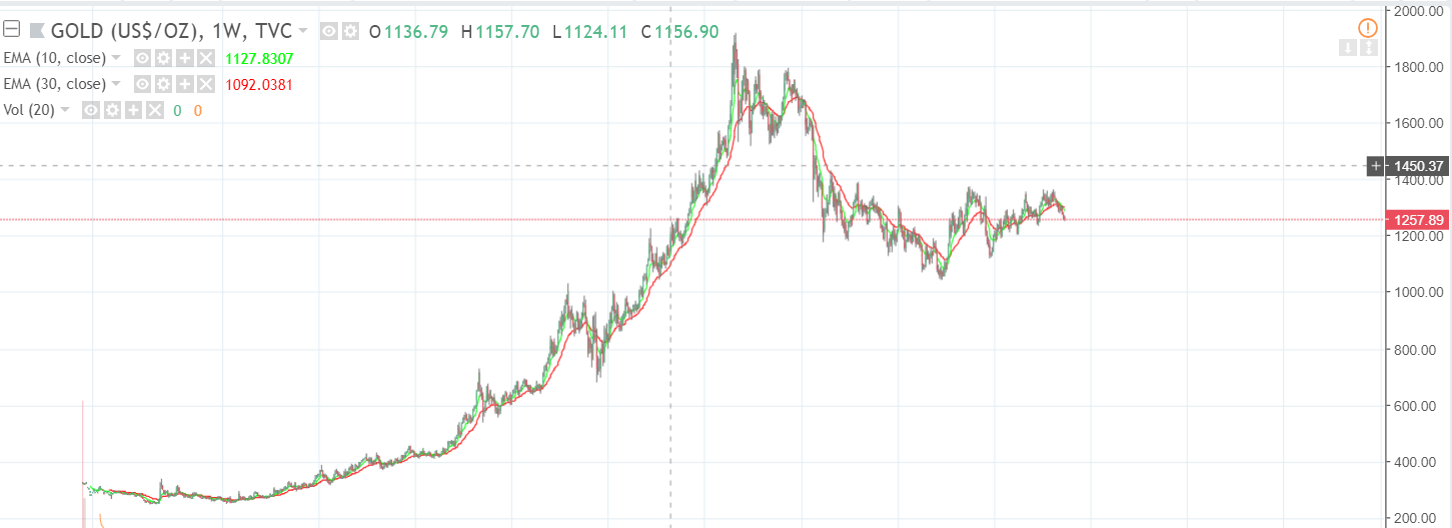
There are those who believe that Bitcoin itself won't make it, being the argument that it's sure to be replaced by another top player. This may be the case, but I sincerely doubt those predictions will ever become true. What is more likely to happen is that Bitcoin will continue to become the new gold of the markets, leaving other currencies to fight for the title of "the best currency" in the world.
It's time to rethink why we are here in the first place
For each one of us to really take a hard look in the mirror and ask ourselves if we truly understand what's taking place in the world. The reason why the technology of blockchain is sure to take over our financial system in the near future. If we are simply participating of the markets blindly, not understanding the value propositions, we are sure to make the same mistakes those who cried foul made back in the dot-com days.
So I invite you my friends, to take this time not to trade, not to speculate, but to educate yourself on the technology and be ready for a future that is just around the block.
Stay safe, all the best to you all
@chbartist
edit.- had a glitch with the tags, please disregard first tag
@nowusa | June 26, 2018, 11:08 a.m. | Votes: 2 | [
VOTE ]
Public opinion towards Cryptocurrencies has always been divided. However, with the new surge in the market, opinions have become even more polarized. Sceptics hinge on Bitcoin’s first impression as being a black-market currency and call this a bubble, while proponents contend that this is a global currency that is just going mainstream and can indeed go way higher.
So what is actually happening?
A number of market observers are right in noting that Cryptocurrencies are exhibiting bubble-like behavior. For Bitcoin, which isn’t backed by a central bank or doesn’t have a market regulator, this is particularly true, as its value is purely notional. Ether - a digital token that is incorrectly regarded as a Cryptocurrency - has real-world utility, but is still in an early experimental state that does not justify its current market price. In addition, the potential supply of Ether is infinite, unlike the Bitcoin – which has a finite supply hard-coded into its design. Long story short, the critics are right – we ARE in an ebullient Cryptocurrency bubble, and a painful correction is certain – but not imminent.
Why is this happening?
Skepticism notwithstanding, Cryptocurrencies are taking baby steps to going mainstream. In many countries, authorities are actually studying Cryptocurrencies, and exploring ways to regulate them. Even in notoriously conservative regulatory jurisdictions like India, sites like Unocoin are permitting people to buy Bitcoins for cash. Zebpay, another platform, allows you to make small payments using the currency. Each passing day, Bitcoin in particular inches close to mass acceptance and has thousands of new users signing up.
Value as a currency aside, the Blockchain technology that cryptocurrenices are based on has tremendous potential. Ethereum, as a technology platform, has just begun to explore this. A number of Ethereum projects such as the DAO, Akasha, and Gnosis have received an enthusiastic response from the market and have been successful in raising millions of dollars in funding. Today, hundreds of companies, in technology, banking, media, communication, and logistics are looking at ways that Blockchain technology can be leveraged for profit. When these efforts mature, platforms like Ethereum will achieve their true potential, as their Software as a Service (“SaaS”) offering will give users access to obscene computing power at a minuscule cost.
The most prominent factor in this bubble right now, is the Cryptocurrency casino. The utility of the Blockchain and the growing acceptance of Bitcoin do not entirely justify the surge in Cryptocurrency prices. However, millions of people around the world have discovered the speculative opportunities in Cryptocurrencies and have begun to trade them for profit. In fact, all Cryptocurrency trade today may be attributed to speculative trading, as the amount of Cryptocurrency used for actual transactions is microscopic. This is not unprecedented. According to the Bank for International Settlements, global trade in foreign exchange (“FX”) was about USD 5.4 trillion per day in April 2016. Incidentally, the total value of the world’s money – currency and bank deposits – is about USD 81 trillion (Source – CIA World Factbook – 2015). To put this in perspective, money equal to all the notes, coins, and bank deposits in the world changes hands every 15 days on the world’s FX exchanges. This entire market is speculative – run largely by multi-million dollar computers playing against each other. In comparison, the cryptocurrency market, valued at around USD 60 billion, is negligible.
The Cryptocurrency market is gaining in speculative appeal, but this journey is just beginning.
The Japan Factor
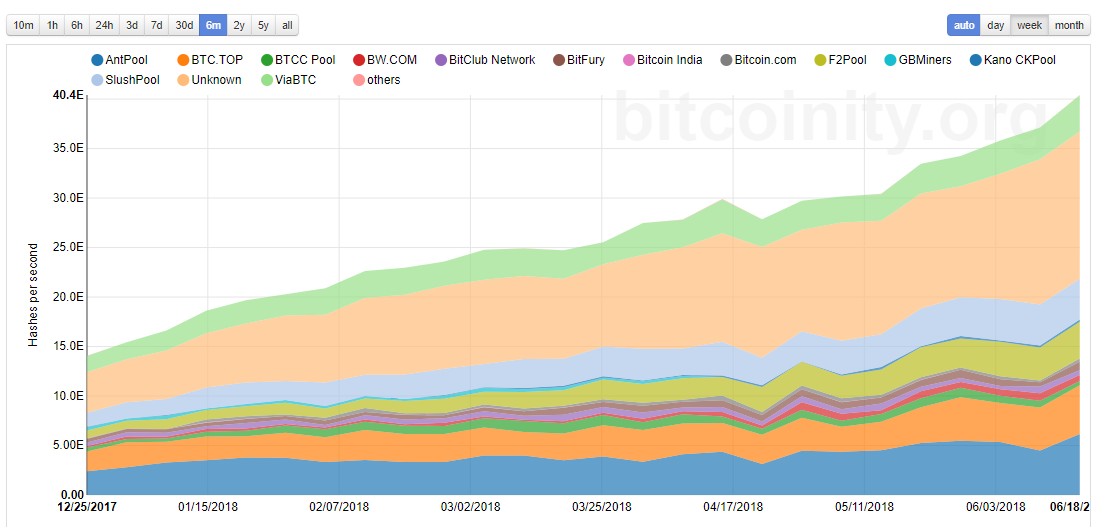
Japan is the most mature market for FX speculators in the world. Ordinary Japanese citizens generate a trading volume of hundreds of billions of dollars each week. Starting April 2017, Japanese regulations have made it easier for their citizens to trade Cryptocurrencies, especially Bitcoin, and as the chart below shows, a large part of Cryptocurrency trading today is in Yen. Bitcoin, with its massive swings, is the perfect currency for a bold FX trader. In fact, the mainstreaming of Bitcoin will accelerate now that Governments are taking notice.
@saguer | June 26, 2018, 12:14 p.m. | Votes: 0 | [
VOTE ]
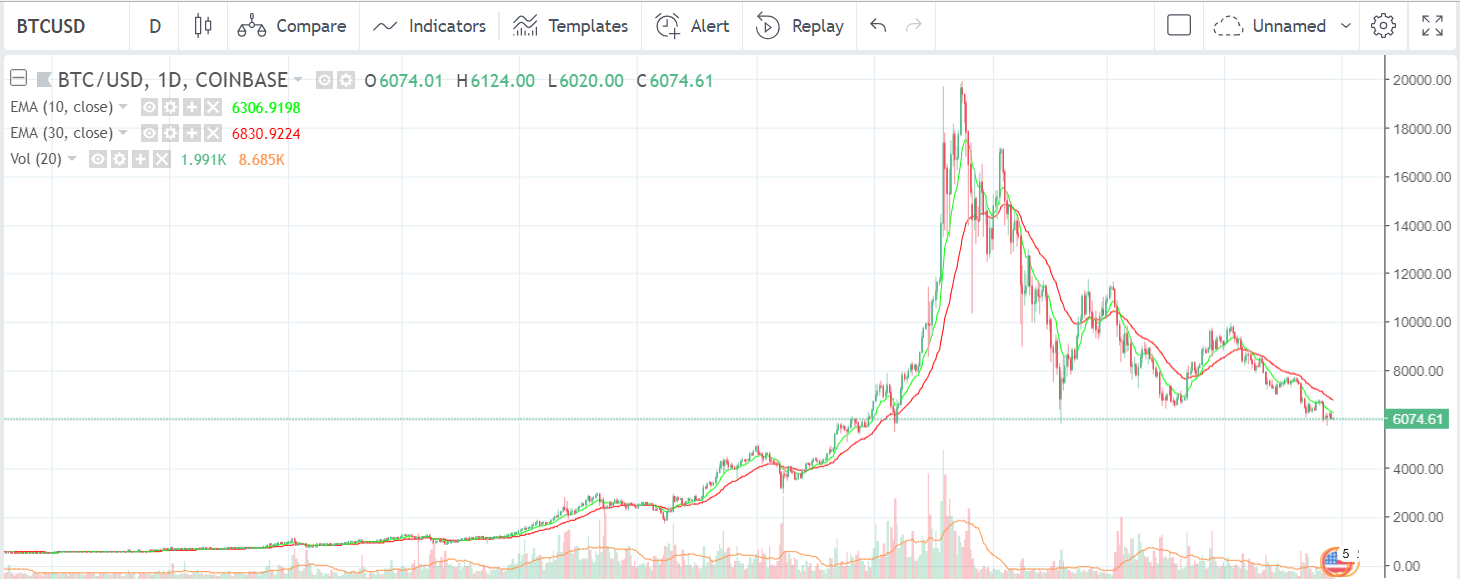
Although BTC failed to close above $6,250 yesterday, the green candle has established a bullish price-relative strength index (RSI) divergence (lower lows in price and higher lows in the RSI).
Meanwhile, the money flow index (MFI) – a momentum indicator that incorporates both price and volume into its calculations – has also created a higher low as opposed to lower lows in price (bullish divergence). The MFI is rising too, indicating an increase in buying pressure.
Clearly, the indicators are aligned in favor of a corrective rally in the short-term. That said, the bulls face an uphill task as a number of key resistance hurdles await:
$6,417 (10-day moving average)
$6,425 (April low)
$6,500 (April 6 low)
$6,533 (March 30 low)
$6,680 (falling channel resistance)
Still, the longer outlook remains bearish, with bitcoin still trading in a falling channel.
Below $6,000 (February low), major support levels are located at:
$5,755 (Sunday's Doji candle low)
$5,400 (November low)
$5,090 (rising wedge breakdown target)
So, there is a lot of room to the downside and plenty resistance to the upside, and the bulls' task doesn't look an easy one.
View
BTC remains on the hunt for a corrective rally to $6,680 (falling channel hurdle). A daily close (as per UTC) above that level would confirm a short-term bearish-to-bullish trend change and would open the doors to the 50-day moving average, currently located at $7,464.
On the downside, a close below $6,000 (February low) would put the focus back on the long-term bearish technicals and boost odds of a drop toward $5,40 (Nove