__________     __ __     __  _______    ________
  / ____/ __ \   / // /    / / / /  _/ |  / / ____/
 / / __/ / / /  / // /_   / /_/ // / | | / / __/
/ /_/ / /_/ /  /__  __/  / __  // /  | |/ / /___
\____/\____/     /_/    /_/ /_/___/  |___/_____/

 --- A GOPHER-LIKE INTERFACE FOR HIVE BLOCKCHAIN ---

Blue Potato Bush

BY: @ctrl-alt-nwo | CREATED: Sept. 28, 2018, 6:35 p.m. | VOTES: 57 | PAYOUT: $8.95 | [ VOTE ]

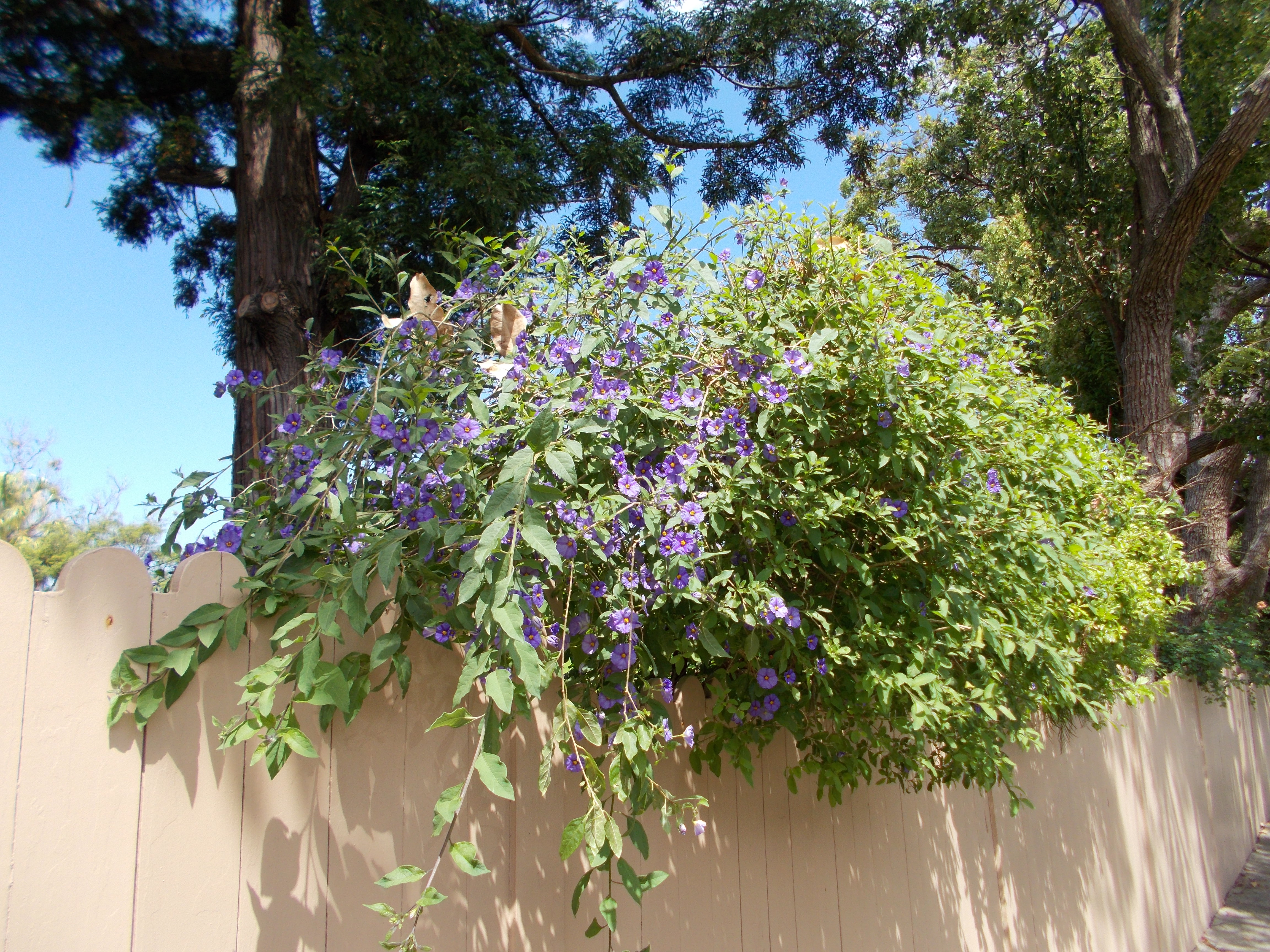
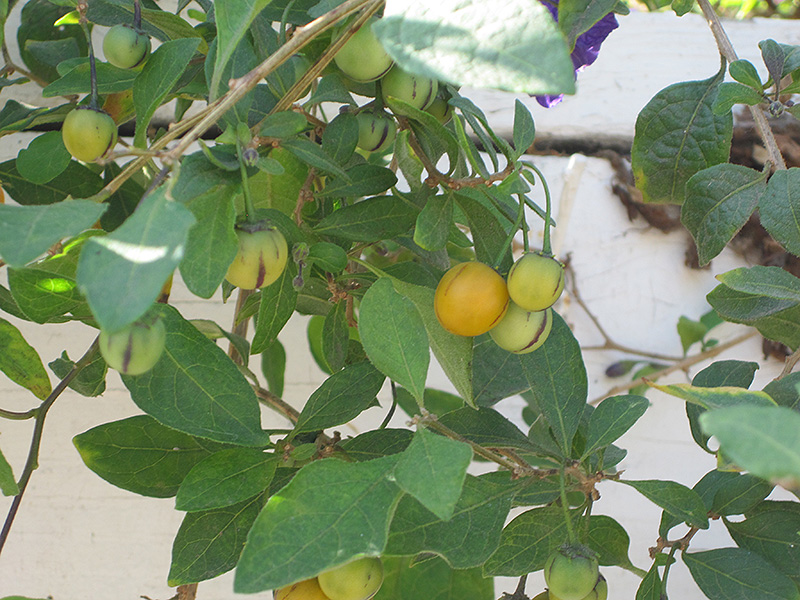
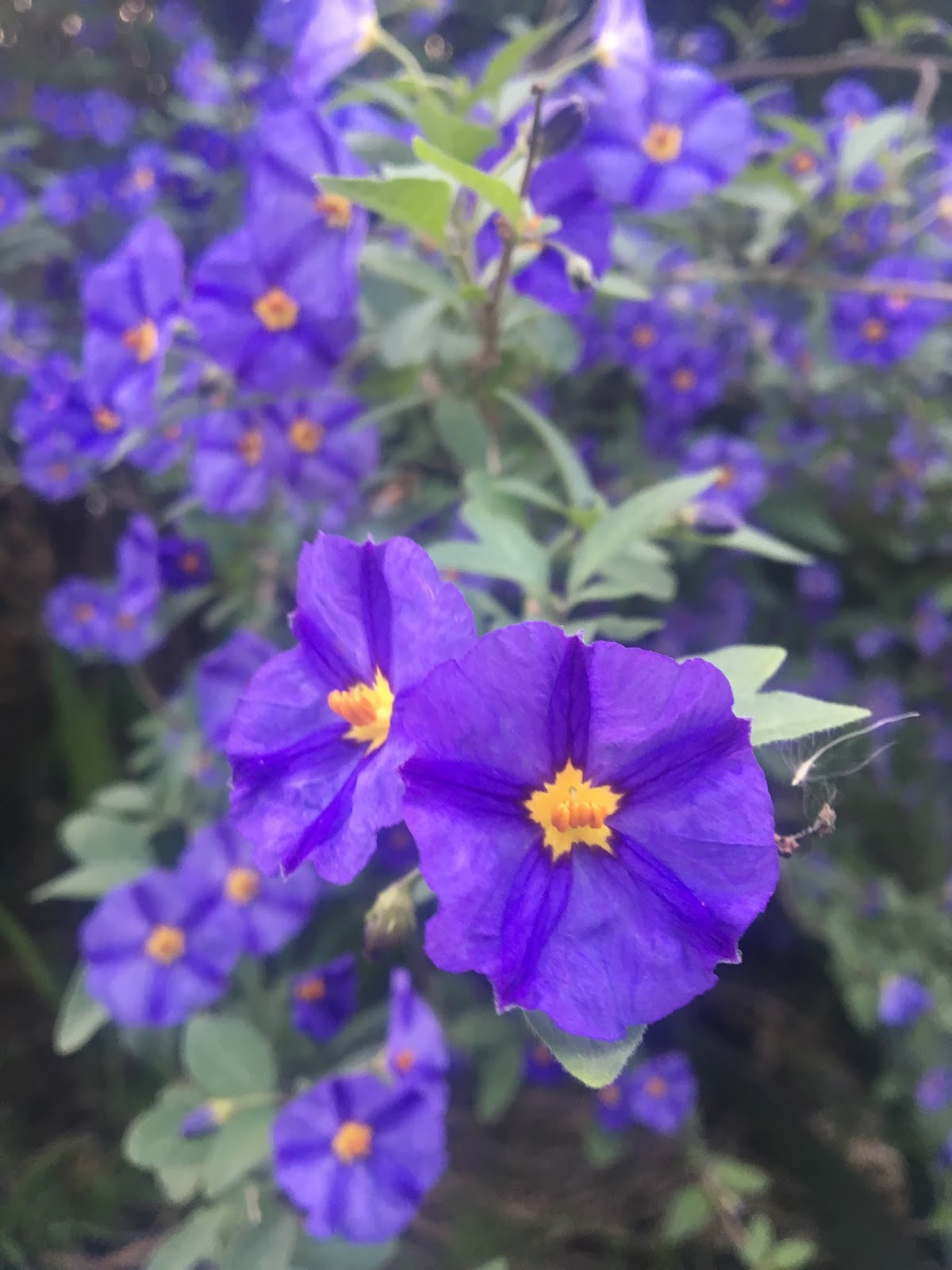
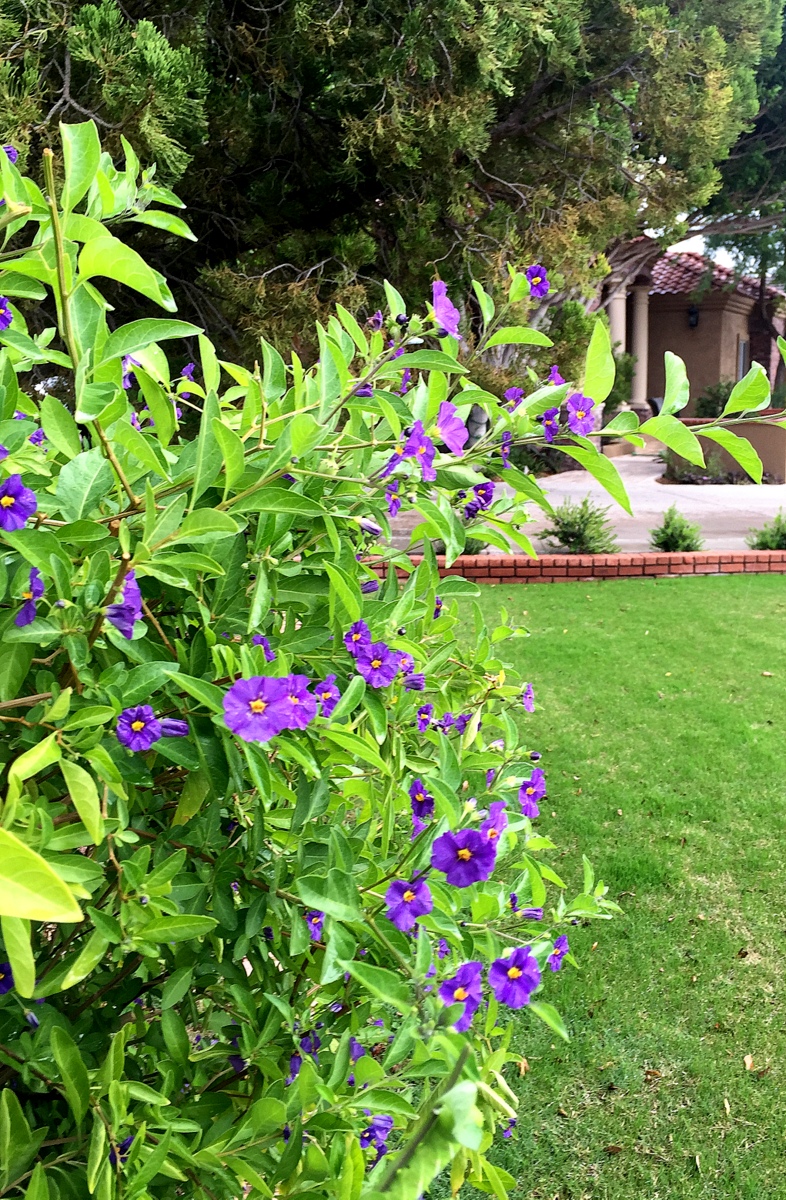
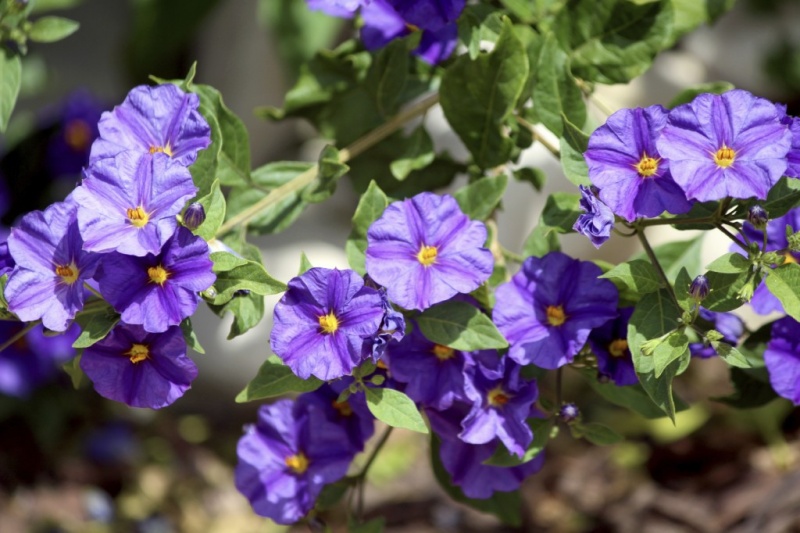
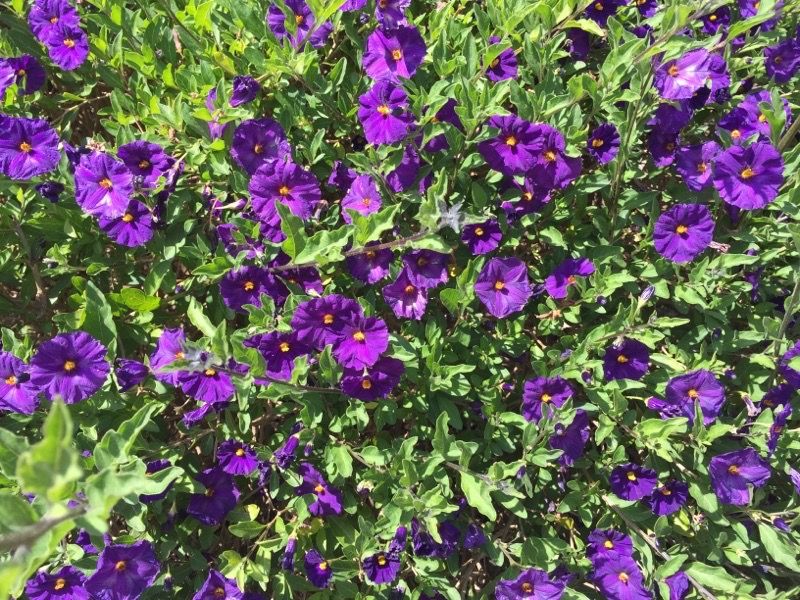
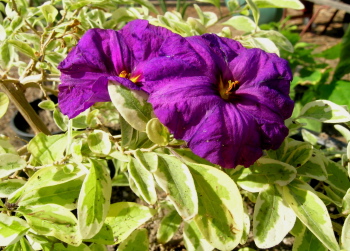
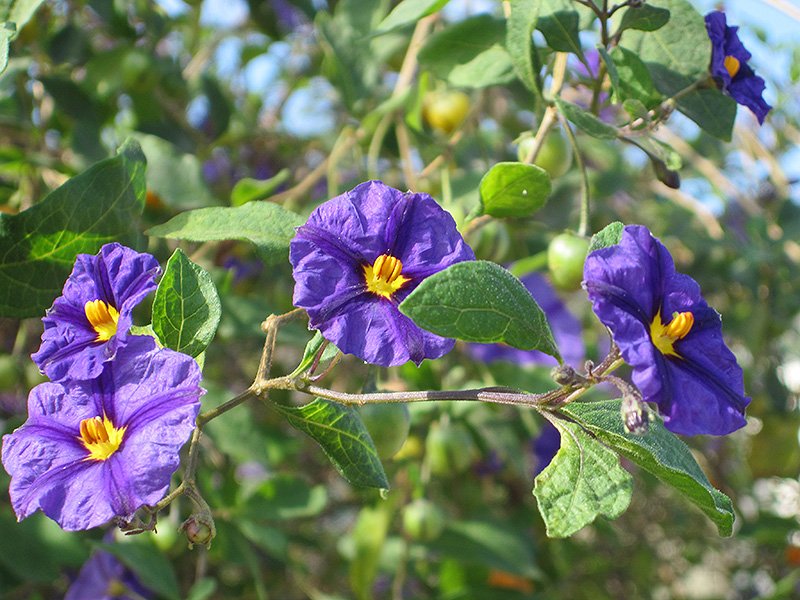
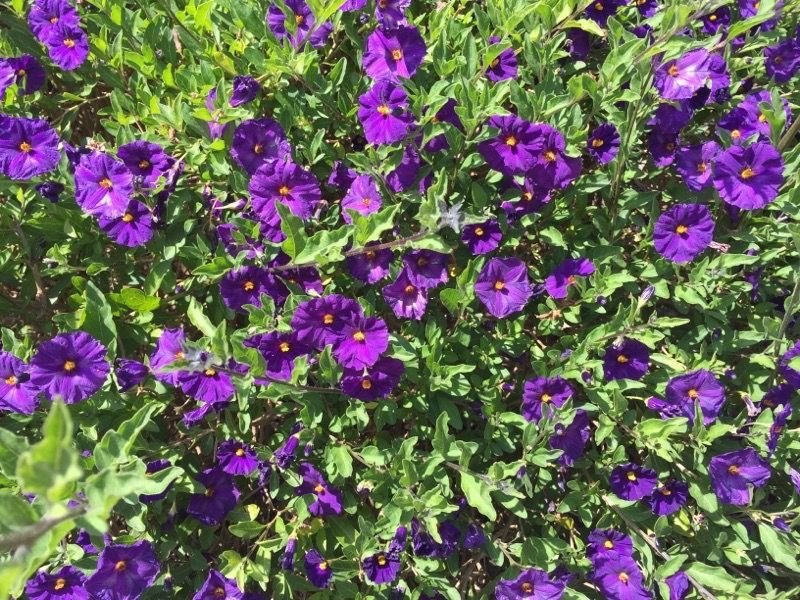
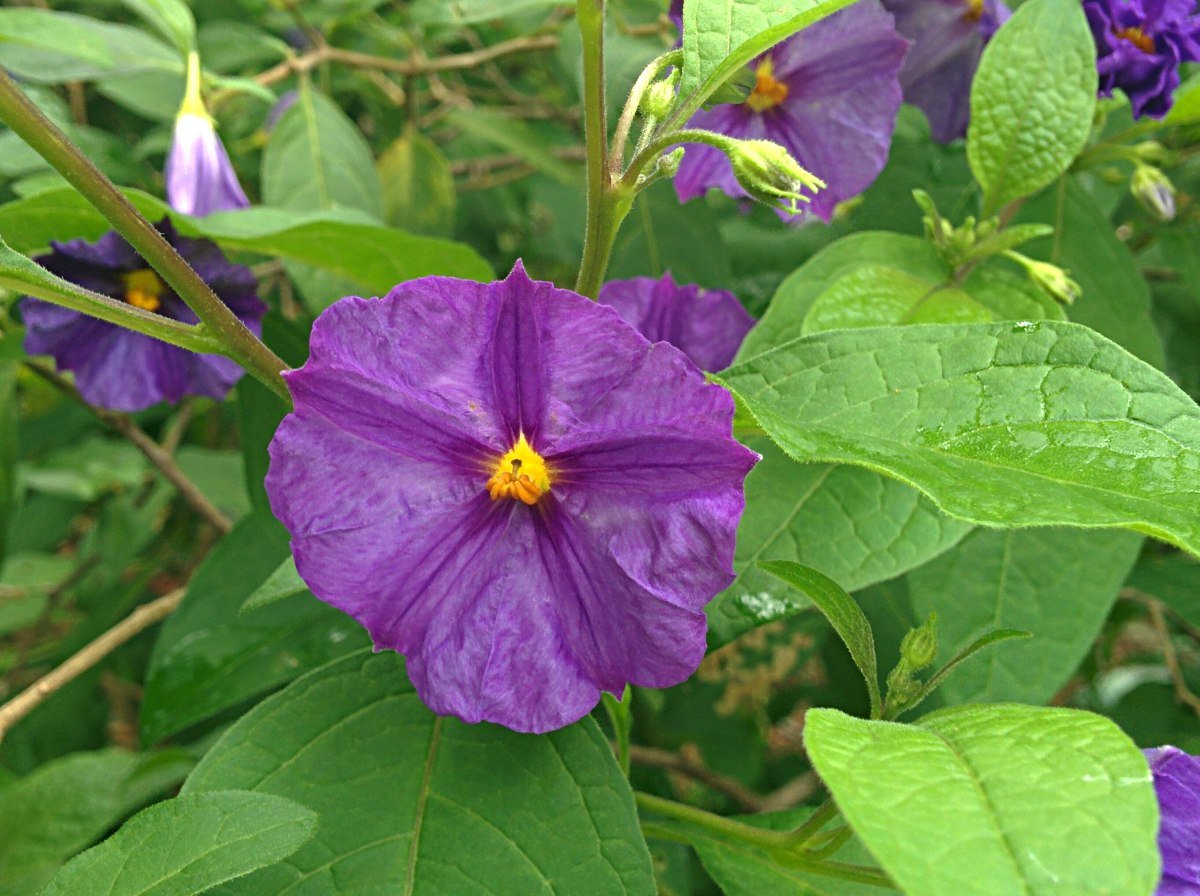
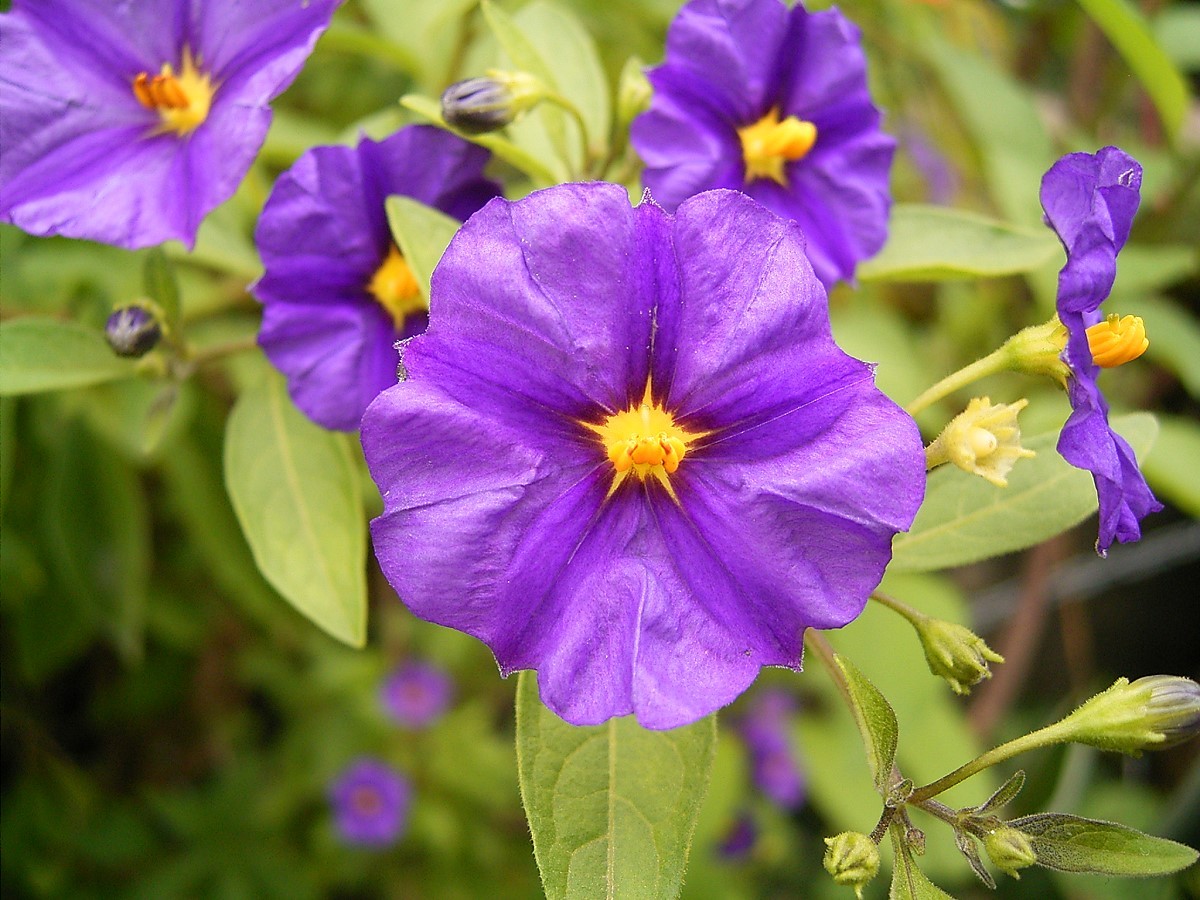
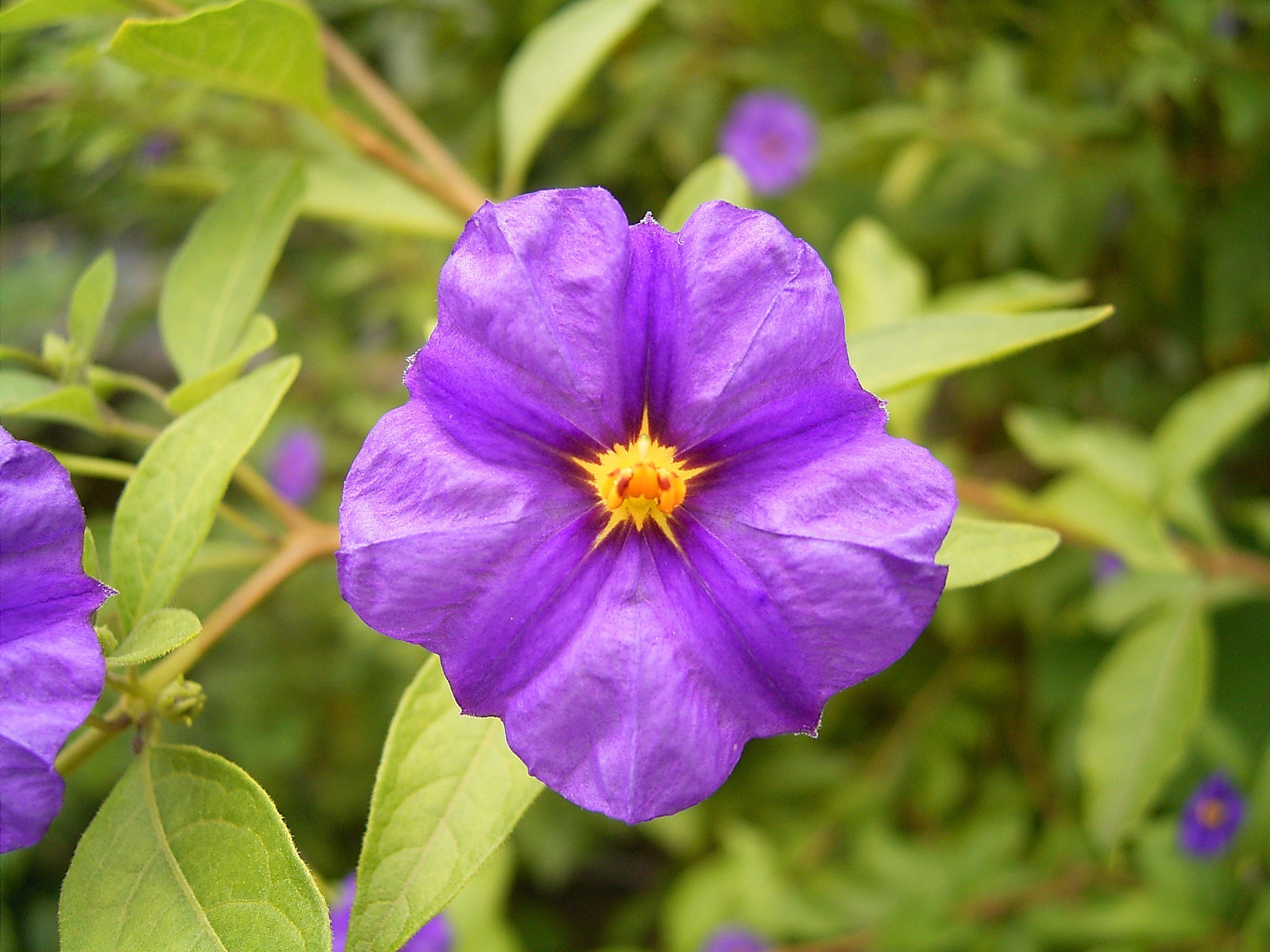
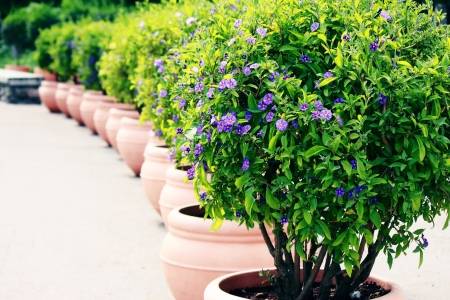
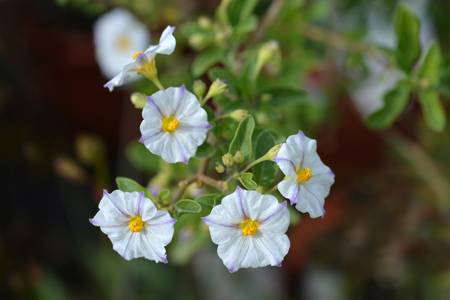
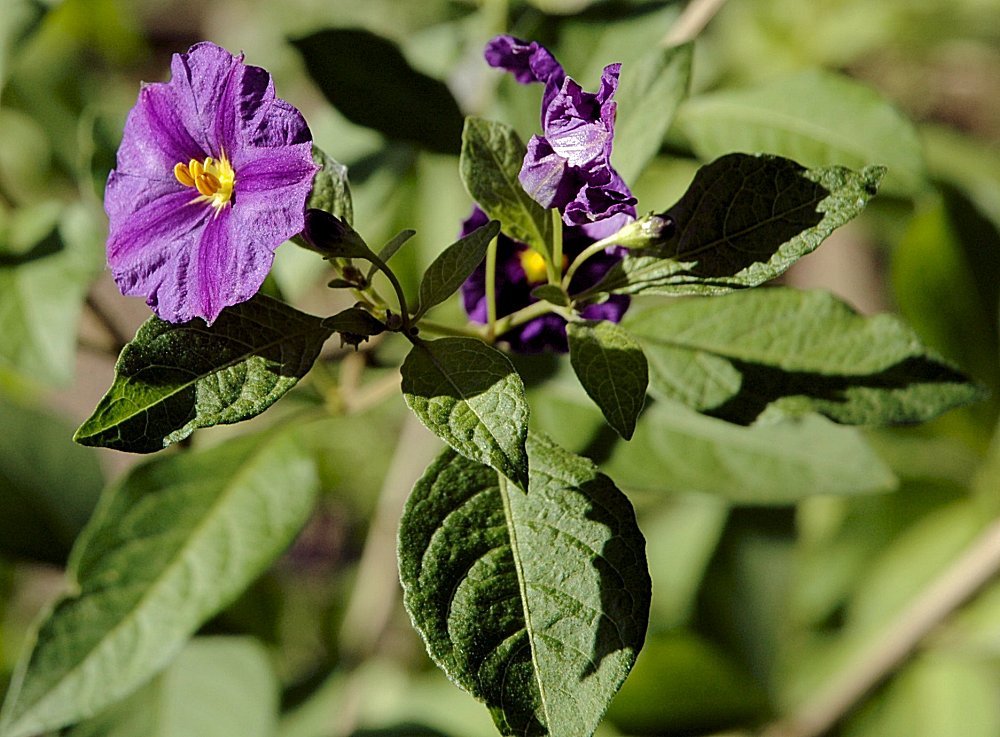
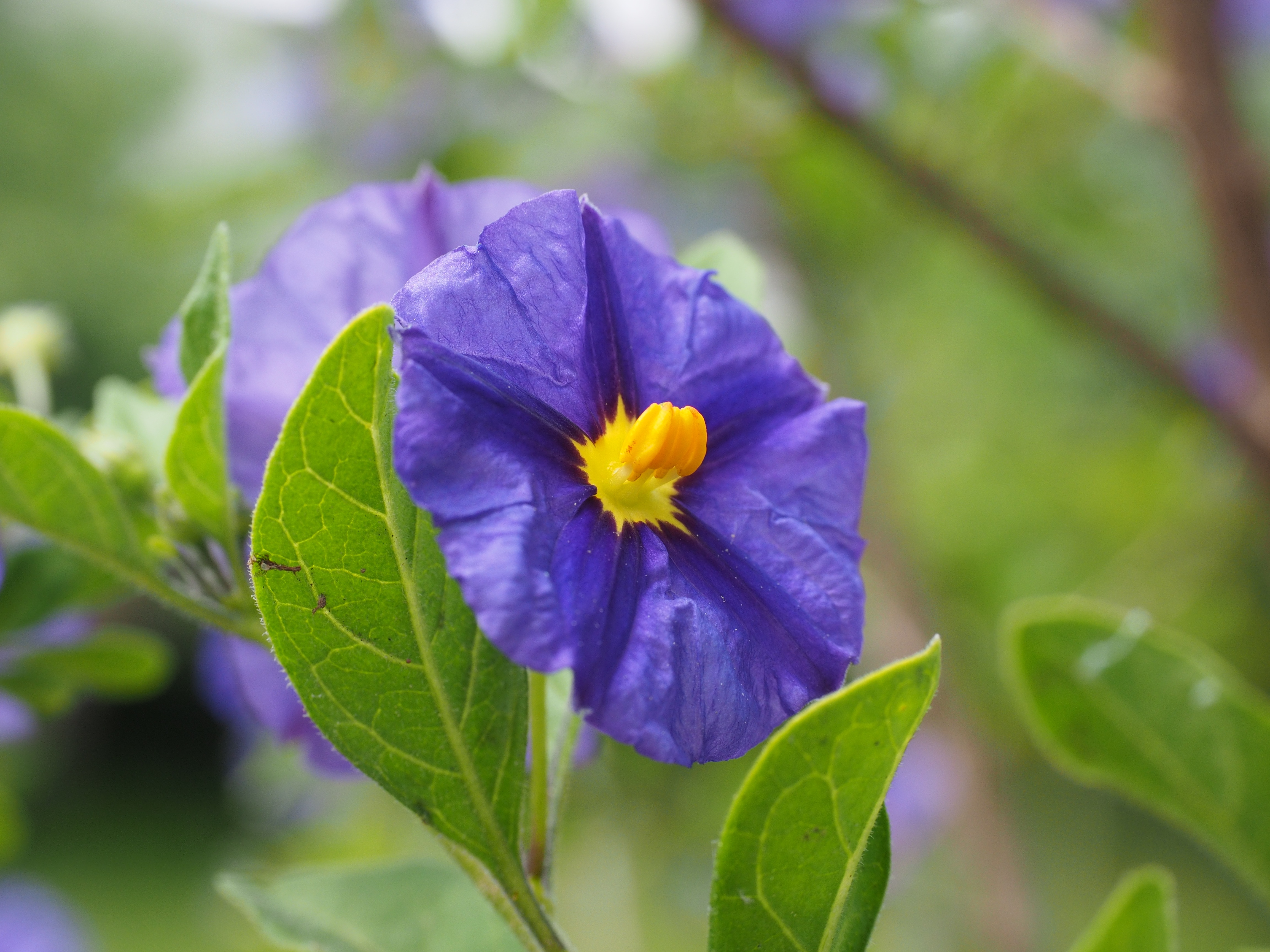
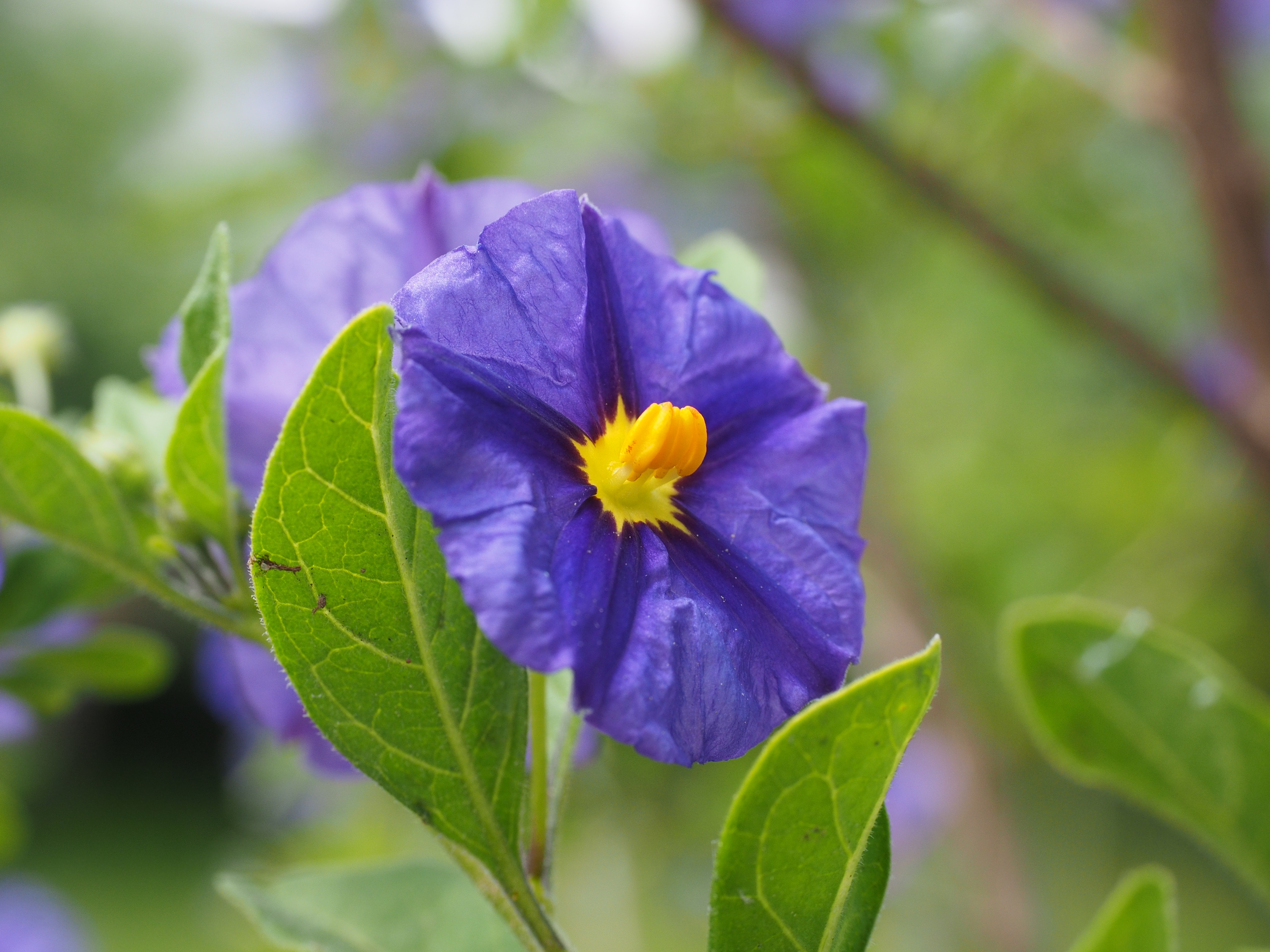
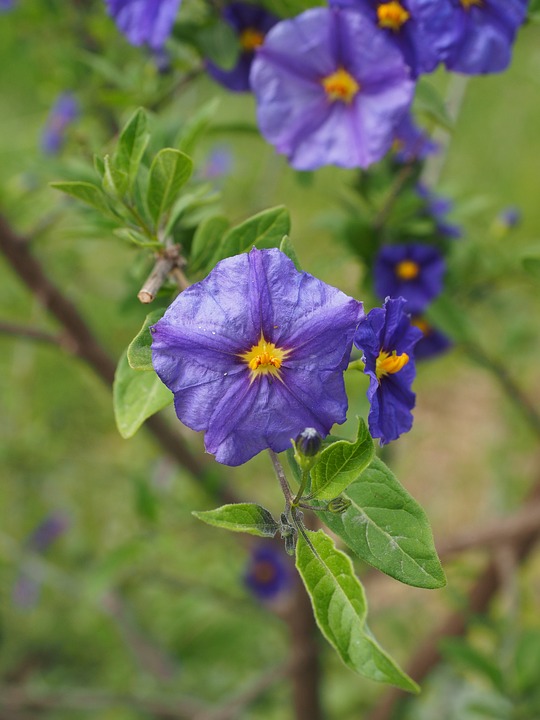
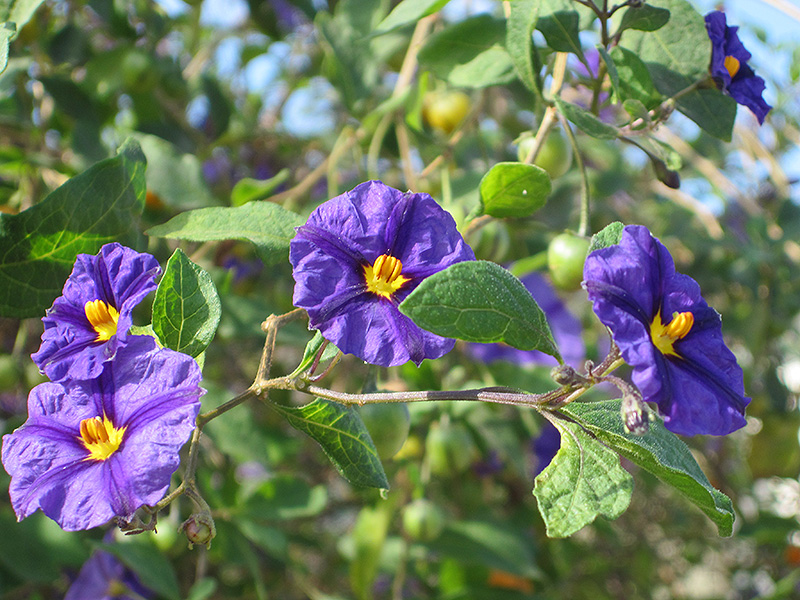
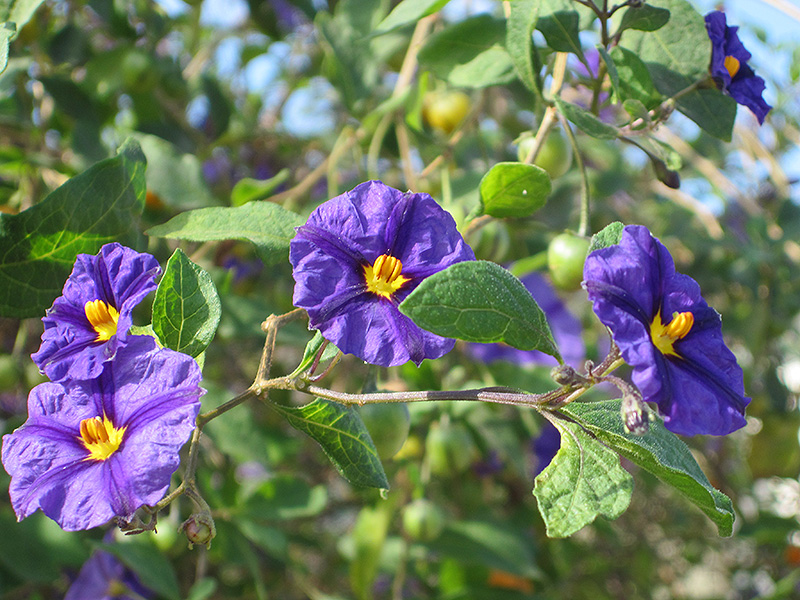
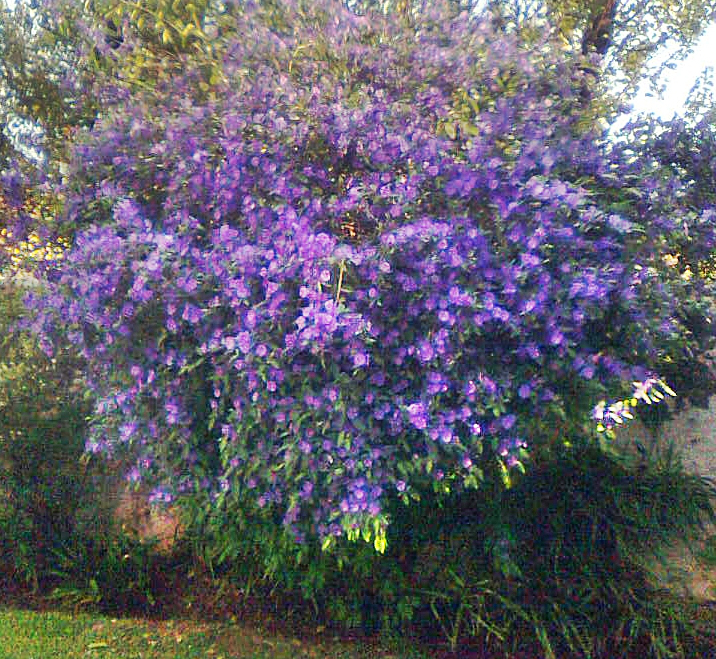
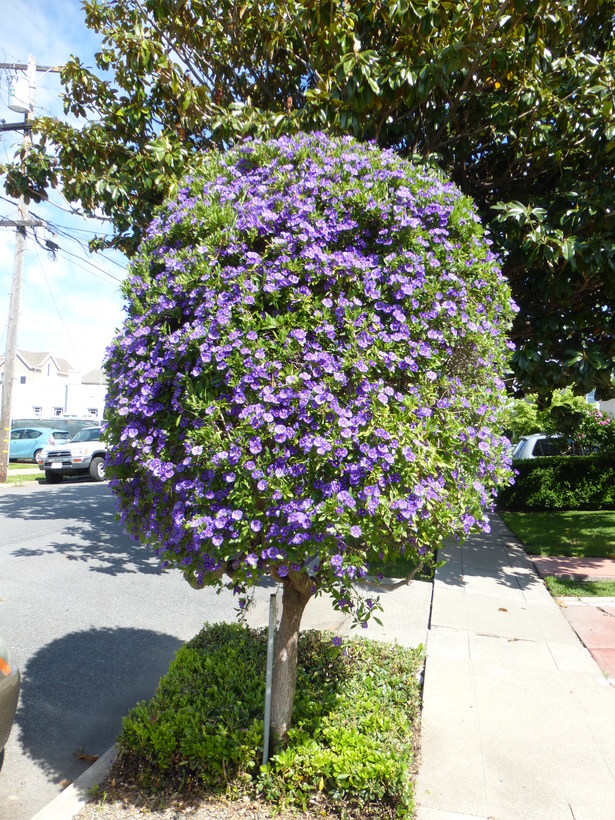
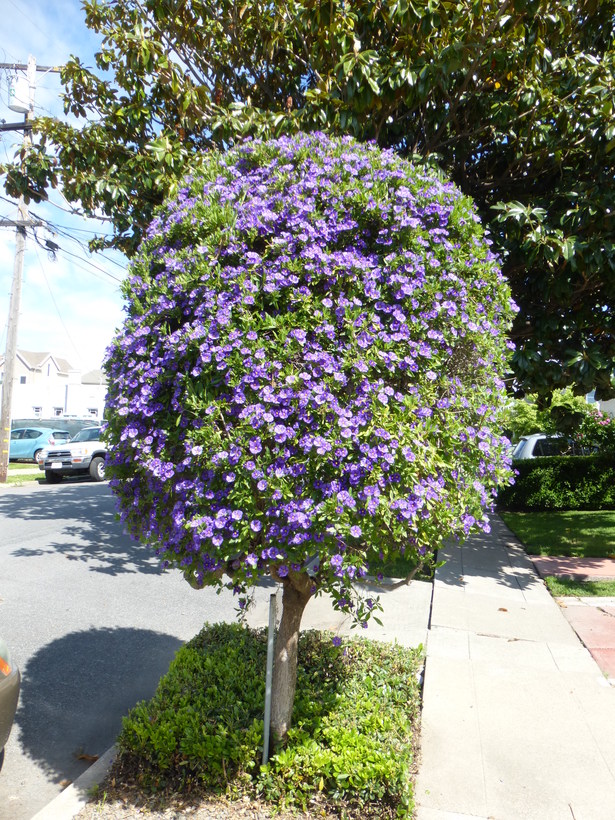
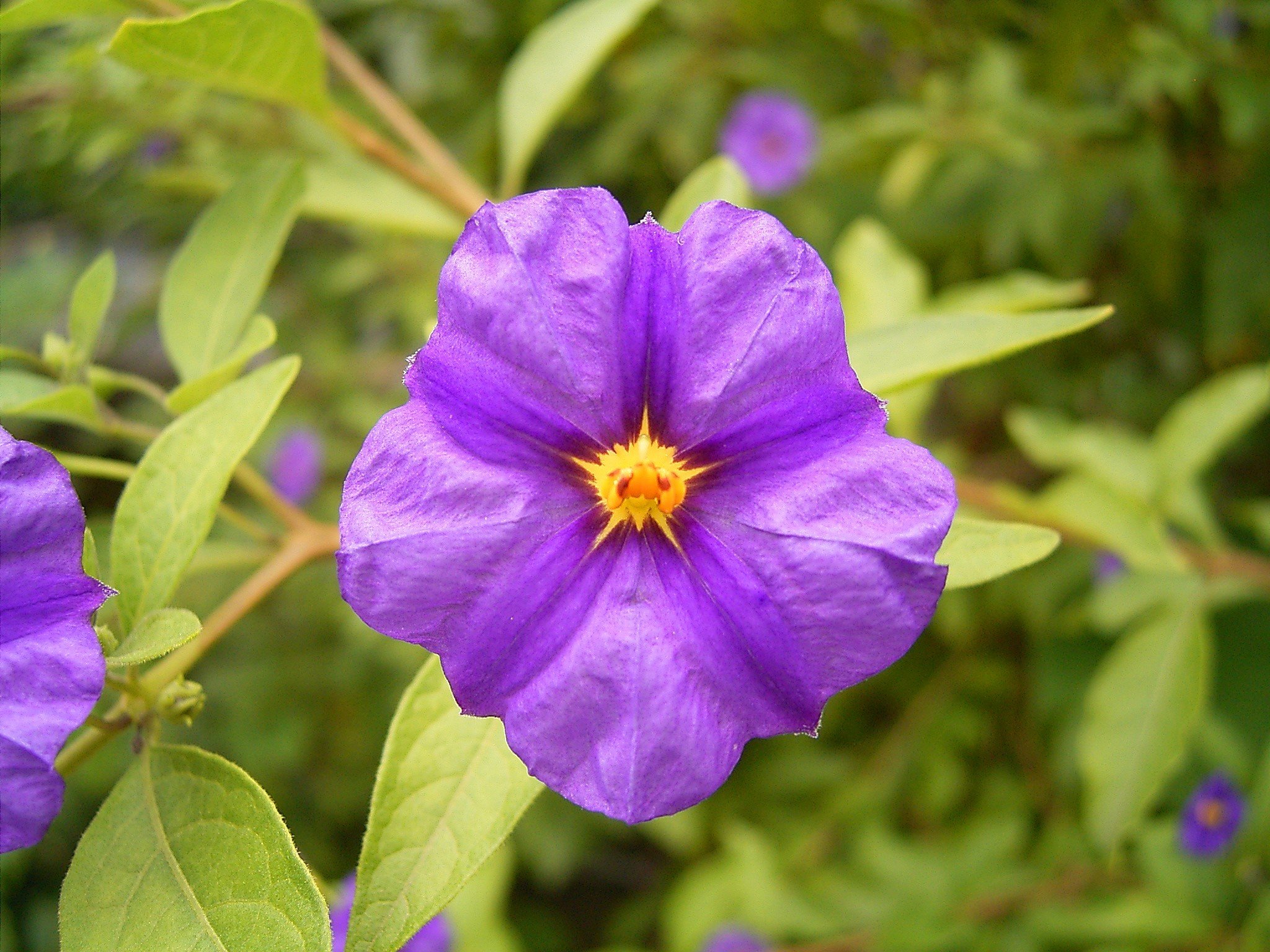
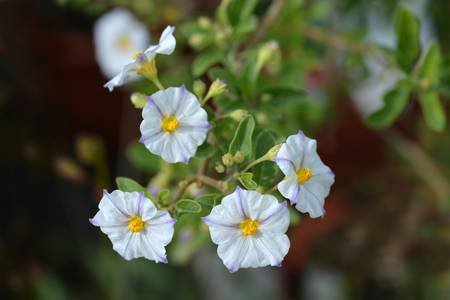
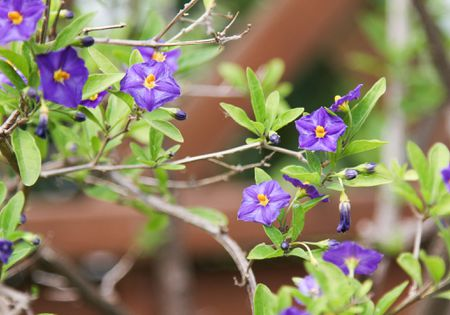
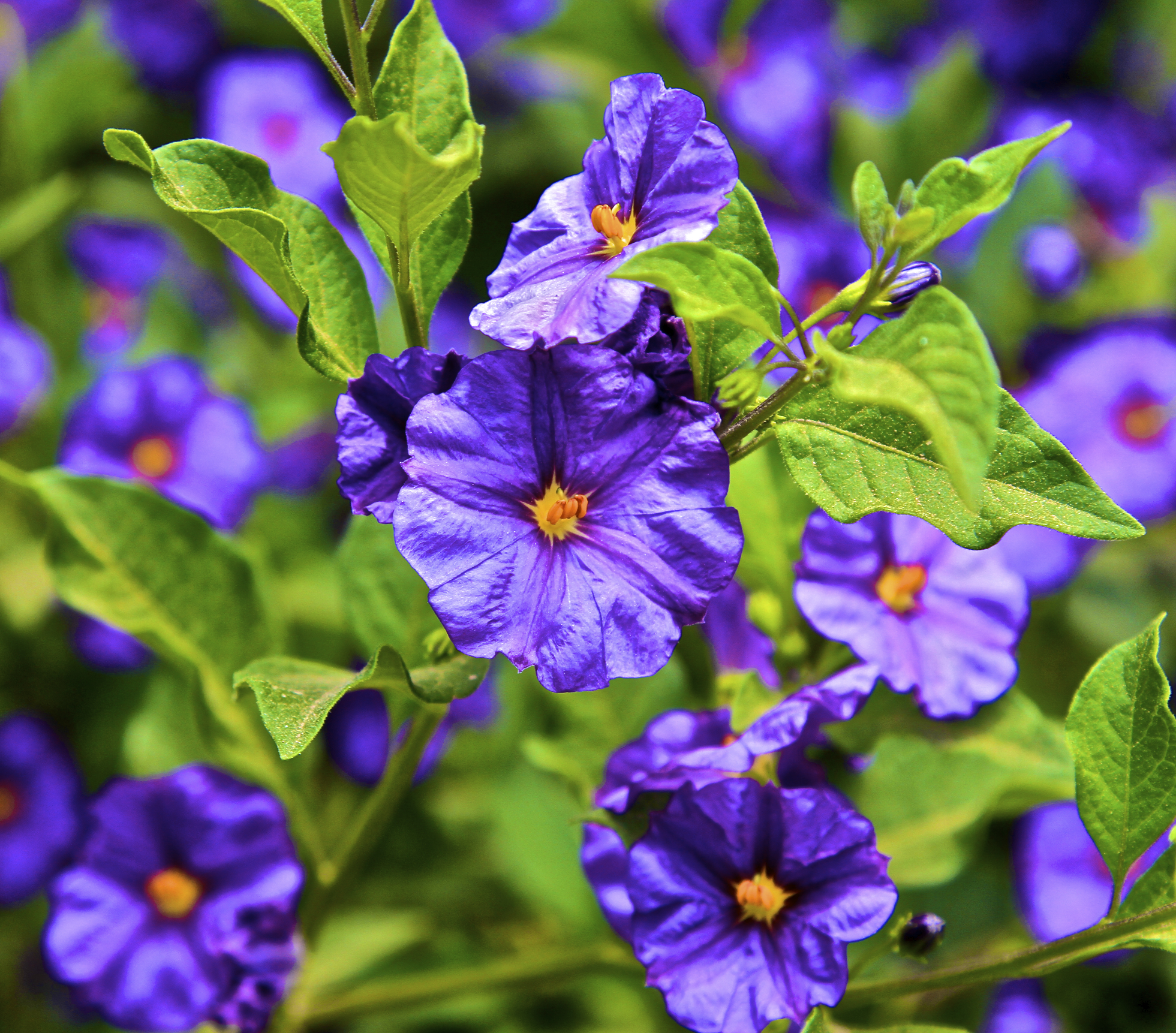
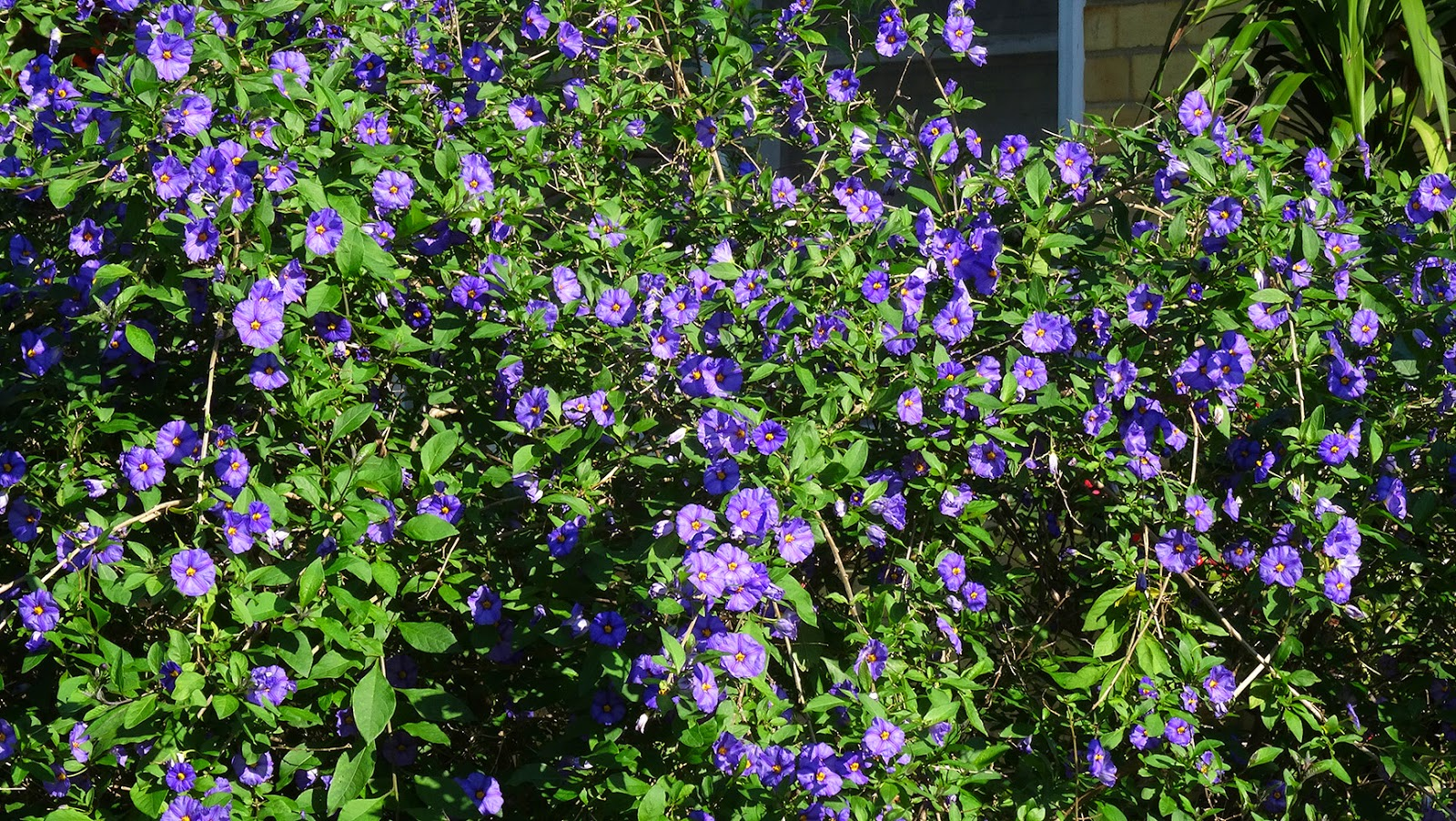
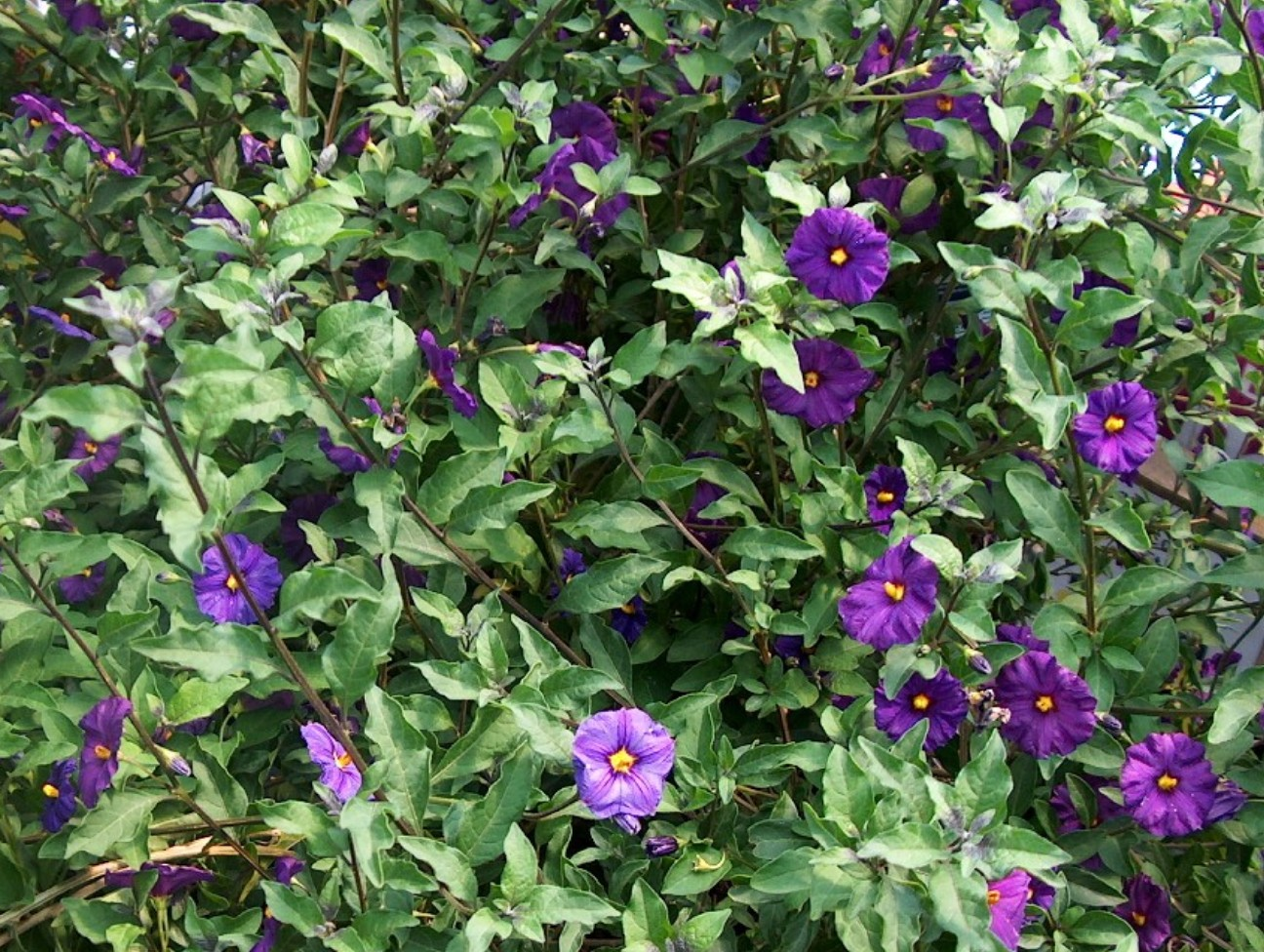
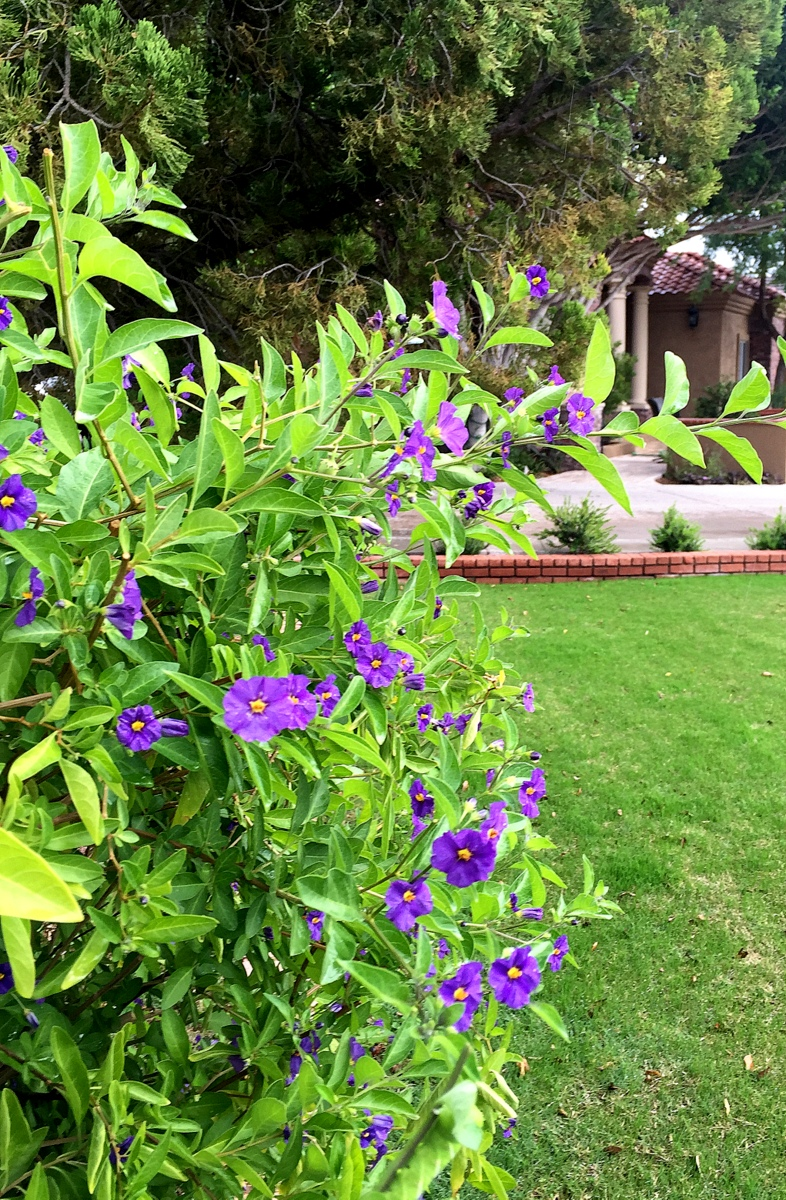
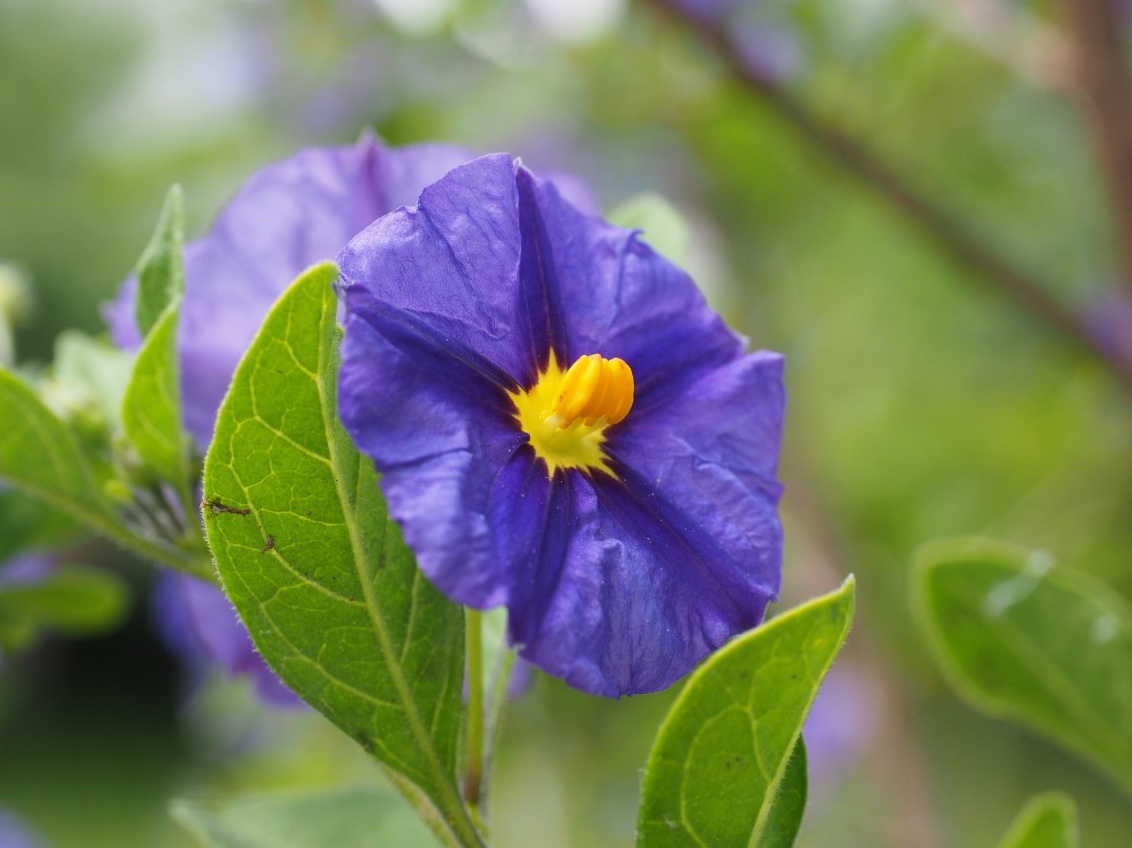
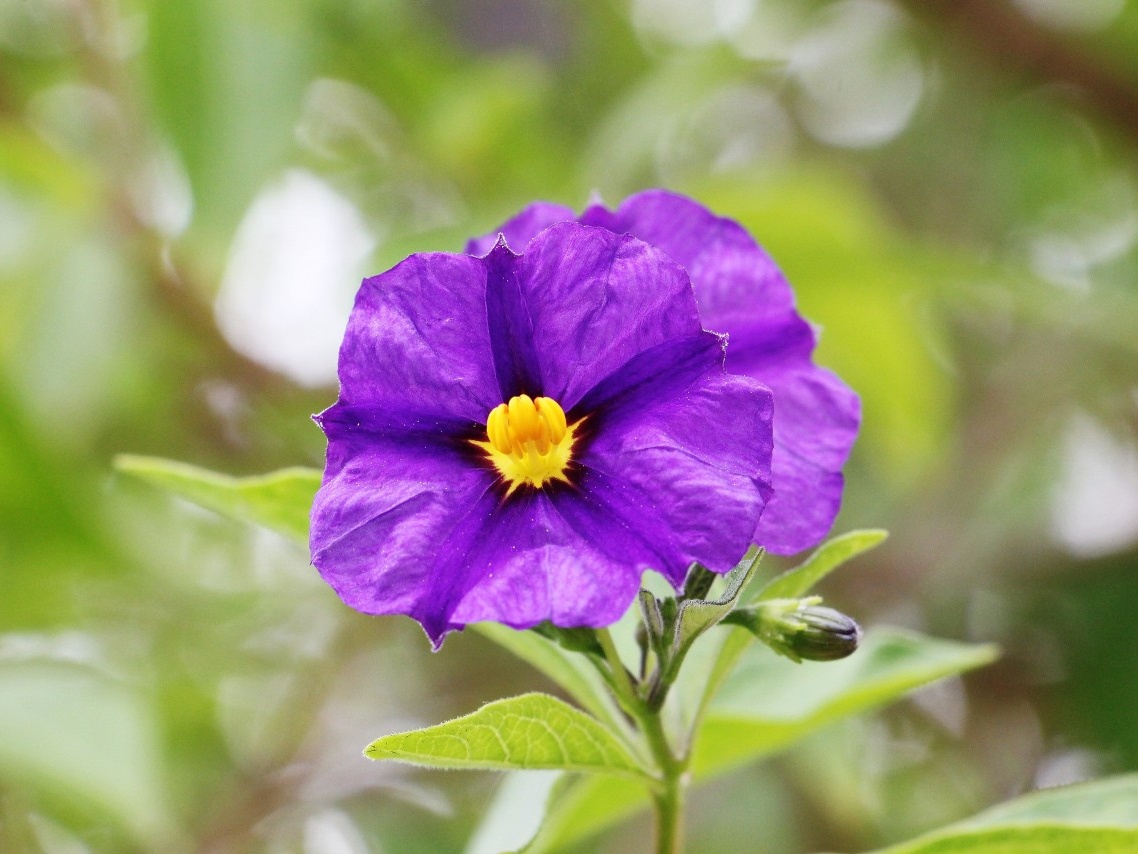
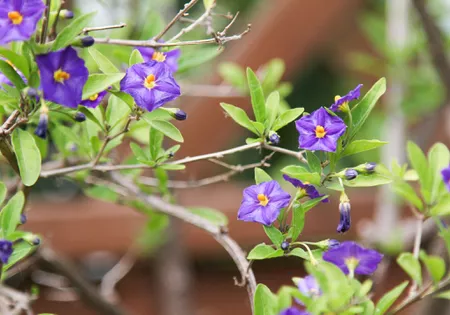
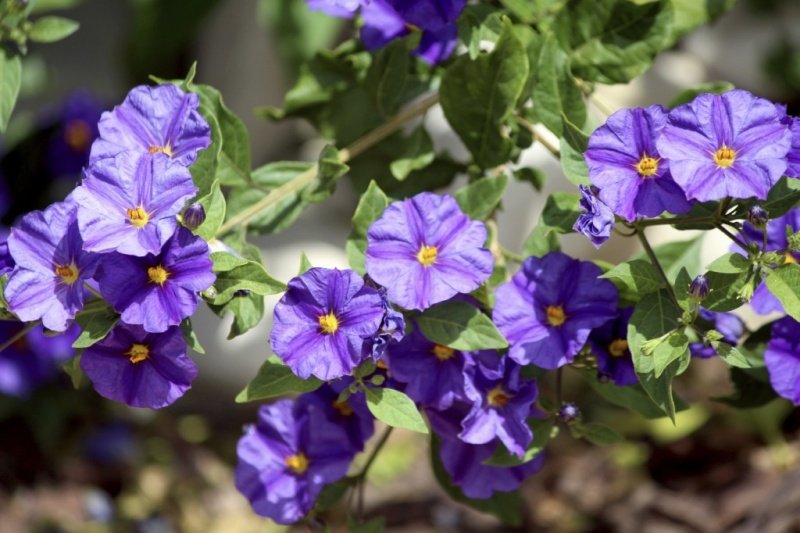
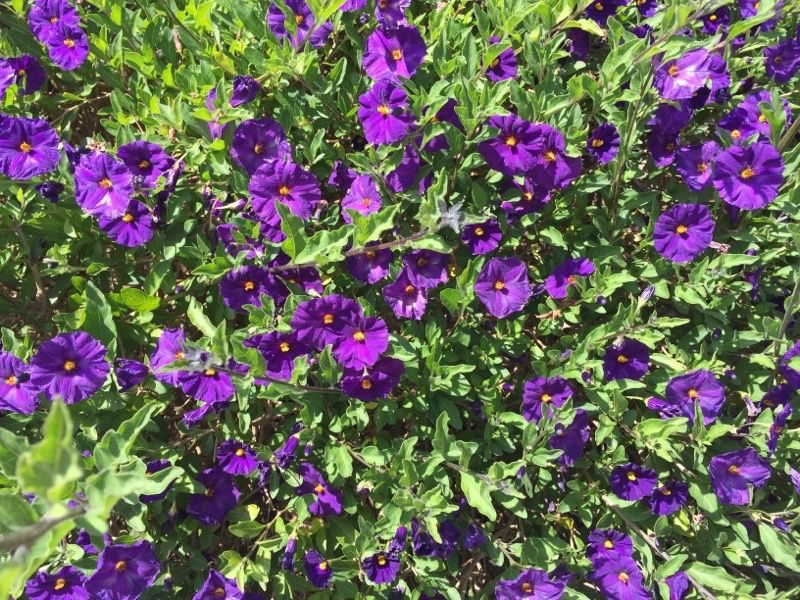
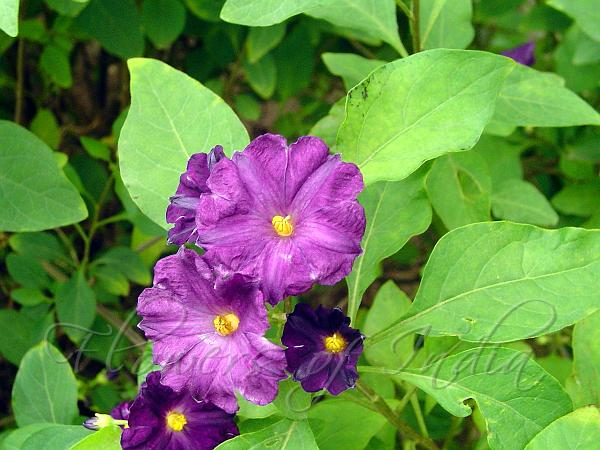
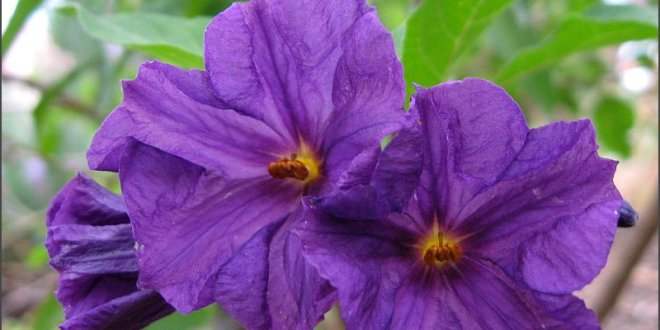
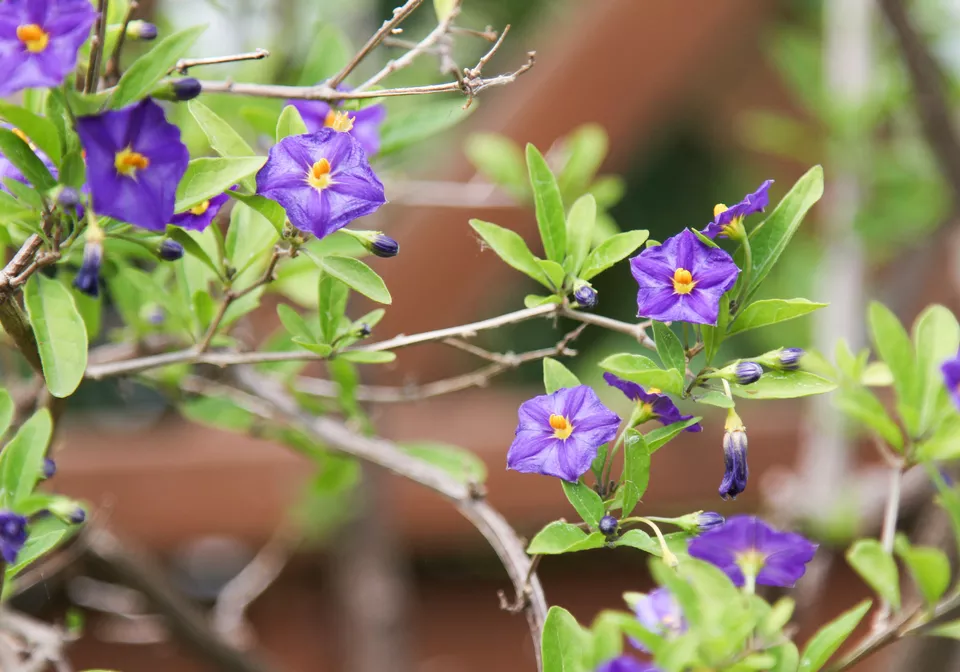
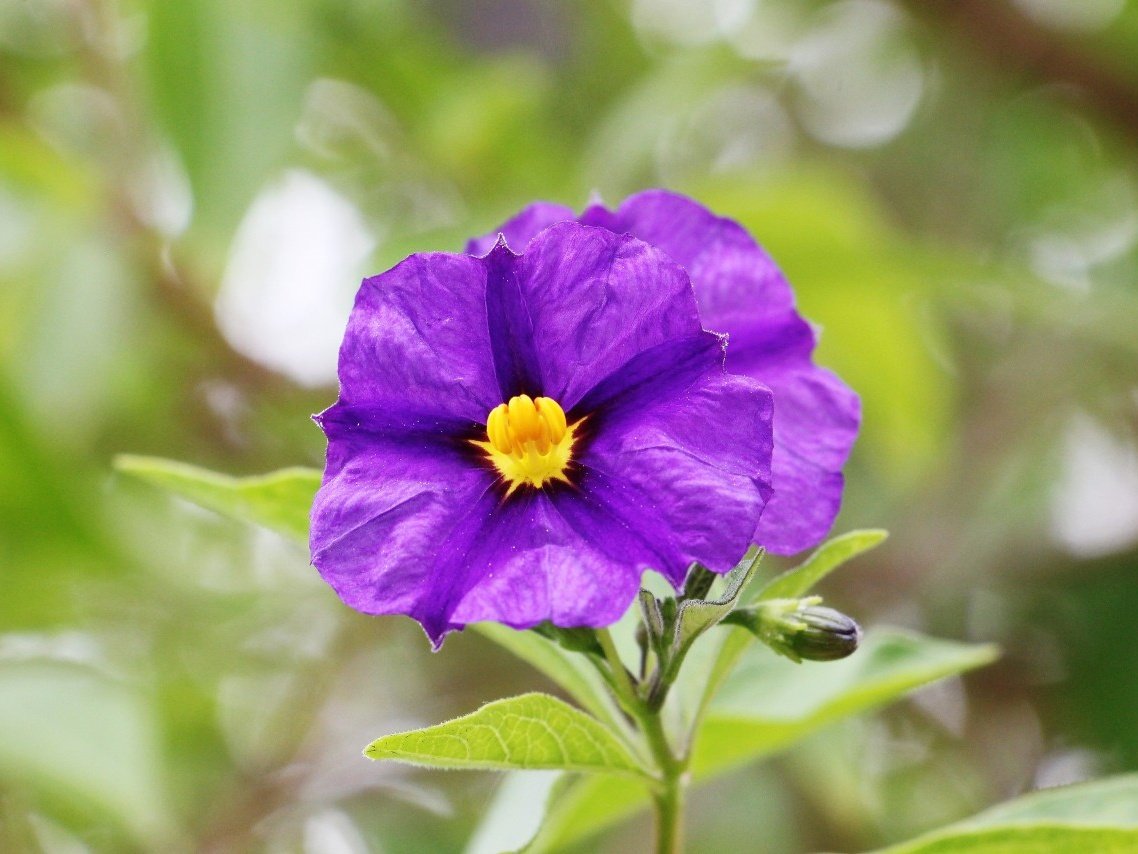
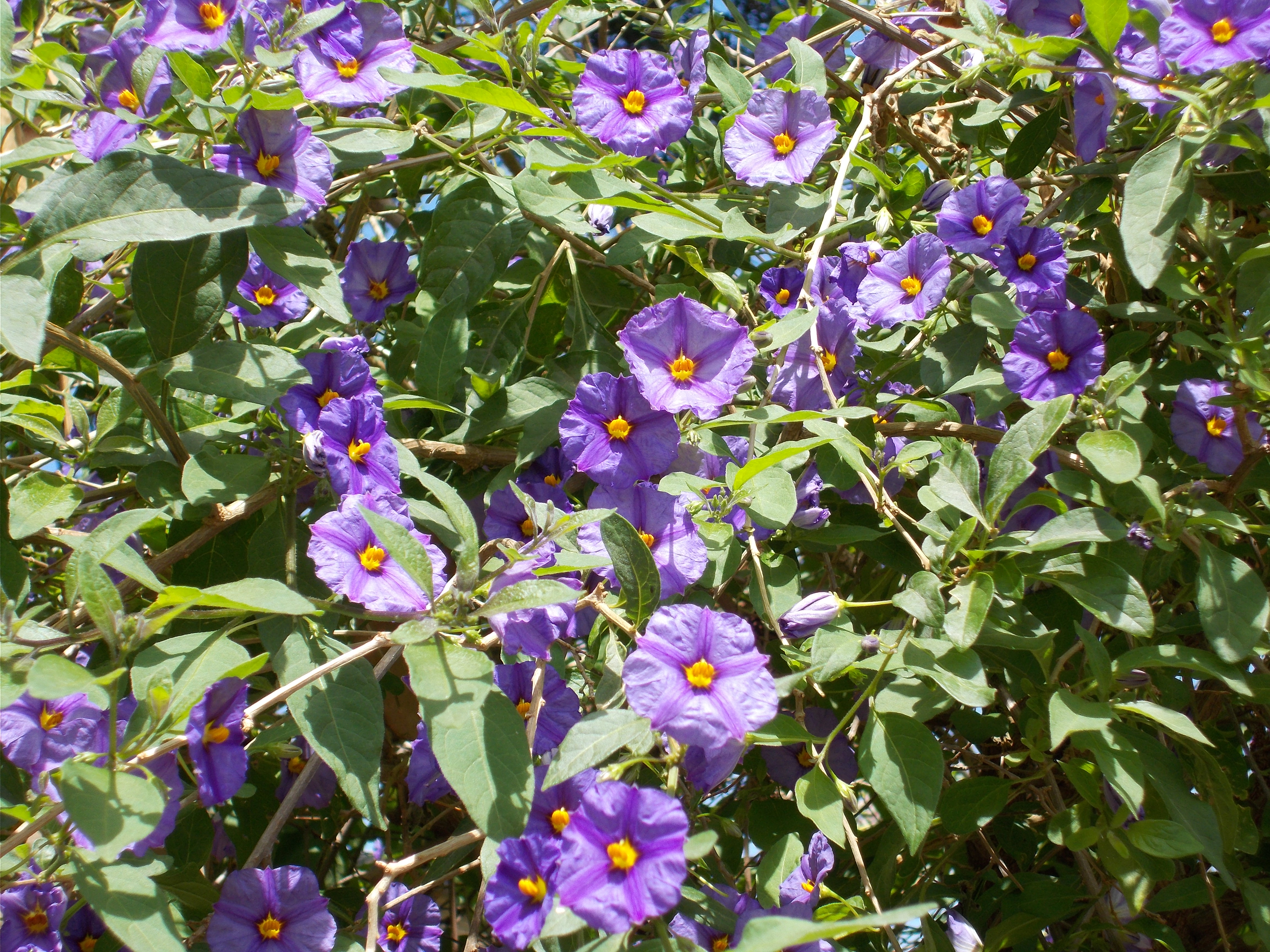
Lycianthes rantonnetii Is the Botanical name for this lovely Blue shrub or climber. It has blue/purple flowers with a yellow centre and flowers appear in masses in the warmer months. It is suited for temperate and warm climates, and grows best in a sunny position. The growth habit can be variable.... if trimmed regularly, it can retain a bushy habit, but if allowed to go wild it will be more a climber and scramble over a trellis or fence. Don't be tricked by it's name, it does not grow Potatoes , and the plant is poisonous. i took these photos in a garden in Northern Sydney.[IMAGE: https://cdn.steemitimages.com/DQmQojnGWDE6JoFsVJDwKdM8ZwijzXymK9Lz5YU1T64EnDR/NEW1%20173.JPG]

[IMAGE: https://cdn.steemitimages.com/DQmRCoVfN3L6pUttiRV7WipdCsYSABcjdSgqRgokniNBXdF/NEW1%20172.JPG]

TAGS: [ #lycianthes ] [ #plant ] [ #garden ] [ #australia ]

Replies

@manorvillemike | Sept. 28, 2018, 6:52 p.m. | Votes: 1 | [ VOTE ]

Poisonous to animals also?

@ctrl-alt-nwo | Sept. 29, 2018, 2:20 a.m. | Votes: 0 | [ VOTE ]

Birds probably come and eat the berries, but i would not feed it to pets.

@basyir01 | Sept. 28, 2018, 7:17 p.m. | Votes: 1 | [ VOTE ]

very beautiful flower friend

@chireerocks | Sept. 28, 2018, 7:37 p.m. | Votes: 1 | [ VOTE ]

@ctrl-alt-nwo, After watching this picture i want to say one thing and that is, for sure these pictures throwing one most beautiful aspect.

And first impression is breathtaking because it's clearly showcasing one thing and that is, two unique colours are staying at one place.

As soon as I've watched these pictures, the Purple colour of flowers is throwing the eye-catching and Artful essence.

I want to appreciate your work because, you always share Simplistic Natural pictures but i always believe that aspects which we think as simple, holds the more value and essence.

Wishing you an great day and stay blessed. 🙂

@ctrl-alt-nwo | Sept. 29, 2018, 2:22 a.m. | Votes: 0 | [ VOTE ]

They say that you should stick to the KISS principle !

@chireerocks | Sept. 29, 2018, 2:23 a.m. | Votes: 0 | [ VOTE ]

Ha ha. 🙂

@rehan12 | Sept. 28, 2018, 7:40 p.m. | Votes: 1 | [ VOTE ]

I do liked the yellow center of it, made t look even more beautiful.
While the unique pattern of it in the form of starfish was indeed cool as well.

@tangera | Sept. 28, 2018, 9:01 p.m. | Votes: 3 | [ VOTE ]

So lovely flower! Widely known by the common name of blue potato bush, this species is also called blue Lycianthes, Paraguay nightshade, and royal robe. The use of the common name of nightshade is not surprising because this plant was mistakenly thought to be one of the nightshade species, even though it is not.

Named after the 19th-century French horticulturist, Barthélémy Victor Rantonnet, the botanical name for this plant is generally accepted as Lycianthes rantonnetii. It is also known as Solanum rantonnetii. The genus name is taken from the Greek word lykion which means ‘a thorny bush’, and anthos which means flower.

[IMAGE: https://cdn.steemitimages.com/DQmSakr1gdnCx8v8319SeudP98cajGuocdj2oVEu7D3RgEo/0097211.jpg]

[IMAGE: https://cdn.steemitimages.com/DQmZorZ1nt5K4t2c3CP6RYr7PHgsUSVR2ZUPN7SqgZcAEiZ/0f6b01e945202a956d39200bb293d985.jpg]

[IMAGE: https://cdn.steemitimages.com/DQmShkAtar5rL8ojFyRN1mHVKuUx8iAgRhrkvx1faMdYioJ/Royal-Robe-Purplesmall1.jpg]

[IMAGE: https://cdn.steemitimages.com/DQmTH9LpmHqXdVAsnWhHHKCtzrtG5kZTTRBUYgHCEwhK3vF/G142-10.jpg]![solidago-rantonnetii-solanacea-visoflora-18854.jpg]

(https://cdn.steemitimages.com/DQmWLdcwdYaU7YFyfsVE3eoezdFaNtfHaMxHt3qbikbHLUY/solidago-rantonnetii-solanacea-visoflora-18854.jpg)

Native to Argentina, Bolivia, Brazil, and Paraguay, the blue potato bush is cultivated all over the world for its beautiful deep purple-blue flowers. If you’ve ever seen it bloom, you won’t forget it. The Royal Horticultural Society gave Lycianthes rantonnetii their prestigious Award of Garden Merit in 2012.

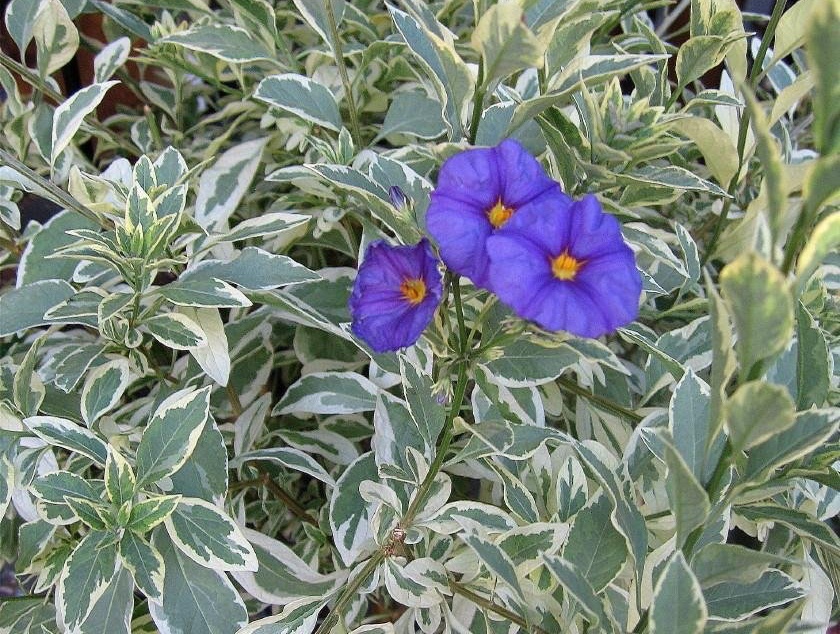
Several cultivars have been produced with different colored foliage and blossoms. The cultivar Lycianthes rantonnetii 'White' has beautiful snow white flowers, while Lycianthes rantonnetii ‘Variegata’ has cream and grey-green leaves with blue flowers. All varieties are sweetly scented and attract butterflies. If not pruned, this species will also produce berries which will attract a variety of birds.

Source:

https://www.google.co.uk/url?sa=t&source=web&rct=j&url=https://www.rhs.org.uk/Plants/57749/i-Lycianthes-rantonnetii-i/Details&ved=2ahUKEwj-kbDuz9_dAhVqLcAKHTrLAVUQFjATegQIBRAB&usg=AOvVaw3NUlwRzMEHh77k0IN-U-6Z

Thanks to share.

@pardeepkumar | Sept. 29, 2018, 2:10 a.m. | Votes: 1 | [ VOTE ]

I like purple color very much. This is my favourite one . Nice flowers . Thanks

@sapwood | Sept. 29, 2018, 3:06 a.m. | Votes: 1 | [ VOTE ]

The plant may be poisonous but the flowers are looking absolutely beautiful. Thank you.

@bien | Sept. 29, 2018, 3:54 a.m. | Votes: 1 | [ VOTE ]

beautiful purple flowers friend!

Purple is everywhere😂[IMAGE: https://cdn.steemitimages.com/DQmVSDUbDmK1NjR8UAg4ysbXkQuZdxQi4HQybyyvvKrJnok/IMG_20180901_233426.JPG]

@theguruasia | Sept. 29, 2018, 4:21 a.m. | Votes: 5 | [ VOTE ]

@ctrl-alt-nwo,
The flower looks beautiful, and the name of the plant also good! But danger is behind it! Really useful article and photography! Actually I didn't know that! It's better we should not grow it at our gardens!

Cheers~

@cranium | Sept. 29, 2018, 5:17 a.m. | Votes: 1 | [ VOTE ]

very beautiful name. Seeing your second photo I understood why he is called a blue climber.

@asadchughtai | Sept. 29, 2018, 5:45 a.m. | Votes: 2 | [ VOTE ]

The potato bush plant is an attractive shrub that grows up to 6 feet tall and wide. It is evergreen in warm climates, and its dense growth habit makes it suitable for use as a hedge or screen. You can also grow it as a tree by removing the lower branches. Pinching the tips.
[IMAGE: https://cdn.steemitimages.com/DQmbxx9hSBxw13YUqEWNLtgsnEzF5aMpnFMyAdrW8AHt17e/IMG_8078.jpg]
Potato bush plant is grown outdoors in warm climates. In areas with cool winters, grow it as a potted plant that can be brought indoors when frost threatens. In cool areas, an abundance of small, blue flowers bloom in summer and fall. In frost-free areas, it blooms year round. The flowers are followed by bright red.
[IMAGE: https://cdn.steemitimages.com/DQmd6YheKCvRJUdHnPBU8wNsQL16zJa5vds1B2zV7URVFrT/depositphotos_27369469-stock-photo-lycianthes-rantonnetii-blue-potato-bush.jpg]
Potato bushes grow best if fertilized regularly. You can use a 2-inch layer of compost once or twice a year; a complete, balanced, slow-release fertilizer in spring and late summer; or a liquid fertilizer once every month or two. Compost helps the soil manage water efficiently.
[IMAGE: https://cdn.steemitimages.com/DQmWVwvz5jjpbNabB7z3f9d1hZESoCQ2R2v39FvLCqzpxHw/0507.jpeg]
Blue potato bush needs a sunny location and a frost-free climate. The plant prefers an organically rich soil that is constantly moist, but well-drained. Achieve the right balance of moisture by watering the plant slowly and deeply when the surface feels dry. Apply a layer of mulch over the soil to slow water evaporation. If the soil drains too quickly, work in some organic material,[IMAGE: https://cdn.steemitimages.com/DQmfRKsbm7YwpBvLyGdFduZgyhrAegrtZ6U38ZJ1jb9cMqS/solanum-2brantonnetii-potato-bush-2b3-for-colorful-shrubs-for-your-garden.jpg][IMAGE: https://cdn.steemitimages.com/DQmW5PhS41rH8XW8mPpUgJJqLpmtiFxBYqwD5trD6ATm91q/Jinnah%20Garden%2022%20May%2014%20(52).jpg]
(SOURCE)https://www.gardeningknowhow.com/ornamental/shrubs/potato-bush/potato-bush-information.htm.

@sarah.taylor | Sept. 29, 2018, 5:47 a.m. | Votes: 3 | [ VOTE ]

Native to Argentina, Bolivia, Brazil, and Paraguay, the blue potato bush is cultivated all over the world for its beautiful deep purple-blue flowers. If you’ve ever seen it bloom, you won’t forget it.
https://previews.123rf.com/images/inavanhateren/inavanhateren1211/inavanhateren121100974/16552087-a-violet-flowering-blue-potato-bush-with-yellow-hearts.jpg

The Royal Horticultural Society gave Lycianthes rantonnetii their prestigious Award of Garden Merit in 2012.

Several cultivars have been produced with different colored foliage and blossoms. The cultivar Lycianthes rantonnetii 'White' has beautiful snow white flowers, while Lycianthes rantonnetii ‘Variegata’ has cream and grey-green leaves with blue flowers.

http://2.bp.blogspot.com/-oiSP_VX6DGQ/U5m3hkH1k4I/AAAAAAAAUWE/0g5CsQ5S2FU/s1600/Potato+bush+3.jpg
All varieties are sweetly scented and attract butterflies. If not pruned, this species will also produce berries which will attract a variety of birds.

Important note: All parts of this plant are poisonous if ingested, including the seeds and berries. Pet owners should monitor their dogs, in particular, to ensure they do not eat the berries or other parts of this shrub.

source

@christian.danny | Sept. 29, 2018, 6 a.m. | Votes: 4 | [ VOTE ]

Latin Name
Named after the 19th-century French horticulturist, Barthélémy Victor Rantonnet, the botanical name for this plant is generally accepted as Lycianthes rantonnetii. It is also known as Solanum rantonnetii. The genus name is taken from the Greek word lykion which means ‘a thorny bush’, and anthos which means flower.

http://2.bp.blogspot.com/-oiSP_VX6DGQ/U5m3hkH1k4I/AAAAAAAAUWE/0g5CsQ5S2FU/s1600/Potato+bush+3.jpg

Common Names
Widely known by the common name of blue potato bush, this species is also called blue Lycianthes, Paraguay nightshade, and royal robe. The use of the common name of nightshade is not surprising because this plant was mistakenly thought to be one of the nightshade species, even though it is not.

https://previews.123rf.com/images/inavanhateren/inavanhateren1211/inavanhateren121100974/16552087-a-violet-flowering-blue-potato-bush-with-yellow-hearts.jpg

Preferred USDA Hardiness Zones
This species is suitable for planting in USDA hardiness zones 8b through 11. In colder zones, it may drop its leaves in the winter, while in the warmer zones it remains evergreen.

Size and Shape
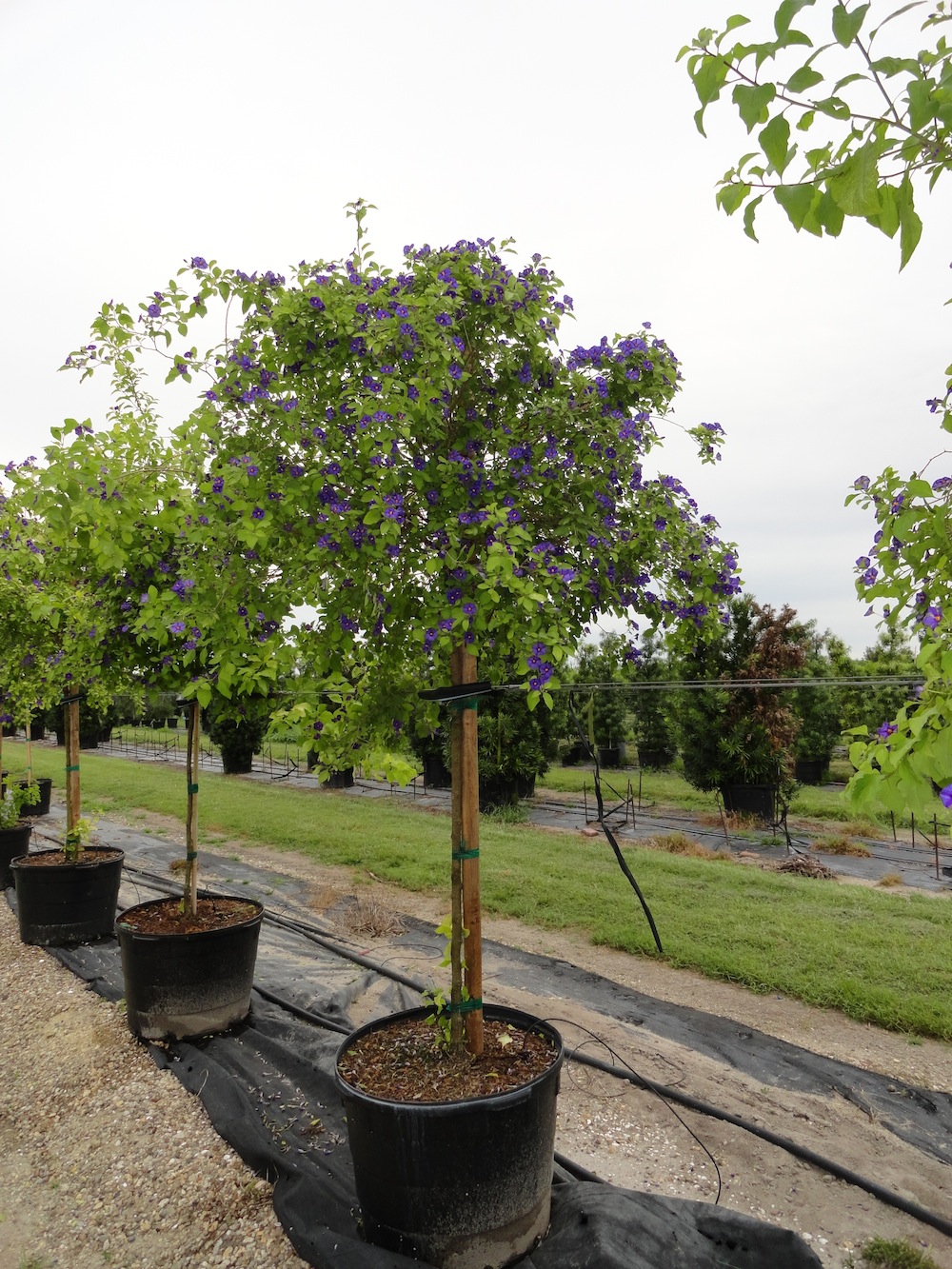
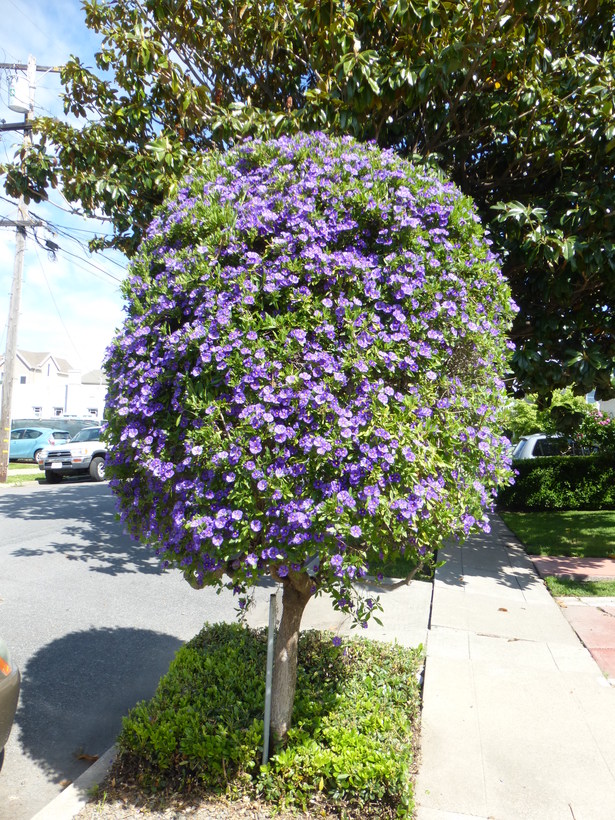
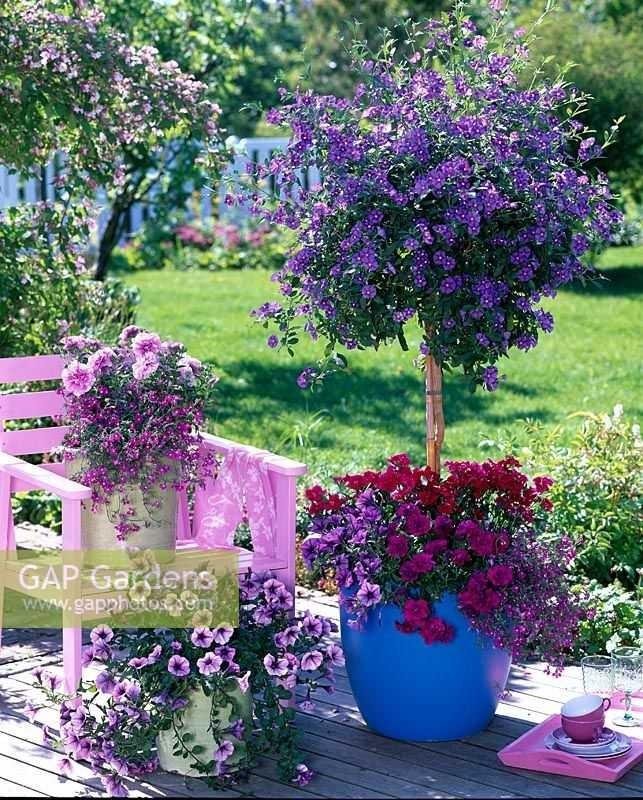
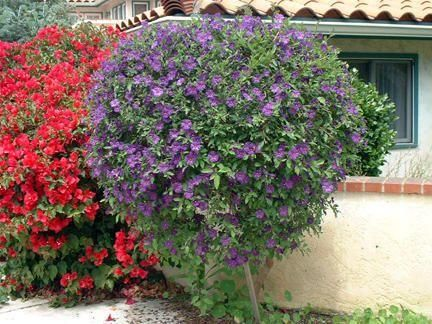
The blue potato bush is a fast growing evergreen that will grow to as much as ten feet in height and width. Typically they are pruned back to a much smaller size. They can be pruned to almost any shape and are often trimmed to a round shape with the lower foliage clipped, thus resembling a small tree.

https://thumbs.dreamstime.com/z/lycianthes-rantonnetii-variegata-blue-potato-bush-%C3%A2%E2%82%AC%CB%9Croyal-robe-variegata%C3%A2%E2%82%AC%E2%84%A2-shrub-golden-variegated-green-leaves-purple-44814492.jpg

Exposure
Blue potato bush prefers full sun if possible, but will tolerate partial shade. This species fare well in coastal regions but should be protected from strong winds.

Foliage/Flowers/Fruit
Leaves of the blue potato bush are oval to elliptical, alternate, and grow up to six inches long and three inches across. They are described as an evergreen in warmer zones and deciduous in zones that are cooler. The smooth gray-brown branches grow in an arching fashion, sprawling to well over six feet if not pruned.

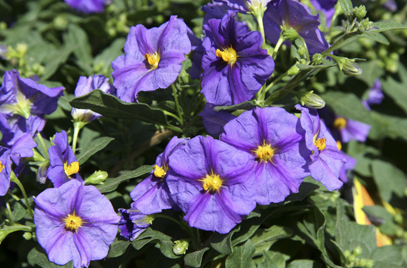
The flowers of this species are what make it memorable. Striking masses of deep violet-blue flowers with yellow centers are grouped at the leaf axils. In cooler zones, blossoms are produced from March through October, while in the warmest zones it may bloom year-round. Flowering is most prolific during the summer months.

https://previews.agefotostock.com/previewimage/medibigoff/dcc8ccd8d1327649101b8236860350de/ssj-194208.jpg
Fruit is produced in the form of orange-red oval berries that are up to an inch in size. The fruit is not edible, and like other parts of the plant is poisonous if ingested. Each berry produces approximately two dozen dark brown seeds.

Design Tips
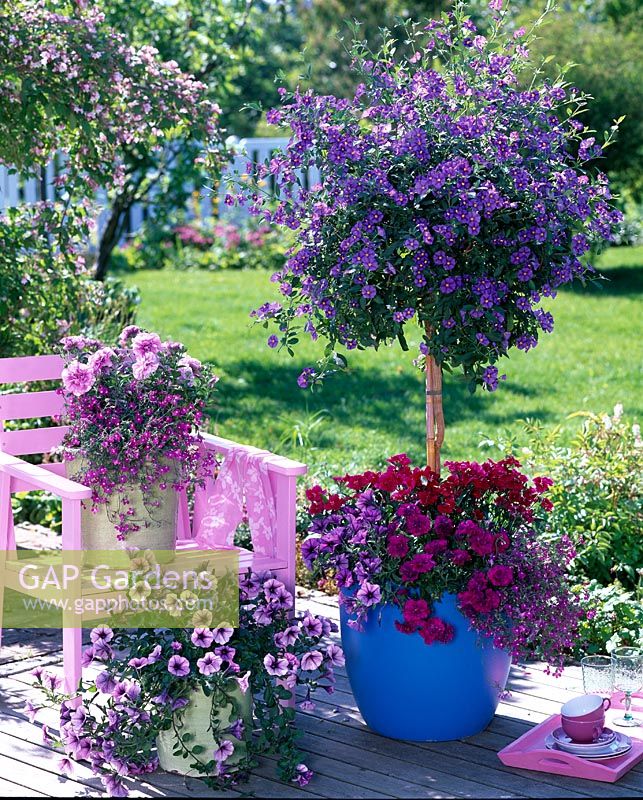
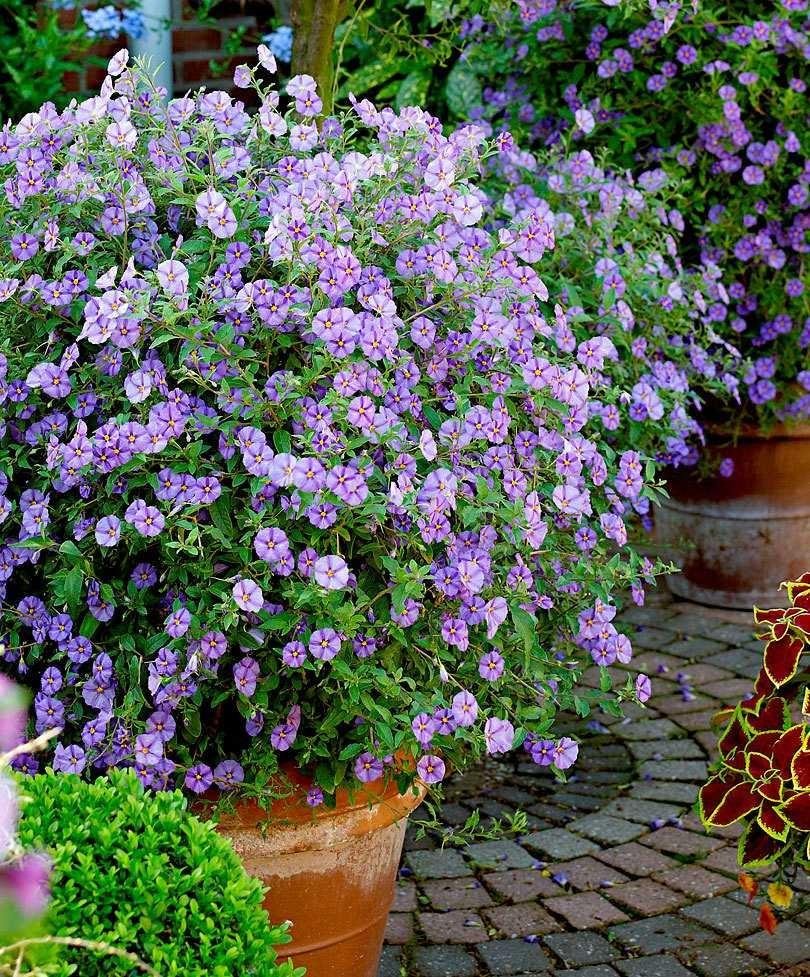
Well suited to many garden types, the blue potato bush makes an excellent backdrop for small shrubs and perennials. It can be used as a focal piece in a garden or mixed in with other plants as a border. This species can also be grown in containers and makes a striking display on a patio.

source

@rumana | Sept. 29, 2018, 6:48 a.m. | Votes: 1 | [ VOTE ]

Hello sir how are you @ctrl-alt-nwo.
Your everyday post is very important. I like it your great full Australia flower photography.
[IMAGE: https://cdn.steemitimages.com/DQmUSvhPJq4L5ovoTL2tUDv8MrbWJ8VvKZhRbHiqQRKHQtK/IMG_20170409_194914.jpg]

@nkleet | Sept. 29, 2018, 7:48 a.m. | Votes: 2 | [ VOTE ]

Apne husn ka deedar kara rahi ho?

Posted using Partiko Android

@rumana | Sept. 29, 2018, 6:52 a.m. | Votes: 2 | [ VOTE ]

Hello sir how are you hoping good sir, your daily post is very good to me, sir you post a picture of such beautiful flowers, which I love very much like you love me very much i love your choice a lot i love your flowers very much and Australia I love the country I really want to visit in Australia one day or so I'll come to Seor M very beautiful to see, and I am very happy to
[IMAGE: https://cdn.steemitimages.com/DQmUQEvnHZ9LcQKTo7XmgPfkDjV1AMZW3b7XnHqMSPKSXpN/IMG_20180918_184040.jpg]

@serkagan | Sept. 29, 2018, 6:54 a.m. | Votes: 3 | [ VOTE ]

A beautiful plant, my friend and L. rantonnetii is a lax, evergreen shrub producing clusters of lightly fragrant, purple-blue, funnel-shaped flowers in summer and autumn. These are followed by red berries.

https://apps.rhs.org.uk/plantselectorimages/detail/RHS_WSYD0000671_7594.JPG

Cultivation
May survive as a wall-shrub in very mild areas, or grow as a standard in a pot and take under cover for winter. Otherwise grow in a cool greenhouse or conservatory with shade from the brightest sun and moderate humidity. Plants will require support

Propagation
Propagate by seed, or semi-ripe cuttings taken in summer or early autumn and rooted with gentle bottom heat

Suggested planting locations and garden types
Wall-side Borders City & Courtyard Gardens Patio & Container Plants Mediterranean Climate Plants

https://thumbs.dreamstime.com/b/rantonnetii-solanum-%D0%B2%D0%B8-rantonnetii-lycianthes-flowerin-30926693.jpg

Pruning
Pruning group 9 if freestanding or pruning group 12 as a wall shrub

Pests
Prone to aphids and glasshouse red spider mites whilst under glass

Diseases
Prone to grey moulds under glass

Thank you @ctrl-alt-nwo

http://www.qscaping.com/Content/Images/Photos/G142-09.jpg

https://www.rhs.org.uk/Plants/57749/i-Lycianthes-rantonnetii-i/Details

@imran77 | Sept. 29, 2018, 6:54 a.m. | Votes: 2 | [ VOTE ]

Hello sir how are you so good hope i love you a lot and i am very supportful to you in every picture i love happiness very beautiful and i love your photo i love you photo you can take beautiful pictures so beautiful i love flowers i love I love your picture and your country is very good. I pray that you have lived for so many days.

@megafart | Sept. 29, 2018, 7:10 a.m. | Votes: 3 | [ VOTE ]

Amazing plant @ctrl-alt-nwo!

Latin name: Lycianthes rantonnetii (pronounced "lie-see-AN-thees rat-oh-NETT-ee-eye")
Common name: Blue Potato Bush, Paraguay Nightshade
Originally from: Brazil, Bolivia, Argentina and Paraguay
Blooms: Absolutely covered in purple flowers that have a little yellow eye. Flowers a lot. Relentlessly? Shamelessly?
Light: Full sun to part shade
Water: Drought tolerant
Drainage: Excellent
Height x width: 4-6' x 4'-6'
USDA Zones: 8b-11
Where to find in P. Garden: In the left bed by the steps

https://3.bp.blogspot.com/-elDV9YfKuN0/WBOyzBr1plI/AAAAAAAAKh4/33re0jGy4qkIEbTIpRlihO8NX7Ln1EIAQCLcB/s1600/IMG_8078.JPG

Lycianthes rantonnetii is a species of flowering shrub in the family Solanaceae. Cultivated as ornamental the world over, you might deem it boring and decide to pass it over. But you'd be wrong.

The blue potato bush is one of about 150 species in the genus Lycianthes, which are found mostly in tropical regions of the Americas, with others in the Asia-Pacific region.

https://3.bp.blogspot.com/-zLqyk0HXIbY/WBOyywM2ZNI/AAAAAAAAKh0/MHQIrELHQoo7m9s6Uw4_h6E7aJBOuoJ2QCLcB/s1600/FullSizeRender-1.jpg

The species is named after Barthélémy Victor Rantonnet, a 19th-century French horticulturalist, who thought at first that it should be lumped in with the nightshades (Solanum) - the same genus as potatoes, hence the frumpy common name: Blue Potato Bush.
You can train it into a little tree, or let it be shrubby. It's easy to prune an doesn't care much when you do it. The flowers don't have a scent but aside from that it's a great little plant that handles all sorts of abuse cheerfully.

https://www.zimbabweflora.co.zw/speciesdata/images/16/165380-4.jpg

More like dangerous. Like most nightshades all parts of this plant are poisonous so keep your kids and dogs out of the flower beds people. A source of psychoactive alkaloids, they will cause a nasty upset stomach and worse.

http://farm6.staticflickr.com/5478/11802128226_3934c74b9c.jpg

http://pennsylvaniagarden.blogspot.com/2016/11/plant-profile-lycianthes-rantonnetii.html

@aaeesha | Sept. 29, 2018, 7:11 a.m. | Votes: 3 | [ VOTE ]

Lycianthes rantonnetii, the blue potato bush or Paraguay nightshade[1] is a species of flowering plant in the nightshade family Solanaceae, native to South America.

https://apps.rhs.org.uk/plantselectorimages/detail/RHS_WSYD0000671_7594.JPG
Growing to about 6 ft (1.8 m) tall and broad, it is a rounded evergreen shrub with a somewhat lax habit. A profusion of trumpet-shaped, bright blue-purple flowers with a prominent yellow eye appear in summer, followed by red berries.

https://previews.123rf.com/images/inavanhateren/inavanhateren1211/inavanhateren121100974/16552087-a-violet-flowering-blue-potato-bush-with-yellow-hearts.jpg

It is widely cultivated and may be hardy in mild or coastal areas. Alternatively it can be grown in a container and brought under cover in winter. It requires a sheltered location in full sun.[3] Though related to food plants like the potato and tomato, all parts of the plant are considered toxic to humans.

It has been given the Royal Horticultural Society’s Award of Garden Merit.

https://www.botanikfoto.com/layout/image-photo-blue-potato-bush-lycianthes-rantonnetii-solanum-572093.jpg
The species is named for Barthélémy Victor Rantonnet, a 19th-century French horticulturalist.[5]

Lycianthes rantonnetii has previously been placed in Solanum, a huge genus which has recently been the subject of major investigation, with species being transferred to and from several different genera. There are many rare and little-known species whose true placement has yet to be determined.

source

@saikr | Sept. 29, 2018, 7:20 a.m. | Votes: 2 | [ VOTE ]

Native to Argentina and Paraguay, Blue Solanum Shrub is a beautiful ever-blooming shrub, clutivated for its blue-purple flowers. It is a much-branched, fast growing evergreen shrub that grows up to 6 feet tall and wide. It produces masses of deep purple flowers with yellow centers. Flowering is most pronounced in summer.

https://i.pinimg.com/originals/6d/4b/83/6d4b832fcd77e9eb0ead2af33f410ba7.jpg
This shrub has evergreen leaves that are alternate, simple, entire, oval to lanceolate. They are almost glabrous on the upper side, and hairy on the underside, with slightly wavy margins.

https://thumbs.dreamstime.com/z/lycianthes-rantonnetii-variegata-blue-potato-bush-%C3%A2%E2%82%AC%CB%9Croyal-robe-variegata%C3%A2%E2%82%AC%E2%84%A2-shrub-golden-variegated-green-leaves-purple-44814492.jpg

They are up to 4 in long. Flowers are .5-1 in (1.25-2.5 cm) in diameter. They are grouped at the leaf axils. Fruits are not edible. They are red and ovoïd small berries.

source

@nkleet | Sept. 29, 2018, 7:48 a.m. | Votes: 2 | [ VOTE ]

Unfortunately, i could not see any potato in it

Posted using Partiko Android

@magnata | Sept. 29, 2018, 8:26 a.m. | Votes: 3 | [ VOTE ]

http://edenland.com.ua/pictures/rasteniya/paslen-rantonneti_813_b.jpg

http://edenland.com.ua/pictures/rasteniya/paslen-rantonneti_810_b.jpg

In our country, this plant is called Nightshade Rantonneti. The indisputable advantage of this plant is a bright, long-lasting and abundant flowering. A fast-growing perennial evergreen shrub or small tree up to 3 m tall. The flowers are bright, purple with a yellow center. It blooms very much in summer and in autumn.
It grows very quickly, so you have to pinch and trim it several times a season. But it perfectly tolerates pruning, and thanks to this property, it can be grown as a head tree, and as a lush bush, and even as an ampelous plant. Its young branches are very flexible, easily bend and the plant can be given any desired shape.

http://edenland.com.ua/rasteniya/paslen-rantonneti.html

@ctrl-alt-nwo | Oct. 1, 2018, 2:20 p.m. | Votes: 0 | [ VOTE ]

I like the standard lollipop plant in the first Pic !

@magnata | Oct. 1, 2018, 3:02 p.m. | Votes: 25 | [ VOTE ]

Thank you so much

@aleks433 | Sept. 29, 2018, 8:55 a.m. | Votes: 3 | [ VOTE ]

I learned a lot of interesting things about this plant. The potato tree is a perennial shrub - it means that you will see the plant return year after year to bring color into your garden from summer to autumn. After the fragrant flowers disappear, the plant will produce attractive red berries. Blue potato bush is cultivated all over the world for its beautiful dark purple blue flowers. If you have ever seen its bloom, you will not forget it. Important note: All parts of this plant are poisonous if ingested, including seeds and berries. Pet owners should watch out for their dogs, in particular, so that they do not eat berries or other parts of this bush.

https://i.nctodo.com/img/trees-shrubs-2018/blue-potato-bush-growing-profile.jpg

https://ru.nctodo.com/blue-potato-bush-growing-profile

@labib316 | Sept. 29, 2018, 10:36 a.m. | Votes: 3 | [ VOTE ]

Lycianthes rantonnetii, the blue potato bush or Paraguay nightshadeis a species of flowering plant in the nightshade family Solanaceae, native to South America.Growing to about 6 ft (1.8 m) tall and broad[1], it is a rounded evergreen shrub with a somewhat lax habit. A profusion of trumpet-shaped, bright blue-purple flowers with a prominent yellow eye appear in summer, followed by red berries. It is widely cultivated and may be hardy in mild or coastal areas. Alternatively it can be grown in a container and brought under cover in winter. It requires a sheltered location in full sun.Though related to food plants like the potato and tomato, all parts of the plant are considered toxic to humans.

It has been given the Royal Horticultural Society’s Award of Garden Merit.[3][4]

The species is named for Barthélémy Victor Rantonnet, a 19th-century French horticulturalist.[5]

Lycianthes rantonnetii has previously been placed in Solanum, a huge genus which has recently been the subject of major investigation, with species being transferred to and from several different genera. There are many rare and little-known species whose true placement has yet to be determined

[IMAGE: https://img.esteem.ws/goqxs35ppv.jpg]

[IMAGE: https://img.esteem.ws/cbrhwsmlsm.jpg]

[IMAGE: https://img.esteem.ws/5ikuy0axkr.jpg]

[IMAGE: https://img.esteem.ws/u9z23tos57.jpg]

[IMAGE: https://img.esteem.ws/b7qkot3o6r.jpg]

Source:

https://www.google.co.uk/url?sa=t&source=web&rct=j&url=https://en.m.wikipedia.org/wiki/Lycianthes_rantonnetii&ved=2ahUKEwjz6PTogeDdAhXEIcAKHWnVCN4QmhMwDHoECAoQPg&usg=AOvVaw34F3hSfaZQwYvO9sJ6u-_s

@ctrl-alt-nwo | Oct. 1, 2018, 2:35 p.m. | Votes: 1 | [ VOTE ]

Fav. comment Award !! Great selection of Pics.

@manha1 | Sept. 29, 2018, 10:48 a.m. | Votes: 3 | [ VOTE ]

The potato bush plant is an attractive shrub that grows up to 6 feet tall and wide. It is evergreen in warm climates, and its dense growth habit makes it suitable for use as a hedge or screen. You can also grow it as a tree by removing the lower branches

The potato bush plant (Lycianthes rantonnetii), a native of Argentina and Paraguay, is best suited to the frost-free climates found in U.S. Department of Agriculture plant hardiness zones 10 and higher. A member of the Solanum family, it is closely related to potatoes, tomatoes and eggplants, but you should never eat it because it is poisonous. Common names for this plant include blue potato bush, Paraguay nightshade and blue solanum shrub. Potato bush plant is grown outdoors in warm climates. In areas with cool winters, grow it as a potted plant that can be brought indoors when frost threatens. In cool areas, an abundance of small, blue flowers bloom in summer and fall. In frost-free areas, it blooms year round. The flowers are followed by bright red berries.

[IMAGE: https://img.esteem.ws/f9ku685zzf.jpg]

[IMAGE: https://img.esteem.ws/bpmzz4mpht.jpg]

[IMAGE: https://img.esteem.ws/b7qkot3o6r.jpg]

[IMAGE: https://img.esteem.ws/5xz1npumir.jpg]

[IMAGE: https://img.esteem.ws/mik5o0fuow.jpg]

Blue potato bush needs a sunny location and a frost-free climate. The plant prefers an organically rich soil that is constantly moist, but well-drained. Achieve the right balance of moisture by watering the plant slowly and deeply when the surface feels dry. Apply a layer of mulch over the soil to slow water evaporation. If the soil drains too quickly, work in some organic material, such as compost

Potato bushes grow best if fertilized regularly. You can use a 2-inch layer of compost once or twice a year; a complete, balanced, slow-release fertilizer in spring and late summer; or a liquid fertilizer once every month or two. Compost helps the soil manage water efficiently. Avoid growing a blue potato bush in areas where children play, as they may be tempted to put the bright red berries in their mouths

Source:

https://www.google.co.uk/url?sa=t&source=web&rct=j&url=https://www.gardeningknowhow.com/ornamental/shrubs/potato-bush/potato-bush-information.htm&ved=2ahUKEwjz6PTogeDdAhXEIcAKHWnVCN4QFjAZegQIBBAB&usg=AOvVaw3x8s2vWNK6mjz0ex8d_axV

@ctrl-alt-nwo | Oct. 1, 2018, 11:45 p.m. | Votes: 0 | [ VOTE ]

Nice Pics , but you have already made a comment.

@ahmad4 | Sept. 29, 2018, 11:17 a.m. | Votes: 3 | [ VOTE ]

Family:
Solanaceae
[IMAGE: https://cdn.steemitimages.com/DQmZMWvV5niRTM4cUjKW2tAaAU13yMWdM9F8objGiFxGUrV/RHS_WSYD0000671_7594.JPG]

Details:
L. rantonnetii is a lax, evergreen shrub producing clusters of lightly fragrant, purple-blue, funnel-shaped flowers in summer and autumn.

Cultivation:
May survive as a wall-shrub in very mild areas, or grow as a standard in a pot and take under cover for winter. Otherwise grow in a cool greenhouse or conservatory with shade from the brightest sun and moderate humidity. Plants will require support
[IMAGE: https://cdn.steemitimages.com/DQmNRTzWYXmALyepyJMYbiKLTVPwmrCAL2BAtEGUnHSA4Dz/lycianthes_rantonnetii.jpg]

Propagation:
Propagate by seed, or semi-ripe cuttings taken in summer or early autumn and rooted with gentle bottom heat
[IMAGE: https://cdn.steemitimages.com/DQmYRSPMgLhfXSeCJvCW7wwN9TSvhzJ5BJRZ8BAkBqFofiF/5f947a2c8dbb020d6d29c8a2b7dd1ca7.jpg]

How to care
Pruning
Pruning group 9 if freestanding or pruning group 12 as a wall shrub

Pests
Prone to aphids and glasshouse red spider mites whilst under glass
[IMAGE: https://cdn.steemitimages.com/DQmaqSCotkvWMUFpVh1CEWnaeg6nt2HEvbQURJfooxv6nbH/69088.jpg]

Diseases
Prone to grey moulds under glass.
Content Source

@blazing | Sept. 29, 2018, 11:38 a.m. | Votes: 1 | [ VOTE ]

Nice to know about this plant quite a complicated name but very simple and great in looks amazing to see that :)

@fatima92 | Sept. 29, 2018, 11:41 a.m. | Votes: 1 | [ VOTE ]

Firstly I love flowers . Secondly flowers are best beauty of nature I think. These flower color combination is very good.Nice sharing dear.

@mhyeasin | Sept. 29, 2018, 2:43 p.m. | Votes: 2 | [ VOTE ]

L. rantonnetii is a lax, evergreen shrub producing clusters of lightly fragrant, purple-blue, funnel-shaped flowers in summer and autumn.
[IMAGE: https://cdn.steemitimages.com/DQmcogEqt4r4tKbxG8fAWGLaU1vLTs61s8z5CoS5fbeXHFw/G142-09.jpg]
source

[IMAGE: https://cdn.steemitimages.com/DQmQHHvLmEiq8oSsdiAbb8ZPU3e3b8mAYDJzBqq1dZ36LTE/5f947a2c8dbb020d6d29c8a2b7dd1ca7.jpg]

[IMAGE: https://cdn.steemitimages.com/DQmRbnqcHvvdE5dXgWKUwJhERHhGTBGRLR7sSpAWeCmhysi/165380-4.jpg]
source

May survive as a wall-shrub in very mild areas, or grow as a standard in a pot and take under cover for winter. Otherwise grow in a cool greenhouse or conservatory with shade from the brightest sun and moderate humidity. Plants will require support
source

@momoriso | Sept. 29, 2018, 2:59 p.m. | Votes: 3 | [ VOTE ]

Blue Potato

[IMAGE: https://cdn.steemitimages.com/DQmeNRmRaAYdawqMhXWcEhDq7yVNQr973yY9sj1EefbZT1n/655.jpg]

Native to Argentina, Bolivia, Brazil, and Paraguay, the blue potato bush is cultivated all over the world for its beautiful deep purple-blue flowers. If you’ve ever seen it bloom, you won’t forget it. The Royal Horticultural Society gave Lycianthes rantonnetii their prestigious Award of Garden Merit in 2012.
[IMAGE: https://cdn.steemitimages.com/DQmfPKo44KyfigBYGZUaU2frh5bYeZe5tVi984QD4SRkDE2/565.jpg]

Several cultivars have been produced with different colored foliage and blossoms. The cultivar Lycianthes rantonnetii 'White' has beautiful snow white flowers, while Lycianthes rantonnetii ‘Variegata’ has cream and grey-green leaves with blue flowers. All varieties are sweetly scented and attract butterflies. If not pruned, this species will also produce berries which will attract a variety of birds.
[IMAGE: https://cdn.steemitimages.com/DQmbwZ7tHANhHvqqgptSGiSQmBZR2nhLr8mySCoWF6MWKJu/2625.jpg][IMAGE: https://cdn.steemitimages.com/DQmcLBDH978Tm6MvdaaXqA3sDGnZJydoUxttzYfEAG87Wbn/26525.jpg]

@milano1113 | Sept. 29, 2018, 8:24 p.m. | Votes: 4 | [ VOTE ]

"Blue Potato Bush"

Growing Profile
(The Proper Latin Name Is Lycianthes rantonnetii)

[IMAGE: https://cdn.steemitimages.com/DQmTi934sau87ag5dT1phhnhv5kuyJ8rRL6ot6CNnwUiuPQ/19B52428-9361-411C-A5A8-99018E809D3D.jpeg]


[IMAGE: https://cdn.steemitimages.com/DQmPp6kzpNBTSeYJGQuuduG4QMzLLZZau6tFFkCKCJbUoYh/4AD9CB98-FBA2-42A9-88A7-2B773DB457BC.jpeg]

Native to Argentina, Bolivia, Brazil, and Paraguay, the blue potato bush is cultivated all over the world for its beautiful deep purple-blue flowers. If you’ve ever seen it bloom, you won’t forget it. The Royal Horticultural Society gave Lycianthes rantonnetii their prestigious Award of Garden Merit in 2012.

The blue potato bush is a fast growing evergreen that will grow to as much as ten feet in height and width. Typically they are pruned back to a much smaller size. They can be pruned to almost any shape and are often trimmed to a round shape with the lower foliage clipped, thus resembling a small tree.

[IMAGE: https://cdn.steemitimages.com/DQmXRVDg2c3EMpFup39R4yguza7bMuZTKnLefHb1btysztJ/C6C83786-BFEA-49CF-A538-6EE19255D90F.jpeg]

Several cultivars have been produced with different colored foliage and blossoms. The cultivar Lycianthes rantonnetii 'White' has beautiful snow white flowers,

Lycianthes rantonnetii 'White'

[IMAGE: https://cdn.steemitimages.com/DQmXe2xLKgzNMgLfxCc33owi4t7RknN3qgrRZ1tq5ukgFEj/0537A9CF-7B49-4D29-89A8-1A844CCD9C92.jpeg]

while Lycianthes rantonnetii ‘Variegata’ has cream and grey-green leaves with blue flowers.

Lycianthes rantonnetii ‘Variegata’

[IMAGE: https://cdn.steemitimages.com/DQmSfV1rpKU3pJCf2Q8fnxQruP25FXwBzEZSGMNEEzeP7xd/3D2A3D30-66FE-47A7-8A07-966618379F3F.jpeg]

All varieties are sweetly scented and attract butterflies. If not pruned, this species will also produce berries which will attract a variety of birds.

Resources

@ctrl-alt-nwo | Oct. 1, 2018, 2:31 p.m. | Votes: 0 | [ VOTE ]

Fav. comment Award !! I like the variegated one in the last Pic.

@singa | Sept. 29, 2018, 8:43 p.m. | Votes: 2 | [ VOTE ]

Beautiful photos of Lycianthes rantonnetii
Pretty cute inflorescences, @ctrl-alt-nwo

https://youtu.be/sFj6AftHGmA

https://delange.org/Blue_Potato_Bush_Lycianthes_rantonnei_Arizona_Landscape/Blue_Potato_Bush_Lycianthes_rantonnei_Flowers_Arizona_Landscape.jpg
source

@msena | Sept. 29, 2018, 9:15 p.m. | Votes: 1 | [ VOTE ]

Lycianthes rantonnetii, the blue potato bush or Paraguay nightshade is a species of flowering plant in the nightshade family Solanaceae, native to South America.
[IMAGE: https://cdn.steemitimages.com/DQmcogEqt4r4tKbxG8fAWGLaU1vLTs61s8z5CoS5fbeXHFw/G142-09.jpg]
Source

[IMAGE: https://cdn.steemitimages.com/DQmca4fZFvg33BH8mUHk9v9sNuAQTJh5Fz996zoZLHT3TgG/Blue_Potato_Bush_Lycianthes_rantonnei_Flowers_Arizona_Landscape.jpg]
Source

[IMAGE: https://cdn.steemitimages.com/DQmU6QSNS7tAMJj4BCReuF2eSwZVmmNBoYixo8bLNUe2XuT/solidago-rantonnetii-solanacea-visoflora-18854.jpg]
Source

Growing to about 6 ft (1.8 m) tall and broad, it is a rounded evergreen shrub with a somewhat lax habit. A profusion of trumpet-shaped, bright blue-purple flowers with a prominent yellow eye appear in summer, followed by red berries. It is widely cultivated and may be hardy in mild or coastal areas. Alternatively it can be grown in a container and brought under cover in winter. It requires a sheltered location in full sun. Though related to food plants like the potato and tomato, all parts of the plant are considered toxic to humans. Source

@rothberg | Sept. 30, 2018, 1:54 a.m. | Votes: 2 | [ VOTE ]

Lycianthes rantonnetii

(Blue Potato Bush)
[IMAGE: https://cdn.steemitimages.com/DQmXnbFveVDuxqZQGDwokkgBHguHwaWAUHsYuNMVkcN4opd/042EE729-0D62-46B7-83C2-36EC977439CA.jpeg]
Source
Lycianthes rantonnetii is a species of flowering shrub in the family Solanaceae. Cultivated as ornamental the world over, you might deem it boring and decide to pass it over. But you'd be wrong.

The blue potato bush is one of about 150 species in the genus Lycianthes, which are found mostly in tropical regions of the Americas, with others in the Asia-Pacific region.

[IMAGE: https://cdn.steemitimages.com/DQmZEi1rwV3YyFNx9mNYERwmHfsJg4Rk87np8ozVtoz5Eye/53360608-3B09-483D-A772-53B960E26453.jpeg]
Source
The species is named after Barthélémy Victor Rantonnet, a 19th-century French horticulturalist, who thought at first that it should be lumped in with the nightshades (Solanum) - the same genus as potatoes, hence the frumpy common name: Blue Potato Bush

[IMAGE: https://cdn.steemitimages.com/DQmPkHNM3oZK27oVCtr6SUkuVtTd6NTAVxCU7ByJ1R2s14b/03321323-93A6-4222-A55C-C99A25800D11.jpeg]
Source
You can train it into a little tree, or let it be shrubby. It's easy to prune an doesn't care much when you do it. The flowers don't have a scent but aside from that it's a great little plant that handles all sorts of abuse cheerfully.

[IMAGE: https://cdn.steemitimages.com/DQmUDX2MaHJQ535Qs7YrFZVNMQL6WtFvC6kYiDJo6dVhCck/D73330E1-9793-4D85-8D5F-D027A58574B8.jpeg]
Source
[IMAGE: https://cdn.steemitimages.com/DQmVRV7zSH6pNTWuxnzzWkgzFna1G5CyLF9H8AbKaP46trc/39F69929-A076-460A-8AAB-9F8D225A56E7.jpeg]
Source
Oh, and boring? More like dangerous. Like most nightshades all parts of this plant are poisonous so keep your kids and dogs out of the flower beds people. A source of psychoactive alkaloids, they will cause a nasty upset stomach and worse.

Text Source

@spiritualpower | Sept. 30, 2018, 3:27 a.m. | Votes: 1 | [ VOTE ]

Very good flower plant for garden . Flowers color is very pretty. That's why this plant is looking unique . Thanks

@zohaib336 | Sept. 30, 2018, 5:51 a.m. | Votes: 3 | [ VOTE ]

So lovely flower! Widely known by the common name of blue potato bush, this species is also called blue Lycianthes, Paraguay nightshade, and royal robe. The use of the common name of nightshade is not surprising because this plant was mistakenly thought to be one of the nightshade species, even though it is not.

Named after the 19th-century French horticulturist, Barthélémy Victor Rantonnet, the botanical name for this plant is generally accepted as Lycianthes rantonnetii. It is also known as Solanum rantonnetii. The genus name is taken from the Greek word lykion which means ‘a thorny bush’, and anthos which means flower.
[IMAGE: https://cdn.steemitimages.com/DQmZdWTb2VzbwYCzAAeWQ4eCqNd8bKBNy2HQ7LVZHEQ4Ndx/26525.jpg]
Source

Lycianthes rantonnetii is a species of flowering shrub in the family Solanaceae. Cultivated as ornamental the world over, you might deem it boring and decide to pass it over. But you'd be wrong.

The blue potato bush is one of about 150 species in the genus Lycianthes, which are found mostly in tropical regions of the Americas, with others in the Asia-Pacific region.
[IMAGE: https://cdn.steemitimages.com/DQmca4fZFvg33BH8mUHk9v9sNuAQTJh5Fz996zoZLHT3TgG/Blue_Potato_Bush_Lycianthes_rantonnei_Flowers_Arizona_Landscape.jpg]
Source

[IMAGE: https://cdn.steemitimages.com/DQmUAMUsCugG2Q9UKig53Qmnkm1jN9DXCbhuXvD2m89LAVN/4AD9CB98-FBA2-42A9-88A7-2B773DB457BC.jpeg]
Source

Growing to about 6 ft (1.8 m) tall and broad, it is a rounded evergreen shrub with a somewhat lax habit. A profusion of trumpet-shaped, bright blue-purple flowers with a prominent yellow eye appear in summer, followed by red berries. It is widely cultivated and may be hardy in mild or coastal areas. Alternatively it can be grown in a container and brought under cover in winter. It requires a sheltered location in full sun. Though related to food plants like the potato and tomato, all parts of the plant are considered toxic to humans.

[IMAGE: https://cdn.steemitimages.com/DQmVCLVmAiT9rPti9AxriYx8r5mn3wZ9JvC1yUuMhoUcRQa/19B52428-9361-411C-A5A8-99018E809D3D.jpeg]
Source

@shoaib721 | Sept. 30, 2018, 5:52 a.m. | Votes: 3 | [ VOTE ]

So lovely flower! Widely known by the common name of blue potato bush, this species is also called blue Lycianthes, Paraguay nightshade, and royal robe. The use of the common name of nightshade is not surprising because this plant was mistakenly thought to be one of the nightshade species, even though it is not.

Named after the 19th-century French horticulturist, Barthélémy Victor Rantonnet, the botanical name for this plant is generally accepted as Lycianthes rantonnetii. It is also known as Solanum rantonnetii. The genus name is taken from the Greek word lykion which means ‘a thorny bush’, and anthos which means flower.
[IMAGE: https://cdn.steemitimages.com/DQmZdWTb2VzbwYCzAAeWQ4eCqNd8bKBNy2HQ7LVZHEQ4Ndx/26525.jpg]
Source

Lycianthes rantonnetii is a species of flowering shrub in the family Solanaceae. Cultivated as ornamental the world over, you might deem it boring and decide to pass it over. But you'd be wrong.

The blue potato bush is one of about 150 species in the genus Lycianthes, which are found mostly in tropical regions of the Americas, with others in the Asia-Pacific region.
[IMAGE: https://cdn.steemitimages.com/DQmca4fZFvg33BH8mUHk9v9sNuAQTJh5Fz996zoZLHT3TgG/Blue_Potato_Bush_Lycianthes_rantonnei_Flowers_Arizona_Landscape.jpg]
Source

[IMAGE: https://cdn.steemitimages.com/DQmUAMUsCugG2Q9UKig53Qmnkm1jN9DXCbhuXvD2m89LAVN/4AD9CB98-FBA2-42A9-88A7-2B773DB457BC.jpeg]
Source

Growing to about 6 ft (1.8 m) tall and broad, it is a rounded evergreen shrub with a somewhat lax habit. A profusion of trumpet-shaped, bright blue-purple flowers with a prominent yellow eye appear in summer, followed by red berries. It is widely cultivated and may be hardy in mild or coastal areas. Alternatively it can be grown in a container and brought under cover in winter. It requires a sheltered location in full sun. Though related to food plants like the potato and tomato, all parts of the plant are considered toxic to humans.

[IMAGE: https://cdn.steemitimages.com/DQmVCLVmAiT9rPti9AxriYx8r5mn3wZ9JvC1yUuMhoUcRQa/19B52428-9361-411C-A5A8-99018E809D3D.jpeg]
Source

@faizazohaib | Sept. 30, 2018, 5:58 a.m. | Votes: 2 | [ VOTE ]

[IMAGE: https://cdn.steemitimages.com/DQmcdqH5ZG6isXgg4Aubd9uG3D15wGPQGAaPVJA1gjiaYbb/0537A9CF-7B49-4D29-89A8-1A844CCD9C92.jpeg]

So lovely flower! Widely known by the common name of blue potato bush, this species is also called blue Lycianthes, Paraguay nightshade, and royal robe. The use of the common name of nightshade is not surprising because this plant was mistakenly thought to be one of the nightshade species, even though it is not.
[IMAGE: https://cdn.steemitimages.com/DQmXPBa4edwVcYf1iNP6PM7J8c4Zmg5BVoZBbGXpebEKibW/u9z23tos57.jpg]

Named after the 19th-century French horticulturist, Barthélémy Victor Rantonnet, the botanical name for this plant is generally accepted as Lycianthes rantonnetii. It is also known as Solanum rantonnetii. The genus name is taken from the Greek word lykion which means ‘a thorny bush’, and anthos which means flower.
[IMAGE: https://cdn.steemitimages.com/DQmZdWTb2VzbwYCzAAeWQ4eCqNd8bKBNy2HQ7LVZHEQ4Ndx/26525.jpg]
Source

Lycianthes rantonnetii is a species of flowering shrub in the family Solanaceae. Cultivated as ornamental the world over, you might deem it boring and decide to pass it over. But you'd be wrong.

The blue potato bush is one of about 150 species in the genus Lycianthes, which are found mostly in tropical regions of the Americas, with others in the Asia-Pacific region.
[IMAGE: https://cdn.steemitimages.com/DQmca4fZFvg33BH8mUHk9v9sNuAQTJh5Fz996zoZLHT3TgG/Blue_Potato_Bush_Lycianthes_rantonnei_Flowers_Arizona_Landscape.jpg]
Source

[IMAGE: https://cdn.steemitimages.com/DQmUAMUsCugG2Q9UKig53Qmnkm1jN9DXCbhuXvD2m89LAVN/4AD9CB98-FBA2-42A9-88A7-2B773DB457BC.jpeg]
Source

Growing to about 6 ft (1.8 m) tall and broad, it is a rounded evergreen shrub with a somewhat lax habit. A profusion of trumpet-shaped, bright blue-purple flowers with a prominent yellow eye appear in summer, followed by red berries. It is widely cultivated and may be hardy in mild or coastal areas. Alternatively it can be grown in a container and brought under cover in winter.
[IMAGE: https://cdn.steemitimages.com/DQmebKXm7KjfffHy47wwuTL769UCRyo53Vcboid6kgsrCap/f9ku685zzf.jpg]

It requires a sheltered location in full sun. Though related to food plants like the potato and tomato, all parts of the plant are considered toxic to humans.

[IMAGE: https://cdn.steemitimages.com/DQmVCLVmAiT9rPti9AxriYx8r5mn3wZ9JvC1yUuMhoUcRQa/19B52428-9361-411C-A5A8-99018E809D3D.jpeg]

[IMAGE: https://cdn.steemitimages.com/DQmXPBa4edwVcYf1iNP6PM7J8c4Zmg5BVoZBbGXpebEKibW/u9z23tos57.jpg]
Source

@faraz33 | Sept. 30, 2018, 6:02 a.m. | Votes: 3 | [ VOTE ]

[IMAGE: https://cdn.steemitimages.com/DQmcdqH5ZG6isXgg4Aubd9uG3D15wGPQGAaPVJA1gjiaYbb/0537A9CF-7B49-4D29-89A8-1A844CCD9C92.jpeg]

So lovely flower! Widely known by the common name of blue potato bush, this species is also called blue Lycianthes, Paraguay nightshade, and royal robe. The use of the common name of nightshade is not surprising because this plant was mistakenly thought to be one of the nightshade species, even though it is not.
[IMAGE: https://cdn.steemitimages.com/DQmXPBa4edwVcYf1iNP6PM7J8c4Zmg5BVoZBbGXpebEKibW/u9z23tos57.jpg]

Named after the 19th-century French horticulturist, Barthélémy Victor Rantonnet, the botanical name for this plant is generally accepted as Lycianthes rantonnetii. It is also known as Solanum rantonnetii. The genus name is taken from the Greek word lykion which means ‘a thorny bush’, and anthos which means flower.
[IMAGE: https://cdn.steemitimages.com/DQmZdWTb2VzbwYCzAAeWQ4eCqNd8bKBNy2HQ7LVZHEQ4Ndx/26525.jpg]
Source

Lycianthes rantonnetii is a species of flowering shrub in the family Solanaceae. Cultivated as ornamental the world over, you might deem it boring and decide to pass it over. But you'd be wrong.

The blue potato bush is one of about 150 species in the genus Lycianthes, which are found mostly in tropical regions of the Americas, with others in the Asia-Pacific region.
[IMAGE: https://cdn.steemitimages.com/DQmca4fZFvg33BH8mUHk9v9sNuAQTJh5Fz996zoZLHT3TgG/Blue_Potato_Bush_Lycianthes_rantonnei_Flowers_Arizona_Landscape.jpg]
Source

[IMAGE: https://cdn.steemitimages.com/DQmUAMUsCugG2Q9UKig53Qmnkm1jN9DXCbhuXvD2m89LAVN/4AD9CB98-FBA2-42A9-88A7-2B773DB457BC.jpeg]
Source

Growing to about 6 ft (1.8 m) tall and broad, it is a rounded evergreen shrub with a somewhat lax habit. A profusion of trumpet-shaped, bright blue-purple flowers with a prominent yellow eye appear in summer, followed by red berries. It is widely cultivated and may be hardy in mild or coastal areas. Alternatively it can be grown in a container and brought under cover in winter.
[IMAGE: https://cdn.steemitimages.com/DQmebKXm7KjfffHy47wwuTL769UCRyo53Vcboid6kgsrCap/f9ku685zzf.jpg]

It requires a sheltered location in full sun. Though related to food plants like the potato and tomato, all parts of the plant are considered toxic to humans.

[IMAGE: https://cdn.steemitimages.com/DQmVCLVmAiT9rPti9AxriYx8r5mn3wZ9JvC1yUuMhoUcRQa/19B52428-9361-411C-A5A8-99018E809D3D.jpeg]

[IMAGE: https://cdn.steemitimages.com/DQmXPBa4edwVcYf1iNP6PM7J8c4Zmg5BVoZBbGXpebEKibW/u9z23tos57.jpg]
Source

@ctrl-alt-nwo | Oct. 1, 2018, 2:24 p.m. | Votes: 0 | [ VOTE ]

Silly Sausage Award !! Great choice of Pics.

@madushanka | Sept. 30, 2018, 6:42 a.m. | Votes: 2 | [ VOTE ]

Although this plant is called "Blue Potato Bush", and it is botanically related to edible potatoes, it is grown for its ornamental beauty only. No part of this plant should be consumed. Blue Potato Bush produces an abundance of charming blue flowers over a long season. It's very showy, fragrant, easy to grow, and a magnet for bees and hummingbirds!

[IMAGE: https://cdn.steemitimages.com/DQmfJZ46k8tHB1bJM5C6Q43KZNQmJt3ND7pWjvykcY1Dikc/image.png]

[IMAGE: https://cdn.steemitimages.com/DQmbZcZAoHXcCoEPPttVkUbbGfPogKwiDjcpAWeCxTHFmo9/image.png]

[IMAGE: https://cdn.steemitimages.com/DQmcYM7HwgZHSSFRsGt9SRXpSesDa4XWq7Y83EizLo5LKGE/image.png]

Choose a location that will allow roots to spread and branches to grow freely. Space plants far enough from building foundations, walls, and decks so that the growing foliage won't crowd the structure. Consider whether tall trees or shrubs will block windows or interfere with the roof or power lines.
To prepare the planting area dig a hole as deep as the root ball and three times as wide. After removing the soil, mix it with some compost or peat moss. This enriches the soil and loosens the existing dirt so that new roots can spread easily.
To remove the plant from the container, gently brace the base of the plant, tip it sideways and tap the outside of the pot to loosen. Rotate the container and continue to tap, loosening the soil until the plant pulls smoothly from the pot. The container can also be removed by carefully cutting it down the side.

[IMAGE: https://cdn.steemitimages.com/DQmaE9BFEwnJPHAm85PrWvd5DpR2xehDuMxAJrZjf7DXfSF/image.png]

[IMAGE: https://cdn.steemitimages.com/DQmXgjioFAypiS7Bcetd5M5BKqJAqmA72pcyvd5T6EAWq8o/image.png]

Source: https://www.mygardenlife.com/plant-library/2580/lycianthes/rantonnetii

@roman-sabil | Sept. 30, 2018, 10:20 a.m. | Votes: 2 | [ VOTE ]

[IMAGE: https://cdn.steemitimages.com/DQmZU13yuU8cNxvtpfJSE9L9Rgr9NrHU8aUzZGBFqn3GEHF/IMG_20180930_171659.JPG]

[IMAGE: https://cdn.steemitimages.com/DQmbCbiozkYGnGDtTqzLrFN6gK2W49vG5E328fZmUPyiybD/IMG_20180930_171646.JPG]
Brazilian potato tree (Solanum wrightii) is a cousin of Brugmansia. Another name is giant potato tree, blue potato tree, or blue giant potato. The flowering tree is not too high. the resulting flower looks sweet, and smells sweet. The blooms start white, then turn into pink, and then blue-brazilian-potato flowers.
[IMAGE: https://cdn.steemitimages.com/DQmdkE25JzKTbQF5Sc8Apt77FyFcPC1bTXkKyPnpN1gFyvD/IMG_20180930_171636.JPG]

Source:
https://www.google.co.id/url?sa=t&source=web&rct=j&url=http://bibitbunga.com/tanaman-brazilian-potato-tree/&ved=2ahUKEwiR8IK8wOLdAhVHLY8KHQQhAfwQFjAKegQIARAB&usg=AOvVaw02FVEIaE-cXPh5GkC4W4Rl

@sgbonus | Sept. 30, 2018, 12:21 p.m. | Votes: 1 | [ VOTE ]

Lycianthes rantonnetii

The potato bush plant is an attractive shrub that grows up to 6 feet tall and wide. It is evergreen in warm climates, and its dense growth habit makes it suitable for use as a hedge or screen. You can also grow it as a tree by removing the lower branches. Pinching the tips of new growth encourages bushiness.
[IMAGE: https://img.esteem.ws/5b7zpvf7sy.png]
A member of the Solanum family, it is closely related to potatoes, tomatoes and eggplants, but you should never eat it because it is poisonous. Common names for this plant include blue potato bush, Paraguay nightshade and blue solanum shrub.

[IMAGE: https://img.esteem.ws/c91yceqjlp.png]

Potato bush plant is grown outdoors in warm climates. In areas with cool winters, grow it as a potted plant that can be brought indoors when frost threatens. In cool areas, an abundance of small, blue flowers bloom in summer and fall. In frost-free areas, it blooms year round. The flowers are followed by bright red berries.
[IMAGE: https://img.esteem.ws/fi8aeygcx1.png]
Source
1234

@cryptopie | Sept. 30, 2018, 3:29 p.m. | Votes: 1 | [ VOTE ]

It looks beautiful when carefully trimmed and arranged @ctrl-alt-nwo as the purple flowers really is nice to look at.

@rakesh1 | Sept. 30, 2018, 3:41 p.m. | Votes: 4 | [ VOTE ]

Lycianthes rantonnetii, the blue potato bush or Paraguay nightshade is a species of flowering plant in the nightshade family Solanaceae, native to South America.It Grows to about 6 ft (1.8 m) tall and broad, it is a rounded evergreen shrub with a somewhat lax habit. A profusion of trumpet-shaped, bright blue-purple flowers with a prominent yellow eye appear in summer, followed by red berries.  It requires a sheltered location in full sun.Though related to food plants like the potato and tomato, all parts of the plant are considered toxic to humans.
[IMAGE: https://cdn.steemitimages.com/DQmUX4mex8G1wELtRyS6FwMxbLihoLcC5XEagxng84Zpand/SOLARA_2.jpg]

@ctrl-alt-nwo | Oct. 1, 2018, 11:36 p.m. | Votes: 0 | [ VOTE ]

Thanks for the comment, but you must quote the SOURCE for the photo unless it is your own.

@rakesh1 | Oct. 2, 2018, 9:58 a.m. | Votes: 0 | [ VOTE ]

Sure sir .

@sadikulaziz | Sept. 30, 2018, 3:56 p.m. | Votes: 1 | [ VOTE ]

Native to Argentina, Bolivia, Brazil, and Paraguay, the blue potato bush is cultivated all over the world for its beautiful deep purple-blue flowers. If you’ve ever seen it bloom, you won’t forget it. The Royal Horticultural Society gave Lycianthes rantonnetii their prestigious Award of Garden Merit in 2012.
[IMAGE: https://cdn.steemitimages.com/DQmf7nZ1fLPeyAa7g1DruDP6mkSgbCjfJSF11MTGXwtcumJ/rantonnetii-solanum-%D0%B2%D0%B8-rantonnetii-lycianthes-flowerin-30926693%20(1).jpg]

[IMAGE: https://cdn.steemitimages.com/DQmcogEqt4r4tKbxG8fAWGLaU1vLTs61s8z5CoS5fbeXHFw/G142-09.jpg]
source of photo
Several cultivars have been produced with different colored foliage and blossoms. The cultivar Lycianthes rantonnetii 'White' has beautiful snow white flowers, while Lycianthes rantonnetii ‘Variegata’ has cream and grey-green leaves with blue flowers. All varieties are sweetly scented and attract butterflies. If not pruned, this species will also produce berries which will attract a variety of birds.
[IMAGE: https://cdn.steemitimages.com/DQmQHHvLmEiq8oSsdiAbb8ZPU3e3b8mAYDJzBqq1dZ36LTE/5f947a2c8dbb020d6d29c8a2b7dd1ca7.jpg]
source of photo
Named after the 19th-century French horticulturist, Barthélémy Victor Rantonnet, the botanical name for this plant is generally accepted as Lycianthes rantonnetii. It is also known as Solanum rantonnetii. The genus name is taken from the Greek word lykion which means ‘a thorny bush’, and anthos which means flower.
[IMAGE: https://cdn.steemitimages.com/DQmXKNFBNoAwaMw4CxtmhANUrSdmcP3ynFDCxHjAaWQmc5m/BluePotatoBushFlickrblumenbiene-5685d23c5f9b586a9e21d99c.jpg]
source of photo
Widely known by the common name of blue potato bush, this species is also called blue Lycianthes, Paraguay nightshade, and royal robe. The use of the common name of nightshade is not surprising because this plant was mistakenly thought to be one of the nightshade species, even though it is not.
source of article

@naim444 | Sept. 30, 2018, 4:23 p.m. | Votes: 1 | [ VOTE ]

The species is named for Barthélémy Victor Rantonnet, a 19th-century French horticulturalist.
[IMAGE: https://cdn.steemitimages.com/DQmamh3w3rXqT8PVBQ2HPmzyiqTFQKkGWDVq1e5wEsXWxPt/lycianthes_rantonnetii.jpg]
photo source

[IMAGE: https://cdn.steemitimages.com/DQmca4fZFvg33BH8mUHk9v9sNuAQTJh5Fz996zoZLHT3TgG/Blue_Potato_Bush_Lycianthes_rantonnei_Flowers_Arizona_Landscape.jpg]
source

Lycianthes rantonnetii has previously been placed in Solanum, a huge genus which has recently been the subject of major investigation, with species being transferred to and from several different genera. There are many rare and little-known species whose true placement has yet to be determined
content source

@kaminchan | Sept. 30, 2018, 6:26 p.m. | Votes: 1 | [ VOTE ]

Very attractive flowers but they are poisonous. I quite like them in a big bush. My bandwidth is back to normal. So good to be able to vote and comment again.

Posted using Partiko iOS

@kingsberry | Oct. 1, 2018, 1:34 a.m. | Votes: 1 | [ VOTE ]

Description:

An exceptional shrub offering intense violet-blue flowers with bright yellow centers from spring until fall; can be grown free standing or trained on fences or trellises; also great in containers; fall berries are poisonous

Ornamental Features

Blue Potato Bush is bathed in stunning lightly-scented blue round flowers with violet overtones and yellow eyes at the ends of the branches from mid spring to mid fall. It has green foliage. The fuzzy oval leaves remain green throughout the winter. The fruit is not ornamentally significant.

Landscape Attributes

Blue Potato Bush is a multi-stemmed evergreen shrub with a shapely form and gracefully arching branches. Its average texture blends into the landscape, but can be balanced by one or two finer or coarser trees or shrubs for an effective composition.

This is a high maintenance shrub that will require regular care and upkeep, and should only be pruned after flowering to avoid removing any of the current season's flowers. It has no significant negative characteristics.

Blue Potato Bush is recommended for the following landscape applications;

Accent
Hedges/Screening
General Garden Use
Planting & Growing

Blue Potato Bush will grow to be about 10 feet tall at maturity, with a spread of 10 feet. It has a low canopy with a typical clearance of 1 foot from the ground, and is suitable for planting under power lines. It grows at a medium rate, and under ideal conditions can be expected to live for approximately 20 years.

[IMAGE: https://cdn.steemitimages.com/DQmSRyfPVhggYonHN4Sdqj5Dd4vZy8Rkpfo7u97Gu2CDrTp/image.png]

[IMAGE: https://cdn.steemitimages.com/DQmX2yc64RnCgkwujYZ1Wm8Cq9JcZdc5u1KZza5oZJfCKb9/image.png]

[IMAGE: https://cdn.steemitimages.com/DQmY3dRsdhTWsbAnLzQ3xrDreiuX9k9vDh7BERCaHF6vrSu/image.png]

[IMAGE: https://cdn.steemitimages.com/DQmQKYHYR1fvfsQXemDc3pC9fkd1vNJJkVbSXjzNYGr1HCc/image.png]

http://www.qscaping.com/12170018/Plant/19944/Blue_Potato_Bush/

@manha1 | Oct. 1, 2018, 8:51 a.m. | Votes: 2 | [ VOTE ]

Pandorea pandorana, commonly known as the Wonga Wonga Vine, is a species of woody climbing vine in the family Bignoniaceae. It is found in Australia, Malesia and the southwestern Pacific region. It forms large pointed pods filled with papery seeds. It is easy to germinate, having two-lobed dicotyledons. It is a popular garden plant, common cultivars include the yellow-flowered P. 'Golden Showers', the white-flowered P. 'Snowbells', and the pinkish P. 'Ruby Belle'. The wood was used as in making spears for woomeras in the Central and Western deserts.

[IMAGE: https://img.esteem.ws/l4wuxl6ukk.jpg]

[IMAGE: https://img.esteem.ws/nsii25g3y3.jpg]

[IMAGE: https://img.esteem.ws/pwmfxbm67f.jpg]

[IMAGE: https://img.esteem.ws/bfcfcwbjv5.jpg]

[IMAGE: https://img.esteem.ws/6b0yg3tsre.jpg]

The species was first described by English botanist Henry Charles Andrews in 1800 as Bignonia pandorana, before being given its current binomial name in 1928 by Steenis. Both the generic and specific name are derived from Greek mythological figure Pandora.The Scottish botanist Robert Brown had described it as Tecoma australis but this name was ruled invalid. A form found in dryer inland regions was previously known as P. doratoxylon

Pandorea pandorana was first raised in England in 1793 by Lee and Kennedy at their nursery in Hammersmith[8] and had flowered in cultivation by 1805. Material was also sent to the garden of the Château de Malmaison under the auspices of Joséphine de Beauharnais.[9] Its floral display makes it a popular and widely grown garden plant. It is an evergreen, half-hardy (hardy to about minus 5 °C once established), twining plant with lovely foliage, particularly so on young plants when it is very finely cut and somewhat fern-like. It is suitable for indoor or outdoor planting. Pruning is necessary to control the quick growing plant, which can overwhelm other plants in a small garden. The plant prefers full-sun to partial shade. It has been argued that the more sun it receives, the more flowers will bloom as a result. The species may be propagated by fresh seed, layering or semi-hardwood tip cuttings.

Source:

https://www.google.co.uk/url?sa=t&source=web&rct=j&url=https://en.m.wikipedia.org/wiki/Pandorea_pandorana&ved=2ahUKEwjW68OJ5uTdAhVrAcAKHe4ACqwQmhMwDHoECAsQPg&usg=AOvVaw1S1FcAIu9I6M6OEJMoj381

Thank you sir.

@ctrl-alt-nwo | Oct. 1, 2018, 2:18 p.m. | Votes: 0 | [ VOTE ]

Hmmm i think you meant this comment for the next post.

@manha1 | Oct. 2, 2018, 11:09 a.m. | Votes: 0 | [ VOTE ]

Oh my God, what I've done! Sorry, really sorry.

@black-horse | Oct. 1, 2018, 4:27 p.m. | Votes: 3 | [ VOTE ]

OMG! It's a very beautiful flower and very pleasant to enjoy seeing collections that are extraordinary and very amazing. Hopefully a beautiful and pleasant day is always @ctrl-alt-nwo!❤

@barski | Oct. 1, 2018, 5:58 p.m. | Votes: 1 | [ VOTE ]

Members of the family Solanaceae amaze with their diversity. They are almost all poisonous, I mean leaves, stalks. some species have poisonous berries in any form, in some species the berries are only poisonous in the immature stage. They are probably united by one thing, they are all curly. I had the most interesting experience when I grew sweet potatoes - sweet potatoes, in terms of Moldova. Very interesting plants. Flowers are very similar to these. Even different varieties of potatoes have different flowers, but there is something that unites them, the Colorado potato beetle loves them all))) Wonderful article and photo.

@ctrl-alt-nwo | Oct. 1, 2018, 11:33 p.m. | Votes: 1 | [ VOTE ]

Try some Neem oil, that will fix those beetles.

@moniristi | Oct. 2, 2018, 4:32 a.m. | Votes: 0 | [ VOTE ]

I really love your post dear. I love garden very much
Shared on twitter dear
[IMAGE: https://cdn.steemitimages.com/DQmcAGW115pVqESSAecKWSyQYHUoGdiqta7BaYmf7UZV8Db/image.png]

@shihabieee | Oct. 2, 2018, 4:51 a.m. | Votes: 1 | [ VOTE ]
@dtube2 | Oct. 4, 2018, 3:37 a.m. | Votes: 1 | [ VOTE ]

Lycianthes rantonnetii

https://img.plantis.info/wp-content/uploads/2016/10/Lycianthes-rantonnetii.jpg

Lycianthes rantonnetii, the blue potato bush or Paraguay nightshade[1] is a species of flowering plant in the nightshade family Solanaceae, native to South America.[2] Growing to about 6 ft (1.8 m) tall and broad[1], it is a rounded evergreen shrub with a somewhat lax habit. A profusion of trumpet-shaped, bright blue-purple flowers with a prominent yellow eye appear in summer, followed by red berries. It is widely cultivated and may be hardy in mild or coastal areas. Alternatively it can be grown in a container and brought under cover in winter. It requires a sheltered location in full sun.[3] Though related to food plants like the potato and tomato, all parts of the plant are considered toxic to humans.

It has been given the Royal Horticultural Society’s Award of Garden Merit.[3][4]

The species is named for Barthélémy Victor Rantonnet, a 19th-century French horticulturalist.[5]

Lycianthes rantonnetii has previously been placed in Solanum, a huge genus which has recently been the subject of major investigation, with species being transferred to and from several different genera. There are many rare and little-known species whose true placement has yet to be determined.

https://upload.wikimedia.org/wikipedia/commons/7/70/Lycianthes_rantonnetii_02_ies.jpg

https://en.wikipedia.org/wiki/Lycianthes_rantonnetii

@wikitextbot | Oct. 4, 2018, 3:37 a.m. | Votes: 0 | [ VOTE ]

Lycianthes rantonnetii
Lycianthes rantonnetii, the blue potato bush or Paraguay nightshade is a species of flowering plant in the nightshade family Solanaceae, native to South America. Growing to about 6 ft (1.8 m) tall and broad, it is a rounded evergreen shrub with a somewhat lax habit. A profusion of trumpet-shaped, bright blue-purple flowers with a prominent yellow eye appear in summer, followed by red berries. It is widely cultivated and may be hardy in mild or coastal areas.

@jacqueline2 | Oct. 4, 2018, 3:39 a.m. | Votes: 1 | [ VOTE ]

Blue Potato Bush Growing Profile

https://upload.wikimedia.org/wikipedia/commons/7/70/Lycianthes_rantonnetii_02_ies.jpg

Native to Argentina, Bolivia, Brazil, and Paraguay, the blue potato bush is cultivated all over the world for its beautiful deep purple-blue flowers. If you’ve ever seen it bloom, you won’t forget it. The Royal Horticultural Society gave Lycianthes rantonnetii their prestigious Award of Garden Merit in 2012.

Several cultivars have been produced with different colored foliage and blossoms. The cultivar Lycianthes rantonnetii 'White' has beautiful snow white flowers, while Lycianthes rantonnetii ‘Variegata’ has cream and grey-green leaves with blue flowers. All varieties are sweetly scented and attract butterflies. If not pruned, this species will also produce berries which will attract a variety of birds.

Important note: All parts of this plant are poisonous if ingested, including the seeds and berries. Pet owners should monitor their dogs, in particular, to ensure they do not eat the berries or other parts of this shrub.

https://steemitimages.com/0x0/https://cdn.steemitimages.com/DQmRCoVfN3L6pUttiRV7WipdCsYSABcjdSgqRgokniNBXdF/NEW1%20172.JPG

Latin Name
Named after the 19th-century French horticulturist, Barthélémy Victor Rantonnet, the botanical name for this plant is generally accepted as Lycianthes rantonnetii. It is also known as Solanum rantonnetii. The genus name is taken from the Greek word lykion which means ‘a thorny bush’, and anthos which means flower.

Common Names
Widely known by the common name of blue potato bush, this species is also called blue Lycianthes, Paraguay nightshade, and royal robe. The use of the common name of nightshade is not surprising because this plant was mistakenly thought to be one of the nightshade species, even though it is not.

Preferred USDA Hardiness Zones
This species is suitable for planting in USDA hardiness zones 8b through 11. In colder zones, it may drop its leaves in the winter, while in the warmer zones it remains evergreen.

Size and Shape
The blue potato bush is a fast growing evergreen that will grow to as much as ten feet in height and width. Typically they are pruned back to a much smaller size. They can be pruned to almost any shape and are often trimmed to a round shape with the lower foliage clipped, thus resembling a small tree.

https://steemitimages.com/0x0/https://cdn.steemitimages.com/DQmTi934sau87ag5dT1phhnhv5kuyJ8rRL6ot6CNnwUiuPQ/19B52428-9361-411C-A5A8-99018E809D3D.jpeg

https://www.thespruce.com/blue-potato-bush-growing-profile-3269148

@jerrybanfields | Oct. 4, 2018, 3:43 a.m. | Votes: 2 | [ VOTE ]

Blue Potato Bush

[IMAGE: https://cdn.steemitimages.com/DQmbAd5LKe3SMRVtGznzmHdkdTUMWW2gkY711fteabMLQZw/BluePotatoBushFlickrblumenbiene-5685d23c5f9b586a9e21d99c.jpg]

Latin Name

Named after the nineteenth century French horticulturist, Barthélémy Victor Rantonnet, the organic name for this plant is by and large acknowledged as Lycianthes rantonnetii. It is otherwise called Solanum rantonnetii. The variety name is taken from the Greek word lykion which signifies 'a prickly shrubbery', and anthos which implies bloom.

Basic Names

Generally known by the basic name of blue potato bramble, this species is additionally called blue Lycianthes, Paraguay nightshade, and regal robe. The utilization of the normal name of nightshade isn't amazing on the grounds that this plant was erroneously thought to be one of the nightshade animal types, despite the fact that it isn't.

Favored USDA Hardiness Zones

This species is appropriate for planting in USDA toughness zones 8b through 11. In colder zones, it might drop its leaves in the winter, while in the hotter zones it stays evergreen.

https://steemitimages.com/0x0/https://cdn.steemitimages.com/DQmSfV1rpKU3pJCf2Q8fnxQruP25FXwBzEZSGMNEEzeP7xd/3D2A3D30-66FE-47A7-8A07-966618379F3F.jpeg

Size and Shape

The blue potato shrub is a quickly developing evergreen that will develop to as much as ten feet in stature and width. Commonly they are pruned back to a considerably littler size. They can be pruned to any shape and are regularly trimmed to a round shape with the lower foliage cut, in this way looking like a little tree.

https://steemitimages.com/0x0/https://cdn.steemitimages.com/DQmQojnGWDE6JoFsVJDwKdM8ZwijzXymK9Lz5YU1T64EnDR/NEW1%20173.JPG

Exposure
Blue potato bush prefers full sun if possible, but will tolerate partial shade. This species fare well in coastal regions but should be protected from strong winds.

Foliage/Flowers/Fruit
Leaves of the blue potato bush are oval to elliptical, alternate, and grow up to six inches long and three inches across. They are described as an evergreen in warmer zones and deciduous in zones that are cooler. The smooth gray-brown branches grow in an arching fashion, sprawling to well over six feet if not pruned.

The flowers of this species are what make it memorable. Striking masses of deep violet-blue flowers with yellow centers are grouped at the leaf axils. In cooler zones, blossoms are produced from March through October, while in the warmest zones it may bloom year-round. Flowering is most prolific during the summer months.

Fruit is produced in the form of orange-red oval berries that are up to an inch in size. The fruit is not edible, and like other parts of the plant is poisonous if ingested. Each berry produces approximately two dozen dark brown seeds.

https://steemitimages.com/0x0/https://www.zimbabweflora.co.zw/speciesdata/images/16/165380-4.jpg

Growing Tips
Regular watering is important, particularly during the first growing season. During times of high heat water more frequently. The soil should be well-drained but not allowed to completely dry out before the next watering.

Apply a slow-release fertilizer in the spring just before new growth begins. If planted in a container, fertilize once a month with a liquid 10-10-10 fertilizer. Mulch roots with compost in the spring and again in the fall.

https://steemitimages.com/0x0/https://previews.123rf.com/images/inavanhateren/inavanhateren1211/inavanhateren121100974/16552087-a-violet-flowering-blue-potato-bush-with-yellow-hearts.jpg

https://www.thespruce.com/blue-potato-bush-growing-profile-3269148
@lararose | Oct. 4, 2018, 3:45 a.m. | Votes: 1 | [ VOTE ]

Blue potato bush

https://steemitimages.com/0x0/https://cdn.steemitimages.com/DQmZU13yuU8cNxvtpfJSE9L9Rgr9NrHU8aUzZGBFqn3GEHF/IMG_20180930_171659.JPG

Other common names
blue potato bush

Synonyms
Solanum rantonnetii

Family
Solanaceae

Details
L. rantonnetii is a lax, evergreen shrub producing clusters of lightly fragrant, purple-blue, funnel-shaped flowers in summer and autumn. These are followed by red berries.

[IMAGE: https://cdn.steemitimages.com/DQmUysz9sSLLLuZJXquemPF5hhEoLkV1yVbXjqzVHAobq3n/IMG_20180930_171646.JPG]

https://www.rhs.org.uk/Plants/57749/i-Lycianthes-rantonnetii-i/Details

@masud1234 | Oct. 4, 2018, 3:47 a.m. | Votes: 1 | [ VOTE ]

Synonymy
Lycianthes rantonnetii (Carrière) Bitter, Abh. Naturwiss. Vereine Bremen 24: 332 (1920). Solanum rantonnetii Carrière, Rev. Hort. 135, t.32 (1859); originally as rantonnei.

T: "Il y a environs dix and qu'un officier de marine, ayant rapporté des graines qu'il avait recuilles aux environs de la Plata, les donna à un horticulteur de Toulon ..." Quoted from Australian Plant Name Index where there is also a discussion of the correct spelling of the epithet. This is also discussed on the Solanaceae Source where the explanation is given for why "rantonnetii" is the correct form of the name honouring Rantonnet.

https://steemitimages.com/0x0/https://cdn.steemitimages.com/DQmQojnGWDE6JoFsVJDwKdM8ZwijzXymK9Lz5YU1T64EnDR/NEW1%20173.JPG

Description
Arching or sprawling shrub 2-3 m high, green; glabrous except for simple or branched hairs on underside of leaves; prickles absent. Stems somewhat angular, sparsely striate.

Leaves sometimes geminate, elliptic; lamina to 10 cm long, 5 cm wide, concolorous, entire, base cuneate, apex acute or acuminate; petiole 0.5-1.5 cm long, winged in upper part by extension of lamina base.

Inflorescence axillary, sub-umbellate cluster of 2-5 somewhat zygomorphic flowers; pedicels 15-25 mm long. Calyx 4–5 mm long; lobes 2 mm long, linear, 5 well-developed with secondary lobe sometimes developing between to give 10-lobed effect. Corolla rotate, 20–30 mm diam., bright blue, upper 3 lobes with yellow patch at base. Anthers unequal, upper pair slightly smaller, c. 3 mm long, oblong.

Berry (not seen) reported as sub-globose-ellipsoid with cordate base, 27–30 mm long, yellow. Seed c. 2.5 mm long, dark brown. Stone cells numerous, c. 1.5 mm wide. n=24.

https://steemitimages.com/0x0/https://cdn.steemitimages.com/DQmeNRmRaAYdawqMhXWcEhDq7yVNQr973yY9sj1EefbZT1n/655.jpg

http://www.flora.sa.gov.au/efsa/lucid/Solanaceae/Solanum%20species/key/Australian%20Solanum%20species/Media/Html/Solanum_rantonnetii_now_Lycianthes_rantonnetii.htm

@masud91 | Oct. 4, 2018, 3:50 a.m. | Votes: 1 | [ VOTE ]

Blue Potato Bush

http://www.flowersofindia.net/catalog/slides/Blue%20Potato%20Bush.jpg

Common name: Blue Potato Bush, Blue Solanum Shrub, Paraguay nightshade, Blue Lycianthes
Botanical name: Lycianthes rantonnetii Family: Solanaceae (Potato family)
Synonyms: Solanum rantonnettii
Native to Argentina and Paraguay, Blue Solanum Shrub is a beautiful ever-blooming shrub, clutivated for its blue-purple flowers. It is a much-branched, fast growing evergreen shrub that grows up to 6 feet tall and wide. It produces masses of deep purple flowers with yellow centers. Flowering is most pronounced in summer. This shrub has evergreen leaves that are alternate, simple, entire, oval to lanceolate. They are almost glabrous on the upper side, and hairy on the underside, with slightly wavy margins. They are up to 4 in long. Flowers are .5-1 in (1.25-2.5 cm) in diameter. They are grouped at the leaf axils. Fruits are not edible. They are red and ovoïd small berries.

https://www.zimbabweflora.co.zw/speciesdata/images/16/165380-2.jpg

http://www.flowersofindia.net/catalog/slides/Blue%20Potato%20Bush.html

@priya1 | Oct. 4, 2018, 3:55 a.m. | Votes: 1 | [ VOTE ]

Botanical Name: Lycianthes rantonnetii
Add
Common Name: Blue Potato Bush

http://www.sanjose.watersavingplants.com/PlantMaster/Photos/24430a.jpg

Plant Type

Shrub, Vine

Height Range

6-12', 12-25'

Flower Color

Blue, Purple

Flower Season

Winter, Spring, Summer, Fall, Intermittent

Leaf Color

Green

Bark Color

n/a

Fruit Color

n/a

Fruit Season

n/a

https://storage.needpix.com/rsynced_images/solanum-rantonnetii-2922149_1280.jpg

This plant will grow 25' high x 30' wide and produces beautiful purple flowers tha bloom all year. It does best in full sun and is very drought tolerant.

https://render.fineartamerica.com/images/rendered/medium/metal-print/images-medium/2-lycianthes-rantonnetii-dr-keith-wheeler.jpg

http://www.sanjose.watersavingplants.com/eplant.php?plantnum=24430&return=l21

@tania12 | Oct. 4, 2018, 3:57 a.m. | Votes: 1 | [ VOTE ]

Blue Potato Bush (Lycianthes rantonnetii)

https://steemitimages.com/0x0/https://3.bp.blogspot.com/-elDV9YfKuN0/WBOyzBr1plI/AAAAAAAAKh4/33re0jGy4qkIEbTIpRlihO8NX7Ln1EIAQCLcB/s1600/IMG_8078.JPG

Botanical names:
Lycianthes rantonnetii Accepted
Solanum rantonnetii Synonym
General Plant Information (Edit)
Plant Habit: Shrub
Life cycle: Perennial
Sun Requirements: Full Sun
Full Sun to Partial Shade
Water Preferences: Mesic
Soil pH Preferences: Slightly acid (6.1 – 6.5)
Neutral (6.6 – 7.3)
Slightly alkaline (7.4 – 7.8)
Minimum cold hardiness: Zone 8b -9.4 °C (15 °F) to -6.7 °C (20 °F)
Maximum recommended zone: Zone 11
Plant Height: Usually 5 to 8 feet in height but can attain heights to 15 feet
Plant Spread: 6 to 8 feet
Leaves: Evergreen
Broadleaf
Fruit: Showy
Other: Dark, purplish-brown berry.
Fruiting Time: Late summer or early fall
Fall
Flowers: Showy
Fragrant
Flower Color: Purple
Bloom Size: Under 1"
Flower Time: Spring
Late spring or early summer
Summer
Late summer or early fall
Underground structures: Taproot
Suitable Locations: Espalier
Wildlife Attractant: Bees
Butterflies
Hummingbirds
Resistances: Deer Resistant
Toxicity: Other: All parts of plant have toxic qualities. Care should be taken to protect skin and eyes when planting or pruning.
Propagation: Other methods: Cuttings: Stem
Containers: Suitable in 3 gallon or larger
Needs excellent drainage in pots.

https://www.gapphotos.com/images/LargeWebPreview/0574/0574596.jpg

https://garden.org/plants/view/92387/Blue-Potato-Bush-Lycianthes-rantonnetii/

@taylor10 | Oct. 4, 2018, 3:59 a.m. | Votes: 1 | [ VOTE ]

Lycianthes rantonnetii 'Royal Robe' /Blue Potato Bush

http://farm5.static.flickr.com/4576/26549924059_d1d4516c94.jpg

Scientific Name: Lycianthes rantonnetii 'Royal Robe'
Common Name: Blue Potato Bush
Plant Type: Evergreen
Leaf Type: Broadleaf
Hardiness Zone: 7, 9, 10, 11 Determine Your Zone
Height: 5-8 feet
Spread: 3 -5 feet
Bloom time: Spring, Summer, Fall
Flower color: Purple
Fruit present: Summer, Fall
Light Exposure: Sun
Drainage: Well drained, Moist, Dry
Rate of Growth: Fast
Water Requirement: Medium
Maintenance Level: Low
Susceptible to insects
and diseases: No
Landscape Categories:

https://img00.deviantart.net/0e28/i/2017/248/5/4/lycianthes_rantonnetii_by_ess_vee-dbmgrxp.jpg

http://www.onlineplantguide.com/Plant-Details/1583/

@max1994 | Oct. 5, 2018, 2:42 a.m. | Votes: 0 | [ VOTE ]

Lycianthes rantonnetii

https://steemitimages.com/0x0/https://cdn.steemitimages.com/DQmPp6kzpNBTSeYJGQuuduG4QMzLLZZau6tFFkCKCJbUoYh/4AD9CB98-FBA2-42A9-88A7-2B773DB457BC.jpeg

Lycianthes rantonnetii, the blue potato hedge or Paraguay nightshadeis a types of blossoming plant in the nightshade family Solanaceae, local to South America.Growing to around 6 ft (1.8 m) tall and broad[1], it is an adjusted evergreen bush with a to some degree careless propensity. An abundance of trumpet-formed, splendid blue-purple blossoms with a conspicuous yellow eye show up in summer, trailed by red berries. It is generally developed and might be strong in gentle or beach front territories. On the other hand it tends to be developed in a holder and brought under cover in winter. It requires a shielded area in full sun.Though identified with sustenance plants like the potato and tomato, all parts of the plant are viewed as poisonous to people.

https://steemitimages.com/0x0/https://img.esteem.ws/goqxs35ppv.jpg

It has been given the Royal Horticultural Society's Award of Garden Merit.

The species is named for Barthélémy Victor Rantonnet, a nineteenth century French horticulturalist.

https://steemitimages.com/0x0/https://img.esteem.ws/5ikuy0axkr.jpg

Lycianthes rantonnetii has beforehand been put in Solanum, a tremendous sort which has as of late been the subject of significant examination, with species being exchanged to and from a few unique genera. There are numerous uncommon and little-known species whose genuine situation still can't seem to be resolved.

https://steemitimages.com/0x0/https://cdn.steemitimages.com/DQmcdqH5ZG6isXgg4Aubd9uG3D15wGPQGAaPVJA1gjiaYbb/0537A9CF-7B49-4D29-89A8-1A844CCD9C92.jpeg

https://www.google.co.uk/url?sa=t&source=web&rct=j&url=https://en.m.wikipedia.org/wiki/Lycianthes_rantonnetii&ved=2ahUKEwjz6PTogeDdAhXEIcAKHWnVCN4QmhMwDHoECAoQPg&usg=AOvVaw34F3hSfaZQwYvO9sJ6u-_s

[ BACK TO TRENDING ] [ BACK TO MENU ]
CMD>