____  ___    _  _     _   _ _____     _______
 / ___|/ _ \  | || |   | | | |_ _\ \   / / ____|
| |  _| | | | | || |_  | |_| || | \ \ / /|  _|
| |_| | |_| | |__   _| |  _  || |  \ V / | |___
 \____|\___/     |_|   |_| |_|___|  \_/  |_____|

 --- A GOPHER-LIKE INTERFACE FOR HIVE BLOCKCHAIN ---

Sydney Rock Orchid

BY: @ctrl-alt-nwo | CREATED: Nov. 11, 2018, 1:12 a.m. | VOTES: 194 | PAYOUT: $19.42 | [ VOTE ]

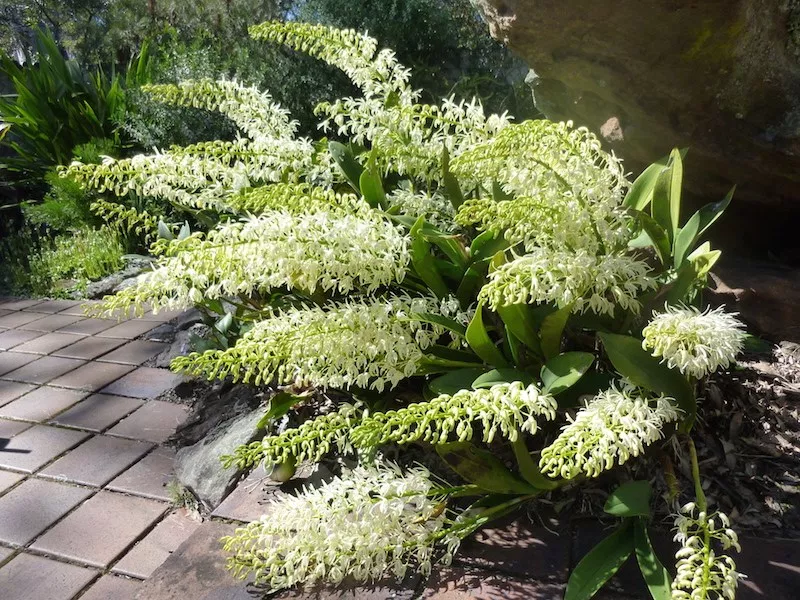
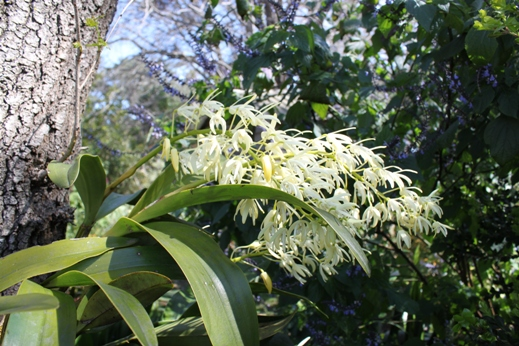
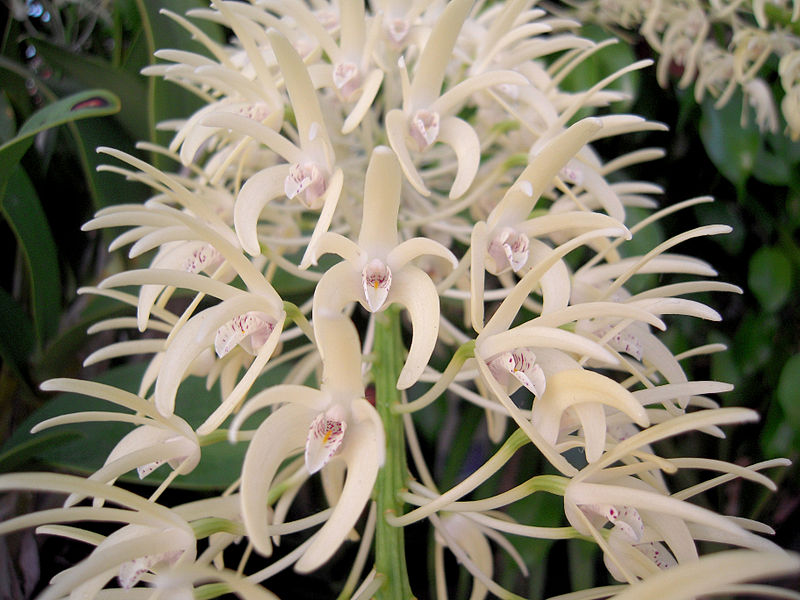
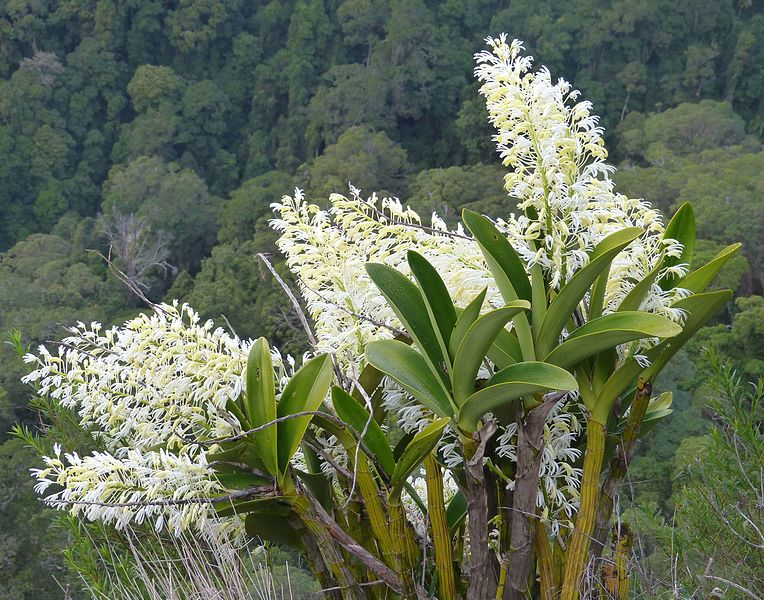
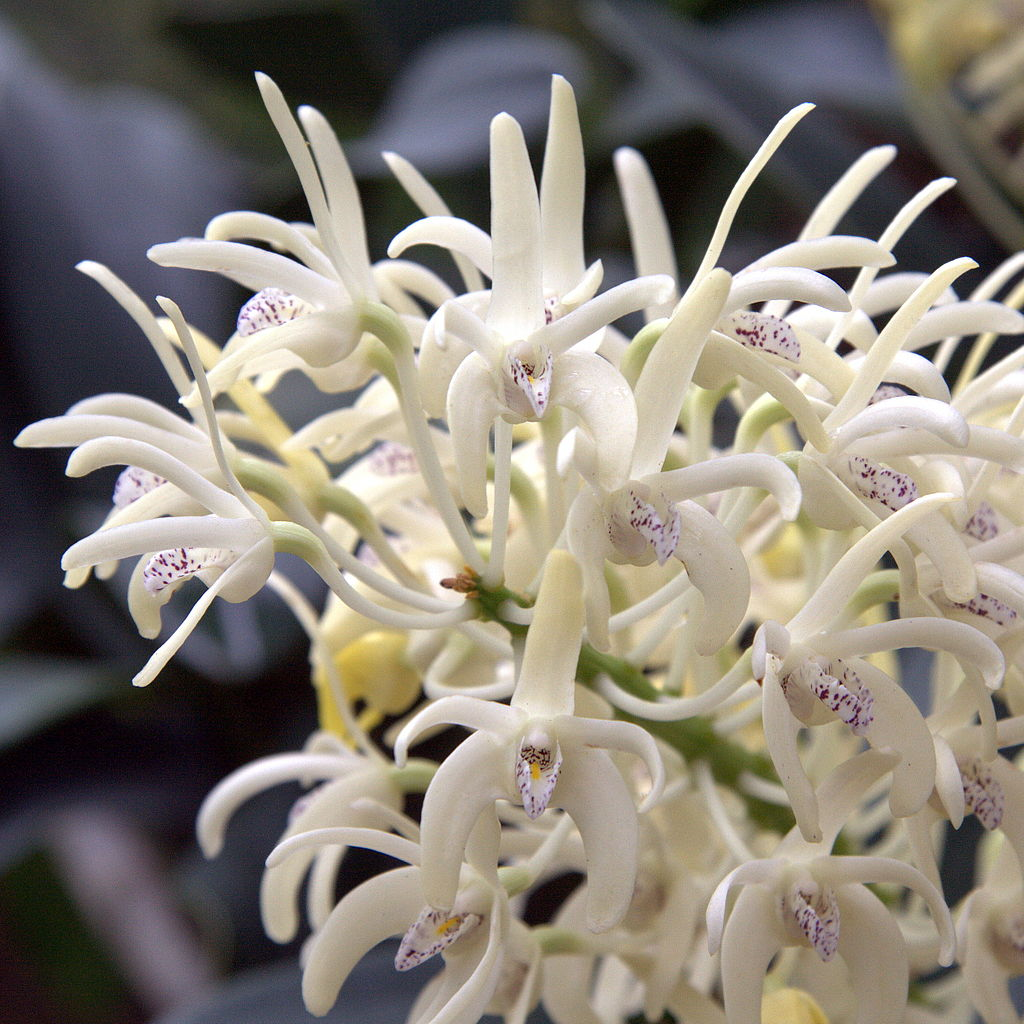
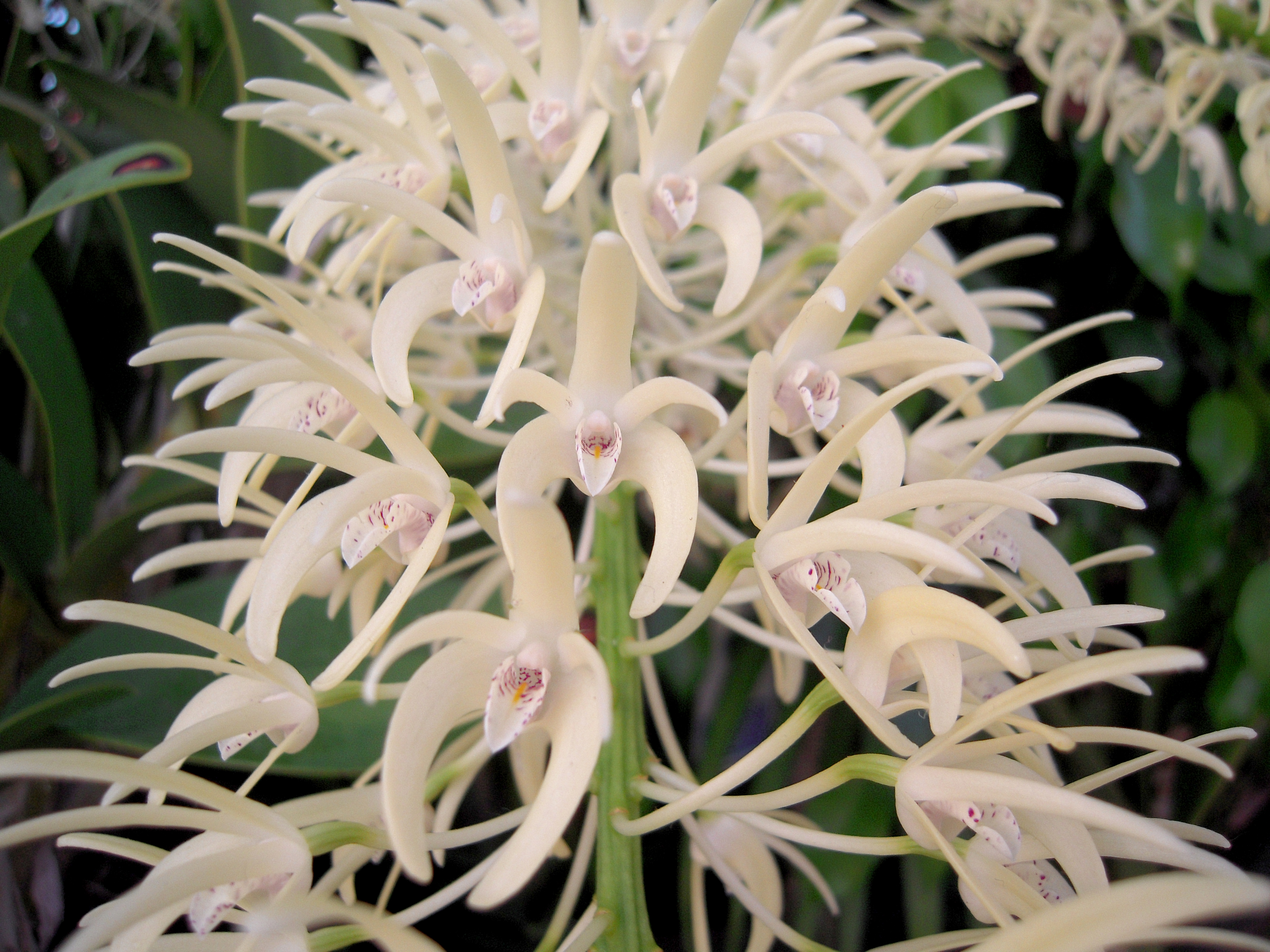
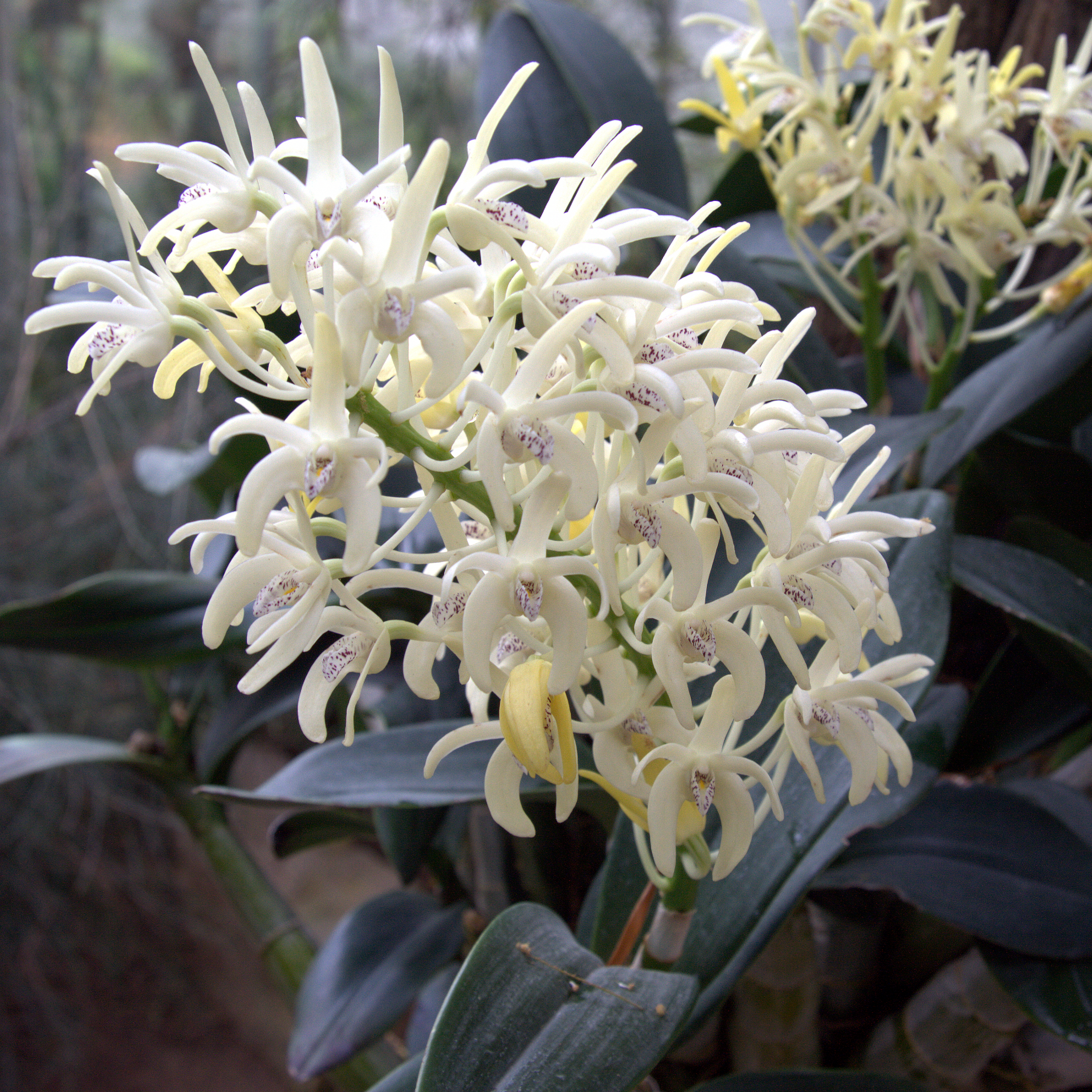
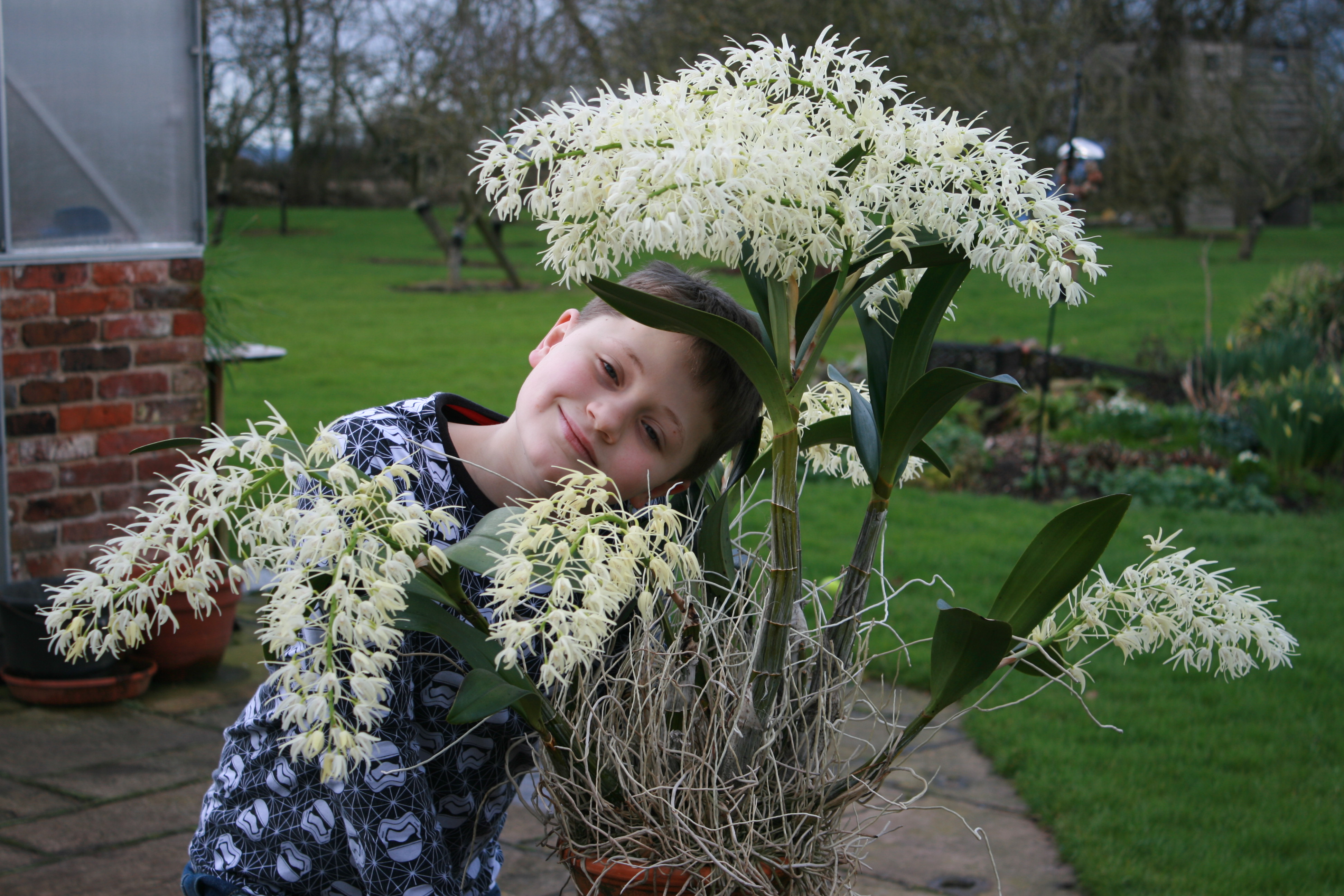
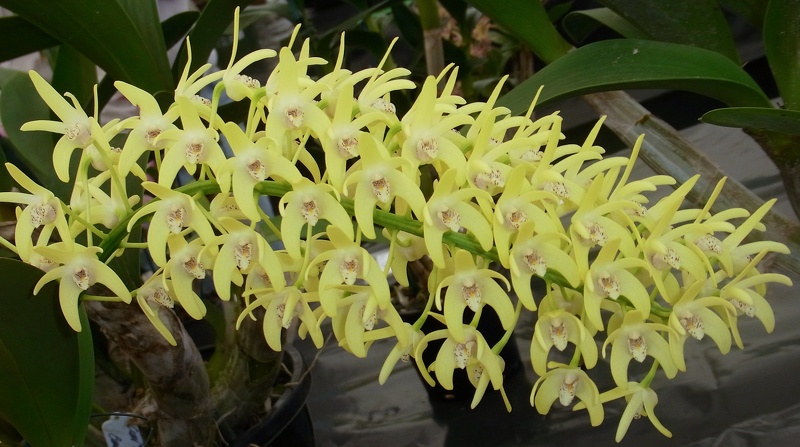
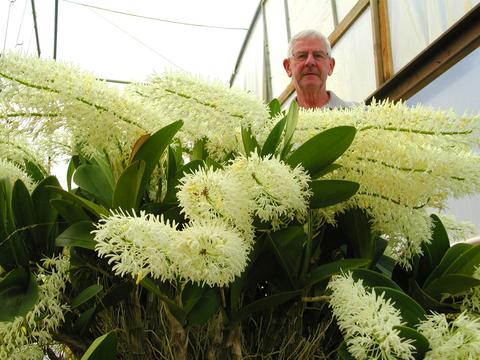
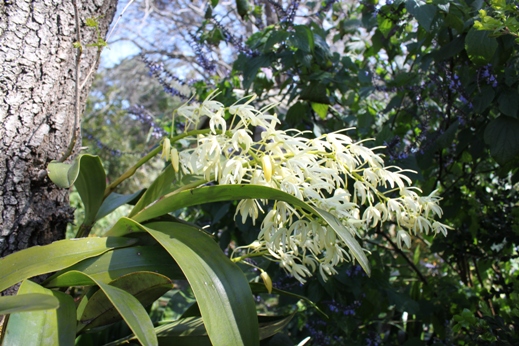
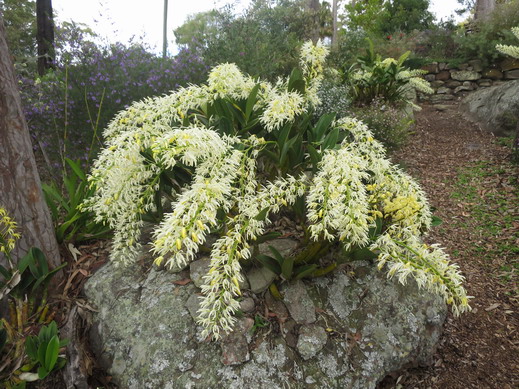
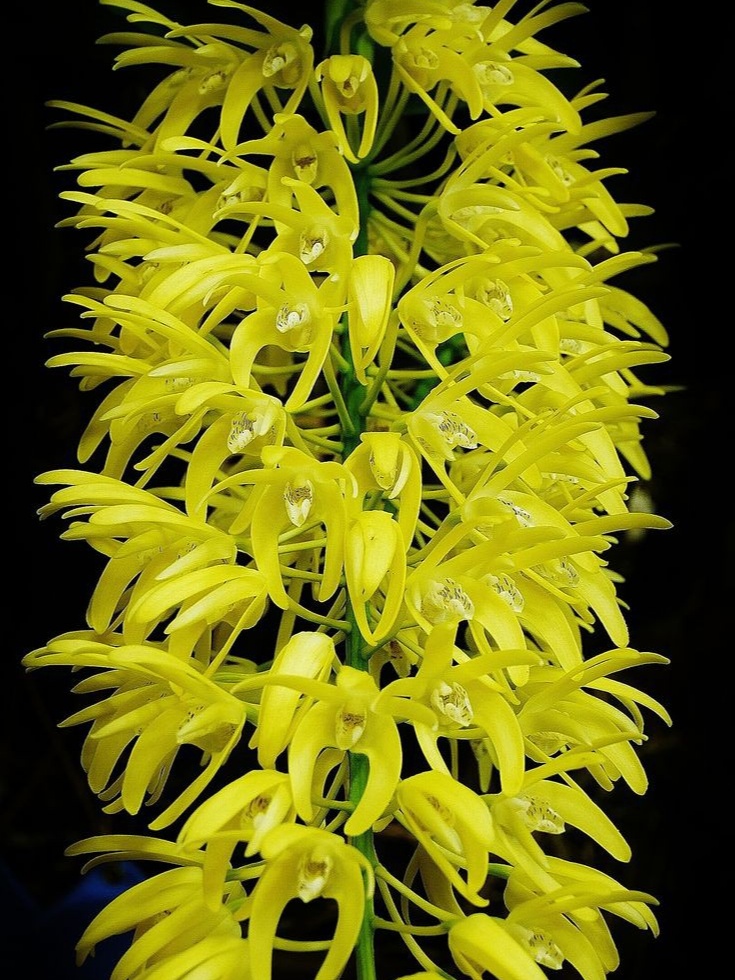
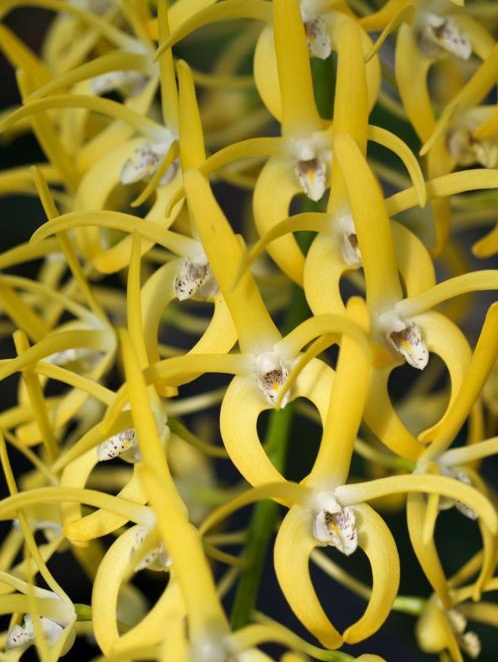
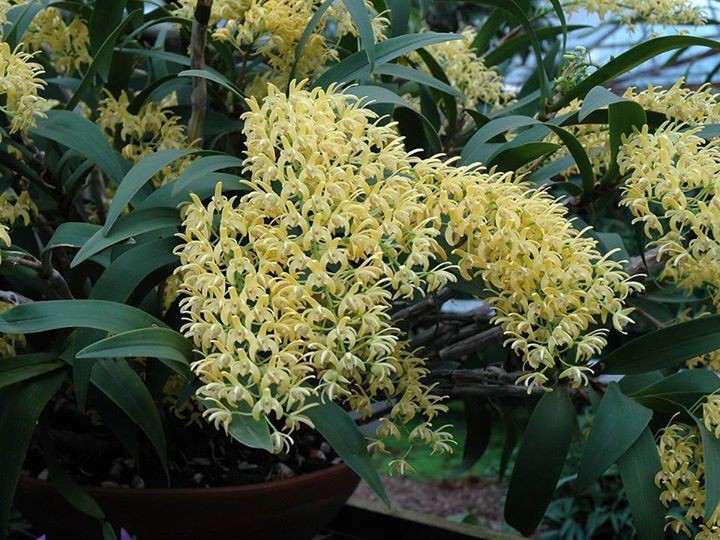
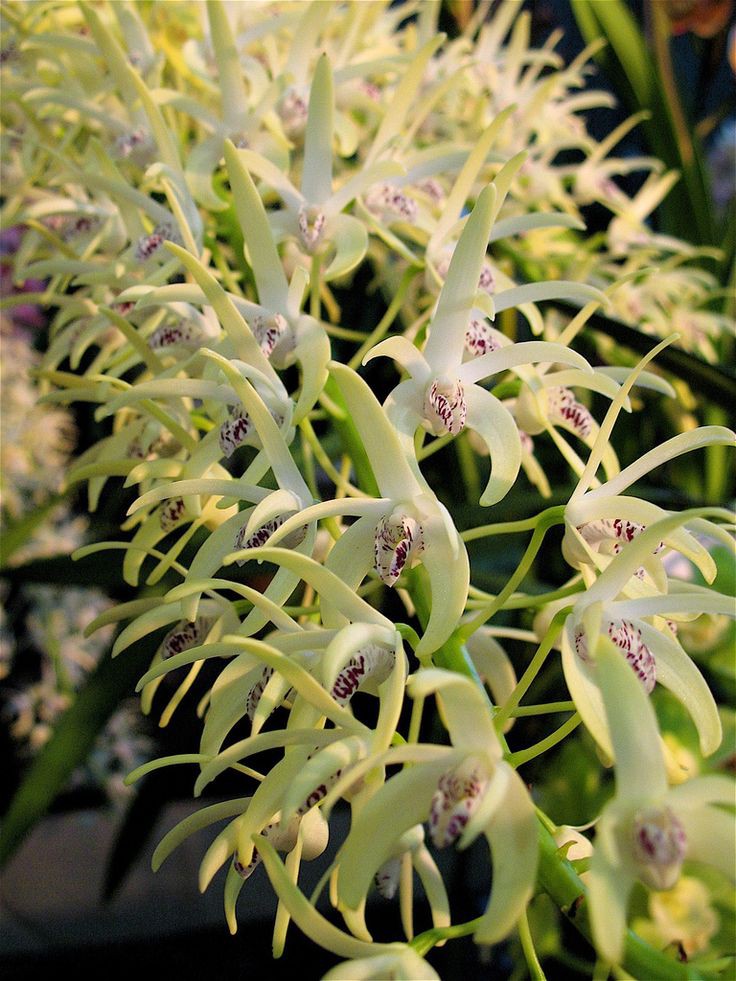
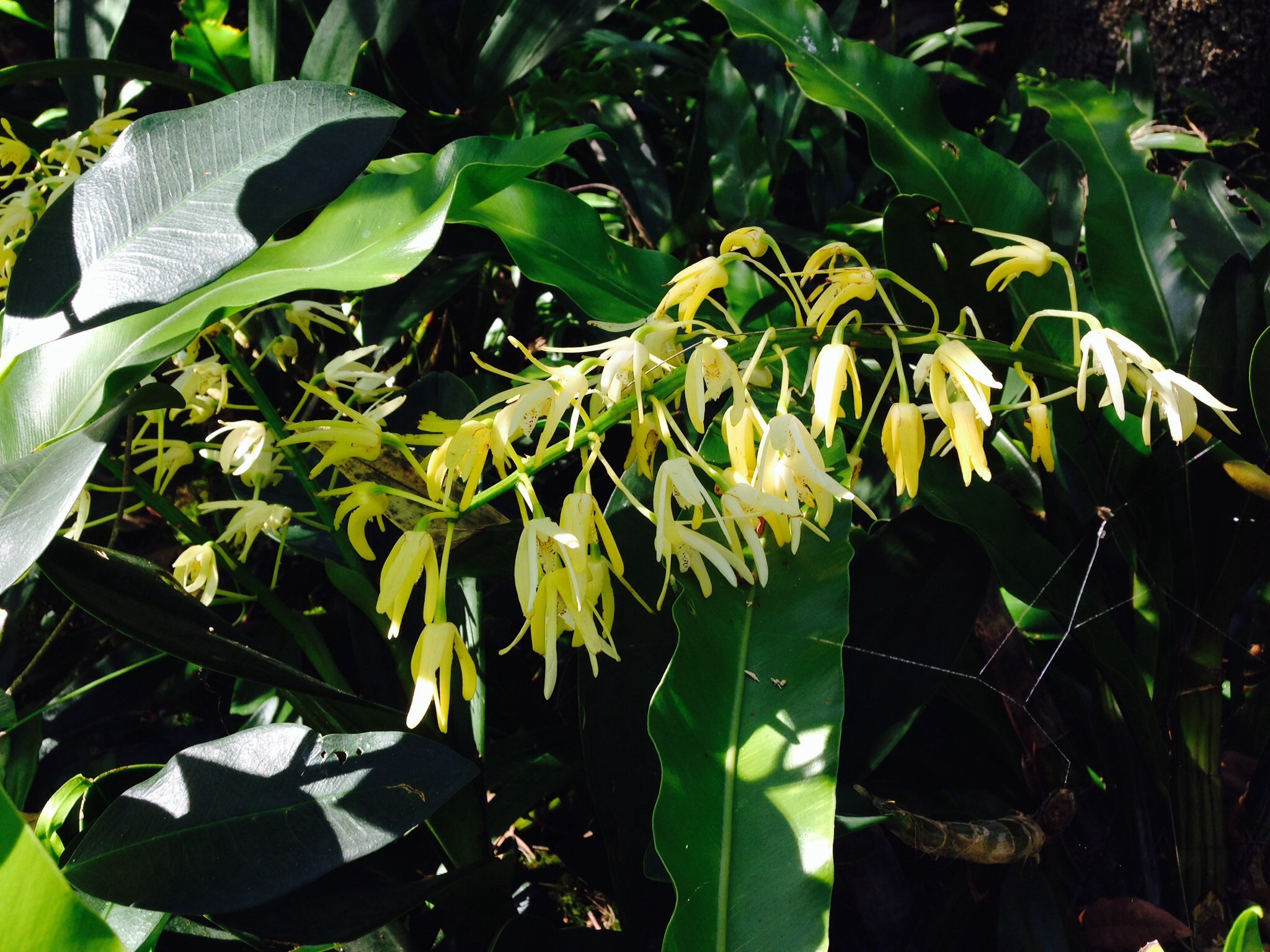
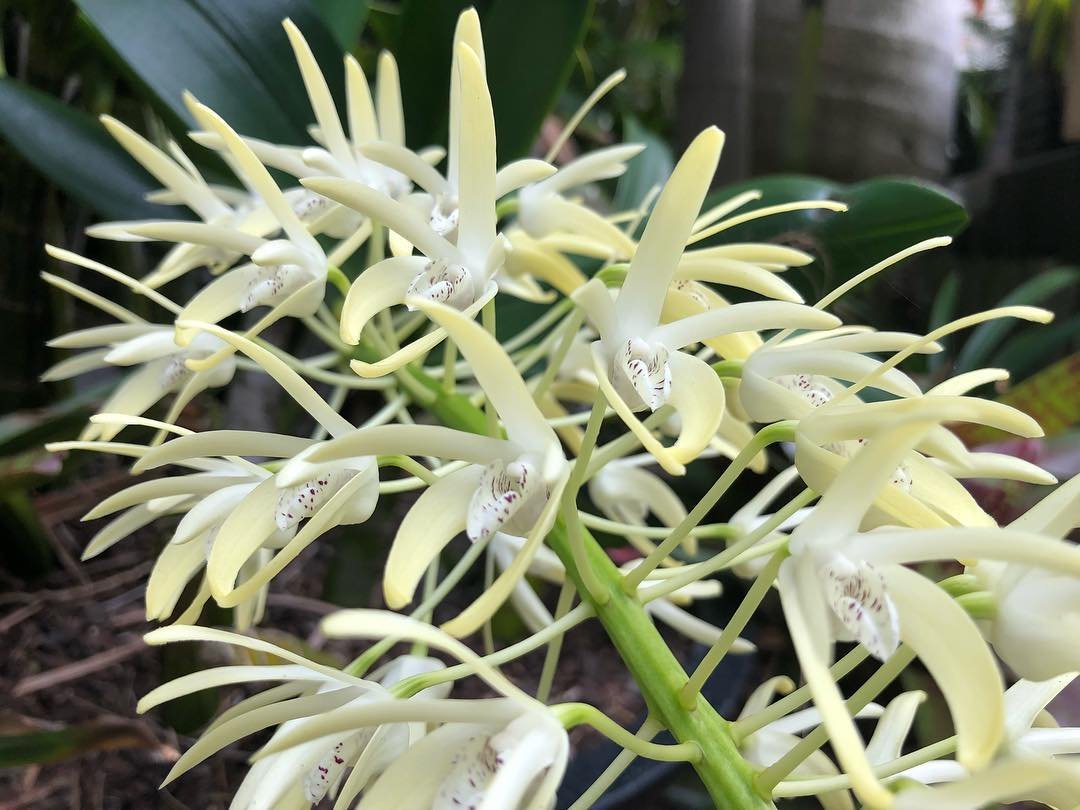
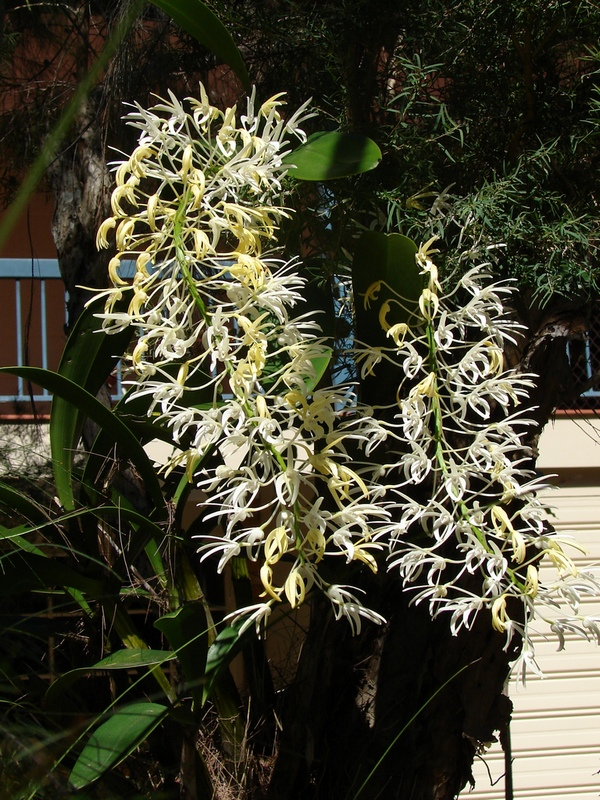
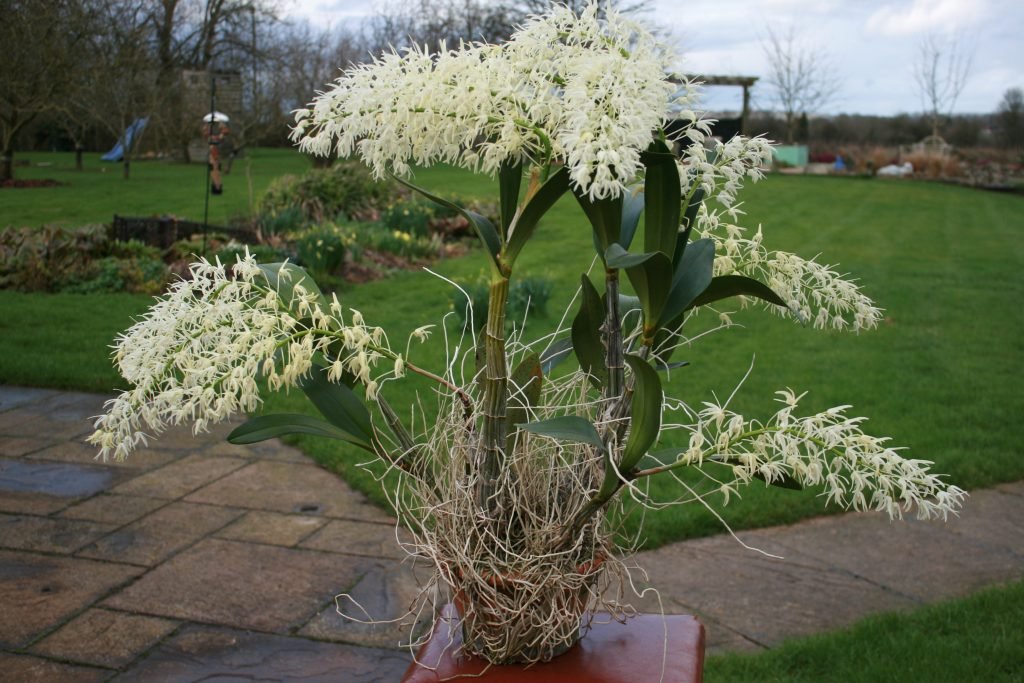
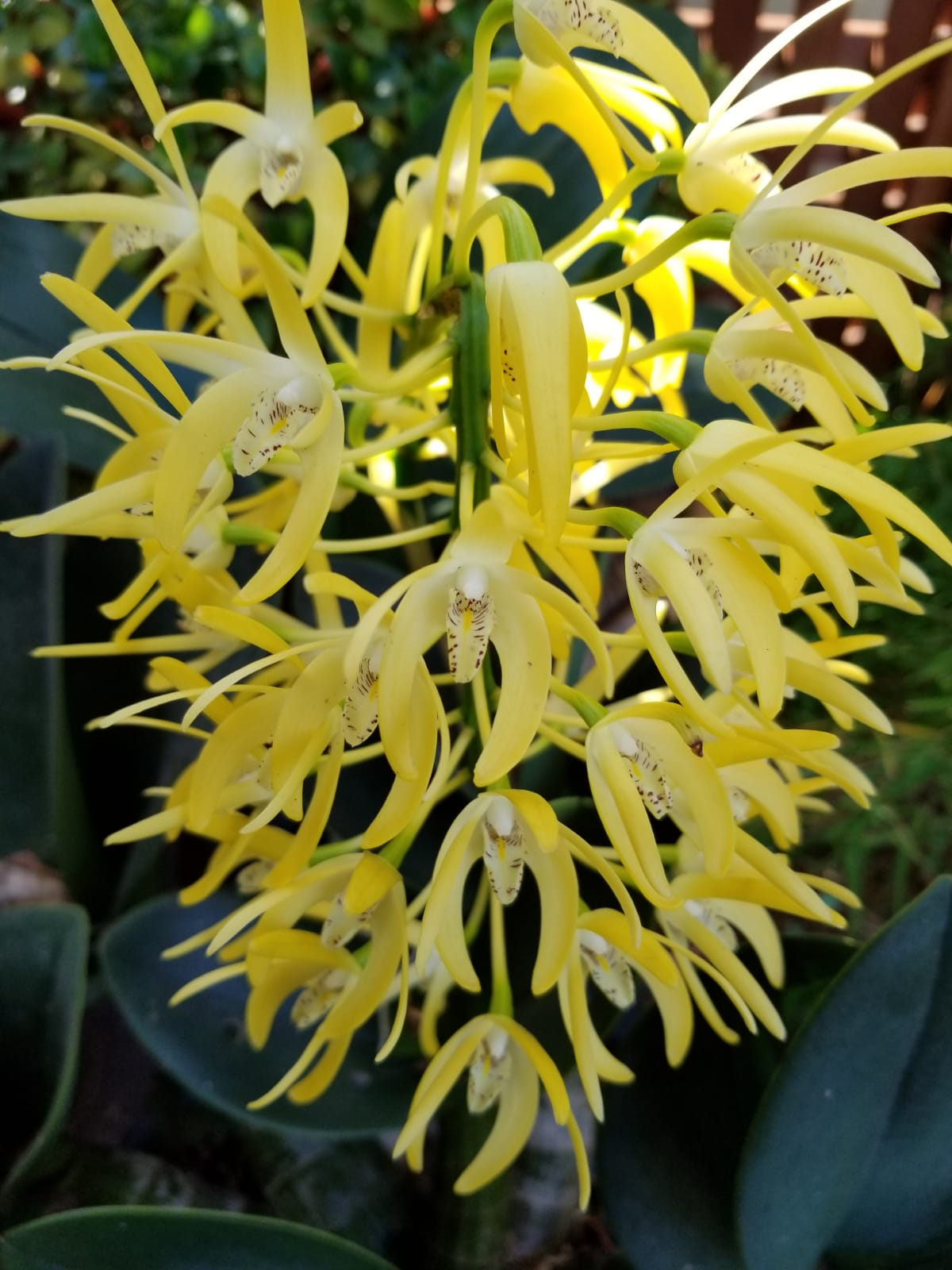
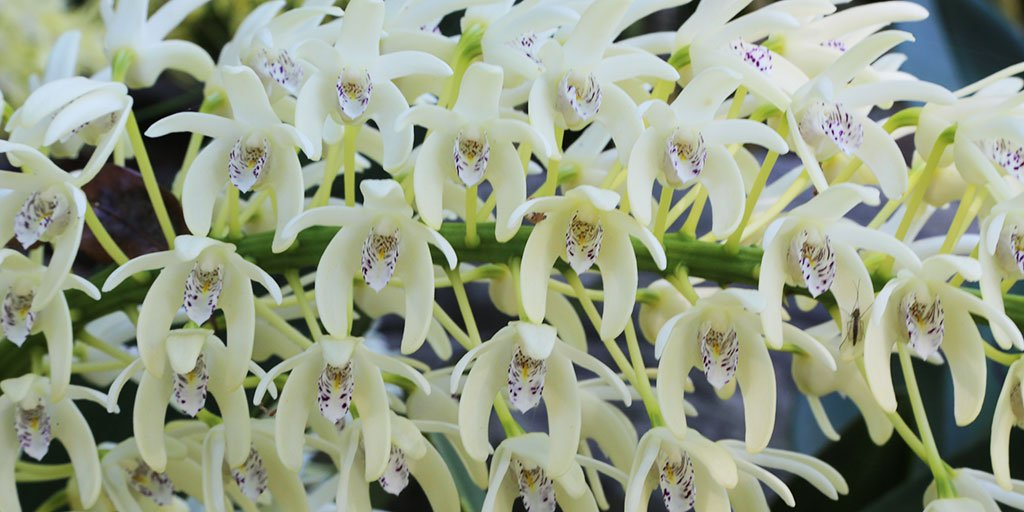
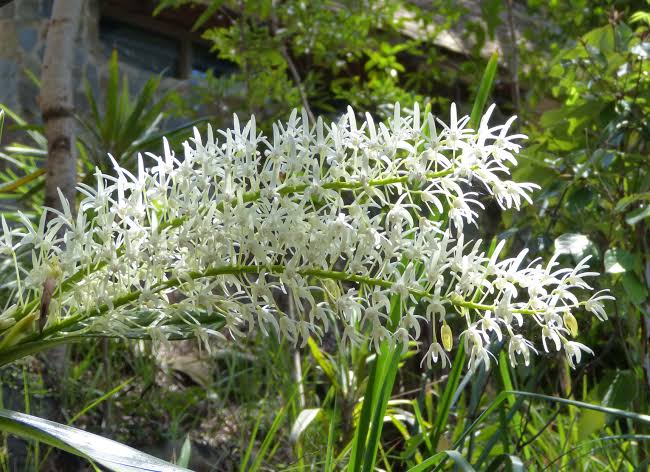
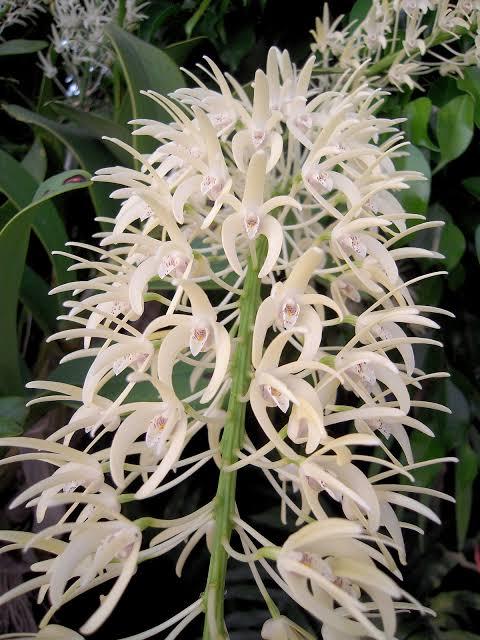
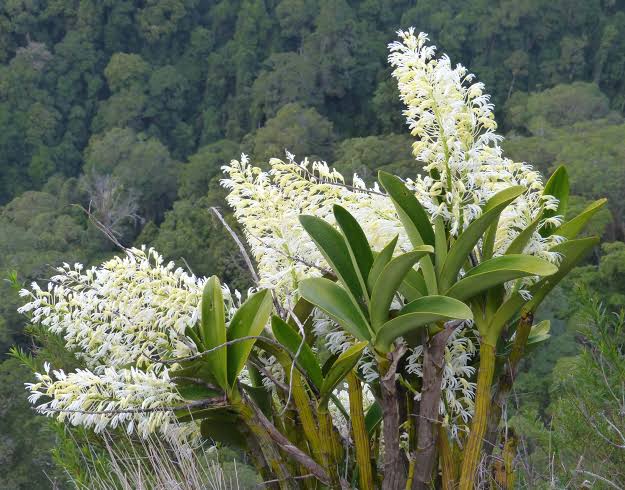
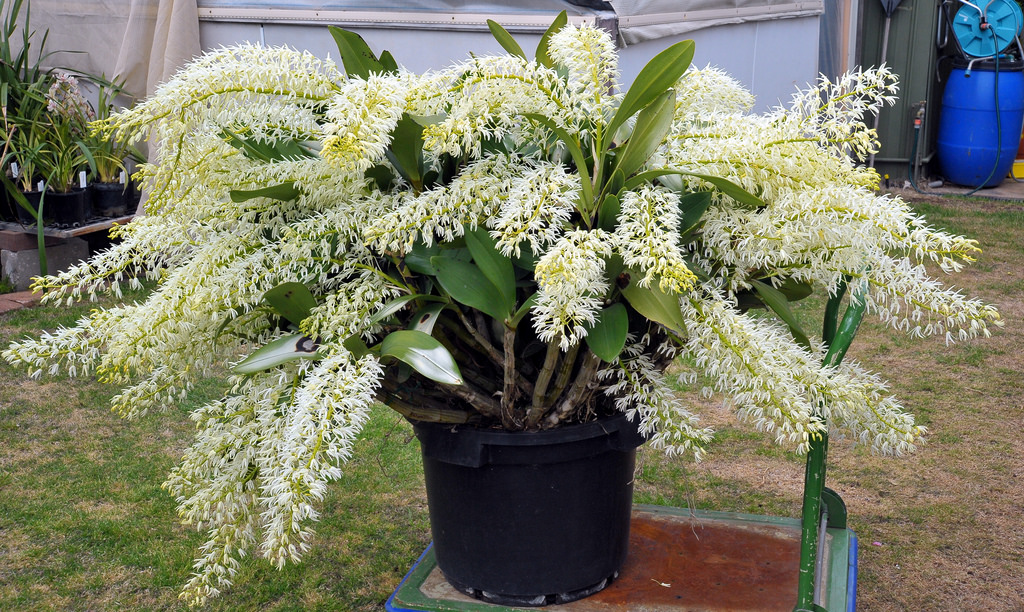
Dendrobium speciosum is the Botanical name for the Sydney Rock Orchid, and is also known as the King orchid. It is an Australian Native plant, and naturally grows over a very large area of the Continent, from cold areas with frosts in winter to warmer areas with temperatures reaching 45 degrees centigrade. In late Winter and Spring, it puts on a spectacular mass display of fragrant flowers, with the flower sprays up to 30 cm long. The plant has many sub-species, and can be quite variable in flower colour, ranging from white and creamy yellow to Golden.

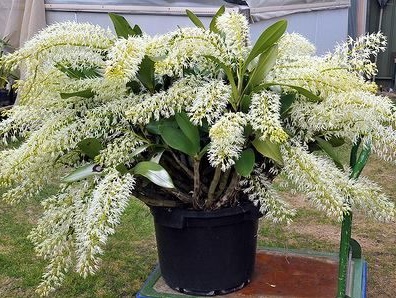
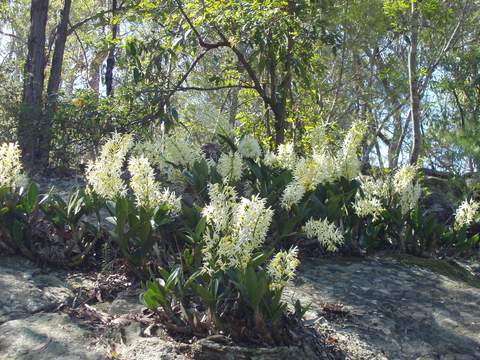
The plants will grow into large clumps, and is found growing amongst or on top of rocks in the bushland, where it is shaded by a tree canopy, in a brightly lit spot and where the roots can stay cool and get some moisture during the rain. The Sydney Rock orchid is extremely tough and will survive in droughts and it is also virtually free of pests, as the leaves are tough and leathery and not edible. They can also be grown in pots, but they require a very well-drained course orchid compost and a position where they get bright light but not direct hot sun.

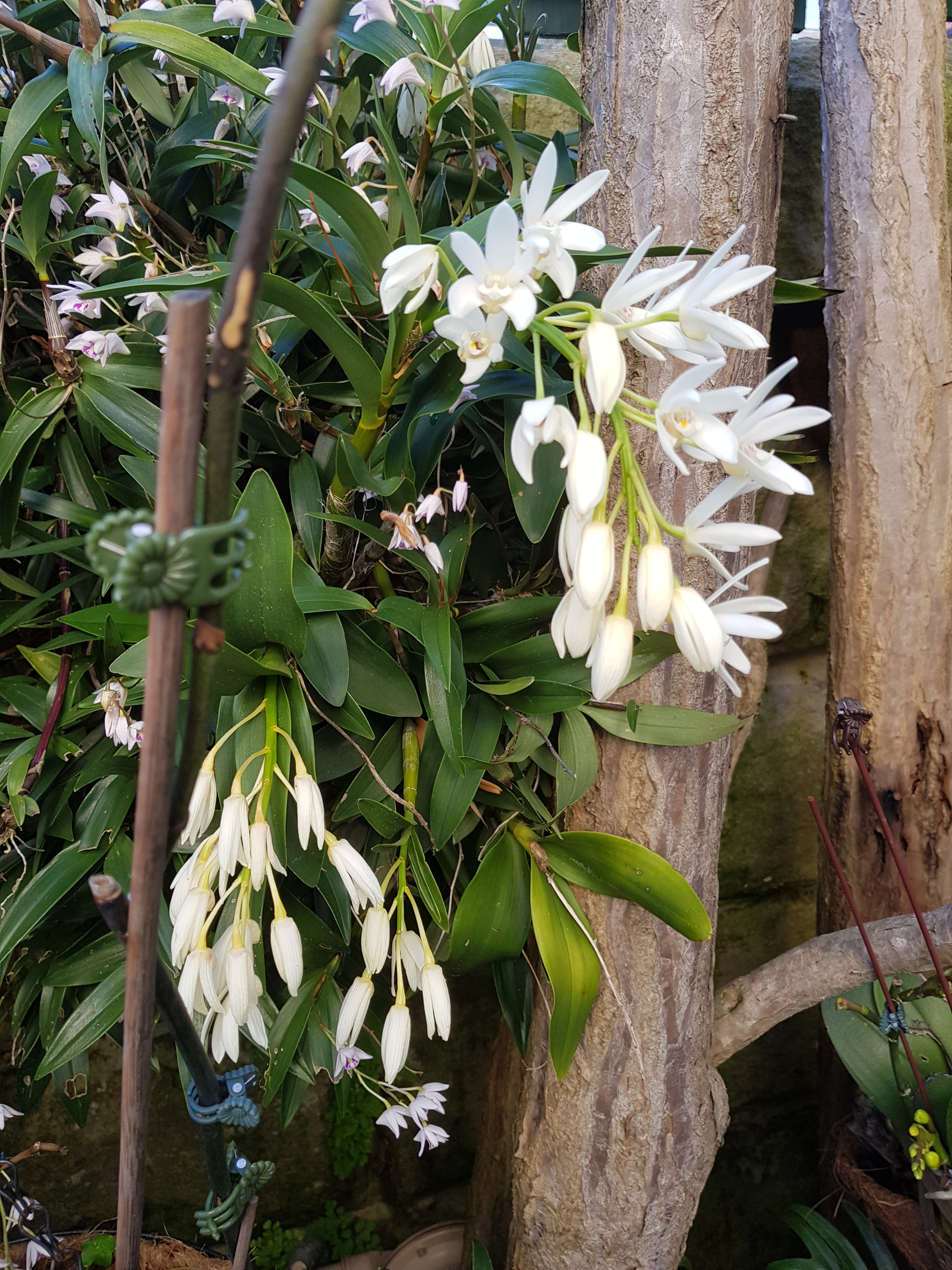
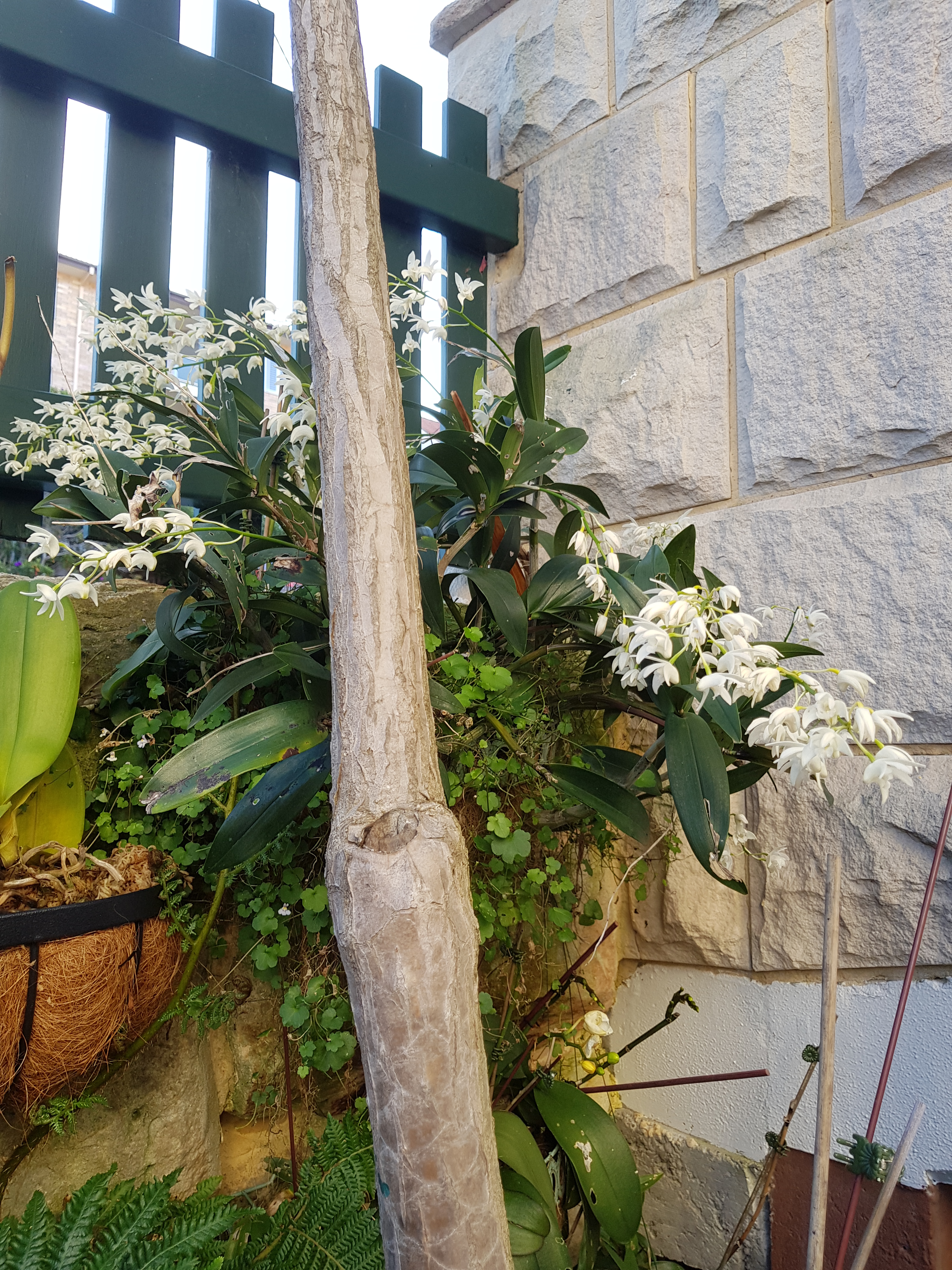
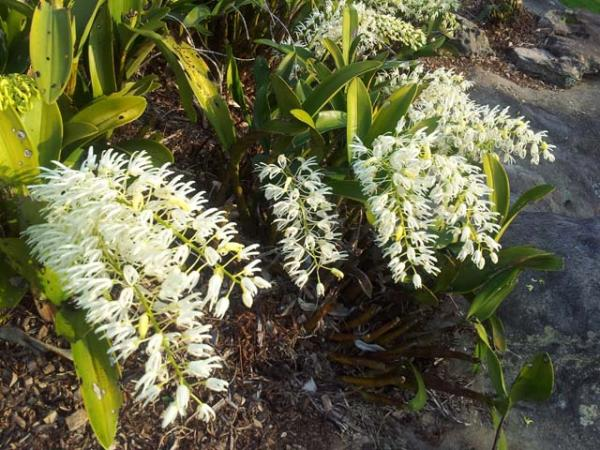
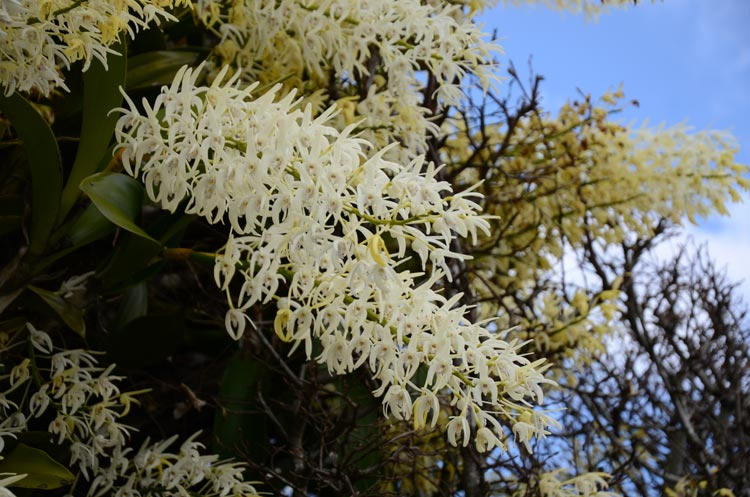
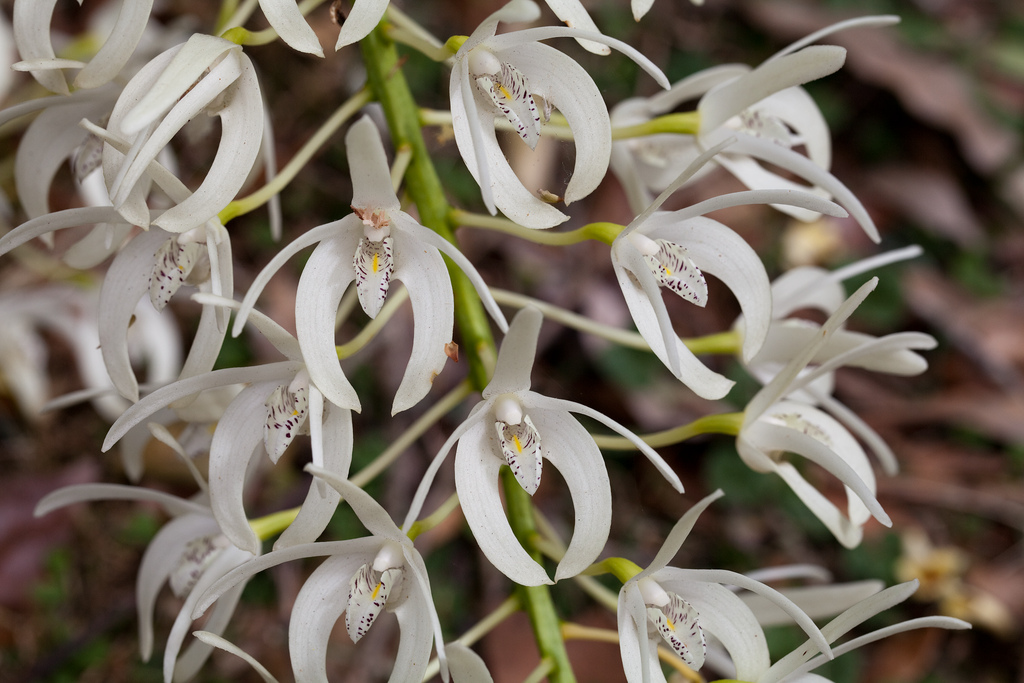
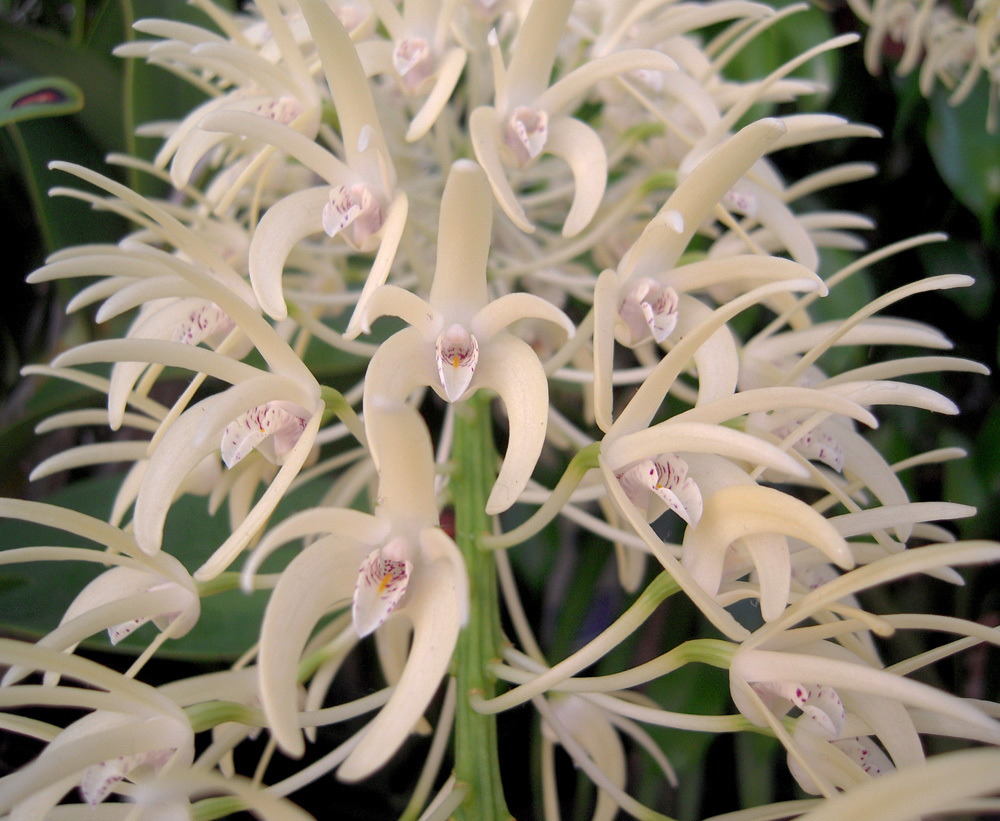
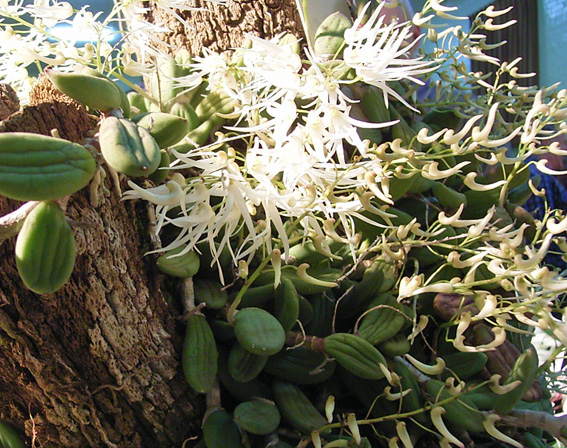
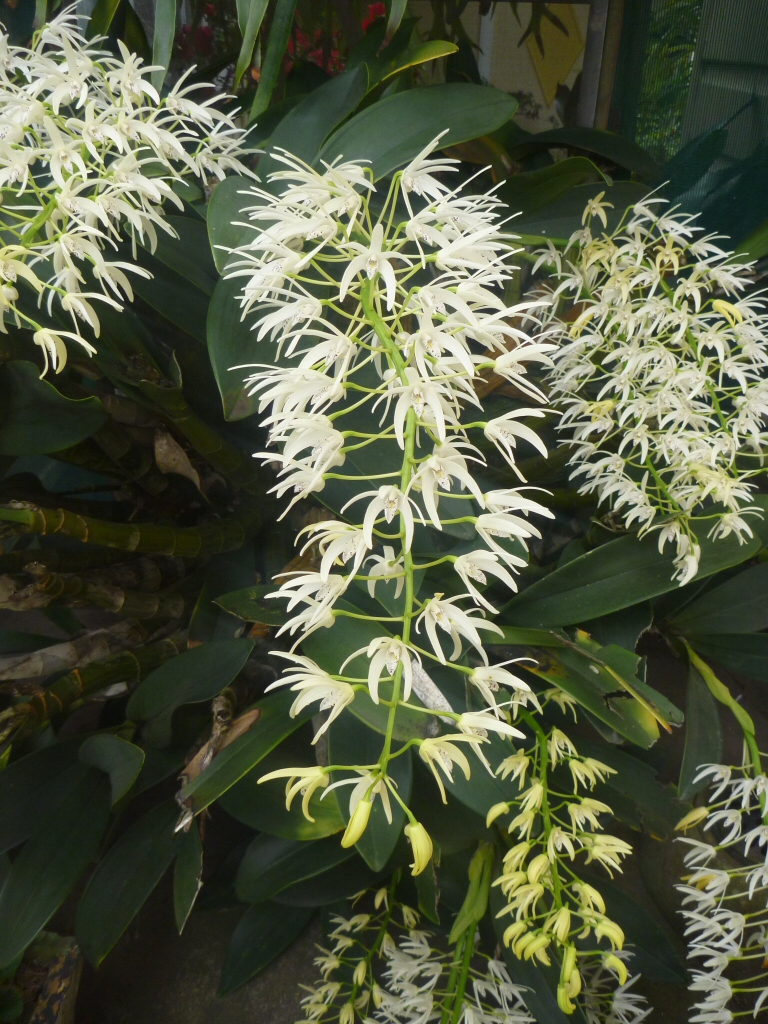
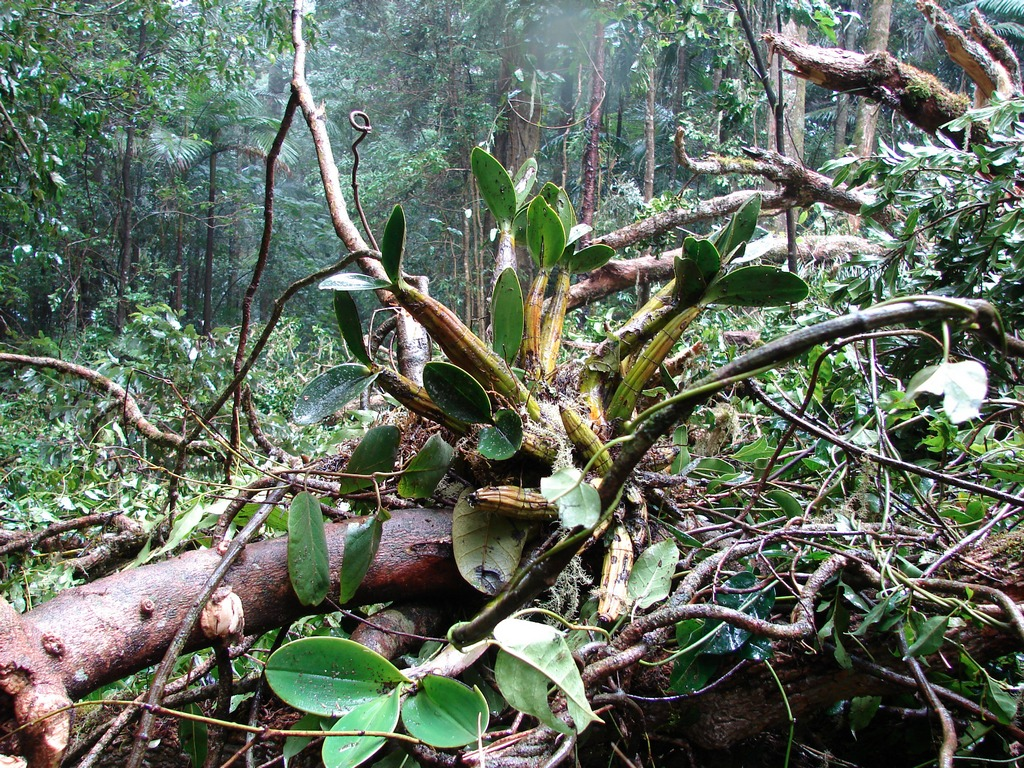
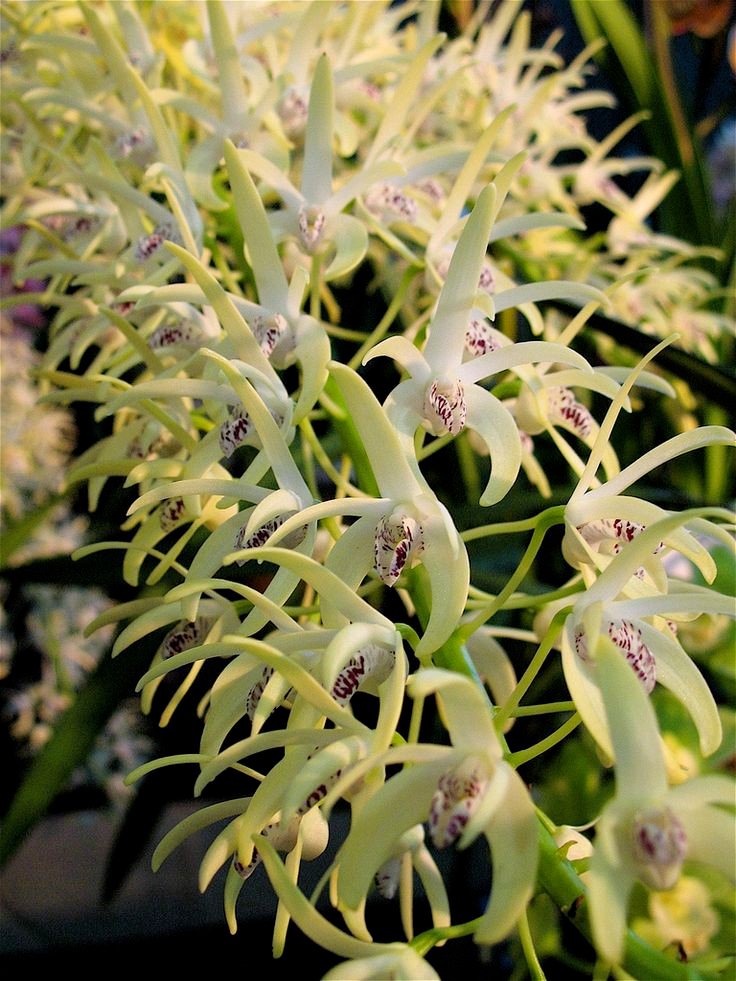
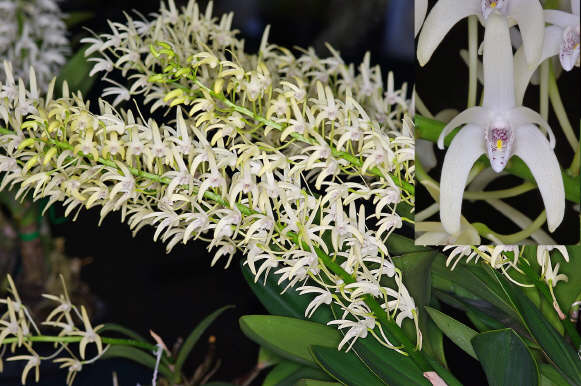
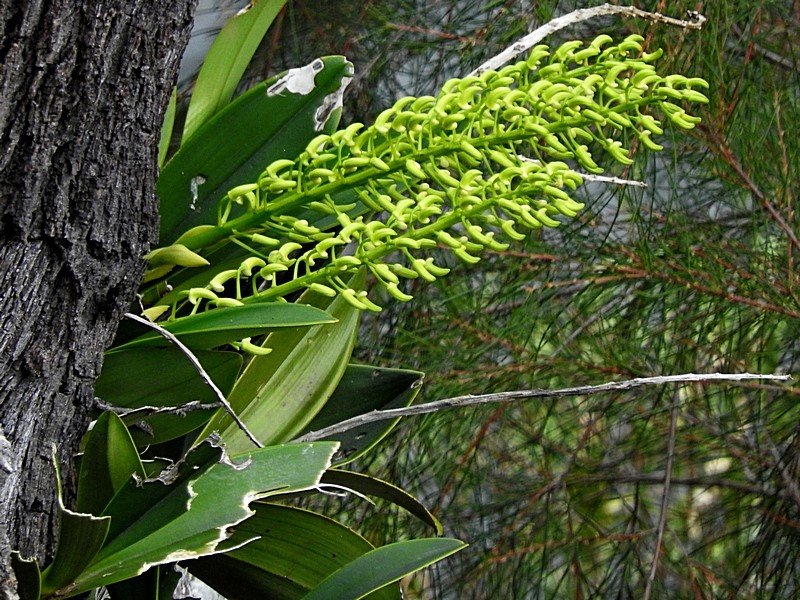
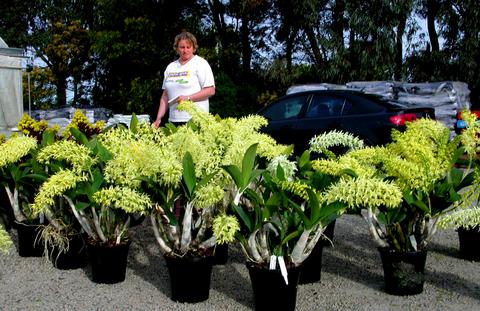
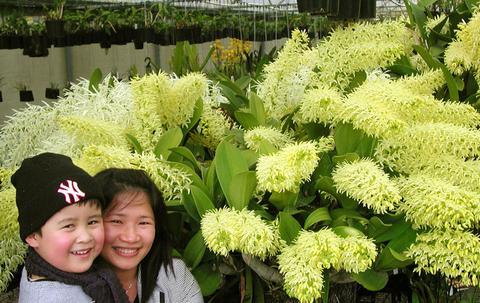
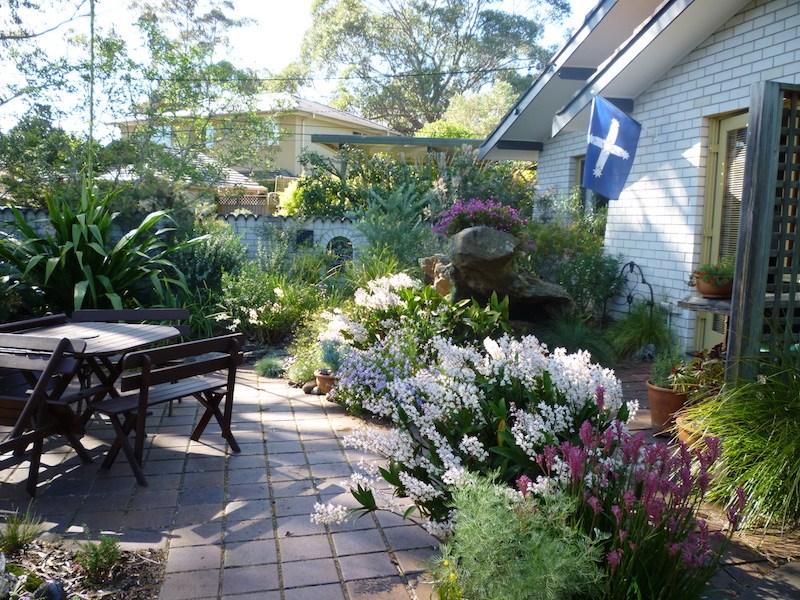
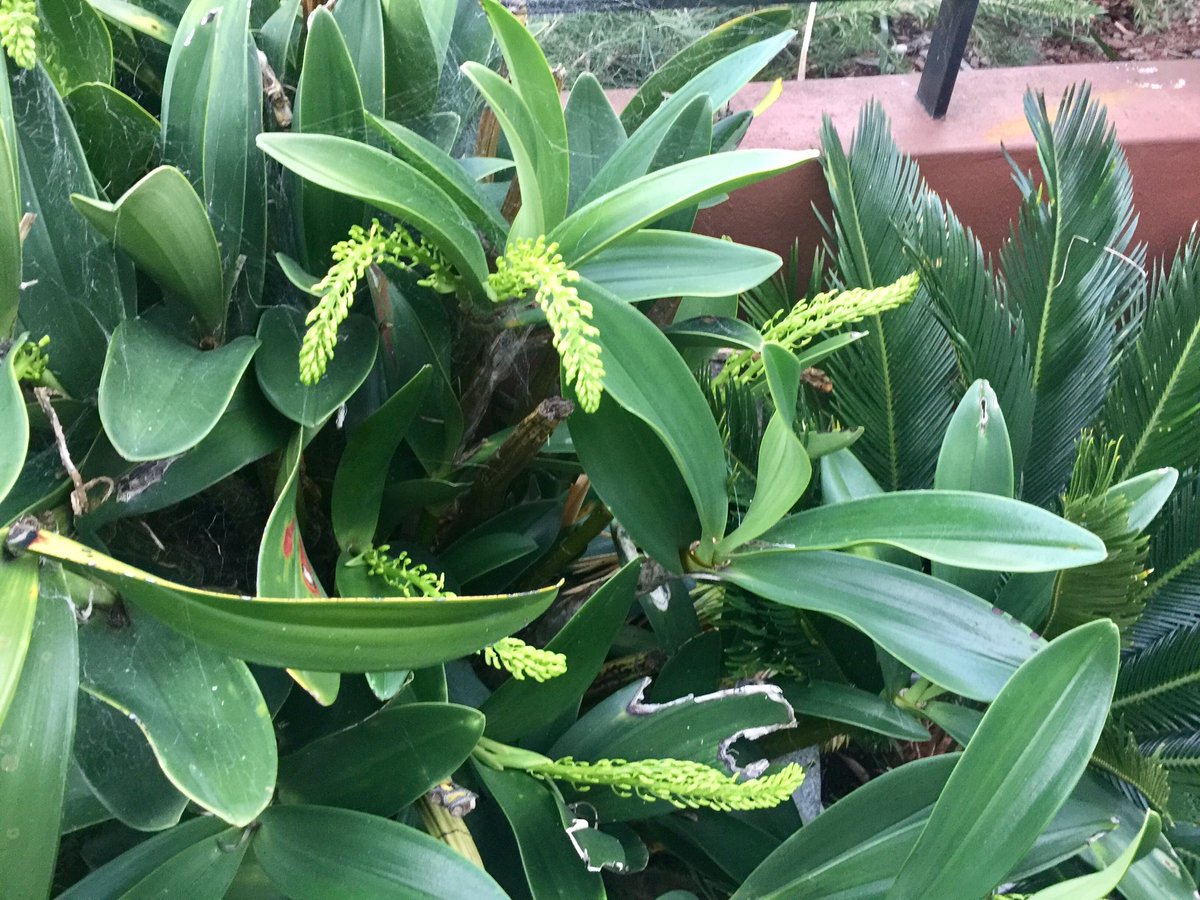
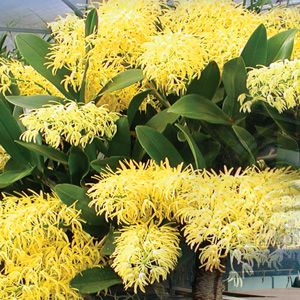
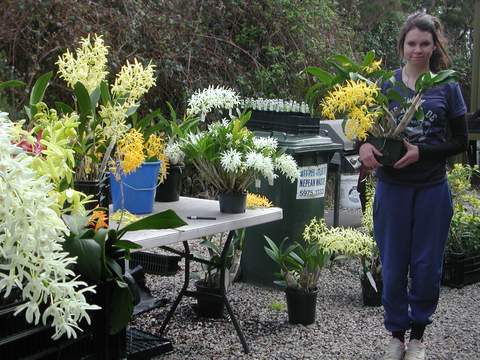
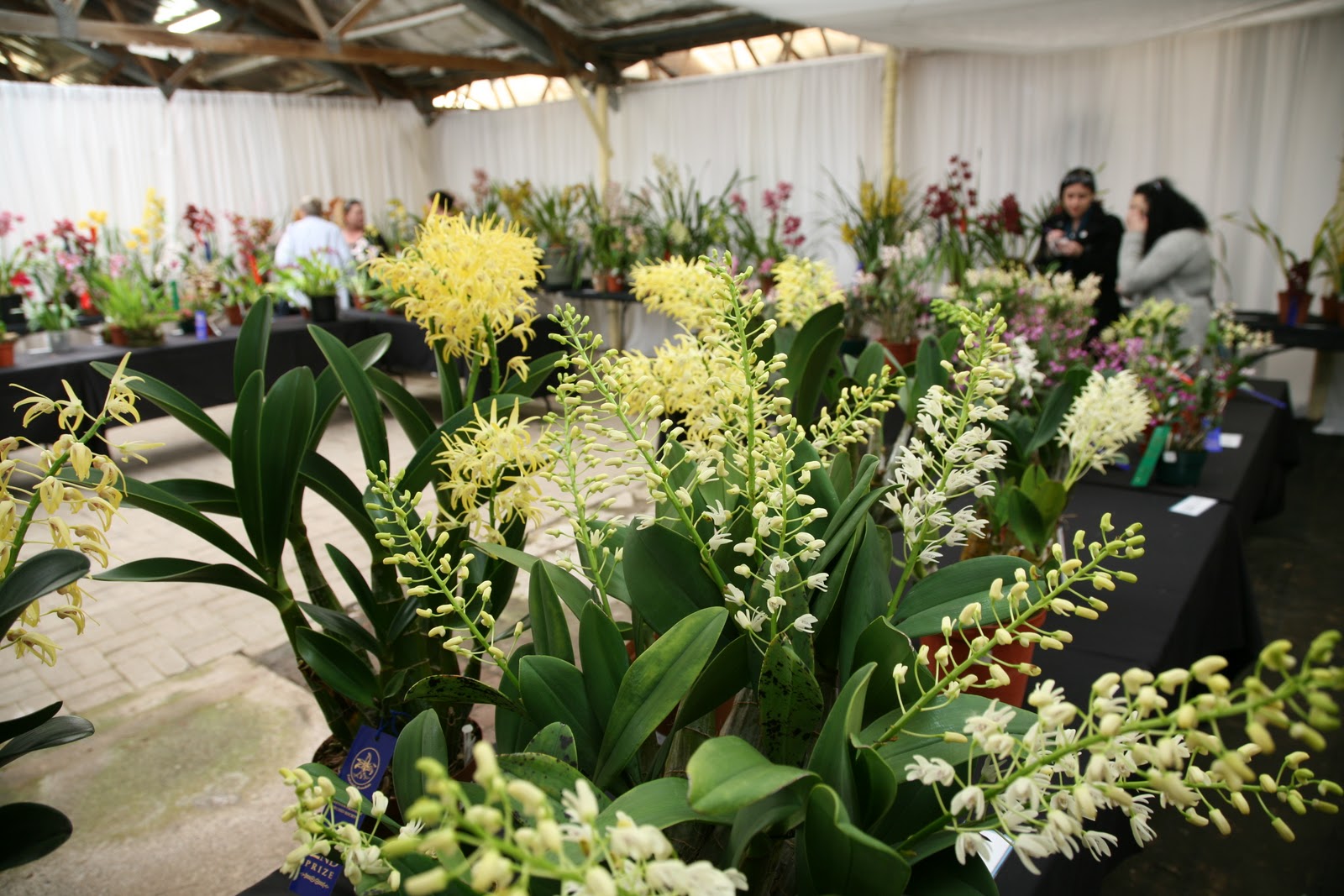
I photographed these Dendrobiums in Sydney gardens, where they are in full flower. [IMAGE: https://cdn.steemitimages.com/DQmbSzRxYuuUVkBsBDUQQuttpT26qR6fkG38CdE3oRxpD2g/new7%20062.jpg][IMAGE: https://cdn.steemitimages.com/DQmaapV3Q8SYgwiXisFcyRDorZ162GzUu8d4UeJ7FW4o9Qc/new7%20061.jpg][IMAGE: https://cdn.steemitimages.com/DQmRCXQTckJUfmFw5q2ApbeFtKg3NjKHbPFBf8aX3BwYNaU/new7%20191.jpg][IMAGE: https://cdn.steemitimages.com/DQmdDtEoHRDFP1EBdD2jrz9t8reXmKSE2ipKt1iFjtcTqKV/new7%20193.jpg]

TAGS: [ #dendrobium ] [ #orchid ] [ #plants ] [ #garden ] [ #australia ]

Replies

@love-peace | Nov. 11, 2018, 1:18 a.m. | Votes: 2 | [ VOTE ]

beautiful orchid my friend,i really like orchids @ctrl-alt-nwo

@magoo-2 | Nov. 11, 2018, 10:59 a.m. | Votes: 2 | [ VOTE ]

Magoo-2 found a series of multi accounts of a same owner is following your articles to cheat your generous rewards.

Magoo-2 found these accounts are suspicious & can be multi accounts of a single owner. Conclusion is based on last 30 days transactions:

@fadhlan86
@bobbylee
@love-peace
@gilangarif131294
@sindy2018
@zahwaawa
@atongis
@shula14
@ivanfurqanpurba
@zam398
@teungkumerdu
@domovoi
@long888
@atongis
@yadah04
@homsys

magoo-2
Check our latest multi comment spam update report

@kaminchan | Nov. 11, 2018, 1:31 a.m. | Votes: 1 | [ VOTE ]

Amazing! The King orchid! Where is the Queen orchid?! Well, who would eat orchids leaves?! Flowers, may be! Hahaha. Blow some seeds with the wind into my garden!

Have a good day!

Posted using Partiko iOS

@madushanka | Nov. 11, 2018, 1:33 a.m. | Votes: 1 | [ VOTE ]

Dendrobium speciosum is one of the world's most underrated and exciting of orchids. They are capable of producing possibly the largest display plants and most spectacular shows of mass blooming of any known orchid. Extraordinarily tough, hardy and drought tolerant it should be one of the most cultivated plants ever! It can tolerate near frost to temperatures over 45°c without severe damage.

[IMAGE: https://cdn.steemitimages.com/DQmTGm3UbgwiofyJxUh3Bwg9icjcetF2bJrrcaT91VDBWPF/image.png]

[IMAGE: https://cdn.steemitimages.com/DQmNX7BsHH361fCfw79EzonLtLbaZgfZbF1Shtq8MrMnhM7/image.png]

This orchid is native to a vast section of Australia ranging from Mallacoota (37°33'S) in South-East Victoria to the tropical conditions up past Cairns (16°57′S). Because it is found over such a vast region, botanists have broken the species apart into many subspecies or varieties. It seems every few years they change names again, so we will mainly use the oldest and most accepted names in this guide.

[IMAGE: https://cdn.steemitimages.com/DQmXYSkoGLK9CVDTEsDogjUhPCC1LMiUQZhvonF8pGeSnBw/image.png]

In almost every occasion I have seen this orchid in the wild, it is growing on granite cliff faces or boulders in open grassy paddocks. The photo below shows just how open bright and exposed these magnificent orchids require. They are huge growers, so in time they may require a giant tub or preferment position in the garden.

[IMAGE: https://cdn.steemitimages.com/DQmXRackT8r6RefAWzEdSLSDQxtCD6T6qQvJE5DvMuUNBoy/image.png]

Source: https://www.australianorchids.com.au/pages/dendrobium-speciosum-the-sydney-rock-orchid

@fun2learn | Nov. 11, 2018, 1:37 a.m. | Votes: 1 | [ VOTE ]

I am your regular supporter of your posts. It is great to see photographs of nature. Nature brings the wonderful inner peace. You are always able to take sharp and clear details of plants from nature.

@pardeepkumar | Nov. 11, 2018, 2:23 a.m. | Votes: 2 | [ VOTE ]

This is beautiful flower plant for home garden. Creamy shade flowers are looking very nice. Green and cream color is best combo . Thanks

@spiritualpower | Nov. 11, 2018, 2:45 a.m. | Votes: 2 | [ VOTE ]

King orchid is very suitable name for it. Dark green and cream color shades makes this plant king . Good plant for everywhere planting. Thanks

@magoo-2 | Nov. 11, 2018, 11:03 a.m. | Votes: 2 | [ VOTE ]

magoo-2 found a series of multi accounts of a same owner is following your articles to cheat your generous rewards.

magoo-2 found these accounts are suspicious & can be multi accounts of a single owner. Conclusion is based on last 1 year transactions:

@sthitaprajna
@crypto-wisdom
@shivohum2015
@spiritualpower

magoo-2
Check our latest multi comment spam update report

@manishkalia | Nov. 11, 2018, 2:54 a.m. | Votes: 1 | [ VOTE ]

White and cream shade flowers plant are always good choice for planting . Many peoples loves this shades . Rock orchid is a good plant for home garden. Thanks

@funtraveller | Nov. 11, 2018, 3:09 a.m. | Votes: 1 | [ VOTE ]

I simply couldn't get enough of these beautiful gifts from nature ~ Orchids. It's astounding that there are around 20,000 - 30,000 species of orchids and they look amazing to say the least.

I've been to Singapore gardens & Botanical gardens and I have never seen anything similar with Sydney Rock Orchid. Though the leaves are quite similar to other orchid species, the stem seems unique with how it sprays up and shows its beautiful flowers.

Thanks for sharing :)

@bankthecrypto | Nov. 11, 2018, 4:04 a.m. | Votes: 5 | [ VOTE ]

It is the king 👑

@dragonking | Nov. 11, 2018, 4:30 a.m. | Votes: 1 | [ VOTE ]

[IMAGE: https://cdn.steemitimages.com/DQmP4hSAcfsgoFQ3GNds6557QK3AYNnbD9DordgY1TNL3Xv/image.png]

[IMAGE: https://cdn.steemitimages.com/DQmZGFBgXzDsMYCSkxTqhNFqmDTBM6pKK7euhZLrjPGQWw4/image.png]

[IMAGE: https://cdn.steemitimages.com/DQmVTanUzq8d4H2H34xKsSkiGbejqTgJ9QJSXYZitEAvyzk/image.png]

[IMAGE: https://cdn.steemitimages.com/DQmQDkKMM1AnZNadW2875zAvtBM43Abby3MUPXfu6q8Tk3N/image.png]

Dendrobium speciosum, or rock lily, is a popular and easy to grow Australain native orchid. It bears showy racemes of cream flowers sometimes with purple spotted throats in spring. It naturally grows as a lithophyte, growing on rocks, or sometimes as an epiphyte, growing on the trunk or branches of trees. It is not well adapted to growing well in normal soil, so should be grown in a position that is similar to the natural conditions. It can be grown in a pot with a good orchid mix and can also be attached to logs.

https://www.gardeningwithangus.com.au/dendrobium-speciosum-rock-lily/

@ctrl-alt-nwo | Nov. 12, 2018, 10:43 p.m. | Votes: 1 | [ VOTE ]

Fav. comment Award ! Thanks for the great Pics.

@sgbonus | Nov. 11, 2018, 4:46 a.m. | Votes: 1 | [ VOTE ]

Dendrobium is a large genus with around 1400 species spread throughout Asia and the Pacific. Australia has about 56 species, many of which are cultivated. Considerable hybridization has been carried out within the genus to produce improved horticultural forms and a number of naturally occurring hybrids are also in cultivation.
[IMAGE: https://cdn.steemitimages.com/DQmV24gcH1xAUhfHznZcdur3hTveFWQd2YAJHLVLbYFN3cX/image.png]
Major taxonomic revision of the Dendrobium group has occurred in recent years with many species being transferred to new genera. Some of these changes have been reasonably widely accepted (eg Dockrillia) while the status of others is less certain. The various forms of Dendrobium speciosum have been transferred to the genus Thelychiton by some authorities but the earlier name is retained here until the taxonomic situation becomes more clear.

[IMAGE: https://cdn.steemitimages.com/DQmRaxLPgLn1qh6aZ47Byfcvae7gx14GzUJftqQGiH1SYPe/image.png]

Dendrobium speciosum is a lithophyte (growing on rocks) or an epiphyte (growing on another living plant, but not parasitic in nature). Pseudobulbs are up to 45 cm long, erect or spreading, thickest near base and often tapering towards the apex. There are usually 2 to 5 thick leaves at the top of each pseudobulb. Flowers occur on long stems in large clusters which may consist of over 100 flowers per stem. They are usually pure white to creamy yellow with purple dots on the labellum. Flowers are seen from late winter to spring.

[IMAGE: https://cdn.steemitimages.com/DQmNUGwpjNi8pjYgTr6j34A5iGfKXD1KXCe2Z4hKUcqknTn/image.png]
There are a number of different form and varieties of Dendrobium speciosum which will become new species under the taxonomic revision. The most commonly encountered are D.speciosum var.speciosum and D.speciosum var.hillii. The later is now regarded as Dendrobium tarberi by many authorities and differs from D.speciosum var.speciosum in having longer, untapered pseudobulbs and is more commonly found growing on trees.
[IMAGE: https://cdn.steemitimages.com/DQmXYSkoGLK9CVDTEsDogjUhPCC1LMiUQZhvonF8pGeSnBw/image.png]
D.speciosum is popular in cultivation and is easy to grow in tropical to temperate climates. It can be grown on branches of trees or on rocks where it receives nutrients through the break down of leaf litter that accumulates around its root system. While the plant is establishing its root system, it may need to be fixed into position by wire or twine. Eventually new roots will form which will grip the substrate firmly. The plant should not be planted directly into soil as the root system is not adapted to constant moisture.

[IMAGE: https://cdn.steemitimages.com/DQmQLXf9kSNSXRb2FoJ7EB9tbTxMDnHoqom47gZ1eApf4gW/image.png]
Sources123456

@lararose | Nov. 11, 2018, 4:52 a.m. | Votes: 2 | [ VOTE ]

Dendrobium speciosum

https://cdn.shopify.com/s/files/1/0757/0243/products/Copy_of_DSCN2493_large.jpg?v=1516410953

Dendrobium speciosum, commonly known as the Sydney rock orchid or rock lily,[2] is a highly variable Australian native orchid that forms a species complex. Its varieties can be found in a range of habitats as an epiphyte (on branches or trunks of trees) or a lithophyte. It has a continuous distribution along the east coast of Australia and in distinct populations along the Tropic of Capricorn. As a lithophyte, it forms gigantic spreading colonies on rocks and cliff faces, often exposed to full sun, with its roots forming dense, matted beds across the rock that anchor the plant. It can be found at altitudes from sea level to 900 metres (3,000 ft).

https://cdn.shopify.com/s/files/1/0757/0243/products/twitter_large.jpg?v=1516411016

Description
There are two to five thick, leathery leaves originating from the top of each pseudobulb. These leaves can remain on the plant for up to 12 years. The erect or curved pseudobulbs are large, up to 45 cm (18 in) long. They are thickest at their base, measuring 5 to 7 cm (2.0 to 2.8 in), and taper towards the apex (3 cm (1.2 in)). The showy flowers grow in long racemes on straight or slowly arching, long, starchy stems. Some varieties produce 100 or more 2 to 5 cm (0.8 to 2.0 in), sweetly fragrant flowers per raceme in winter or spring. Flower colour, depending on variety, can be white, cream, yellow or dark yellow. Some cultivars have golden hued flowers.[4] The (predominantly) white labellum is covered with purple dots and veined with red and purple.

This orchid is popular in cultivation, growing into a large specimen that does well outdoors in climates with a mild winter. It may be grown in an open, coarse orchid growing medium, on a sturdy tree with an open canopy, or as a terrestrial in a well-drained position. It requires very bright light to full sun. Watering is year round in moderation. It is very temperature tolerant as long as it receives good warmth during the growing season. Frost, however, can cause extensive defoliation, an event the plant may require years to recover from. In cultivation D. speciosum can develop extremely large pseudobulbs, and benefits from regular fertilisation.[3] Even in ideal cultivation conditions it may not flower every year, especially so in plants from more southern populations.

The 1889 book The Useful Native Plants of Australia records that common names included "rock lily" and that "The large pseudo-bulbs have been eaten by the aborigines, they, however, contain but little nutritive matter."

https://www.sloorchids.com/images/Dendrobium%20speciosum.jpg

https://cdn.shopify.com/s/files/1/0757/0243/products/IMG_2666_grande.JPG?v=1514858170

https://en.wikipedia.org/wiki/Dendrobium_speciosum

@magoo-2 | Nov. 11, 2018, 10:58 a.m. | Votes: 2 | [ VOTE ]

magoo-2 found a series of multi accounts of a same owner is following your articles to cheat your generous rewards.

magoo-2 found these accounts are suspicious & can be multi accounts of a single owner. Conclusion is based on last 1 year transactions:

@sony1992
@melissa1999
@max1994
@tania12
@lararose

magoo-2
Check our latest multi comment spam update report

@maxipad | Nov. 11, 2018, 4:54 a.m. | Votes: 0 | [ VOTE ]

Dendrobium speciosum is to a great degree fitting name for it. Diminish green and cream shading shades makes this plant ruler . Extraordinary plant for wherever planting.

http://www.igarden.com.au/img.jsp?l=dendrobium_nancy_lrg.jpg

https://c1.staticflickr.com/7/6147/6044120803_68d973f0ec_z.jpg

@bingham | Nov. 11, 2018, 4:55 a.m. | Votes: 1 | [ VOTE ]

lovely orchid my friend,i extremely like orchids @ctrl-alt-nwo

https://cdn.shopify.com/s/files/1/0757/0243/products/beranghi_2015_2_large.jpg?v=1496363410

https://cdn.shopify.com/s/files/1/0757/0243/products/Australis_Maximus_1_f2a089ab-8501-4d99-8481-40970639f7ac_large.jpg?v=1506383908

@magoo-2 | Nov. 11, 2018, 11:05 a.m. | Votes: 2 | [ VOTE ]

magoo-2 found a series of multi accounts of a same owner is following your articles to cheat your generous rewards.

magoo-2 found these accounts are suspicious & can be multi accounts of a single owner. Conclusion is based on last 1 year transactions:

@nanoz
@bingham
@ramela
@borna
@rabada2001
@mulder2000
@elva1999
@chrelye1989

magoo-2
Check our latest multi comment spam update report

@borna | Nov. 11, 2018, 4:55 a.m. | Votes: 0 | [ VOTE ]

This is delightful bloom plant for home garden. Rich shade blooms are looking extremely pleasant. Green and cream shading is best combo .
http://anpsa.org.au/jpg4/igp0260.jpg

@magoo-2 | Nov. 11, 2018, 11:06 a.m. | Votes: 2 | [ VOTE ]

magoo-2 found a series of multi accounts of a same owner is following your articles to cheat your generous rewards.

magoo-2 found these accounts are suspicious & can be multi accounts of a single owner. Conclusion is based on last 1 year transactions:

@nanoz
@bingham
@ramela
@borna
@rabada2001
@mulder2000
@elva1999
@chrelye1989

magoo-2
Check our latest multi comment spam update report

@chrelye1989 | Nov. 11, 2018, 4:58 a.m. | Votes: 0 | [ VOTE ]

Dendrobium speciosum

https://www.eliteorchids.com/wp-content/uploads/2017/08/Dendrobium-speciosum-1-.jpg

Dendrobium speciosum is one of the world's most underrated and energizing of orchids. They are fit for delivering conceivably the biggest presentation plants and most tremendous shows of mass sprouting of any known orchid. Remarkably intense, tough and dry spell tolerant it ought to be a standout amongst the most developed plants ever! It can endure close ice to temperatures over 45°c without extreme harm.

http://www.igarden.com.au/img.jsp?l=dendrobium_nancy_lrg.jpg

https://www.eliteorchids.com/wp-content/uploads/2017/08/Dendrobium-speciosum-5-.jpg

@magoo-2 | Nov. 11, 2018, 11:06 a.m. | Votes: 2 | [ VOTE ]

magoo-2 found a series of multi accounts of a same owner is following your articles to cheat your generous rewards.

magoo-2 found these accounts are suspicious & can be multi accounts of a single owner. Conclusion is based on last 1 year transactions:

@nanoz
@bingham
@ramela
@borna
@rabada2001
@mulder2000
@elva1999
@chrelye1989

magoo-2
Check our latest multi comment spam update report

@dtube2 | Nov. 11, 2018, 4:59 a.m. | Votes: 0 | [ VOTE ]

Dendrobium is a vast variety with around 1400 species spread all through Asia and the Pacific. Australia has around 56 species, a significant number of which are developed. Impressive hybridization has been done inside the class to deliver enhanced agricultural structures and various normally happening half breeds are additionally in development.

https://previews.123rf.com/images/ivusakzkrabice/ivusakzkrabice1803/ivusakzkrabice180300092/97723361-dendrobium-speciosum-group-of-small-white-flowers-in-bloom-orchid-flowers.jpg

@magoo-2 | Nov. 11, 2018, 11:06 a.m. | Votes: 2 | [ VOTE ]

magoo-2 found a series of multi accounts of a same owner is following your articles to cheat your generous rewards.

magoo-2 found these accounts are suspicious & can be multi accounts of a single owner. Conclusion is based on last 30 days transactions:

@dtube2
@masud1234

magoo-2
Check our latest multi comment spam update report

@elva1999 | Nov. 11, 2018, 5 a.m. | Votes: 0 | [ VOTE ]

White and cream shade blossoms plant are in every case great decision for planting . Numerous people groups adores this shades . Shake orchid is a decent plant for home garden.

https://upload.wikimedia.org/wikipedia/commons/a/a3/IMG_5696-Dendrobium_speciosum.jpg

@magoo-2 | Nov. 11, 2018, 11:07 a.m. | Votes: 2 | [ VOTE ]

magoo-2 found a series of multi accounts of a same owner is following your articles to cheat your generous rewards.

magoo-2 found these accounts are suspicious & can be multi accounts of a single owner. Conclusion is based on last 1 year transactions:

@nanoz
@bingham
@ramela
@borna
@rabada2001
@mulder2000
@elva1999
@chrelye1989

magoo-2
Check our latest multi comment spam update report

@jacqueline2 | Nov. 11, 2018, 5:04 a.m. | Votes: 1 | [ VOTE ]

Dendrobium Speciosum - The Sydney Rock Orchid

[IMAGE: https://cdn.steemitimages.com/DQmZsfPTMkKyX24zcP3cn8f6YL9jmRbj9YecFbz383z378j/Dendrobium_speciosum.jpg]

https://pics.davesgarden.com/pics/2015/02/25/DaveH/f3adcf.jpg

Dendrobium speciosum is one of the world's most underrated and exciting of orchids. They are capable of producing possibly the largest display plants and most spectacular shows of mass blooming of any known orchid. Extraordinarily tough, hardy and drought tolerant it should be one of the most cultivated plants ever! It can tolerate near frost to temperatures over 45°c without severe damage.

This orchid is native to a vast section of Australia ranging from Mallacoota (37°33'S) in South-East Victoria to the tropical conditions up past Cairns (16°57′S). Because it is found over such a vast region, botanists have broken the species apart into many subspecies or varieties. It seems every few years they change names again, so we will mainly use the oldest and most accepted names in this guide.

http://www.igarden.com.au/img.jsp?l=dendrobium3_lrg.jpg

Growing under harsh dry and bright Australian conditions it is the perfect orchid for garden planting in tubs or even half wine barrels. Anywhere worldwide that has similar conditions to south-eastern Australia will be able to grow this orchid with ease. Dendrobium speciosum is particularly suited for growing in southern Italy, Greece, Portugal, Spain, southern France, and California USA.

This is an orchid that thrives on low-medium humidity, bright to very bright light and an open well drained pot with orchid compost.

http://malleedesign.com.au/wp-content/uploads/2013/08/P1070365.jpg

In almost every occasion I have seen this orchid in the wild, it is growing on granite cliff faces or boulders in open grassy paddocks. The photo below shows just how open bright and exposed these magnificent orchids require. They are huge growers, so in time they may require a giant tub or preferment position in the garden.

https://2.bp.blogspot.com/-7nLOD2poBao/UilA6pdxuOI/AAAAAAAAFNc/cGJVVx1yEUg/s1600/Dendrobium+speciosum+smaller+display.jpg

https://www.australianorchids.com.au/pages/dendrobium-speciosum-the-sydney-rock-orchid

@jerrybanfields | Nov. 11, 2018, 5:07 a.m. | Votes: 4 | [ VOTE ]

Dendrobium speciosum

https://c1.staticflickr.com/9/8435/8013082943_883bbc6b0b_b.jpg

Dendrobium speciosum is the Botanical name for the Sydney Rock Orchid, and is otherwise called the King orchid. It is an Australian Native plant, and normally becomes over an expansive territory of the Continent, from chilly zones with ices in winter to hotter territories with temperatures achieving 45 degrees centigrade. In pre-spring and Spring, it puts on a staggering mass presentation of fragrant blooms, with the blossom showers up to 30 cm long. The plant has many sub-species, and can be very factor in bloom shading, extending from white and velvety yellow to Golden.

https://steemitimages.com/0x0/https://cdn.steemitimages.com/DQmdDtEoHRDFP1EBdD2jrz9t8reXmKSE2ipKt1iFjtcTqKV/new7%20193.jpg

https://c1.staticflickr.com/7/6190/6154086484_c19f4ec537_b.jpg

https://upload.wikimedia.org/wikipedia/commons/9/9f/King_Orchid.Dendrobium_speciosum-Flickr-_gailhampshire.jpg

@masud1234 | Nov. 11, 2018, 5:09 a.m. | Votes: 1 | [ VOTE ]

Sydney Rock Orchid is to a great degree fitting name for it. Dull green and cream shading shades makes this plant ruler . Incredible plant for wherever planting.

@magoo-2 | Nov. 11, 2018, 11:07 a.m. | Votes: 2 | [ VOTE ]

magoo-2 found a series of multi accounts of a same owner is following your articles to cheat your generous rewards.

magoo-2 found these accounts are suspicious & can be multi accounts of a single owner. Conclusion is based on last 30 days transactions:

@dtube2
@masud1234

magoo-2
Check our latest multi comment spam update report

@isumona | Nov. 11, 2018, 5:10 a.m. | Votes: 2 | [ VOTE ]

Ata khub sundor garden photography. ..ami garden korte khub valobasi. ..

@magoo-2 | Nov. 11, 2018, 11:01 a.m. | Votes: 2 | [ VOTE ]

magoo-2 found a series of multi accounts of a same owner is following your articles to cheat your generous rewards.

magoo-2 found these accounts are suspicious & can be multi accounts of a single owner. Conclusion is based on last 30 days transactions:

@triptybarsha
@rakib786
@sujonkhan
@sujonmia
@imamulkhan
@roky77
@dilshan77
@feju
@imu420
@bulet07
@isumona

magoo-2
Check our latest multi comment spam update report

@masud91 | Nov. 11, 2018, 5:13 a.m. | Votes: 2 | [ VOTE ]

Dendrobium speciosum

[IMAGE: https://cdn.steemitimages.com/DQmeff8DowxCR4Vqn2Sb6oDRHpQ5nHNT4sSWxe9gVe9bJL9/IMG_5696-Dendrobium_speciosum.jpg]

[IMAGE: https://cdn.steemitimages.com/DQmZsfPTMkKyX24zcP3cn8f6YL9jmRbj9YecFbz383z378j/Dendrobium_speciosum.jpg]

Dendrobium is one of the largest genera of orchids. Many are lithophytic and epiphytic and so can be grown on rocks or on trees, including Dendrobium speciosum, which is an Australian native sometimes called the king orchid or rock orchid. It was first named in 1804 from a specimen collected by the First Fleet surgeon John White. It forms large clumps, with thick 'pseudobulbs' and leathery leaves. The plant flowers in late winter and early spring, with showy racemes clustered with small perfumed flowers ranging in colour from white to creamy yellow or gold. To see them in the bush in early spring is a wonderful spectacle.

[IMAGE: https://cdn.steemitimages.com/DQmPmd2k6b1cf83EW7SZZRH9VQKWLTDfGyJMY7MUGZiX7ry/Dendrobium-speciosum-5-.jpg]

According to a sign I saw in the Royal Botanic Garden, Sydney, 'the starchy stems of this orchid were eaten raw by the Cadigal people, or after roasting them over hot coals'.

https://www.gardeningwithangus.com.au/wp-content/uploads/2015/12/dendrobium-speciosum_rock-orchid-3.jpg

http://www.igarden.com.au/img.jsp?l=dendrobium_nancy_lrg.jpg

They can be grown on a rock by sitting them on some orchid compost and propping them up with smaller rocks: they will eventually attach themselves to the main rock. They can also be affixed to a tree using an old stocking partially filled with orchid compost in which to anchor the roots - tie the orchid onto the tree with the ends of the stocking. Eventually it will adhere itself onto the bark. They can also grow in cut-up tree stumps. They can also be wired onto boards. If grown in pots, they need very well-drained orchid medium. They should not be planted directly into soil. Give them water, especially in summer, and some liquid fertiliser occasionally in spring and summer. They need sun to promote best flowering. The colour of the flowers can echo cream-coloured Clivia that appear at the same time, and also consorts well with the soft blue flowers of Salvia fallax. Propagate by removing rooted pieces from the clump. The main pest is the dendrobium beetle, which can ruin leaes, new shoots and flowers. Remove them by hand in the early evening. You can flick them into a container with some soapy water at the bottom.

https://www.orchidsforum.com/data/attachment-files/2017/03/65344_ad35c9fc8ded3235b85c05e4464a7c7a.JPG

http://www.igarden.com.au/plant-type.jsp?t=Dendrobium

@priya1 | Nov. 11, 2018, 5:17 a.m. | Votes: 1 | [ VOTE ]

Growing dendrobium speciosum

[IMAGE: https://cdn.steemitimages.com/DQmXEKNrHZARaSZrT9Gd8wm2Rg4YipyiD9kFo5pmuNxCN8w/20120830171529-6f25e840-me.jpg]

This is the page I have been dreading. There have been an awful lot of words written and spoken attempting to deal with the culture for Dendrobium speciosum. I guess that on a website dealing with a single species there has to be some information advising how to grow it. If you want in-depth knowledge, you can simply Google it up and I can tell you there are certainly a lot of good articles out there. Rather then prattling on about using this and that, all in very exacting quantities of course, and boring everyone senseless, I am really only going to give a few ideas to take into consideration.

https://www.orchidsforum.com/data/attachment-files/2017/03/65344_ad35c9fc8ded3235b85c05e4464a7c7a.JPG

The first thing that must be said about growing D. speciosum is this: D. speciosum, in all of its forms, is pretty easy to grow. I live in western Sydney and I have experienced temperatures ranging from -6C all the way up to +46C. Cold temperatures do not appear to worry it. However, if frost actually settles on the leaves, the news is not going to be good.

https://www.gardeningwithangus.com.au/wp-content/uploads/2015/12/dendrobium-speciosum_rock-orchid-2.jpg

Frost protection is the most important thing for long-term success with D. speciosum. One frosty night can set back your plants for three or four years. Defoliation is the problem. Plants will recover however, but nothing is as ugly as a bush house full of leafless bulbs and a carpet of dead leaves on the gravel floor.

I know this from two major events in my growing career when frost got in and left me with wheelbarrow loads of freshly dropped and dead D. speciosum leaves. Heartbreaking in the extreme! Good news is that new growths will not be affected but it will take three years to grow out the old damage. If you do not take precautions you risk losing the new growths just matured the next time Jack Frost pays you a visit.

https://static.wixstatic.com/media/0408a7_18291523df954150ba1f1c72a4f6b72a~mv2.jpg/v1/fill/w_498,h_295,al_c,q_90/file.jpg

These days I just live with the acceptance that I must cover my bush house with an extra layer of shade cloth during the winter. I put it on at the start of June and it comes off again in late September. Conditions during this blackout are dark indeed. By June all racemes that are going to emerge are on their way. If I left the two layers on all year round, the number of racemes would be much lower then I get with one layer.

http://1.bp.blogspot.com/-SxgTzA8NFHw/TZvNue7HmzI/AAAAAAAAGcA/ei9mGTGdb90/s1600/dendro2.jpg

To see really successful flowerings, you must have strong light all year. As strong as you can provide without the sun actually damaging your plants. If your plants are not flowering for you, low light levels will almost always cause it. So, if your plants are housed between your garage and the six foot high side fence, you probably will not have enough light to form flowering eyes between the leaves of the new growths. Without eyes you cannot have flowers. Give your plants plenty of light all year and you are off to a good start with managing D. speciosum.

http://therocklilyman.com/culture/growing-dendrobium-speciosum/

@rachel1990 | Nov. 11, 2018, 5:21 a.m. | Votes: 1 | [ VOTE ]

(The Spectacular Dendrobium speciosum )
Australia’s Native Orchids make a great inclusion into your garden. They may be planted into rockeries or trees, no matter where you put them when they bloom they are sure to make an impact. As these orchids are naturally found here they are ideal for gardens, the orchids we supply (The Spectacular Dendrobium speciosum) are ideally suited to Cool, Temperate and Subtropical Climates. Some prefer a shaded position while others want maximum light – there are orchids for all situations. We get frosts every year and have many orchids included in our gardens. Orchids, like anything else, just like to be put in the right spot and you will be surprised how well they will grow and the blooms will astound you.

http://1.bp.blogspot.com/-SxgTzA8NFHw/TZvNue7HmzI/AAAAAAAAGcA/ei9mGTGdb90/s1600/dendro2.jpg

http://www.orchidsbymyles.com/wp-content/uploads/400-Dendrobium-Speciosum1.jpg

Here we will explain and show you how to put your Aussie Native Orchid into the garden and onto trees. We also have a list of orchids that are available from us that are suitable for your garden. We are able to help with any plant selection, just give us a ring or email us.

*** HERE WE GO ***
It should be noted that your orchid must be planted with the correct amount of light, or the correct orchid chosen for the site to be planted out. Too little light and your orchid will grow great but will not bloom for you.

** High light – will take full sun – Dendrobium speciosum ( King Rock or Sydney Orchid )
** Strong to Filtered Light – Dendrobium species ( ie kingianum,speciosum) and Hybrids
** Shaded – not deep shade – Sarcochilus species and Hybrids

https://scholar.ufs.ac.za/xmlui/bitstream/handle/11660/4429/Dendrobium_speciosum_2.jpg?sequence=2&isAllowed=y

In all situations plants love early light and protection from Westerly sun.The planting process is the same for all our orchids. With the site selected and plant in hand, we now come to planting.

** First we have a look at the plant and see which way it would be best situated, the plant could be there for 100 years so make sure that it has some space and that it’s new growths have room. Now we get the spot ready for the plant, your orchid does not want to be planted into the soil as that will suffocate and kill the plant. – Orchids roots breathe – We must plant them in what is called an ‘Open Mix’ that will allow air to the root system. Rock, Gravel, Broken Terracotta, Polystyrene Foam, Pine Bark nuggets and Hardwood chunks are all ideal, a mix of some of these would be just right. -- We’ve got our Potting Mix.

https://sun.gardenexplorer.org/AppImages/302.jpg

PREPARE THE PLANTING SITE ** - We must raise where we are going to plant our orchid above the soil height to allow the water to run away from the plant and also to make it easier for air to reach the root zone. So, we build a ‘Nest’ of rocks to hold our potting mix and orchid, this nest should be no less than 6” (150mm) high. It is a good idea to throw in a layer of rock, broken bricks or similar, this will help get good drainage. With the nest built pour in the potting mix, leave it hilled in the centre as this makes it easier for planting.

http://www.earthtojoy.com.au/guides/orchids.php

@rachel1998 | Nov. 11, 2018, 5:25 a.m. | Votes: 1 | [ VOTE ]

Dendrobium speciosum
King of Orchids

https://sun.gardenexplorer.org/AppImages/302.jpg

Dendrobium speciosum to me is the King of Orchids. I have loved the Australian bush all my life, and get away whenever I can for walks or fishing the rivers on the East Coast of New South Wales. During one of these walks with my brother in the late 70's we came across a plant of Dendrobium speciosum var. hillii. It was a massive clump that had fallen from a huge eucalypt and I removed 5 canes and brought them back to me in Sydney, it thrived and grew into a clump over 2m across.

Over the next 10 years I developed a love of all orchids and especially species orchids, from all over the world, which we grew in a bushhouse in our backyard.

My love of Australian native orchids and especially the Dendrobiums grew stronger, and the pull to Dendrobium speciosum was such that it had me under its spell and I must say it's my favourite.

In Australia there has always had a small band of individuals who have grown Dendrobium speciosum in its many varieties, and have gone on to grow and promote growing from seed to save our navive orchids. You have to be special, some say mad, to concentrate your efforts on growing and breeding a plant that may take 12-14 years to flower from seed. Especially the devoted group of individuals who are line breeding some of these magnificent plants. Not all Dendrobium speciosum will take that long to flower, some of the different varieties and nursery raised plants can flower in 6-7 years. However, when they flower it is all worth it. A single inflorescence that is 700 mm long with 100 plus fully opened 75mm tall flowers all perfectly spaced so the whole raceme looks like a huge foxtail. I almost forgot about the honey sweet all pervading perfume, ah for spring.

http://bauble.botanicalgarden.ubc.ca/dendrobium_speciosum2.jpg

http://www.ourshopfront.com/kabi/images/Natives/Dendrobium%20speciosum%202.JPG

OK, if your interested then come on in and enjoy this site that is dedicated to the King of orchids.

I have tried to gather all the information that is available today on this marvellous orchid. In these pages you will find articles that have been written on the species by some gifted people in the native orchid scene in Australia.

Information covering the following
Feeding program
Shadehouse
Potting materials
Structure of the various types including geographical locations and climatic conditions.
Roots, pseudobulbs, leaves, inflorescence, flowers, fruit.
Pests and diseases.

Articles that have been written over the last 15 years from some of this countries best writers and
Information on flasking and deflasking plants, pests, diseases and virus. Sources for more information on Australian Native Orchids.

Pictures of plants in the wild, in culture in bushhouses and flasks, deflasking, deflasking and seedlings to 3 year olds. Pictures from shows and on the show benches plus upcoming shows for the spring of '03 and the Native Orchid Conference to be held in '04. Lists of top clones from all varieties.

Links to Nurseries that are involved in breeding programs of Dendrobium speciosum. Links to A.N.O.S. Inc. and local groups. Links to periodicals that feature Australian Native Orchids. Other links of interest.
INFORMATION
ARTICLES

PICTURES

LINKS

https://c1.staticflickr.com/9/8628/16594112756_cb2ab79bd7_b.jpg

https://www.biolib.cz/IMG/GAL/260399.jpg

http://members.optusnet.com.au/elanbee/index.html

@taylor10 | Nov. 11, 2018, 5:27 a.m. | Votes: 1 | [ VOTE ]

Dendrobium speciosum

http://members.optusnet.com.au/bdobson/Pictures/Dendrobium%20speciosum5.jpg

https://st.hzcdn.com/fimgs/1ff262eb04afaaee_8704-w500-h375-b0-p0--.jpg

Australia's favorite Dendrobium, 'Rock Lillies' they call them as they can grow on exposed hillsides in full sun. I have a number of them, will post them here as they open up. This one is a hybrid called 'Golden Arch'. (Lynette Banks x spec Yellow Moon), so I guess it's not really a Dend speciosum but a Dendrobium. I think of it as a Dend speciosum, correct me Arthur.

http://farm5.static.flickr.com/4088/5162216367_f1e056eb3f.jpg

A Viet Namese grower from Orange County brought about 500 seedling into California some time ago and has them numbered 1 to 10. Don't exactly know how he gets that but whatever. #1, sold by him always looks the same, divisions I guess. The flowers are large but not placed too well, not compact and a little rambling all over the place.

[IMAGE: https://cdn.steemitimages.com/DQmPmd2k6b1cf83EW7SZZRH9VQKWLTDfGyJMY7MUGZiX7ry/Dendrobium-speciosum-5-.jpg]

https://www.houzz.com/discussions/2055210/dendrobium-speciosum

@magoo-2 | Nov. 11, 2018, 11:07 a.m. | Votes: 1 | [ VOTE ]

magoo-2 found a series of multi accounts of a same owner is following your articles to cheat your generous rewards.

magoo-2 found these accounts are suspicious & can be multi accounts of a single owner. Conclusion is based on last 1 year transactions:

@villani
@Wilson
@purepinag
@taylor10

magoo-2
Check our latest multi comment spam update report

@max1994 | Nov. 11, 2018, 5:30 a.m. | Votes: 1 | [ VOTE ]

Dendrobium speciosum

[IMAGE: https://cdn.steemitimages.com/DQmPPWDLhZ6FzqoANhWoso2mBTyKedeywKzJK1NtKo4Uiez/Copy_of_DSCN2493_large.jpg]

http://members.optusnet.com.au/elanbee/Pictures/Den_NationalWhite_NeilsPick.jpg

Distribution Map
Family: Orchidaceae
Distribution: Northern Queensland to south-eastern Victoria as a lithophyte or an epiphyte.
Common Name: Rock orchid; rock lily
Derivation of Name: Dendrobium...from the Greek dendron, a tree, and bios, life, referring to the growth habit of many, but not all, species.
speciosum... From latin speciosus, showy or beautiful, referring to the flowering habit of the species.
Conservation Status: Not considered to be at risk in the wild.

https://www.orchidsforum.com/data/attachment-files/2009/03/50024_787eb102a412648cda77a10f2be4d5c1.jpg

General Description:
Dendrobium is a large genus with around 1400 species spread throughout Asia and the Pacific. Australia has about 56 species, many of which are cultivated. Considerable hybridization has been carried out within the genus to produce improved horticultural forms and a number of naturally occurring hybrids are also in cultivation.

Major taxonomic revision of the Dendrobium group has occurred in recent years with many species being transferred to new genera. Some of these changes have been reasonably widely accepted (eg Dockrillia) while the status of others is less certain. The various forms of Dendrobium speciosum have been transferred to the genus Thelychiton by some authorities but the earlier name is retained here until the taxonomic situation becomes more clear.

http://anpsa.org.au/jpg4/igp0260.jpg

http://anpsa.org.au/jpg4/imp0775.jpg

Dendrobium speciosum is a lithophyte (growing on rocks) or an epiphyte (growing on another living plant, but not parasitic in nature). Pseudobulbs are up to 45 cm long, erect or spreading, thickest near base and often tapering towards the apex. There are usually 2 to 5 thick leaves at the top of each pseudobulb. Flowers occur on long stems in large clusters which may consist of over 100 flowers per stem. They are usually pure white to creamy yellow with purple dots on the labellum. Flowers are seen from late winter to spring.

There are a number of different form and varieties of Dendrobium speciosum which will become new species under the taxonomic revision. The most commonly encountered are D.speciosum var.speciosum and D.speciosum var.hillii. The later is now regarded as Dendrobium tarberi by many authorities and differs from D.speciosum var.speciosum in having longer, untapered pseudobulbs and is more commonly found growing on trees.

http://anpsa.org.au/d-spe.html

@magoo-2 | Nov. 11, 2018, 11:08 a.m. | Votes: 2 | [ VOTE ]

magoo-2 found a series of multi accounts of a same owner is following your articles to cheat your generous rewards.

magoo-2 found these accounts are suspicious & can be multi accounts of a single owner. Conclusion is based on last 1 year transactions:

@sony1992
@melissa1999
@max1994
@tania12
@lararose

magoo-2
Check our latest multi comment spam update report

@aulia1993 | Nov. 11, 2018, 5:30 a.m. | Votes: 1 | [ VOTE ]

Hello @ctrl-alt-nwo, nice to meet you again. You discuss the king orchid flower from Australia.

the flowers look pretty good, and can be used as decorations for the yard. I did not expect beautiful flowers like this to grow widely, even in the bushes.

@melissa1999 | Nov. 11, 2018, 5:31 a.m. | Votes: 1 | [ VOTE ]

Dendrobium is a vast sort with around 1400 species spread all through Asia and the Pacific. Australia has around 56 species, a significant number of which are developed. Significant hybridization has been completed inside the sort to deliver enhanced green structures and various normally happening half and halves are likewise in development.

https://steemitimages.com/0x0/https://cdn.steemitimages.com/DQmRCXQTckJUfmFw5q2ApbeFtKg3NjKHbPFBf8aX3BwYNaU/new7%20191.jpg

https://2.bp.blogspot.com/-7nLOD2poBao/UilA6pdxuOI/AAAAAAAAFNc/cGJVVx1yEUg/s1600/Dendrobium+speciosum+smaller+display.jpg

@magoo-2 | Nov. 11, 2018, 11:08 a.m. | Votes: 1 | [ VOTE ]

magoo-2 found a series of multi accounts of a same owner is following your articles to cheat your generous rewards.

magoo-2 found these accounts are suspicious & can be multi accounts of a single owner. Conclusion is based on last 1 year transactions:

@sony1992
@melissa1999
@max1994
@tania12
@lararose

magoo-2
Check our latest multi comment spam update report

@pocketrocket | Nov. 11, 2018, 5:32 a.m. | Votes: 1 | [ VOTE ]

I knew the Sydney opera before, thanks for showing us the Sydney rock ;)

@sony1992 | Nov. 11, 2018, 5:32 a.m. | Votes: 1 | [ VOTE ]

Dendrobium speciosum

https://image.shutterstock.com/image-photo/dendrobium-speciosum-v-grandiflorum-450w-72290419.jpg

Family: Orchidaceae
Distribution: Northern Queensland to south-eastern Victoria as a lithophyte or an epiphyte.
Common Name: Rock orchid; rock lily
Derivation of Name: Dendrobium...from the Greek dendron, a tree, and bios, life, referring to the growth habit of many, but not all, species.
speciosum... From latin speciosus, showy or beautiful, referring to the flowering habit of the species.
Conservation Status: Not considered to be at risk in the wild.

https://upload.wikimedia.org/wikipedia/commons/5/52/King_Orchid.Dendrobium_speciosum-Flickr-gailhampshire%282%29.jpg

@magoo-2 | Nov. 11, 2018, 11:08 a.m. | Votes: 4 | [ VOTE ]

magoo-2 found a series of multi accounts of a same owner is following your articles to cheat your generous rewards.

magoo-2 found these accounts are suspicious & can be multi accounts of a single owner. Conclusion is based on last 1 year transactions:

@sony1992
@melissa1999
@max1994
@tania12
@lararose

magoo-2
Check our latest multi comment spam update report

@theguruasia | Nov. 11, 2018, 5:32 a.m. | Votes: 4 | [ VOTE ]

@ctrl-alt-nwo,
Unseen before! According to your description it's not depending on climate changes! Probably a well suited plant for my country climate as well! Most of Orchid plants in my country also get Thick leaves! Had no idea so far why was that! Nice explanation and photography! Thank you for sharing!

Cheers~

@mulder2000 | Nov. 11, 2018, 5:35 a.m. | Votes: 1 | [ VOTE ]

Thelychiton speciosus
formerly Dendrobium speciosum
Rock Orchid, Rock Lily

[IMAGE: https://cdn.steemitimages.com/DQmPmd2k6b1cf83EW7SZZRH9VQKWLTDfGyJMY7MUGZiX7ry/Dendrobium-speciosum-5-.jpg]

The popular and relatively easy-to-grow orchid known as Dendrobium speciosum has undergone a name change during a major taxonomic revision of the Dendrobium group and is now renamed Thelychiton speciosus.

The epithet speciosus means beautiful and is in reference to the great racemes of showy cream flowers that are borne from the plant’s crown of 2-5 dark-green leaves. These tough, oblong-shaped leaves arise at the top of attractive laterally ribbed canes that can grow to approximately 40cm high.

Much of T. speciosus’s popular appeal lies in its flowers. Individually these are beautiful, being cream to yellow on the outer of the petals and sepals and tending to a reflective white toward the center. The lower petal, the labellum, is attractively spotted with purple. But the flowering stem of the plant produces up to 120 of these flowers many of which may be open at once, producing a spectacular floral show. The exact time of flowering depends on the regions climate. In its cooler distribution flowering occurs from September to October, though this may be earlier in warmer places.

Thelychiton speciosus distributionIn nature T. speciosus is usually found growing as a lithophyte (growing on rocks) on sandstone or granite in damper sclerophyll forest or occasionally rainforest, or growing as an epiphyte (from the trunk or branches of another plant). Its intolerance to frost means its distribution is limited in Victoria to far East Gippsland and near to the coast in NSW. In QLD its distribution can venture further inland. In places T. speciosus populations have been devastated by illegal orchid poachers, but it remains common in many areas.

http://www.rv-orchidworks.com/orchidtalk/attachments/cattleyas-vandas-dendrobiums-bloom/44152d1315882154-speciosum-dendrobium-orchid-2011_0911spec0003.jpg

Its natural growth habit means that this species is not suitable for planting in soil because the root system is not adapted to constant wet. Rather it should be grown in a pot in an epiphytic orchid potting mix. The potting mix described in Appendix 1 is mixed 50:50 with scoria and used by the Australian National Botanic Gardens (ANBG) to grow T. speciosus, and though it may be a bit extravagant for the more casual gardener it provides a guideline for what is required. The most important ingredient is the wood chips.

http://www.rv-orchidworks.com/orchidtalk/attachments/not-bloom-all-genera/41895d1310187993-dendrobium-speciosum-var-paucifolium-2011_0709grand0002.jpg

To grow this plant as an epiphyte or a lithophyte, a form where it can contribute greatly to a garden’s interest and beauty, it is necessary to attach the plant by plastic-covered wire, or even a pair of pantyhose, for at least one growing season. During this period the plant must be well watered to allow for the roots to establish a hold on the substrate. Alternatively it can be pushed into crevices between rocks.

https://cdn.shopify.com/s/files/1/0757/0243/files/vv_large.jpg?11912470030653831354

Orchid propagation by seed is difficult but T. speciosus is easy to propagate by dividing the canes where they are attached to each other at the base or by rhizomes. The plant is a tough one so you may need to improvise in your choice of instrument for this task (the ANBG uses a hammer, a chisel and a spade).

http://www.fascinationoforchids.com/species/Images/2000_Den%20speciosum%20grandiflorum.jpg

[IMAGE: https://cdn.steemitimages.com/DQmedCDiUHvnVYAX2WZeYpJ3rTFM7g4cebH6txAt6kGGKao/King_Orchid._Dendrobium_speciosum_-_Flickr_-_gailhampshire_(2).jpg]

https://www.anbg.gov.au/gnp/interns-2003/thelychiton-speciosum.html

@magoo-2 | Nov. 11, 2018, 11:08 a.m. | Votes: 2 | [ VOTE ]

magoo-2 found a series of multi accounts of a same owner is following your articles to cheat your generous rewards.

magoo-2 found these accounts are suspicious & can be multi accounts of a single owner. Conclusion is based on last 1 year transactions:

@nanoz
@bingham
@ramela
@borna
@rabada2001
@mulder2000
@elva1999
@chrelye1989

magoo-2
Check our latest multi comment spam update report

@nanoz | Nov. 11, 2018, 5:38 a.m. | Votes: 1 | [ VOTE ]

GROWING DENDROBIUM SPECIOSUM
Widely known as the 'King Orchid'

https://www.jodos.org.au/wp-content/uploads/2017/11/Den.-speciosum-Copy.jpg

Notes and tips on the culture of this Australian Native Orchid
By O.Sengstock.

Culture:

Culture of this orchid is same as any other orchids, it is always a balance between lighting, watering, potting
mixes etc.
There are 9 varieties of speciosum:
Var. speciosum – from the NSW – Vic border to Buladelah in NSW.
Var. Hillii – from Buladelah NSW to Mt Mee Qld – ranging westwards to around Girraween, with some
isolated colonies.
Var. Grandiflorum – further west from about Conondale Range / Mt Mee area to Mt Morgan near
Rockhampton – integrades with Var hillii at the southern limit of range.
Var. Capricornicum – located on the volcanic plugs surrounding Rockhampton and Byfield region.
Var. Blackdownense – localized on the Blackdown tableland.
Var. Carnarvonense – Carnarvon gorge.
Var. curvicaule – surrounding the Mackay region, sea level to highest areas of the great dividing range.
Var. Boreale – Townsville to Cairns at altitude.
Var. Pendunculatum– Atherton tableland west of Var Boreale on the dry west facing slopes.

Light requirements:
Speciosum love light. 50 % cloth here in Brisbane is a good benchmark. My bush house gets sun from
6.00am to 4.00pm.
Var grandiflorum, boreale, hillii, curvicuale, speciosum grow and flower optimally under this light level
Var carnarvonense, blackdownense, capricornicum, pendulculatum, flower better when they are higher to
the roof under these conditions. They often grow in more exposed locations in the wild.

Watering:
Winter watering is about once per week lightly, summer time is challenging. Excessive water can bring on
rot. This is often challenging to avoid in summer. This is why I choose a mix which is dryer where possible.

Fertilizing:
Speciosum love a good feed. I have a regular fertilizing regime which suits the smaller plants without
supplement. But for pots greater than 200mm, I throw in a small handful of slow release fertilizer every 9-
12 months to give them an extra boost.

http://www.rv-orchidworks.com/orchidtalk/attachments/cattleyas-vandas-dendrobiums-bloom/44152d1315882154-speciosum-dendrobium-orchid-2011_0911spec0003.jpg

https://c1.staticflickr.com/4/3826/12401325594_0e8f59c920_b.jpg

https://www.jodos.org.au/growing-dendrobium-speciosum/

@magoo-2 | Nov. 11, 2018, 11:08 a.m. | Votes: 4 | [ VOTE ]

magoo-2 found a series of multi accounts of a same owner is following your articles to cheat your generous rewards.

magoo-2 found these accounts are suspicious & can be multi accounts of a single owner. Conclusion is based on last 1 year transactions:

@nanoz
@bingham
@ramela
@borna
@rabada2001
@mulder2000
@elva1999
@chrelye1989

magoo-2
Check our latest multi comment spam update report

@rabada2001 | Nov. 11, 2018, 5:39 a.m. | Votes: 0 | [ VOTE ]

Dendrobium speciosum

https://c1.staticflickr.com/4/3826/12401325594_0e8f59c920_b.jpg

The popular and relatively easy-to-grow orchid known as Dendrobium speciosum has undergone a name change during a major taxonomic revision of the Dendrobium group and is now renamed Thelychiton speciosus.

The epithet speciosus means beautiful and is in reference to the great racemes of showy cream flowers that are borne from the plant’s crown of 2-5 dark-green leaves. These tough, oblong-shaped leaves arise at the top of attractive laterally ribbed canes that can grow to approximately 40cm high.

http://www.rv-orchidworks.com/orchidtalk/attachments/cattleyas-vandas-dendrobiums-bloom/44152d1315882154-speciosum-dendrobium-orchid-2011_0911spec0003.jpg

@magoo-2 | Nov. 11, 2018, 11:08 a.m. | Votes: 2 | [ VOTE ]

magoo-2 found a series of multi accounts of a same owner is following your articles to cheat your generous rewards.

magoo-2 found these accounts are suspicious & can be multi accounts of a single owner. Conclusion is based on last 1 year transactions:

@nanoz
@bingham
@ramela
@borna
@rabada2001
@mulder2000
@elva1999
@chrelye1989

magoo-2
Check our latest multi comment spam update report

@ramela | Nov. 11, 2018, 5:41 a.m. | Votes: 2 | [ VOTE ]

Growing Dendrobium Speciosum

http://www.rv-orchidworks.com/orchidtalk/attachments/cattleyas-vandas-dendrobiums-bloom/44152d1315882154-speciosum-dendrobium-orchid-2011_0911spec0003.jpg

Once in a past life when I was a beginning native dendrobium hybridist emeritus AOC judge Gordon Giles said something to the effect that "the trouble with you native breeders is that you muck around in your backyards with your toothpicks and you still haven't come up with a hybrid that is as good as a decent speciosum". Although this observation rankled a bit at the time I think I know what he was getting at. 'Rock Lilies' can reliably produce long racemes of relatively large white, cream or yellow flowers late in winter or spring and, being native to most of the Australian east coast, will thrive in their home range given minimum care. Dendrobium speciosum Var. speciosum 'National White' HCC/OSNSW is definitely my favourite native and possibly my favourite orchid overall even though there are probably 'better' clones around.

Den. speciosum 'Kayla'Den. speciosum does best when given a little protection from the weather extremes of the increasingly angry summer sun and biting winter frosts but even then they will survive these tortures looking only a little worse for wear as a result. There is no need to molly coddle these workhorses like some of the newer temperature and water sensitive hybrids! The ideal situation would be where they receive sun from dawn to sundown under 50% shadecloth on benches that enable some degree of control over slugs and snails.

For many years I have grown them in a mix of treated pine bark and river pebbles of a fairly coarse grade and had good results. They seem to do a little better in cement or terra cotta pots but these have largely been replaced in my collection by plastic Port Pots for reasons of cost and practicality. Wayne Turville in Melbourne has excellent growth in hollowed out treefern trunks, they were growing so well when I visited his nursery that I wondered at the time if he would need a forklift to move them. I am currently experimenting with a cocochip and Maidenwell stone mix and the early indications are of excellent root growth, I hope that this material will last for at least a couple of years. Remember if you use cocochips that it is devoid of calcium so you will need to add it in some form without raising the ph too much - dolomite or calcium nitrate may be useful for this.

These plants are not fussy eaters and any soluble fertiliser, blood and bone, Dynamic Lifter or similar served up in small doses from after flowering through to January will be appreciated. Garden specimens survive in rockeries with little extra feed while some growers employ heavy feeding programs but this tends to result in oversized growth in plants that can often assume large dimensions without any extra encouragement. The greater danger is to try and spoil them too much water and fertilizer which often ends in disaster.

I am not the only one who loves the 'King Orchid', many growers are coming to appreciate its virtues especially in the USA where, as the stories go, large consignments of speciosum have ended up (at fairly attractive prices too!). There is even a specifically dedicated speciosum show held every year on the NSW mid north coast each year. Unfortunately humans are not the only creatures that have an appetite for Rock Lilies and dendrobium (orchid) beetles love to eat the flowers, seed pods and new leaves while their larvae can often be found on or in any juicy new part of the plant converting plant tissue into slimy jelly. Aphids and snails will enjoy the flowering season just as much as you if you are not careful while longicorn beetles don't mind tunnelling down the centre of the canes at any stage of growth. A bug proof shadehouse and vigilant hunting are usually enough to minimise the problem without having to resort to chemicals.

Dendrobium speciosum is very adaptable to a variety of growing situations and in the greenhouse can be grown in pots, on mounts or in hanging baskets while in the garden it will grow on trees, rocks, concrete walls or strategically positioned in pockets in rockeries. A walk around most of the streets of Sydney's older suburbs in September will reveal a surprisingly large number of rock lilies flowering their heads off, doing it tough and providing a haven for dendrobium beetles

The most common complaint about growing speciosum is that they take too long to flower from seedlings. We've all heard the "I'll be dead before it flowers" whinge. What these defeatists do not appreciate is that a well cultured plant will flower in five to six years, a time frame comparable with many other orchid genera. The 'twenty years to flower' myth has been based on a few degenerative individuals (how many of us have a plant or two of other genera that we can't flower?) or on a past era when they were poorly regarded as "just rock lilies" and neglected in a corner of the greenhouse and afforded little encouragement to develop quickly.

[IMAGE: https://cdn.steemitimages.com/DQmPmd2k6b1cf83EW7SZZRH9VQKWLTDfGyJMY7MUGZiX7ry/Dendrobium-speciosum-5-.jpg]

https://farm3.staticflickr.com/2669/4195467410_7f6f3cf63c_b.jpg

[IMAGE: https://cdn.steemitimages.com/DQmPPWDLhZ6FzqoANhWoso2mBTyKedeywKzJK1NtKo4Uiez/Copy_of_DSCN2493_large.jpg]

https://www.ssos.org.au/GrowingDendrobiumSpeciosum.htm

@magoo-2 | Nov. 11, 2018, 11:05 a.m. | Votes: 2 | [ VOTE ]

magoo-2 found a series of multi accounts of a same owner is following your articles to cheat your generous rewards.

magoo-2 found these accounts are suspicious & can be multi accounts of a single owner. Conclusion is based on last 1 year transactions:

@nanoz
@bingham
@ramela
@borna
@rabada2001
@mulder2000
@elva1999
@chrelye1989

magoo-2
Check our latest multi comment spam update report

@tania12 | Nov. 11, 2018, 5:43 a.m. | Votes: 1 | [ VOTE ]

Genus: Dendrobium
Species: speciosum ssp pedunculatum
Indigenous to: Australia
this variety is a magnificent, compact, robust plant, 4" to 7" pseudobulbs topped by 2 or 3 round and leathery 5" leaves, multiple 18" racemes each carry many white spidery 2" flowers on the upper half, purple markings on the white lip, extremely fragrant and an impressive display

http://orchidroots.org/static/utils/images/species/spc_000059134_000027498.jpg

http://farm2.static.flickr.com/1677/25012909729_ab6b8df041.jpg

http://negieorchids.com/sonota/speciosum2.jpg

https://andysorchids.com/pictureframe.asp?pic=%20images/Species/3534med.jpg&PicId=3534&PicNam=Dendrobium%20-%20speciosum%20ssp%20pedunculatum

@magoo-2 | Nov. 11, 2018, 11:09 a.m. | Votes: 2 | [ VOTE ]

magoo-2 found a series of multi accounts of a same owner is following your articles to cheat your generous rewards.

magoo-2 found these accounts are suspicious & can be multi accounts of a single owner. Conclusion is based on last 1 year transactions:

@sony1992
@melissa1999
@max1994
@tania12
@lararose

magoo-2
Check our latest multi comment spam update report

@villani | Nov. 11, 2018, 5:45 a.m. | Votes: 2 | [ VOTE ]

Growing Dendrobium Orchids Indoors

https://farm5.staticflickr.com/4415/36389598902_446d6cbd65_b.jpg

Native to Southeast Asia, the genus Dendrobium is one of the largest of all orchid groups. There are about 1,200 individual species, and they grow in all manner of climates, from hot, wet lowlands to high-altitude, colder mountains. Growers usually divide dendrobiums into groups based on their growing conditions. All dendrobiums are epiphytes, meaning that they grow on other plants. In nature, they grow on the branches of trees. Some are deciduous and some hold onto their leaves all year round.

Serious collectors often favor the D. nobile, but the most common kind of dendrobium—the kind gracing grocery store shelves—is a hybrid Dendrobium phalaenopsis. This article will focus on those plants.

Grower's Tips
While they are considered a great orchid for beginners, some people have trouble with Dendrobium phalaenopsis hybrids. With the hybrids, think more of everything—more light, more water, and more fertilizer. They are robust growers that send up at least one new upright cane every year from creeping rhizomes. Don't cut off old canes as they store nutrients and water to keep the plant healthy. Older canes will sometimes flower or produce tiny plantlets (called keikis) that can be potted up on their own after they develop roots.

Light
These plants like strong, natural sunlight. They will grow in lower light conditions, but it is unlikely the plant will bloom well. The appearance of keikis often means the plant isn't getting enough light. On the other hand, if you see yellow leaves you may have given the plant too much direct sunlight.

Water
During the growing season, dendrobiums like high humidity and lots of water. As with all orchids, the frequency of watering depends on your growing conditions, but at least weekly is a good idea during the summer. Don't leave them in a tray of water as that can rot the roots. After the growing season, cut water back somewhat (maybe every ten days), but do not suspend watering. These orchids like a humidity level of 50 to 70 percent. Brown leaf tips are a sign that the air is too dry for your orchid and you may need a humidifier.

Fertilizer
Feed heavily during the growing season with a weak fertilizer solution containing lots of nitrogen, or use a balanced fertilizer like Peters 20-20-20 at quarter strength with every watering. At the end of the growing season, reduce fertilizer by about half to help provoke a better bloom.

https://c1.staticflickr.com/2/1649/25991265104_b0fae1a8cc_b.jpg

Temperature
There are considered warm-house plants by growers, meaning they favor conditions in a warm greenhouse. The temperature for these plants should be above 60 F at all times. Although experience has shown they can withstand a few nights down to 50 F, this should be avoided if possible. A slight drop in nighttime temperature will often stimulate a bloom.

Blooming
You can find a wide range in the color, size, and shape of the blooms. The long-lasting sprays of flowers remain in bloom for six to eight weeks. You can use the sprays to use as cut flowers for arrangements. These bloom several times throughout the year, depending on conditions. To help provoke a flower spike, slightly drop the water and nighttime temperature. Also, if a cane loses all its leaves, don't cut it off—they sometimes bloom from old canes.

http://3.bp.blogspot.com/-En-Et7Vesdc/UEfd9xU3o5I/AAAAAAAAA4s/rFzHw37dyUY/s1600/20120904_102213.jpg

http://therocklilyman.com/web_images/Colo%20Ridg%20A%20.JPG

https://cdn.shopify.com/s/files/1/0757/0243/files/DSCN1293_large.JPG?v=1487022120

https://www.thespruce.com/grow-cane-and-dendrobium-orchids-1902862

@magoo-2 | Nov. 11, 2018, 11:04 a.m. | Votes: 2 | [ VOTE ]

magoo-2 found a series of multi accounts of a same owner is following your articles to cheat your generous rewards.

magoo-2 found these accounts are suspicious & can be multi accounts of a single owner. Conclusion is based on last 1 year transactions:

@villani
@Wilson
@purepinag
@taylor10

magoo-2
Check our latest multi comment spam update report

@mrme1984 | Nov. 11, 2018, 6:12 a.m. | Votes: 1 | [ VOTE ]

Never saw this before , they are looking so good

@magoo-2 | Nov. 11, 2018, 11:09 a.m. | Votes: 2 | [ VOTE ]

magoo-2 found a series of multi accounts of a same owner is following your articles to cheat your generous rewards.

magoo-2 found these accounts are suspicious & can be multi accounts of a single owner. Conclusion is based on last 1 year transactions:

@cryptotrader84
@mrme1984

magoo-2
Check our latest multi comment spam update report

@cryptotrader84 | Nov. 11, 2018, 6:14 a.m. | Votes: 1 | [ VOTE ]

The amazing plants you have only in Australia

@magoo-2 | Nov. 11, 2018, 11:09 a.m. | Votes: 1 | [ VOTE ]

magoo-2 found a series of multi accounts of a same owner is following your articles to cheat your generous rewards.

magoo-2 found these accounts are suspicious & can be multi accounts of a single owner. Conclusion is based on last 1 year transactions:

@cryptotrader84
@mrme1984

magoo-2
Check our latest multi comment spam update report

@aaeesha | Nov. 11, 2018, 7:25 a.m. | Votes: 3 | [ VOTE ]

Dendrobium is a genus of mostly epiphytis and lithophytic orchids in the family Orchidaceae. It is a very large genus, containing more than 1,800 species that are found in diverse habitats throughout much of south, east and southeast Asia, including China, Japan, India, the Philippines, Indonesia, Australia, New Guinea, Vietnam and many of the islands of the Pacific. Orchids in this genus have roots that creep over the surface of trees or rocks, rarely having their roots in soil. Up to six leaves develop in a tuft at the tip of a shoot and from one to a large number of flowers are arranged along an unbranched flowering stem. Several attempts have been made to separate Dendrobium into smaller genera, but most have not been accepted by the World Checklist of Selected Plant Families.

https://www.whiteflowerfarm.com/mas_assets/cache/image/3/5/c/b/13771.Jpg

https://upload.wikimedia.org/wikipedia/commons/thumb/3/33/Dendrobium_anosmum_Orchi_01.jpg/1200px-Dendrobium_anosmum_Orchi_01.jpg

http://www.babylonblooms.com/wp-content/uploads/2018/03/Nobile-Den..jpg

https://www.nybg.org/blogs/plant-talk/wp-content/uploads/2012/03/Dendrobium-nobile1.jpg

http://www.creativefarmer.in/image/cache/Images/Orchids/CFORCHID-54-0000A-500x500.jpg

source

@magoo-2 | Nov. 11, 2018, 11 a.m. | Votes: 2 | [ VOTE ]

magoo-2 found a series of multi accounts of a same owner is following your articles to cheat your generous rewards.

magoo-2 found these accounts are suspicious & can be multi accounts of a single owner. Conclusion is based on last 1 year transactions:

@saikr
@christian.danny
@aaeesha
@sarah.taylor

magoo-2
Check our latest multi comment spam update report

@alexeyy | Nov. 11, 2018, 7:30 a.m. | Votes: 1 | [ VOTE ]

Native to Southeast Asia, the genus Dendrobium is one of the largest of all orchid groups. There are about 1,200 individual species, and they grow in all manner of climates, from hot, wet lowlands to high-altitude, colder mountains. Growers usually divide dendrobiums into groups based on their growing conditions. All dendrobiums are epiphytes, meaning that they grow on other plants. In nature, they grow on the branches of trees. Some are deciduous and some hold onto their leaves all year round.

Serious collectors often favor the D. nobile, but the most common kind of dendrobium—the kind gracing grocery store shelves—is a hybrid Dendrobium phalaenopsis. This article will focus on those plants.

http://www.aos.org/AOS/media/Content-Images/Orchids/Den_goldschmidtianum_vert.jpg

https://www.lookingafterorchids.com/wp-content/uploads/2015/06/dendrobium-phalaenopsis.jpg

https://assets.bakker.com/ProductPics/810x978/88374-02-BAKI_20150126165548.jpg

http://storage.googleapis.com/powop-assets/kew_profiles/PPCONT_010298_fullsize.jpg

http://www.orchidplantcare.info/wp-content/uploads/Dendrobium_nobile.jpg

source

@magoo-2 | Nov. 11, 2018, 11:10 a.m. | Votes: 2 | [ VOTE ]

magoo-2 found a series of multi accounts of a same owner is following your articles to cheat your generous rewards.

magoo-2 found these accounts are suspicious & can be multi accounts of a single owner. Conclusion is based on last 1 year transactions:

@kheightces
@thytheso
@mabir
@ristotle
@tanuesh
@alizamanjutt454
@eastmund
@reicher
@vijayar
@lycusa
@snorio
@alexeyy
@surenda
@isuru1127

magoo-2
Check our latest multi comment spam update report

@alinaloredana | Nov. 11, 2018, 7:32 a.m. | Votes: 3 | [ VOTE ]

Dendrobium is a diverse genus of orchids with different cultural needs. This culture information is for the phalenopsis-type dendrobiums pictured above. They are evergreen with thin, tall stems (pseudobulbs).

Water
Water your orchids in the morning so that the leaves are dry before night. How often to water depends on the potting media used, the type of pot (plastic or clay), and the size of the pot. Dendrobiums like to be in small pots and are usually much taller than the pot is wide. Because they are usually large plants in relatively small pots, watering twice a week is about average. They like to be almost dry before re-watering.

https://ssosvorchids.files.wordpress.com/2015/04/dendrobium-purple.jpg

https://img.plantis.info/wp-content/uploads/2017/03/Dendrobium-phalaenopsis-2.jpg

http://www.ecuagenera.com/WebRoot/Store/Shops/ecuagenera/5555/5A35/6B2A/5821/585F/C0A8/DA44/1DEE/Dendrobium_nindii.jpg

http://www.flowersofindia.net/catalog/slides/Noble%20Dendrobium.jpg

https://austplants.com.au/resources/Pictures/Main/PlantProfileImages/Thelychiton%20delicatum%20flowers%20hm.jpg

source

@magoo-2 | Nov. 11, 2018, 11:01 a.m. | Votes: 2 | [ VOTE ]

magoo-2 found a series of multi accounts of a same owner is following your articles to cheat your generous rewards.

magoo-2 found these accounts are suspicious & can be multi accounts of a single owner. Conclusion is based on last 30 days transactions:

@astique
@alinaloredana
@archista

magoo-2
Check our latest multi comment spam update report

@helpbd | Nov. 11, 2018, 7:37 a.m. | Votes: 1 | [ VOTE ]

Wow awesome photography my dear friend and first time I see this flower .thank you very much for sharing with us .this flower not available in my country

@alizamanjutt454 | Nov. 11, 2018, 7:41 a.m. | Votes: 3 | [ VOTE ]

Dendrobium speciosum is one of the world's most underrated and exciting of orchids. They are capable of producing possibly the largest display plants and most spectacular shows of mass blooming of any known orchid. Extraordinarily tough, hardy and drought tolerant it should be one of the most cultivated plants ever! It can tolerate near frost to temperatures over 45°c without severe damage.

This orchid is native to a vast section of Australia ranging from Mallacoota (37°33'S) in South-East Victoria to the tropical conditions up past Cairns (16°57′S). Because it is found over such a vast region, botanists have broken the species apart into many subspecies or varieties. It seems every few years they change names again, so we will mainly use the oldest and most accepted names in this guide.

https://upload.wikimedia.org/wikipedia/commons/3/30/Rock_Orchid_-Thelychiton_speciosus%287977925423%29.jpg

http://deborahbirdrose.com/wp-content/uploads/2014/09/DSC01895.jpg

https://i.redd.it/jyydkf5z44m11.jpg

https://c8.alamy.com/comp/PW07GG/sydney-australia-yellow-flower-stem-of-dendrobium-speciosum-or-sydney-rock-orchid-PW07GG.jpg

https://c8.alamy.com/comp/PW07HF/sydney-australia-yellow-flower-stem-of-dendrobium-speciosum-or-sydney-rock-orchid-PW07HF.jpg

source

@magoo-2 | Nov. 11, 2018, 11:02 a.m. | Votes: 1 | [ VOTE ]

magoo-2 found a series of multi accounts of a same owner is following your articles to cheat your generous rewards.

magoo-2 found these accounts are suspicious & can be multi accounts of a single owner. Conclusion is based on last 1 year transactions:

@kheightces
@thytheso
@mabir
@ristotle
@tanuesh
@alizamanjutt454
@eastmund
@reicher
@vijayar
@lycusa
@snorio
@alexeyy
@surenda
@isuru1127

magoo-2
Check our latest multi comment spam update report

@archista | Nov. 11, 2018, 7:50 a.m. | Votes: 1 | [ VOTE ]

(The Spectacular Dendrobium speciosum )
Australia’s Native Orchids make a great inclusion into your garden. They may be planted into rockeries or trees, no matter where you put them when they bloom they are sure to make an impact. As these orchids are naturally found here they are ideal for gardens, the orchids we supply (The Spectacular Dendrobium speciosum) are ideally suited to Cool, Temperate and Subtropical Climates. Some prefer a shaded position while others want maximum light – there are orchids for all situations. We get frosts every year and have many orchids included in our gardens. Orchids, like anything else, just like to be put in the right spot and you will be surprised how well they will grow and the blooms will astound you.

https://www.australianoutdoorliving.com.au/wp-content/uploads/2018/05/dendrobium-speciosum-orchid-e1459210238152.jpg

https://blog.csiro.au/wp-content/uploads/2017/10/rock_orchid_flowering_1200.jpg

http://therocklilyman.com/web_images/MyPrayerA%20.JPG

https://pbs.twimg.com/media/CrpDdSVUAAAzwHb.jpg

http://www.ozanimals.com/image/albums/plants/OzPlant/Thelychiton_speciosus_1.jpg

sources

@magoo-2 | Nov. 11, 2018, 11:10 a.m. | Votes: 2 | [ VOTE ]

magoo-2 found a series of multi accounts of a same owner is following your articles to cheat your generous rewards.

magoo-2 found these accounts are suspicious & can be multi accounts of a single owner. Conclusion is based on last 30 days transactions:

@astique
@alinaloredana
@archista

magoo-2
Check our latest multi comment spam update report

@ashasikder | Nov. 11, 2018, 7:54 a.m. | Votes: 1 | [ VOTE ]

Dendrobium speciosum, commonly known as the Sydney rock orchid or rock lily,[2] is a highly variable Australian native orchid that forms a species complex. Its varieties can be found in a range of habitats as an epiphyte (on branches or trunks of trees) or a lithophyte. It has a continuous distribution along the east coast of Australia and in distinct populations along the Tropic of Capricorn. As a lithophyte, it forms gigantic spreading colonies on rocks and cliff faces, often exposed to full sun, with its roots forming dense, matted beds across the rock that anchor the plant. It can be found at altitudes from sea level to 900 metres (3,000 ft).

https://austplants.com.au/resources/Pictures/Main/PlantProfileImages/Thelychiton%20delicatum%20flowers%20hm.jpg

https://www.australianoutdoorliving.com.au/wp-content/uploads/2018/05/australian-native-orchid-dendrobium-e1459210192723.jpg

https://nossaorg.files.wordpress.com/2014/07/sarcochilus-falcatus.jpg

https://i2.wp.com/gardendrum.com/wp-content/uploads/2015/12/Close-up-of-Thelychiton-speciosus-growing-under-trees-in-the-Hunter-Valley.-Photo-Heather-Miles.jpg

source

@magoo-2 | Nov. 11, 2018, 11:10 a.m. | Votes: 2 | [ VOTE ]

magoo-2 found a series of multi accounts of a same owner is following your articles to cheat your generous rewards.

magoo-2 found these accounts are suspicious & can be multi accounts of a single owner. Conclusion is based on last 1 year transactions:

@alves
@devid1996
@mhyeasin
@sadikulaziz
@kilee
@ripon1
@googlefighter
@melianasagita
@ashasikder
@hichako

magoo-2
Check our latest multi comment spam update report

@astique | Nov. 11, 2018, 7:58 a.m. | Votes: 3 | [ VOTE ]

The Rock Orchid, Dendrobium speciosum, which grows along the east coast of Australia, has shown us how climate change can drive the evolution and survival of species.

Past climate change drove the evolution of this orchid into two subspecies, increasing its genetic diversity, but future climate change is likely to severely reduce its diversity.

Genetic analysis carried out by researchers at the Australian Tropical Herbarium and the Australian National Herbarium has revealed the rock orchid, once thought to be a group of 11 different species, is a single species made up of a northern subspecies, which grows north of Mackay to Cape Melville in Queensland, and a southern subspecies, which grows south of Rockhampton to Genoa in Victoria.

https://scontent-atl3-1.cdninstagram.com/vp/20794566caa19ad755ce5a7a26dc3e36/5C54017A/t51.2885-15/e35/39356534_556637718087869_7570193794998425233_n.jpg

http://deborahbirdrose.com/wp-content/uploads/2014/09/orchids-9-2014b.jpg

https://www.nurseriesonline.com.au/wp-content/uploads/2015/08/Dendrobium-Speciosum.jpg

https://c8.alamy.com/comp/D9JTM0/outstanding-dendrobium-king-orchid-or-rock-lily-dendrobium-speciosum-D9JTM0.jpg

https://jannaschreier.files.wordpress.com/2014/09/image54.jpg

source

@magoo-2 | Nov. 11, 2018, 11 a.m. | Votes: 2 | [ VOTE ]

magoo-2 found a series of multi accounts of a same owner is following your articles to cheat your generous rewards.

magoo-2 found these accounts are suspicious & can be multi accounts of a single owner. Conclusion is based on last 30 days transactions:

@astique
@alinaloredana
@archista

magoo-2
Check our latest multi comment spam update report

@desikaamukkahani | Nov. 11, 2018, 8:05 a.m. | Votes: 1 | [ VOTE ]

My friend lives there

Posted using Partiko Android

@magoo-2 | Nov. 14, 2018, 8:03 a.m. | Votes: 3 | [ VOTE ]

magoo-2 found a series of multi accounts of a same owner is following your articles to cheat your generous rewards.

magoo-2 found these accounts are suspicious & can be multi accounts of a single owner. Conclusion is based on last 1 year transactions:

@desikaamukkahani
@nkleet

magoo-2
Check our latest multi comment spam update report

@cranium | Nov. 11, 2018, 8:09 a.m. | Votes: 1 | [ VOTE ]

Very beautiful flowers. No wonder they were called royal.

@ahmad4 | Nov. 11, 2018, 8:11 a.m. | Votes: 2 | [ VOTE ]

Dendrobium is one of the largest genera of orchids. Many are lithophytic and epiphytic and so can be grown on rocks or on trees, including Dendrobium speciosum, which is an Australian native sometimes called the king orchid or rock orchid. It was first named in 1804 from a specimen collected by the First Fleet surgeon John White. It forms large clumps, with thick 'pseudobulbs' and leathery leaves.

[IMAGE: https://cdn.steemitimages.com/DQmSmFA5fNQzLa3u9NuSkPNUQjrWjonL3SH9157saVrTsmw/Dendrobium.orchids1.jpg]
The plant flowers in late winter and early spring, with showy racemes clustered with small perfumed flowers ranging in colour from white to creamy yellow or gold. To see them in the bush in early spring is a wonderful spectacle.

[IMAGE: https://cdn.steemitimages.com/DQmPHyt2vzUcBkqt8Y4YwekYMcfHLND8jDTvCeJcUmAsFCF/dendrobium3_lrg.jpg]

They can be grown on a rock by sitting them on some orchid compost and propping them up with smaller rocks: they will eventually attach themselves to the main rock. They can also be affixed to a tree using an old stocking partially filled with orchid compost in which to anchor the roots - tie the orchid onto the tree with the ends of the stocking. Eventually it will adhere itself onto the bark.

[IMAGE: https://cdn.steemitimages.com/DQmeHQm7FdC3TFsVVv9eChZfTzFVgVkAMtp3xp2gSQ3rLLM/dendrobium_nancy_lrg.jpg]

They need sun to promote best flowering. The colour of the flowers can echo cream-coloured Clivia that appear at the same time, and also consorts well with the soft blue flowers of Salvia fallax. Propagate by removing rooted pieces from the clump. The main pest is the dendrobium beetle, which can ruin leaes, new shoots and flowers. Remove them by hand in the early evening. You can flick them into a container with some soapy water at the bottom.
Source

@benedetto | Nov. 11, 2018, 8:16 a.m. | Votes: 3 | [ VOTE ]

Given a north- or east-facing aspect in a frost-free environment they flower, year after year, from mid winter to late spring. With neglect, rather than pampering, they reward annually with sprays of heavily scented blooms. While orchids perform in a rich variety of flower sizes and colours, they vary little in flower shape. All have a hanging lip, or labellum, to lure insect pollinators, often bees, and many have a scent formulated to attract pollinators.

https://jannaschreier.files.wordpress.com/2014/09/image54.jpg

https://scontent-frt3-2.cdninstagram.com/vp/cf8ba8dc6ca8ddaa733f8f13d335dbe6/5C29EBE2/t51.2885-15/sh0.08/e35/s640x640/39902783_297277357731200_6145633137222221824_n.jpg

https://www.wikihow.com/images/thumb/0/01/User-Completed-Image-Care-for-a-Dendrobium-Orchid-2015.11.29-13.40.44.0.jpg/670px-User-Completed-Image-Care-for-a-Dendrobium-Orchid-2015.11.29-13.40.44.0.jpg

https://static1.squarespace.com/static/5a8c962e0abd041f2894bebd/t/5bb332e1f4e1fcf06a9b1733/1538470634348/3424554.jpg

http://thestar.com.au/wp-content/uploads/2018/10/MS16NativeFlowerShow04.jpg

source

@magoo-2 | Nov. 11, 2018, 10:59 a.m. | Votes: 2 | [ VOTE ]

magoo-2 found a series of multi accounts of a same owner is following your articles to cheat your generous rewards.

magoo-2 found these accounts are suspicious & can be multi accounts of a single owner. Conclusion is based on last 1 year transactions:

@itamarr
@chocosteem
@berwyn
@benedetto
@bronter
@hungduan

magoo-2
Check our latest multi comment spam update report

@benash | Nov. 11, 2018, 8:20 a.m. | Votes: 3 | [ VOTE ]

Common Name: Sydney Rock Orchid

Botanic Name: Dendrobium speciosum

Other Names: Waragaldarra, Rock Lily

Distribution: Sandstone outcrops Eastern NSW

Field Notes: This is a beautiful prolific orchid, and can be found in abundance in some areas. Populations were decimated as specimens were removed for gardens last century, but it is becoming more common again as populations re-build

Uses: The starchy stems of this orchid were eaten raw or after roasting them over hot coals. The stems could be chewed and rubbed onto burns, wounds and sores to promote healing.

https://www.springfieldorchids.com.au/wp-content/uploads/2018/03/Flowering-October-2017-resized.jpg

https://c8.alamy.com/comp/EK759D/pink-rock-orchid-or-captain-kings-dendrobium-dendrobium-kingianum-EK759D.jpg

http://www.ourshopfront.com/kabi/images/Show/2008/Class_4_2nd.jpg

https://3.bp.blogspot.com/-aEjqiYI_nTU/V-30AvmnyvI/AAAAAAAAQ2s/xcGoKnJEgmk8rgAW5xP3NkY70ZjZ7JyKgCLcB/s1600/1-WS%2BDendrobium.jpg

https://c8.alamy.com/comp/PW07HK/sydney-australia-yellow-flower-stem-of-dendrobium-speciosum-or-sydney-rock-orchid-PW07HK.jpg

source

@berwyn | Nov. 11, 2018, 8:25 a.m. | Votes: 3 | [ VOTE ]

Sydney Rock Orchids (or are they?)
I am told that once upon a time, the rocky ledges around Sydney were covered with "Rock Lilies" (as they were known to the early settlers). They are of course, Orchids - Dendrobium speciosum (the Sydney Rock Orchid).

Sadly the rock ledges around Sydney no longer are festooned with these spectacular flowers. There is a huge issue with illegal collection of Orchids from "The Bush".

Currently one can drive around the coastal towns and cities of the Illawarra and Shoalhaven regions and see spectacular plants of the Sydney Rock Orchid in flower in people's front gardens. Albion Park, Nowra and Kangaroo Valley all spring to mind as places with examples of plants growing happily in gardens.

Unfortunately, it is precisely because of people's fondness for these plants in gardens, they are now a rare sight in "The Bush".

It is of course, illegal to collect these plants from the Bush, but it is a difficult matter to police and administer.
Anyway, best not to dwell on the "sins of our fathers".
The same story can be told of Christmas Bells, which were once picked in their thousands, for sale in flower markets (where the sale of cut flowers is now specifically prohibited).

https://pbs.twimg.com/media/CrpDdSLUAAEYFcg.jpg

https://c8.alamy.com/comp/PTX8HN/sydney-australia-yellow-flower-stem-of-dendrobium-speciosum-or-sydney-rock-orchid-PTX8HN.jpg

https://pbs.twimg.com/media/CrpDdSVUAAAzwHb.jpg

https://scontent-ort2-1.cdninstagram.com/vp/ffe51bd8fcb13105e9c34b36511f93e1/5C3F8EAE/t51.2885-15/e35/s480x480/40606913_1817022048366270_9136634248703999363_n.jpg

http://3.bp.blogspot.com/-Zbrc8bCQEjU/Vb3UvG4mU7I/AAAAAAAABFQ/t-ef0aqsCdw/s1600/Dendrobium%2Bspeciosum.JPG

source

@magoo-2 | Nov. 11, 2018, 10:59 a.m. | Votes: 2 | [ VOTE ]

magoo-2 found a series of multi accounts of a same owner is following your articles to cheat your generous rewards.

magoo-2 found these accounts are suspicious & can be multi accounts of a single owner. Conclusion is based on last 1 year transactions:

@itamarr
@chocosteem
@berwyn
@benedetto
@bronter
@hungduan

magoo-2
Check our latest multi comment spam update report

@bronter | Nov. 11, 2018, 8:29 a.m. | Votes: 2 | [ VOTE ]

Orchids are much loved because of their beautiful assortment of colours and scents. Australian native orchids are a perfect addition to any Australian garden.

There are registered hybrids to choose from and whole garden nurseries dedicated to offering plants and advice.

If you are a passionate gardener and want to try your hand at growing these beautiful specimens, this guide may be a help to you.

https://austplants.com.au/resources/Pictures/Main/PlantProfileImages/Thelychiton%20delicatum%20flowers%20hm.jpg

http://images.yuku.com/image/jpg/03616169ac772b1922b366bd151e079ed121bb68_r.jpg

https://www.jodos.org.au/wp-content/uploads/2017/11/Den.-speciosum-Copy.jpg

https://www.tesselaar.net.au/uploads/images/product/large/DNSCW01.jpg

https://scontent-atl3-1.cdninstagram.com/vp/20794566caa19ad755ce5a7a26dc3e36/5C54017A/t51.2885-15/e35/39356534_556637718087869_7570193794998425233_n.jpg

source

@magoo-2 | Nov. 11, 2018, 11:03 a.m. | Votes: 4 | [ VOTE ]

magoo-2 found a series of multi accounts of a same owner is following your articles to cheat your generous rewards.

magoo-2 found these accounts are suspicious & can be multi accounts of a single owner. Conclusion is based on last 1 year transactions:

@itamarr
@chocosteem
@berwyn
@benedetto
@bronter
@hungduan

magoo-2
Check our latest multi comment spam update report

@christian.danny | Nov. 11, 2018, 8:45 a.m. | Votes: 1 | [ VOTE ]

Dendrobium speciosum, or rock lily, is a popular and easy to grow Australain native orchid. It bears showy racemes of cream flowers sometimes with purple spotted throats in spring. It naturally grows as a lithophyte, growing on rocks, or sometimes as an epiphyte, growing on the trunk or branches of trees. It is not well adapted to growing well in normal soil, so should be grown in a position that is similar to the natural conditions. It can be grown in a pot with a good orchid mix and can also be attached to logs.

https://scontent-atl3-1.cdninstagram.com/vp/20794566caa19ad755ce5a7a26dc3e36/5C54017A/t51.2885-15/e35/39356534_556637718087869_7570193794998425233_n.jpg

https://scontent-atl3-1.cdninstagram.com/vp/96c068991435ad77289c3049b44a3904/5C683BBC/t51.2885-15/e35/39312687_285420615616951_1122452358068961280_n.jpg

https://www.tapatalk.com/groups/fhotd64476/imageproxy.php?url=http://i1203.photobucket.com/albums/bb393/mangopie69/Potting%20up%20finished%20for%202011/DSCF1636.jpg

http://www.retiredaussies.com/ColinsHome%20Page/OrchidsNSW/EpiphytesNSW/Thelychiton/Thelychiton%20speciosus%20JLO%20NSW/Images/Thelychiton%20speciosus%20Sydney%20Rock%20Orchid%20P1160762.JPG

http://nnimgt-a.akamaihd.net/transform/v1/crop/frm/32UQzXcwHuv6EtT6StXJwQK/dd173a57-0cec-4e57-9bd2-2df9fc23d8c3.jpg/r0_340_3648_2423_w1200_h678_fmax.jpg

https://c8.alamy.com/comp/D9JTM0/outstanding-dendrobium-king-orchid-or-rock-lily-dendrobium-speciosum-D9JTM0.jpg

source

@magoo-2 | Nov. 11, 2018, 11:11 a.m. | Votes: 2 | [ VOTE ]

magoo-2 found a series of multi accounts of a same owner is following your articles to cheat your generous rewards.

magoo-2 found these accounts are suspicious & can be multi accounts of a single owner. Conclusion is based on last 1 year transactions:

@saikr
@christian.danny
@aaeesha
@sarah.taylor

magoo-2
Check our latest multi comment spam update report

@black-horse | Nov. 11, 2018, 8:52 a.m. | Votes: 2 | [ VOTE ]

This orchid, which has the Latin name Dendrobium speciosum, is commonly known as Sydney rock orchid or rock lily in Australia.
[IMAGE: https://cdn.steemitimages.com/DQmbaEd9aHUMFmTfPANZTF3HxBRLNjrjzgxMJLawqPGfyux/IMG_20181111_153648.JPG]
Varieties can be found in various habitats that form giant colonies that spread on rocks and cliffs, often exposed to full sunlight, with roots forming thick, tangled beds on rocks that anchor plants.
[IMAGE: https://cdn.steemitimages.com/DQmf6pBUGD5hfTut69Ty144Z3Av9XvY43CAH446J8dq2Jgg/IMG_20181111_153658.JPG]
I think, Dendrobium speciosum is an amazing orchid.

Why?

Here are some reasons:
  • Dendrobium speciosum is the largest screen plant.
  • Has a spectacular appearance from every orchid I've seen.
  • Then, extraordinarily hard, tough and drought resistant so it is best suited for cultivation.
  • In addition, Dendrobium speciosum can also tolerate freezing temperatures without severe damage, and much more ...

[IMAGE: https://cdn.steemitimages.com/DQmYFJfU99aw1Uq8UgbEidzbLHKWeSmXYo68Pu2Axd7q3oY/IMG_20181111_153606.JPG]

Dendrobium speciosum including orchids is easily found in Australia, especially Mallacoota in Southeast Victoria. This extraordinary orchid grows under harsh, dry and bright conditions in Australia which is an orchid that is very suitable to be planted anywhere in the world that has conditions similar to Australia which will be able to grow these orchids easily.

[IMAGE: https://cdn.steemitimages.com/DQmPo9rD95B8mDYfrsSZTDXgVqnPP2LZhaWBbpuDH6Yarcp/0246c792d5b70b47db8823fee850d77d.jpg]

[IMAGE: https://cdn.steemitimages.com/DQmdkPqaZhN1vsNzJ4DjpRZ1EhHEmZ4spo6VPjc9f7hzsfW/1fbdd6bee382d78063fc25064733988b.jpg]

A bright, open, windy position is the key to the growth of this beautiful orchid flower. Growing simple dendrobium speciosum. Avoid frost, the sun's heat is too extreme.

Reference:
Source
Source

@ctrl-alt-nwo | Nov. 13, 2018, 4:37 a.m. | Votes: 2 | [ VOTE ]

Fav. comment Award ! Very nice Pics selection, thanks.

@serkagan | Nov. 11, 2018, 9:41 a.m. | Votes: 24 | [ VOTE ]

Beautiful plant, my friend and Australia’s Native Orchids make a great inclusion into your garden. They may be planted into rockeries or trees, no matter where you put them when they bloom they are sure to make an impact. As these orchids are naturally found here they are ideal for gardens, the orchids we supply (The Spectacular Dendrobium speciosum) are ideally suited to Cool, Temperate and Subtropical Climates. Some prefer a shaded position while others want maximum light – there are orchids for all situations. We get frosts every year and have many orchids included in our gardens. Orchids, like anything else, just like to be put in the right spot and you will be sur.

http://www.earthtojoy.com.au/img/garden/28.jpg

http://www.earthtojoy.com.au/img/garden/29.jpg

We must raise where we are going to plant our orchid above the soil height to allow the water to run away from the plant and also to make it easier for air to reach the root zone. So, we build a ‘Nest’ of rocks to hold our potting mix and orchid, this nest should be no less than 6” (150mm) high. It is a good idea to throw in a layer of rock, broken bricks or similar, this will help get good drainage. With the nest built pour in the potting mix, leave it hilled in the centre as this makes it easier for planting.

http://www.earthtojoy.com.au/img/garden/30.jpg

http://www.earthtojoy.com.au/img/garden/31.jpg

Some orchids will be holding very firm in their pot, to get them out takes a bit of work. If they are too tight to pull out easily lay the pot on it’s side and press down on the side of the pot (for big plants don’t be afraid to use your foot), do this a few times as you roll the pot around – this should loosen your orchid for you. Now we need to prepare the orchid for planting – not hard – orchids are tough don’t worry !! Your orchid should have a stack of roots, during planting a lot of these will be broken then rot away, to avoid this we must prepare the plant. Plant is prepared by cutting off the root system so that only 2-3 inches ( 50 -75mm ) of the root system is left. When cut, using your fingers, loosen the remaing roots. The plant will send out new roots very quickly to anchor itself in place, you will find in 12 months you won’t be able to budge the plant. Your Plant’s Ready. Native Orchids live for a long time, I have a piece of a speciosum that belonged to my Grandma and she passed away nearly 50 years ago.

Thank you @ctrl-alt-nwo

A source of information: http://www.earthtojoy.com.au/guides/orchids.php

@megafart | Nov. 11, 2018, 9:49 a.m. | Votes: 24 | [ VOTE ]

Great plant @ctrl-alt-nwo! Dendrobium speciosum is a simply spectacular lithophyte type orchid from the coastal mountain ranges of Australia. Sometimes known as the King of Orchids or ‘Sydney Rock Orchid’, this is not a difficult difficult orchid to grow given appropriate conditions.

Found naturally in the coastal forest regions of eastern Australia from Queensland through to East Gippsland in Victoria. This is a large growing lithophyte or occasionally, epiphyte depending on location.

With such a wide natural range, a large number of sub-species are identified. Just to confuse the average gardener, Dendrobium speciosum has recently been reclassified as Thelychiton speciosus. And it lives up to its name, the second part means beautiful.

https://www.nurseriesonline.com.au/wp-content/uploads/2015/08/Dendrobium-Speciosum.jpg

http://1.bp.blogspot.com/-rIaDarjGN8M/VpVrz1Z_kNI/AAAAAAAAAB0/DdLU_m0fy9w/s1600/dendrobium%2Bspeciosum%2Bflowering.jpg

Easily identified by large dark green leaves and huge flower spikes (see picture right) often to over 1m, and flowering in late winter to spring Dendrobium speciosum is a spectacular Orchid.

It is sought after by orchid lovers around the world. Now grown in many countries, including southern Europe and America it is mainly the hybrids that we see for sale.

https://i.pinimg.com/originals/5b/e0/41/5be041fd5b0912d80d5316108787c67c.jpg

https://www.nurseriesonline.com.au/wp-content/uploads/2015/08/dendrobium-speciosum-var-National-White.jpg

Being an orchid that naturally grows on rocks (lithophytes), it also like an open position with good sun for at least part of the day.

Sun is important for good flowering as is appropriate watering.

Generally watering should be less in winter and more during spring through summer. The root system is best if slightly damp. Watering does differ according to sub species.

D. speciosum do not like constantly wet root systems and are best grown in a specialist orchid potting mix or perhaps in a constructed rock formation where the roots may be pushed between rocks. Filtered light with part sun and good air circulation are beneficial.

Given that this is an easy plant to grow, and a beautiful orchid when in full flower the question is, why so rare in cultivation?

The answer is it can take 7 to 12 years to flower, so the commercial growers who only wish to pump out plants as quickly as possible do not bother much, but this wonderful orchid is well worth the wait.

If you are growing these as potted specimens, you must maintain a small pot size, the plant grows best when the roots are constricted. This may mean repotting every 12 months. We suggest using a mix with 33% rock, granite chips if you can find them.

A source: https://www.nurseriesonline.com.au/gardening-articles/dendrobium-speciosum/

@magnata | Nov. 11, 2018, 10:25 a.m. | Votes: 24 | [ VOTE ]

https://www.eliteorchids.com/wp-content/uploads/2017/08/Dendrobium-speciosum-2--1024x683.jpg

https://www.eliteorchids.com/wp-content/uploads/2017/08/Dendrobium-speciosum-1--1024x683.jpg

Dendrobium speciosum is one of the world's most under-rated and exciting of orchids. capable of producing possibly the largest display plants and most spectacular shows of mass blooming of any known orchid. Extraordinarily tough, hardy and drought tolerant it should be one of the most cultivated plants ever! It can tolerate near frost to temperatures over 45°c without severe damage.

This orchid is native to a vast section of Australia ranging from Mallacoota (37°33'S) south-east Victoria to the tropical conditions up past Cairns (16°57′S). Because it is found over such a vast region, botanists have broken the species apart into many subspecies or varieties

https://cdn.shopify.com/s/files/1/0757/0243/files/Dendrobium_speciosum_MH__002_b065419a-8bf2-4cfa-841c-a1cfbdcd9428_large.jpg?
v=1486014368

https://cdn.shopify.com/s/files/1/0757/0243/files/pic_capt_large.jpg?v=1486016549

Growing under harsh dry and bright Australian conditions it is the perfect orchid for garden planting in tubs or even half wine barrels. Anywhere worldwide that has similar conditions to south-eastern Australia will be able to grow this orchid with ease. Dendrobium speciosum is particularly suited for growing in southern Italy, Greece, Portugal, Spain, southern France, and California USA.
https://www.australianorchids.com.au/blogs/blog/dendrobium-speciosum-the-sydney-rock-orchid-guide

Very beautiful plant. Thanks for the knowledge

@aleks433 | Nov. 11, 2018, 10:35 a.m. | Votes: 24 | [ VOTE ]

Dendrobium is one of the largest genera of orchids. Many of them are lithophytic and epiphytic, so they can be grown on rocks or on trees, including the Dendrobium speciosum, which is an Australian, sometimes called the King’s Orchid or the Rock Orchid. It was first named in 1804 from a specimen collected by the surgeon of the first fleet, John White. It forms large clusters, with thick “pseudobulbs” and leather leaves. The plant blooms in late winter and early spring, with spectacular tassels, grouped with small scented flowers in color from white to cream yellow or gold. To see them in the bushes in early spring, this is a wonderful sight.

http://www.igarden.com.au/img.jsp?l=dendrobium3_lrg.jpg

http://www.igarden.com.au/img.jsp?l=dendrobium_nancy_lrg.jpg

http://deborahbirdrose.com/wp-content/uploads/2014/09/orchids-9-2014c-300x225.jpg

http://www.igarden.com.au/plant-type.jsp?t=Dendrobium&id=726

@chireerocks | Nov. 11, 2018, 11:10 a.m. | Votes: 1 | [ VOTE ]

@ctrl-alt-nwo, Good to know that this plant is free from the Pests. And most importantly when we have plants which will stay Pest Free in my opinion it can spread the ever lasting natural beauty for sure. And after watching these pictures i can say that these flowers are reflecting as Group Of Little Bells. Thank you so much for sharing everytime some diversified plants.

Wishing you an great day and stay blessed. 🙂

@blazing | Nov. 11, 2018, 12:41 p.m. | Votes: 1 | [ VOTE ]

Those are very unique in their own wow never seen such thing before this is beautiful :)

@msena | Nov. 11, 2018, 3:11 p.m. | Votes: 1 | [ VOTE ]

Dendrobium speciosum, commonly known as the Sydney rock orchid or rock lily, is a highly variable Australian native orchid that forms a species complex. Its varieties can be found in a range of habitats as an epiphyte (on branches or trunks of trees) or a lithophyte. It has a continuous distribution along the east coast of Australia and in distinct populations along the Tropic of Capricorn. As a lithophyte, it forms gigantic spreading colonies on rocks and cliff faces, often exposed to full sun, with its roots forming dense, matted beds across the rock that anchor the plant. It can be found at altitudes from sea level to 900 metres (3,000 ft).
[IMAGE: https://cdn.steemitimages.com/DQmTZTWATpvKyt1e9mjZZtEbXkuao6EFriS6FmBA7umchNY/7b4bio5hobgskW8qdPdvSqcwwJTvbiCMpGmRey1Rtd8H5raMfMvSVPMgLtPpYwd3HctHdk1acrtnUv7CAq9ihEJ52t9Tso1QyeY6PuV1o8tTS5LESbX4TXwnrG6wQaNpBxMexFiCRDHk13bhb6vU982oiuQz.jpeg]
Source
[IMAGE: https://cdn.steemitimages.com/DQmQLM2xJBZsRscb4yjvWo5YKvgMW5dL1xokXSvBE6yeyBH/2Qhhdda6QnbetZ4wqycYbuaiTdoiWRNVbb45vpYHTeNenUXS1xU5NcBayzdbbXfdYn5snm9adZ6rn2MBCamt.jpeg]
Source
[IMAGE: https://cdn.steemitimages.com/DQmS6KYU6qNpjxo9HyoTkTv14tgmNX9fZnvr634GmTqqRsX/5JTYhfHc4YoCeQENLeuwphkcksrHPidx9FtTKzz6c7YafcR6e6LHWevSeHz7rbYdJHgVpTbPAFTfruLr2unH1ELKp3qR2RjjioHw3HH9BoSatM5D27YSf2LvNmPUkzMR8UBwGWAuFcWz5khcP1zFX4wkNWYvkRKxBiBiX9W1tzUP8Jrg6jgUefZeZjsY65kxGPyKvLJADnxkT8Y6.jpeg]
Source
There are two to five thick, leathery leaves originating from the top of each pseudobulb. These leaves can remain on the plant for up to 12 years. The erect or curved pseudobulbs are large, up to 45 cm (18 in) long. They are thickest at their base, measuring 5 to 7 cm (2.0 to 2.8 in), and taper towards the apex (3 cm (1.2 in)). The showy flowers grow in long racemes on straight or slowly arching, long, starchy stems. Some varieties produce 100 or more 2 to 5 cm (0.8 to 2.0 in), sweetly fragrant flowers per raceme in winter or spring. Flower colour, depending on variety, can be white, cream, yellow or dark yellow. Some cultivars have golden hued flowers. The (predominantly) white labellum is covered with purple dots and veined with red and purple.
Source

@kingsberry | Nov. 11, 2018, 4:20 p.m. | Votes: 1 | [ VOTE ]

Once in a past life when I was a beginning native dendrobium hybridist emeritus AOC judge Gordon Giles said something to the effect that "the trouble with you native breeders is that you muck around in your backyards with your toothpicks and you still haven't come up with a hybrid that is as good as a decent speciosum". Although this observation rankled a bit at the time I think I know what he was getting at. 'Rock Lilies' can reliably produce long racemes of relatively large white, cream or yellow flowers late in winter or spring and, being native to most of the Australian east coast, will thrive in their home range given minimum care. Dendrobium speciosum Var. speciosum 'National White' HCC/OSNSW is definitely my favourite native and possibly my favourite orchid overall even though there are probably 'better' clones around.

[IMAGE: https://cdn.steemitimages.com/DQmP4hSAcfsgoFQ3GNds6557QK3AYNnbD9DordgY1TNL3Xv/image.png]

[IMAGE: https://cdn.steemitimages.com/DQmaSUURePq2b8UqFtJFwGULT37K2p3ck6AgHuzM7AYRfwu/image.png]

Den. speciosum does best when given a little protection from the weather extremes of the increasingly angry summer sun and biting winter frosts but even then they will survive these tortures looking only a little worse for wear as a result. There is no need to molly coddle these workhorses like some of the newer temperature and water sensitive hybrids! The ideal situation would be where they receive sun from dawn to sundown under 50% shadecloth on benches that enable some degree of control over slugs and snails.

[IMAGE: https://cdn.steemitimages.com/DQmZGFBgXzDsMYCSkxTqhNFqmDTBM6pKK7euhZLrjPGQWw4/image.png]

[IMAGE: https://cdn.steemitimages.com/DQmRKGWanhJvgBb2uQSonuoDF3JagiLFoE9QrfRpxEdJd8y/image.png]

https://www.ssos.org.au/GrowingDendrobiumSpeciosum.htm

@naim444 | Nov. 11, 2018, 4:58 p.m. | Votes: 2 | [ VOTE ]

Dendrobium speciosum is one of the world's most under-rated and exciting of orchids. capable of producing possibly the largest display plants and most spectacular shows of mass blooming of any known orchid. Extraordinarily tough, hardy and drought tolerant it should be one of the most cultivated plants ever! It can tolerate near frost to temperatures over 45°c without severe damage.
[IMAGE: https://cdn.steemitimages.com/DQmRSn8qsb5CyzNfG72717ZAhFjuFpUUasfuRA4tJqEjnyv/Dendrobium-speciosum-1--1024x683.jpg]
image source
This orchid is native to a vast section of Australia ranging from Mallacoota (37°33'S) south-east Victoria to the tropical conditions up past Cairns (16°57′S). Because it is found over such a vast region, botanists have broken the species apart into many subspecies or varieties.
[IMAGE: https://cdn.steemitimages.com/DQmcGDuTthQXmTFDaDrWVeDm2kJf7KiTTK6qDQU7qzcSPL6/3424554.jpg]
image source
Growing under harsh dry and bright Australian conditions it is the perfect orchid for garden planting in tubs or even half wine barrels. Anywhere worldwide that has similar conditions to south-eastern Australia will be able to grow this orchid with ease. Dendrobium speciosum is particularly suited for growing in southern Italy, Greece, Portugal, Spain, southern France, and California USA.
content source

@asadchughtai | Nov. 11, 2018, 8:41 p.m. | Votes: 2 | [ VOTE ]

Australia’s Native Orchids make a great inclusion into your garden. They may be planted into rockeries or trees, no matter where you put them when they bloom they are sure to make an impact. As these orchids are naturally found here they are ideal for gardens, the orchids we supply (The Spectacular Dendrobium speciosum) are ideally suited to Cool, Temperate and Subtropical Climates. Some prefer a shaded position while others want maximum light – there are orchids for all situations. We get frosts every year and have many orchids included in our gardens. Orchids, like anything else, just like to be put in the right spot and you will be surprised how well they will grow and the blooms will astound you.[IMAGE: https://cdn.steemitimages.com/DQmQ8fXH6JtGXHYjswrGg2PixuxT3fW7tDnDjBsESh7kcwm/downloadfile-1.jpg][IMAGE: https://cdn.steemitimages.com/DQmTwyGzLKLGiJT2CfPcVRszf3tgfv1bYfgY41FRaQQsueE/1452644528845.jpeg]Here we will explain and show you how to put your Aussie Native Orchid into the garden and onto trees. We also have a list of orchids that are available from us that are suitable for your garden. We are able to help with any plant selection, just give us a ring or email us.[IMAGE: https://cdn.steemitimages.com/DQmPtGAurcp92e1o48eMZGoCS29WtVGWQpp2UmskPh83YgS/downloadfile.jpg]
It should be noted that your orchid must be planted with the correct amount of light, or the correct orchid chosen for the site to be planted out. Too little light and your orchid will grow great but will not bloom for you.
(Pondside Sarcochilus and Fern)
High light – will take full sun – Dendrobium speciosum ( King Rock or Sydney Orchid )Strong to Filtered Light – Dendrobium species ( ie kingianum,speciosum) and Hybrids. Shaded – not deep shade- Sarcochilus species and Hybrids.In all situations plants love early light and protection from Westerly sun.The planting process is the same for all our orchids. With the site selected and plant in hand, we now come to planting.
[IMAGE: https://cdn.steemitimages.com/DQme4vdgT5K3kRGFr9xvXk8Cu4FEHJHxPtQRAyBVznA71Et/Our-front-courtyard-filled-with-Australian-native-plants.jpg][IMAGE: https://cdn.steemitimages.com/DQmf8Q6f1wiZ5pqoLDSerasiwkwRd72KRzUw9ph9sT8n19r/DHIylk4UIAAAFlW.jpg]
Source.

@templeflower | Nov. 12, 2018, 12:13 a.m. | Votes: 1 | [ VOTE ]

[IMAGE: https://cdn.steemitimages.com/DQmNW7E7cHp9bxs1hT7DMTBt33wYFMSCSMMtkHbfpGSinrT/image.png]

They can be grown on a rock by sitting them on some orchid compost and propping them up with smaller rocks: they will eventually attach themselves to the main rock. They can also be affixed to a tree using an old stocking partially filled with orchid compost in which to anchor the roots - tie the orchid onto the tree with the ends of the stocking. Eventually it will adhere itself onto the bark. They can also grow in cut-up tree stumps. They can also be wired onto boards. If grown in pots, they need very well-drained orchid medium. They should not be planted directly into soil. Give them water, especially in summer, and some liquid fertiliser occasionally in spring and summer. They need sun to promote best flowering. The colour of the flowers can echo cream-coloured Clivia that appear at the same time, and also consorts well with the soft blue flowers of Salvia fallax. Propagate by removing rooted pieces from the clump. The main pest is the dendrobium beetle, which can ruin leaes, new shoots and flowers. Remove them by hand in the early evening. You can flick them into a container with some soapy water at the bottom.

[IMAGE: https://cdn.steemitimages.com/DQmRVJsTFtdyixxdoaXG5vyg4KoTeoVvVakXeHpixg5Tsm3/image.png]

[IMAGE: https://cdn.steemitimages.com/DQmNjPp3NjjGcLpu5nkGtrqXEbiFp1B6UdyidaEZzjVf7Uo/image.png]

[IMAGE: https://cdn.steemitimages.com/DQmVw9zixbgKgr4H3Eh8mBS8k2w67ptWSv1UoCoMTySfVnt/image.png]

http://www.igarden.com.au/plant-type.jsp?t=Dendrobium

@rakesh1 | Nov. 12, 2018, 6:02 a.m. | Votes: 1 | [ VOTE ]

Dendrobium speciosum is one of the world's most underrated and exciting of orchids. They are capable of producing possibly the largest display plants and most spectacular shows of mass blooming of any known orchid. Extraordinarily tough, hardy and drought tolerant it should be one of the most cultivated plants ever! It can tolerate near frost to temperatures over 45°c without severe damage.  
[IMAGE: https://cdn.steemitimages.com/DQmXJbUPR24M45joGfjaJ9rRVN8vXYfHioG4dztbikrGPPy/formula_1360_large.jpg]

This orchid is native to a vast section of Australia ranging from Mallacoota (37°33'S) in South-East Victoria to the tropical conditions up past Cairns (16°57′S). Because it is found over such a vast region, botanists have broken the species apart into many subspecies or varieties. It seems every few years they change names again, so we will mainly use the oldest and most accepted names in this guide.[IMAGE: https://cdn.steemitimages.com/DQmUuv8fRdpiZa5Yh5reujGuf1dcew6u9jxDzNT3Htmy4Qi/images-7.jpg]

Growing under harsh dry and bright Australian conditions it is the perfect orchid for garden planting in tubs or even half wine barrels. Anywhere worldwide that has similar conditions to south-eastern Australia will be able to grow this orchid with ease. Dendrobium speciosum is particularly suited for growing in southern Italy, Greece, Portugal, Spain, southern France, and California USA.[IMAGE: https://cdn.steemitimages.com/DQmUVPJms5RRjFPohyv8DY12mzJpph5TuMJDvbi9F9QDYQQ/Dendrobium_speciosum_MH__002_large.jpg]

This is an orchid that thrives on low-medium humidity, bright to very bright light and an open well drained pot with orchid compost.[IMAGE: https://cdn.steemitimages.com/DQmVX6Wqgcye3bEskbyivcfH3oS9VXf14QsvugcrppiooVP/images-6.jpg]

In almost every occasion I have seen this orchid in the wild, it is growing on granite cliff faces or boulders in open grassy paddocks. The photo below shows just how open bright and exposed these magnificent orchids require. They are huge growers, so in time they may require a giant tub or preferment position in the garden.

[IMAGE: https://cdn.steemitimages.com/DQmR6pmPPCoskmkSQiVq9FG2z3C3gGkpLCi11KQmiP3sesM/images-5.jpg]

Very bright, open, breezy positions seem to be the key to mass blooming. Speciosums can be acclimatised to take 100% full-sun if slowly positioned into brighter and brighter light from late winter onwards. It is in these full sun positions that they will bloom annually without fail. A constantly moist root system is also important, as in natural cliff faces they live on weep moisture constantly.
[IMAGE: https://cdn.steemitimages.com/DQmPF3RbgriEMuqoxkWjoSZ65oxDmmDQQpRxx6dT6rwDa4G/images-4.jpg]
The speciosum's root systems are always covered with a blanket of moist ferns and mosses. Certain African introduced weeds also grow along with speciosums. A good indicater plant is Plectranthus sp.  Wherever this grows, speciosum will too!

Growing dendrobium speciosum is simple. Avoid frosts, unaccustomed hot sun, too much shade (make sure you can see a shadow when placing hand above foliage) and temperatures above 36c if possible.
[IMAGE: https://cdn.steemitimages.com/DQmPmd2k6b1cf83EW7SZZRH9VQKWLTDfGyJMY7MUGZiX7ry/Dendrobium-speciosum-5-.jpg]
The orchid trade in Australia has sold speciosum for over 30 years, and much work has been done hybridising many different colour forms and shapes, using the various sub species from up and down the east coast. The most desirable hybrid line bred speciosum is one with intense rich golden yellow colour but not to large in the canes or pseudobulbs.

The far Southern form known as dendrobium speciosum var speciosum is the easiest to grow (and most tolerant of abuse).  The deepest colour forms are unusual variants of speciosum var grandiflorum, these may be rich golden yellow, and sometimes in full sun almost a golden orange. This colour form is extremely rare and known from only a very few parents such as "Kroombit Tops" "Mt Larcom Gold" and "Beranghi Gold". Do not expect the deepest colour forms to come easily or cheaply. Generally a good rich daffodil yellow is to be expected.[IMAGE: https://cdn.steemitimages.com/DQmTFcwnbYHND4bc25LS6tRMfKLSEEET65GcvNCkieBM9Hq/5162216367_f1e056eb3f_b.jpg]

In nature most clones are a pale lemon or yellow/cream in colour, very rarely are true clear whites seen. These are the rarest colour form. Look for the parent "National White" when trying to obtain a white flowering form. One of the rarest natural forms 'Boreale" from Nth Queensland tends also to be clear white.

The shortest caned forms are the pedunculatum forms from furthest north Queensland. They may have fully mature blooming sized canes at only 3" tall! When bred with the largest caned grandiflorums, it is possible to obtain deep colours but on relatively tiny canes (bonsai)!

For cultivation avoid the hillii variety as this produces clawed tiny blooms in pale creams. Also it produces giant canes with disproportionately tiny blooms. Many of these are exported as grandiflorums, so buyers beware.

We usually sell 50mm tube sized dendrobium speciosum that are 18 months to two years ex vitro. These are 3" tall and will take about 6 years to bloom.

An 80mm size is about 3 years old and about 4-5 years from blooming

[IMAGE: https://cdn.steemitimages.com/DQmYNhVh6BPoEU8xb7Jt7K44XV3FDoAySfkNryUxXr1GqjJ/IMG_7437.jpg]Our 100mm advanced size is about 3-4 years out of the bottle and about 2-3 years from blooming.

Pots should always have excellent drainage and not be too large in comparison to the orchid. As they are vigorous growers, re pot annually.  The compost should be open well drained and have about 25% rock present.

Feeding is with Peters Excel Hi K  5 grams (1 teaspoon) per 10 litres.

They are virtually free of pests, as their foliage is like heavy gauge plastic (but may occasionally get scale insect)[source](Dendrobium speciosum is one of the world's most underrated and exciting of orchids. They are capable of producing possibly the largest display plants and most spectacular shows of mass blooming of any known orchid. Extraordinarily tough, hardy and drought tolerant it should be one of the most cultivated plants ever! It can tolerate near frost to temperatures over 45°c without severe damage.  

This orchid is native to a vast section of Australia ranging from Mallacoota (37°33'S) in South-East Victoria to the tropical conditions up past Cairns (16°57′S). Because it is found over such a vast region, botanists have broken the species apart into many subspecies or varieties. It seems every few years they change names again, so we will mainly use the oldest and most accepted names in this guide.

Growing under harsh dry and bright Australian conditions it is the perfect orchid for garden planting in tubs or even half wine barrels. Anywhere worldwide that has similar conditions to south-eastern Australia will be able to grow this orchid with ease. Dendrobium speciosum is particularly suited for growing in southern Italy, Greece, Portugal, Spain, southern France, and California USA.

This is an orchid that thrives on low-medium humidity, bright to very bright light and an open well drained pot with orchid compost.

In almost every occasion I have seen this orchid in the wild, it is growing on granite cliff faces or boulders in open grassy paddocks. The photo below shows just how open bright and exposed these magnificent orchids require. They are huge growers, so in time they may require a giant tub or preferment position in the garden.

Very bright, open, breezy positions seem to be the key to mass blooming. Speciosums can be acclimatised to take 100% full-sun if slowly positioned into brighter and brighter light from late winter onwards. It is in these full sun positions that they will bloom annually without fail. A constantly moist root system is also important, as in natural cliff faces they live on weep moisture constantly.

The speciosum's root systems are always covered with a blanket of moist ferns and mosses. Certain African introduced weeds also grow along with speciosums. A good indicater plant is Plectranthus sp.  Wherever this grows, speciosum will too!

Growing dendrobium speciosum is simple. Avoid frosts, unaccustomed hot sun, too much shade (make sure you can see a shadow when placing hand above foliage) and temperatures above 36c if possible.

The orchid trade in Australia has sold speciosum for over 30 years, and much work has been done hybridising many different colour forms and shapes, using the various sub species from up and down the east coast. The most desirable hybrid line bred speciosum is one with intense rich golden yellow colour but not to large in the canes or pseudobulbs.

The far Southern form known as dendrobium speciosum var speciosum is the easiest to grow (and most tolerant of abuse).  The deepest colour forms are unusual variants of speciosum var grandiflorum, these may be rich golden yellow, and sometimes in full sun almost a golden orange. This colour form is extremely rare and known from only a very few parents such as "Kroombit Tops" "Mt Larcom Gold" and "Beranghi Gold". Do not expect the deepest colour forms to come easily or cheaply. Generally a good rich daffodil yellow is to be expected.

In nature most clones are a pale lemon or yellow/cream in colour, very rarely are true clear whites seen. These are the rarest colour form. Look for the parent "National White" when trying to obtain a white flowering form. One of the rarest natural forms 'Boreale" from Nth Queensland tends also to be clear white.

The shortest caned forms are the pedunculatum forms from furthest north Queensland. They may have fully mature blooming sized canes at only 3" tall! When bred with the largest caned grandiflorums, it is possible to obtain deep colours but on relatively tiny canes (bonsai)!

For cultivation avoid the hillii variety as this produces clawed tiny blooms in pale creams. Also it produces giant canes with disproportionately tiny blooms. Many of these are exported as grandiflorums, so buyers beware.

We usually sell 50mm tube sized dendrobium speciosum that are 18 months to two years ex vitro. These are 3" tall and will take about 6 years to bloom.

An 80mm size is about 3 years old and about 4-5 years from blooming

Our 100mm advanced size is about 3-4 years out of the bottle and about 2-3 years from blooming.

Pots should always have excellent drainage and not be too large in comparison to the orchid. As they are vigorous growers, re pot annually.  The compost should be open well drained and have about 25% rock present.

Feeding is with Peters Excel Hi K  5 grams (1 teaspoon) per 10 litres.

They are virtually free of pests, as their foliage is like heavy gauge plastic (but may occasionally get scale insect)source
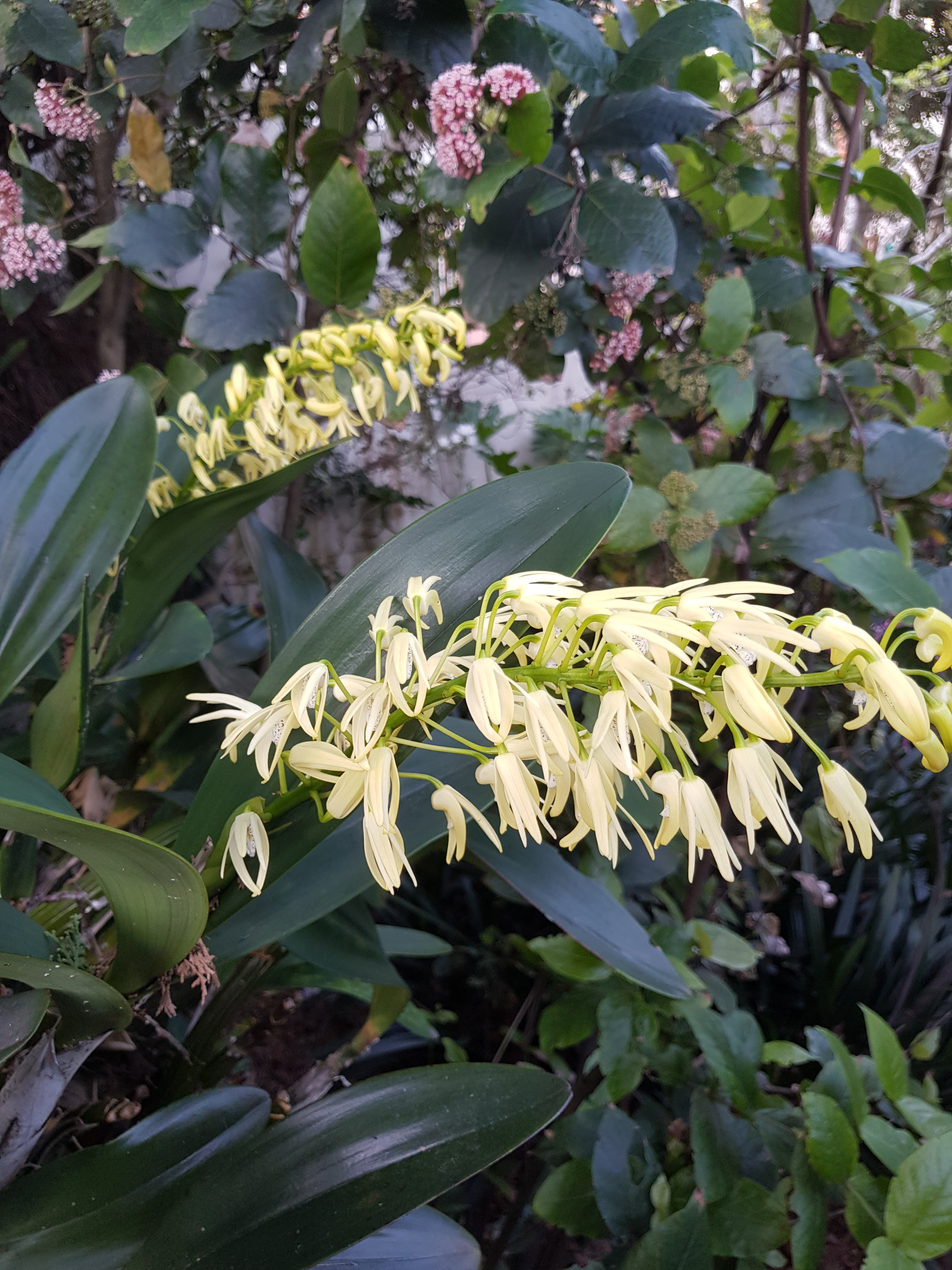
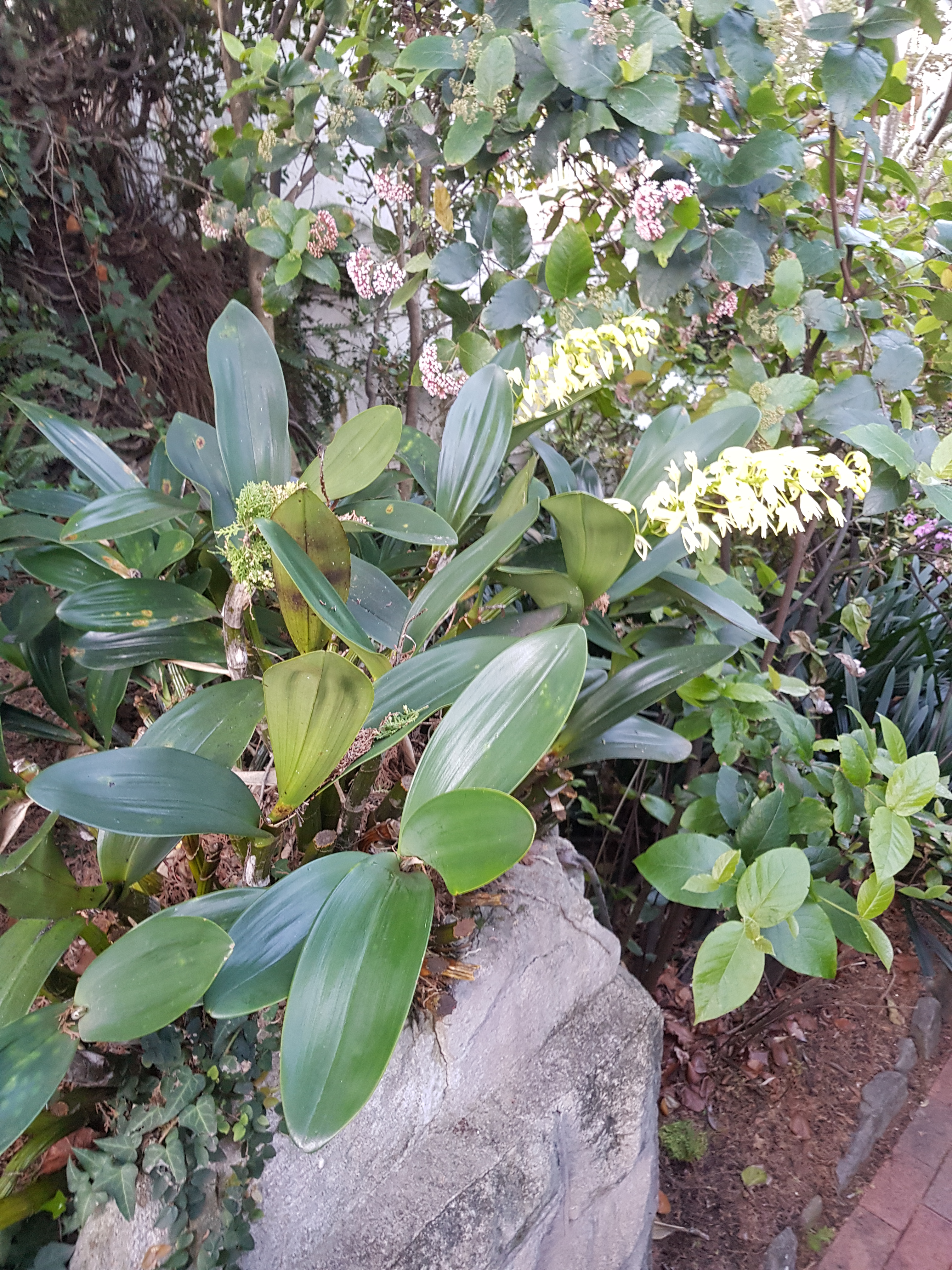
@ctrl-alt-nwo | Nov. 12, 2018, 6:51 p.m. | Votes: 0 | [ VOTE ]

Comment is far too long. Maximum 200 words, thanks.

@rakesh1 | Nov. 13, 2018, 4:18 a.m. | Votes: 0 | [ VOTE ]

Ok sir

@helpbd | Nov. 12, 2018, 7:42 a.m. | Votes: 1 | [ VOTE ]

Awesome photography my dear and your first photo is very good. I love photography very much. your all flower is excellent .thank you very much for sharing this

@chocosteem | Nov. 12, 2018, 8:40 a.m. | Votes: 1 | [ VOTE ]

The popular and relatively easy-to-grow orchid known as Dendrobium speciosum has undergone a name change during a major taxonomic revision of the Dendrobium group and is now renamed Thelychiton speciosus.

The epithet speciosus means beautiful and is in reference to the great racemes of showy cream flowers that are borne from the plant’s crown of 2-5 dark-green leaves. These tough, oblong-shaped leaves arise at the top of attractive laterally ribbed canes that can grow to approximately 40cm high.

Much of T. speciosus’s popular appeal lies in its flowers. Individually these are beautiful, being cream to yellow on the outer of the petals and sepals and tending to a reflective white toward the center. The lower petal, the labellum, is attractively spotted with purple. But the flowering stem of the plant produces up to 120 of these flowers many of which may be open at once, producing a spectacular floral show. The exact time of flowering depends on the regions climate. In its cooler distribution flowering occurs from September to October, though this may be earlier in warmer places.

https://orchidgarden.co.uk/images/virtuemart/product/DSC_00739.jpg

https://images-na.ssl-images-amazon.com/images/I/716qbEroY8L.SX466.jpg

http://therocklilyman.com/web_images/Windermere%201.jpg

http://anpsa.org.au/jpg4/imp0775.jpg

https://images-eu.ssl-images-amazon.com/images/I/511cI7UqELL.jpg

https://www.australianoutdoorliving.com.au/wp-content/uploads/2018/05/dendrobium-speciosum-orchid-e1459210238152.jpg

source

@deepthim | Nov. 12, 2018, 8:44 a.m. | Votes: 2 | [ VOTE ]

General information
Dendrobium speciosum is native to Australia where it grows from Northern Queensland to south-eastern Victoria. It is known as rock orchid or rock lily. The second part of its scientific name is derived from the Lating word speciosus, which means showy or beautiful.

There are many different forms and varieties of Dendrobium speciosum, and they might be considered independent species rather than subspecies after the next revision of the genus Dendrobium. In the floral trade, you are most likely to find D.speciosum var.speciosum and D.speciosum var.hillii.

Flowers Dendrobium speciosum develops large clusters of flowers along its long stems. The flowers are normally present from late winter to spring. A single stem can carry over 100 flowers. The standard colour varies from snow white to creamy yellow, and the flower is decorated with purple dots in the labellum.

https://www.orchidsforum.com/data/attachment-files/2017/03/65344_ad35c9fc8ded3235b85c05e4464a7c7a.JPG

https://upload.wikimedia.org/wikipedia/commons/thumb/f/fa/Dendrobium_speciosum_1.jpg/290px-Dendrobium_speciosum_1.jpg

https://www.gardensonline.com.au/Uploads/Plant/1359/Dendrobium-Speciosum-Cream-Spray.jpg

http://bluenanta.com/static/utils/images/species/spc_000014235_000059120.jpg

http://bauble.botanicalgarden.ubc.ca/dendrobium_speciosum2.jpg

https://sun.gardenexplorer.org/AppImages/302.jpg

source

@disanthreddy | Nov. 12, 2018, 8:50 a.m. | Votes: 2 | [ VOTE ]

Australia's favorite Dendrobium, 'Rock Lillies' they call them as they can grow on exposed hillsides in full sun. I have a number of them, will post them here as they open up. This one is a hybrid called 'Golden Arch'. (Lynette Banks x spec Yellow Moon), so I guess it's not really a Dend speciosum but a Dendrobium. I think of it as a Dend speciosum, correct me Arthur.

A Viet Namese grower from Orange County brought about 500 seedling into California some time ago and has them numbered 1 to 10. Don't exactly know how he gets that but whatever. #1, sold by him always looks the same, divisions I guess. The flowers are large but not placed too well, not compact and a little rambling all over the place.

https://image.shutterstock.com/z/stock-photo-dendrobium-speciosum-v-grandiflorum-72290419.jpg

http://farm5.static.flickr.com/4655/40283837151_aa34024f9f.jpg

https://c8.alamy.com/comp/A666YW/cane-orchid-dendrobium-speciosum-eastern-australia-enid-a-haupt-conservatory-A666YW.jpg

http://orchidsaustralia.com.au/awards/A0/a_4597_web.jpg

https://pbs.twimg.com/media/C2OV3X_XAAAa2aN.jpg

source

@ctrl-alt-nwo | Nov. 13, 2018, 4:29 a.m. | Votes: 1 | [ VOTE ]

Silly Sausage Award ! Excellent selection of Pics, thanks.

@eastmund | Nov. 12, 2018, 8:57 a.m. | Votes: 4 | [ VOTE ]

How to Grow Dendrobium speciosum the Ted Walmsley Way

Over many years I have been asked how I grow my speciosums. So I put together this little guide to explain how I grow mine.

Housing

When the plants are first deflasked they are put under 70% shade cloth where they remain until they reach the size of a 200mm (8") pot. They are then placed with the more mature plants under 50% shade cloth for the rest of their growing and flowering life.

Potting

When plants are first deflasked they are potted into 50mm (2") tubes using Mini Aus-Gro® (Van Schaik's Quality Products) Orchid Bark (10mm). The plants are left in these pots until they fill the pot. They should not be allowed to overgrow the pot.

When they fill the 50mm (2") tube, they are then repotted into a 100mm (4") pot using Medium Aus-Gro® Orchid Bark (15mm). They are left in these pots until the pot is full, but again make sure they do not overgrow the pot. If the plant is allowed to outgrow the pot then when it is repotted it does not grow as vigorously as those plants not in an overgrown state. I use standard pots (not squat pots), but crock 25-30% with styrofoam lumps.

http://www.orchids.com/Assets/ProductImages/nf2035_12.jpg

https://farm3.staticflickr.com/2458/3956752303_bbe9216a5a_b.jpg

https://static.aujardin.info/cache/th/img10/dendrobium-speciosum-600x450.jpg

http://www.ourshopfront.com/kabi/images/Show/2008/Class_5.jpg

https://2.bp.blogspot.com/-JBGaGKy5nLo/UilAEBcCAYI/AAAAAAAAFM8/Yv5XYbHb_ec/s1600/Dendrobium+speciosum+bigger.jpg

https://cimg9.ibsrv.net/gimg/www.davesgarden.com-main_site/664x495/dscn4897_a719b1414e826dfece7a75028b4443302d638694.jpg

http://www.stridvall.se/flowers/albums/Dendrobium/AAAA4955.sized.jpg

source

@magoo-2 | Nov. 12, 2018, 7:21 p.m. | Votes: 2 | [ VOTE ]

magoo-2 found a series of multi accounts of a same owner is following your articles to cheat your generous rewards.

magoo-2 found these accounts are suspicious & can be multi accounts of a single owner. Conclusion is based on last 1 year transactions:

@kheightces
@thytheso
@mabir
@ristotle
@tanuesh
@alizamanjutt454
@eastmund
@reicher
@vijayar
@lycusa
@snorio
@alexeyy
@surenda
@isuru1127

magoo-2
Check our latest multi comment spam update report

@googlefighter | Nov. 12, 2018, 9:24 a.m. | Votes: 2 | [ VOTE ]

Dendrobium speciosum to me is the King of Orchids. I have loved the Australian bush all my life, and get away whenever I can for walks or fishing the rivers on the East Coast of New South Wales. During one of these walks with my brother in the late 70's we came across a plant of Dendrobium speciosum var. hillii. It was a massive clump that had fallen from a huge eucalypt and I removed 5 canes and brought them back to me in Sydney, it thrived and grew into a clump over 2m across.

Over the next 10 years I developed a love of all orchids and especially species orchids, from all over the world, which we grew in a bushhouse in our backyard.

http://noosasnativeplants.com.au/images/photos/600x600_Thelychiton%20speciosus%204.jpg

https://www.biolib.cz/IMG/GAL/46374.jpg

http://www.ourshopfront.com/kabi/images/Show/2008/Class_1_2nd.jpg

https://www.orchidjacky.be/webshop_v6/images/cache/D-2145_Dendrobium_speciosum__Custom_.500.JPG

http://www.potteringaboutorchidsnz.com/uploads/3/0/7/5/30755681/s382150968411432402_p7_i14_w640.jpeg

https://pbs.twimg.com/media/DIcbpzgUMAA7TEQ.jpg

source

@magoo-2 | Nov. 12, 2018, 7:22 p.m. | Votes: 2 | [ VOTE ]

magoo-2 found a series of multi accounts of a same owner is following your articles to cheat your generous rewards.

magoo-2 found these accounts are suspicious & can be multi accounts of a single owner. Conclusion is based on last 1 year transactions:

@alves
@devid1996
@mhyeasin
@sadikulaziz
@msena
@kilee
@ripon1
@googlefighter
@melianasagita
@ashasikder
@hichako

magoo-2
Check our latest multi comment spam update report

@hungduan | Nov. 12, 2018, 9:34 a.m. | Votes: 1 | [ VOTE ]

Description: Epilith or epiphyte with stems erect to spreading, succulent, cylindrical, thickest just below the middle and tapering slightly towards each end, rooting only at base, 30–100 cm long, 20–40 mm diam., with 2–5 leaves at apex; roots smooth, some creeping but others growing upwards as 'basket roots'.

Leaves spreading to erect, elliptic to oblong, 18–25 cm long, 38–65 mm wide, conduplicate, thickly leathery, smooth.

Inflorescences 30–60 cm long, 90–200-flowered. Sepals and lateral petals white to cream; dorsal sepal 16–28 mm long, 3–5 mm wide; labellum white to cream, finely dotted and striped with dark purple, 8–10 mm long, 7–8 mm wide. Column 3–4 mm long; column foot 4–6 mm long.

https://farm8.staticflickr.com/7330/14052392475_5f9ef0a81d_b.jpg

http://www.orchidphotos.org/images/orchids/speciesV2/Dendrobium/dendrobiumspeciosum1_260.jpg

https://garden.org/pics/2018-02-08/Ursula/a31e6d.jpg

https://www.biolib.cz/IMG/GAL/46374.jpg

http://orchids.la.coocan.jp/Dendrobium/Dendrobium%20speciosum/DSC09210.JPG

https://scontent-atl3-1.cdninstagram.com/vp/2bdc969f98b2ddd61f64de101dc03535/5C5CE14F/t51.2885-15/e35/40238628_407553906441513_761494338993561229_n.jpg

source

@stephenkendal | Nov. 12, 2018, 9:41 a.m. | Votes: 1 | [ VOTE ]

Thanks again for sharing some great photos and bringing great content to the #Steem Blockchain.

It is always my pleasure to share your content on twitter for my followers to see and promoting #Steemit at the same time.

Have a great week.

Stephen

Promo-Steem #steemtalent #JoinSteemit #Steemit

Sydney Rock Orchid. #STEEM #steemtalent #JoinSteemit #Steemit

gardenersworld #garden #gardening #plant #life #blog #blogger #australia #photography #photographer

https://twitter.com/StephenPKendal/status/1061915098862833664

[IMAGE: https://cdn.steemitimages.com/DQmfRJCEGyLrboWUTJkf6JtNDcZijVqkjAj1jbQcaLVN329/20181112_094215.jpg]

@itamarr | Nov. 12, 2018, 9:46 a.m. | Votes: 2 | [ VOTE ]

Common name
(none recorded)
Scientific name
Dendrobium speciosum
Kingdom
plants
Class
Liliopsida (monocots)
Family
Orchidaceae (Orchidaceae)
NCA status
Least concern
EPBC status
-
Wetland indicator
No
Endemicity
Unknown endemicity - native

http://www.orchids-world.com/piwigo/_data/i/upload/2012/08/04/20120804080518-cb9b1cd8-me.jpg

http://www.kjbeath.com.au/photos/orchids%202/Images/King_Orchid.jpg

https://st.hzcdn.com/fimgs/6052b07008b329d3_6667-w500-h375-b0-p0--.jpg

https://pics.davesgarden.com/pics/2018/03/07/Kell/30e302.jpg

http://farm7.static.flickr.com/6207/6090357515_14e0021ecb.jpg

https://cairnsfotosandtours.com/_files/200001815-c2673c3619/450/Dendrobium-speciosum-O-53.jpg

https://pics.davesgarden.com/pics/2017/10/01/Kell/1fa2da.jpg

http://francianick.f.r.pic.centerblog.net/o/7b31863f.JPG

source

@cryptopie | Nov. 12, 2018, 10:01 a.m. | Votes: 1 | [ VOTE ]

Anything orchid is very beautiful and it beautifies every garden or backyard. Those plants just needs an indirect sunlight and lots of moisture @ctrl-alt-nwo

@kheightces | Nov. 12, 2018, 10:14 a.m. | Votes: 2 | [ VOTE ]

The Dendrobium speciosum complex comprises a group of closely related Australian endemic orchids. One of Australia’s most wide spread orchid groups occurring from north eastern Victoria to Cooktown in far north Queensland, the complex shows considerable morphological variability across its range. Although putative morphological groups are recognised that appear to be associated with geographical regions, the pattern of variability is complex and in many areas morphological intermediates also exist. Several taxonomic treatments have been proposed for the complex however classifications do not agree on the number of distinct groups or the taxonomic rank (species, sub-species or variety) at which these groups should be recognised.

https://st.hzcdn.com/fimgs/15d2989004afa47e_7056-w500-h418-b0-p0--.jpg

http://francianick.f.r.pic.centerblog.net/o/7b31863f.JPG

https://st.hzcdn.com/fimgs/15d2989004afa47e_7056-w500-h418-b0-p0--.jpg

https://www.jodos.org.au/wp-content/uploads/2017/04/Dendrobium-speciosum-from-Richard-800pxw.jpg

https://c1.staticflickr.com/7/6082/6090901862_7048fec32f_b.jpg

https://garden.org/pics/2018-02-24/hawkarica/cccb31.jpg

http://www.eerikas-bilder.de/orchideen/Dendrobium_Epigeneium/dendrobium/7/dendrobiumspeciosum.jpg

source

@kilee | Nov. 12, 2018, 10:21 a.m. | Votes: 2 | [ VOTE ]

FAMILY Orchidaceae (Orchid Family)
SYNONYMS Dendrobium speciosum ssp. curvicaule
RANGE Australia
HABIT Herbaceous
SPECIAL CHARACTERISTICS Epiphyte

http://therocklilyman.com/web_images/Carnarv%20B%20.jpg

https://www.visoflora.com/images/original/orchidee-sur-les-rochers-dendrobium-speciosum-2-visoflora-86673.jpg

https://www.todohusqvarna.com/blog/wp-content/uploads/2017/09/dendrobium-speciosum.jpg

https://scontent-atl3-1.cdninstagram.com/vp/20794566caa19ad755ce5a7a26dc3e36/5C54017A/t51.2885-15/e35/39356534_556637718087869_7570193794998425233_n.jpg

https://henrikzetterlund.files.wordpress.com/2013/03/dendrobium-speciosum.jpg

source

@lycusa | Nov. 12, 2018, 4:25 p.m. | Votes: 3 | [ VOTE ]

There are two to five thick, leathery leaves originating from the top of each pseudobulb. These leaves can remain on the plant for up to 12 years. The erect or curved pseudobulbs are rather large, up to 45 cm long. They are thickest at their base 5 - 7 cm, and often taper towards the apex 3 cm. The showy flowers grow in long racemes on straight or slowly arching, long, starchy stems with over 100 small.

http://www.orchidroots.com/static/utils/images/hybrid/hyb_000151243_000004066.jpg

https://garden.org/pics/2015-03-05/bamira/ad36af.jpg

https://i.pinimg.com/originals/4e/32/1c/4e321cdf692ffa1c118dec163da844f3.jpg

http://bluenanta.com/static/utils/images/species/spc_000182392_000346675.jpg

http://www.orchids-world.com/piwigo/upload/2012/07/18/20120718065327-10351496.jpg

http://bluenanta.com/static/utils/images/species/spc_000042265_000059125.jpg

source

@magoo-2 | Nov. 12, 2018, 7:23 p.m. | Votes: 2 | [ VOTE ]

magoo-2 found a series of multi accounts of a same owner is following your articles to cheat your generous rewards.

magoo-2 found these accounts are suspicious & can be multi accounts of a single owner. Conclusion is based on last 1 year transactions:

@kheightces
@thytheso
@mabir
@ristotle
@tanuesh
@alizamanjutt454
@eastmund
@reicher
@vijayar
@lycusa
@snorio
@alexeyy
@surenda
@isuru1127

magoo-2
Check our latest multi comment spam update report

@melianasagita | Nov. 12, 2018, 4:30 p.m. | Votes: 1 | [ VOTE ]

Large epiphytic or lithophytic clumping plant with thick leathery leaves. Cylindrical pseudobulbs to 90cm. Showy racemes of fragrant whitish or yellow flowers to 5cm, spring.

https://garden.org/pics/2018-02-24/hawkarica/9c0533-300.jpg

http://members.optusnet.com.au/elanbee/Pictures/BeeCreek.jpg

https://i.pinimg.com/originals/c2/c2/d6/c2c2d6ff792ba2c2cb2d1f6ce14941d5.jpg

https://pbs.twimg.com/media/DOps3-pWkAMFkWn.jpg

http://www.ourshopfront.com/kabi/images/Show/2010/Class11-1-1.jpg

http://www.orchidspecies.com/orphotdir/dengracillimum.jpg

source

@mohosinh37 | Nov. 12, 2018, 4:34 p.m. | Votes: 1 | [ VOTE ]

Nom latin : Dendrobium speciosum
Synonyme : Thelychiton speciosus
Famille : Orchidées, Orchidacées
Origine : Australie
Période de floraison : hiver, printemps
Couleur des fleurs : crème à jaune
Type de plante : orchidée tropicale
Type de végétation : vivace
Type de feuillage : persistant
Hauteur : 40 à 90 cm

http://members.optusnet.com.au/elanbee/Pictures/BeeCreek.jpg

https://garden.org/pics/2017-09-30/Australis/017300-300.jpg

https://i.pinimg.com/originals/c2/c2/d6/c2c2d6ff792ba2c2cb2d1f6ce14941d5.jpg

http://www.orchidspecies.com/orphotdir/dendpedunculatum.jpg

https://pbs.twimg.com/media/DHIyllhVoAA8l4k.jpg

http://therocklilyman.com/web_images/Granite%20Speimen.JPG

source

@reicher | Nov. 12, 2018, 4:37 p.m. | Votes: 2 | [ VOTE ]

Dendrobium speciosum is the largest Victorian orchid and occurs in small isolated colonies on exposed rocky outcrops. It is often found in Eucalyptus forest above rivers and creeks. These forests suffered severe damage in the March fires and D. speciosum took a real beating, despite its fire-resistant features of tough thick leaves and large water reserve in bulky pseudobulbs." (Adams and Lawson 1984:282-286)

http://therocklilyman.com/web_images/Granite%20Speimen.JPG

https://pbs.twimg.com/media/DHIyllhVoAA8l4k.jpg

http://www.orchids-world.com/piwigo/_data/i/upload/2012/08/31/20120831064016-132f7194-me.jpg

http://www.orchidroots.com/static/utils/images/hybrid/hyb_000020657_100916603.jpg

http://francianick.f.r.pic.centerblog.net/o/7b31863f.JPG

source

@magoo-2 | Nov. 12, 2018, 7:23 p.m. | Votes: 2 | [ VOTE ]

magoo-2 found a series of multi accounts of a same owner is following your articles to cheat your generous rewards.

magoo-2 found these accounts are suspicious & can be multi accounts of a single owner. Conclusion is based on last 1 year transactions:

@kheightces
@thytheso
@mabir
@ristotle
@tanuesh
@alizamanjutt454
@eastmund
@reicher
@vijayar
@lycusa
@snorio
@alexeyy
@surenda
@isuru1127

magoo-2
Check our latest multi comment spam update report

@ristotle | Nov. 12, 2018, 4:40 p.m. | Votes: 2 | [ VOTE ]

The Dendrobium speciosum complex comprises a group of closely related Australian endemic orchids. One of Australia’s most wide spread orchid groups occurring from north eastern Victoria to Cooktown in far north Queensland, the complex shows considerable morphological variability across its range. Although putative morphological groups are recognised that appear to be associated with geographical regions, the pattern of variability is complex and in many areas morphological intermediates also exist.

https://farm4.staticflickr.com/3568/3295662271_9b35b1b9ba_b.jpg

https://pbs.twimg.com/media/DIcbpwdUEAAC98Q.jpg

http://www.orchids-world.com/piwigo/_data/i/upload/2012/08/04/20120804073703-5aee54c1-me.jpg

https://www.firstrays.com/Pictures_orchids/D_speciosum_closeup.jpg

https://farm5.staticflickr.com/4415/36389598902_446d6cbd65_b.jpg

https://www.naturepl.com/cache/pcache/01130598.jpg

source

@magoo-2 | Nov. 12, 2018, 7:22 p.m. | Votes: 2 | [ VOTE ]

magoo-2 found a series of multi accounts of a same owner is following your articles to cheat your generous rewards.

magoo-2 found these accounts are suspicious & can be multi accounts of a single owner. Conclusion is based on last 1 year transactions:

@kheightces
@thytheso
@mabir
@ristotle
@tanuesh
@alizamanjutt454
@eastmund
@reicher
@vijayar
@lycusa
@snorio
@alexeyy
@surenda
@isuru1127

magoo-2
Check our latest multi comment spam update report

@arcange | Nov. 12, 2018, 4:46 p.m. | Votes: 1 | [ VOTE ]

Congratulations @ctrl-alt-nwo!
Your post was mentioned in the Steemit Hit Parade in the following category:

  • Comments - Ranked 5 with 115 comments
@kaminchan | Nov. 19, 2018, 10:31 p.m. | Votes: 0 | [ VOTE ]

Wow! You must be very busy too! Where is your new post?!
Hope you are doing very well!

Posted using Partiko iOS

@ctrl-alt-nwo | Nov. 19, 2018, 11:39 p.m. | Votes: 0 | [ VOTE ]

Nice to see you miss me ! Yes, very busy now, i don't know when my next post will be, honestly. I'll try to be back on Steemit soon, i have had to go away on business. All the best my friend.

@steemitboard | Nov. 26, 2018, 5:49 p.m. | Votes: 0 | [ VOTE ]

Congratulations @ctrl-alt-nwo! You have completed the following achievement on the Steem blockchain and have been rewarded with new badge(s) :

https://steemitimages.com/60x70/http://steemitboard.com/@ctrl-alt-nwo/commented.png?201811260738You got more than 1000 replies. Your next target is to reach 1250 replies.

Click here to view your Board of Honor
If you no longer want to receive notifications, reply to this comment with the word STOP

> Support SteemitBoard's project! Vote for its witness and get one more award!

@kaminchan | Dec. 16, 2018, 1:45 a.m. | Votes: 0 | [ VOTE ]

Happy weekend!! Almost the end of the year! Hope all is well on your front.

Cheers.

Posted using Partiko iOS

@rachel1998 | Dec. 18, 2018, 9:53 a.m. | Votes: 0 | [ VOTE ]

Hi sir how are you. Where are you goging sir?

Posted using Partiko Messaging

@kaminchan | Dec. 24, 2018, 1:48 p.m. | Votes: 1 | [ VOTE ]

Merry Christmas to you and your family.

Posted using Partiko iOS

@ctrl-alt-nwo | Dec. 26, 2018, 2:50 p.m. | Votes: 0 | [ VOTE ]

Thanks, @kaminchan, i hope you have had a Merry Christmas too ! All the best for the new year.

@kaminchan | Jan. 5, 2019, 2:41 a.m. | Votes: 0 | [ VOTE ]

Gosh! You are not back yet!!
You’d better do something with your Steem or SBD?! You could delegate and earn passive income!!
I rented a few from Blocktrades during the promotion period. Those voting trails are good investment?!

Hope you are very well.
Happy New Year to you and your family.

Cheers.

Posted using Partiko iOS

@ctrl-alt-nwo | Jan. 8, 2019, 5:21 a.m. | Votes: 0 | [ VOTE ]

Happy New Year my friend. Ahhh, passive Income...that's taxable here, and i'm not going down that path thanks.... it's not worth the trouble, paperwork for the accountants and half the money going in Tax,,,and also i might need the money soon, thats why i am cashing in my SP for STEEM. I don't want to sound too negative but unfortunately i might not be back unless things look much better soon.

@kaminchan | Jan. 8, 2019, 7:08 a.m. | Votes: 1 | [ VOTE ]

Oh! I didn’t know the tax law is very heavy and complicated there! Thanks for letting me know this!

Then you should have exchanged for Bitcoins or Litecoins when they were very cheap.
I am not very optimistic about Steemit! I think silver and gold coins are better investment.

People are quite certain that the financial collapse is due this year. Everyone I know in Thailand is complaining about the slowing down in the economy. People are more careful with their spending. What’s happening in France is quite astonishing. People are not taking it any more!

I expect there will be some chaos when global financial troubles starting to hit Thailand! Too much public debts.

Good luck with all your plans!!
Have a good and prosperous week!

Cheers.

Posted using Partiko iOS

@ctrl-alt-nwo | Jan. 8, 2019, 11:19 p.m. | Votes: 0 | [ VOTE ]

I agree with you, Physical metal is the best investment, especially now the world is so very uncertain. I was lucky to pick a good time to convert a lot of my BTC to silver near the BTC highs of Christmas 2017. I only convert silver to cash when i need to, but only a little at a time. Cash is trash, but unfortunately we still need it. I believe we are headed to a Depression worse than 1929, so anybody exposed to Fiat currency and paper assets like shares/stocks and bonds will lose most of their wealth. The world will be like Venezuela. Most dumbed down people believe the lies that the mainstream media peddles, and unfortunately they will be victims. Sorry to be so "doomsday", but it's my take on things. I'm still going to hang around here on Steemit, just don't have the time at the moment to do much.

@kaminchan | Jan. 9, 2019, 12:51 a.m. | Votes: 0 | [ VOTE ]

Thank you very much for confirming what I have read and been following! My friends and families think I am very crazy telling them to get some gold bars and be prepared for very chaotic future in Thailand.

I think things will get crazy here before the end of this year. I haven’t got much time to prepare for all the impact of a recession. I just lost my second part-time job which means I have a month to get packing and organist get for a move out of the city befits the end of the year.

The overall mood has been very slow and depressive at times because if the sense of uncertainty. Now I shall have to listen to my inner voice mite intently and get moving. It’s so long that I have been used to living in my comfort zone!

Thanks for all the straight talk!!
Cheers.

Posted using Partiko iOS

@kaminchan | April 5, 2019, 6:32 a.m. | Votes: 0 | [ VOTE ]

Hello! Hope you are well!
Come back soon!

Posted using Partiko iOS

@steemitboard | May 8, 2019, 3:16 a.m. | Votes: 0 | [ VOTE ]

Congratulations @ctrl-alt-nwo! You received a personal award!

https://steemitimages.com/70x70/http://steemitboard.com/@ctrl-alt-nwo/birthday2.pngHappy Birthday! - You are on the Steem blockchain for 2 years!

You can view your badges on your Steem Board and compare to others on the Steem Ranking

Do not miss the last post from @steemitboard:

SteemitBoard - Witness UpdateSteemitBoard to support the german speaking community meetups

Vote for @Steemitboard as a witness to get one more award and increased upvotes!
@kaminchan | May 23, 2019, 2:07 a.m. | Votes: 0 | [ VOTE ]

Hi! Are you still there?!
Why didn’t you power down to but Bitcoin when it’s really low?!

Dare I ask you to let me rent some Steem Power for a few months?! They are sitting there idle!
You could have delegated to some people to earn something back or have auto-upvote accounts too!

This silence is not positive!
Hope you are well and healthy!
You are a sharp investor, do something to show you’re okay!

Take care.

Posted using Partiko iOS

@ctrl-alt-nwo | July 11, 2019, 4:50 a.m. | Votes: 0 | [ VOTE ]

Hi mate, yes i am still around, but not active at the moment , too much to do everywhere else. To answer your questions, i did not transfer my STEEM to BTC because this would realise a loss in my accounts, which is not healthy. Yes, i would have doubled my money if i had bought BTC at the right time, but this is still only a paper gain until i sell them. Better to sit on STEEM until the rise to the price i bought for, about 3 times what they are now. As far as delegating STEEM or loaning them, i would have to declare this as income in my tax return, which is a pain in the butt with the paperwork involved, the accountants fees for working out my income from it, and the extra tax i would have to pay for doing it . Maybe your tax laws are less complicated where you are, so maybe its an option for you. Hope you are keeping well anyway.

@kaminchan | July 11, 2019, 6:25 a.m. | Votes: 0 | [ VOTE ]

Wow! This is great! You are very busy and very well!
Thanks for the long explanation! I am learning new things everyday! That’s why many people just leave their Steem there while Bitcoin was climbing very high!

Urge! Those tax laws sound just like monsters! I hope we will not embarked on complicated tax law like yours!!

I am still surviving though this has been a testing year for me. I am going to have to make some drastic changes to my life early next year! Hoping that the global financial system has not become unglued too soon!

All the best!
Cheers.

@chorock | Sept. 8, 2019, 5:56 p.m. | Votes: 2 | [ VOTE ]

I think you can earn 200 Steem by curation rewards. You can log in SteemAuto and follow me as a curation trail. You can earn passive income.

[ BACK TO TRENDING ] [ BACK TO MENU ]
CMD>