____  ___    _  _     _   _ _____     _______
 / ___|/ _ \  | || |   | | | |_ _\ \   / / ____|
| |  _| | | | | || |_  | |_| || | \ \ / /|  _|
| |_| | |_| | |__   _| |  _  || |  \ V / | |___
 \____|\___/     |_|   |_| |_|___|  \_/  |_____|

 --- A GOPHER-LIKE INTERFACE FOR HIVE BLOCKCHAIN ---

Wonga Wonga Vine

BY: @ctrl-alt-nwo | CREATED: Oct. 1, 2018, 12:39 a.m. | VOTES: 114 | PAYOUT: $37.81 | [ VOTE ]

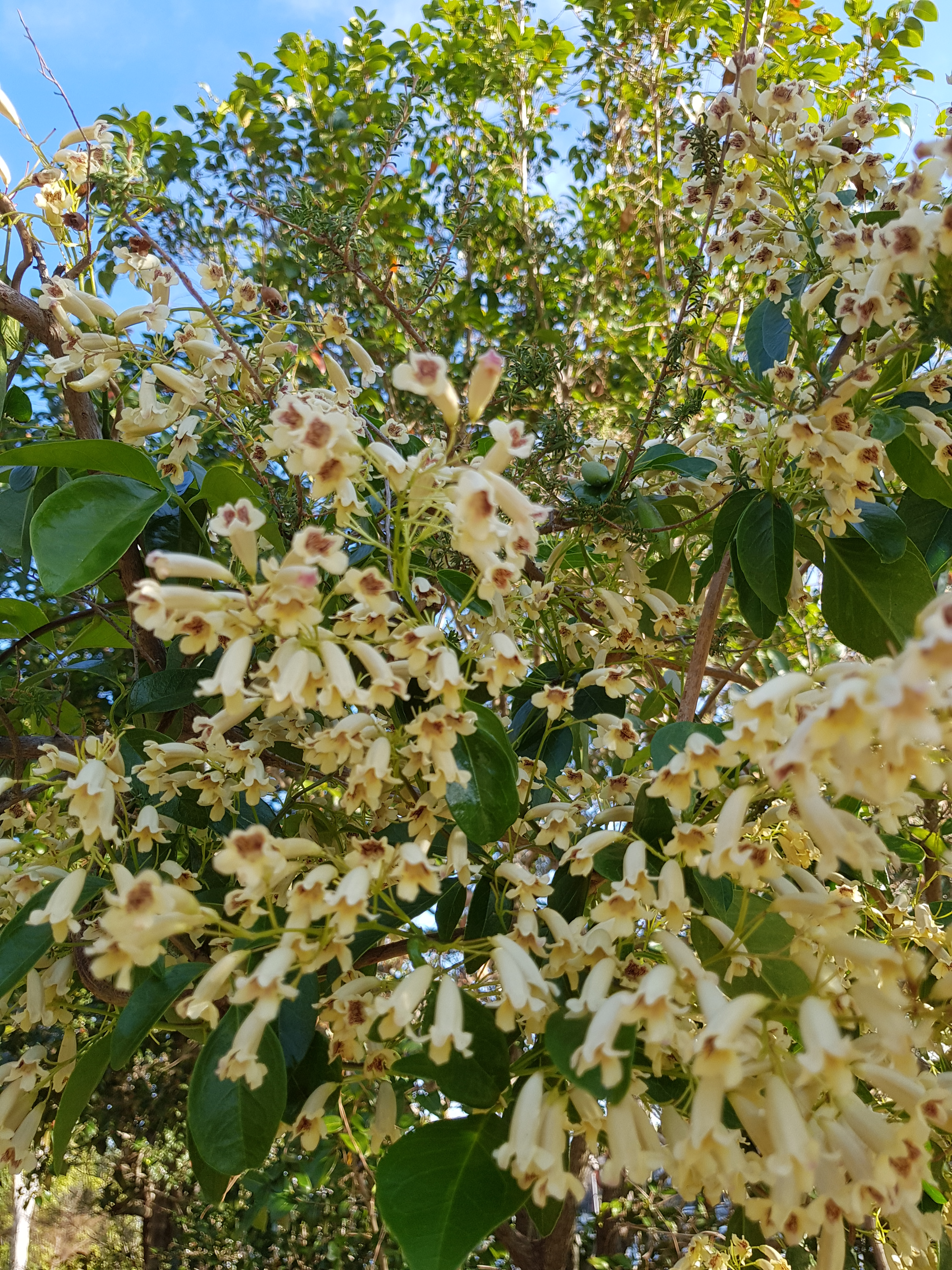
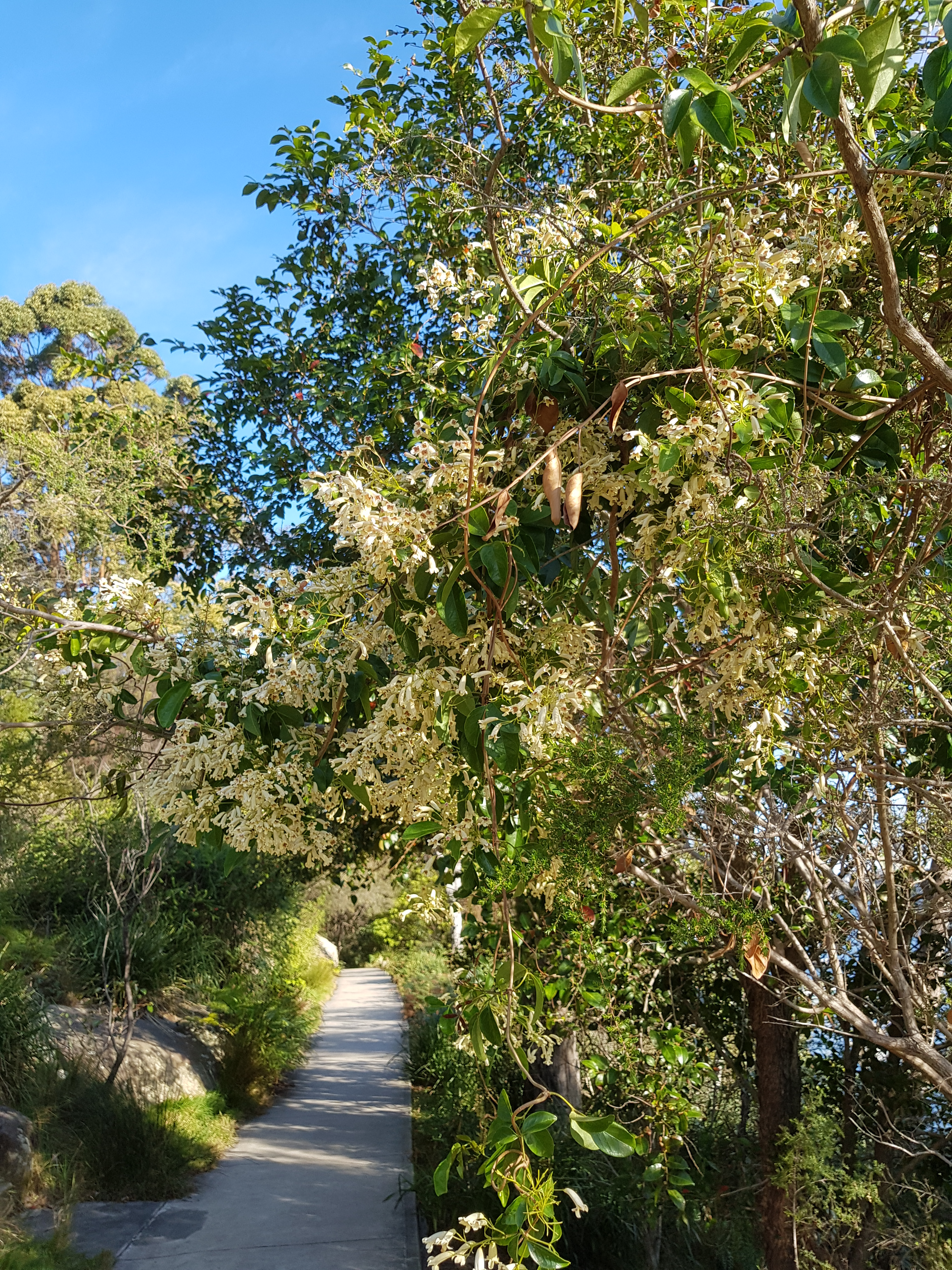
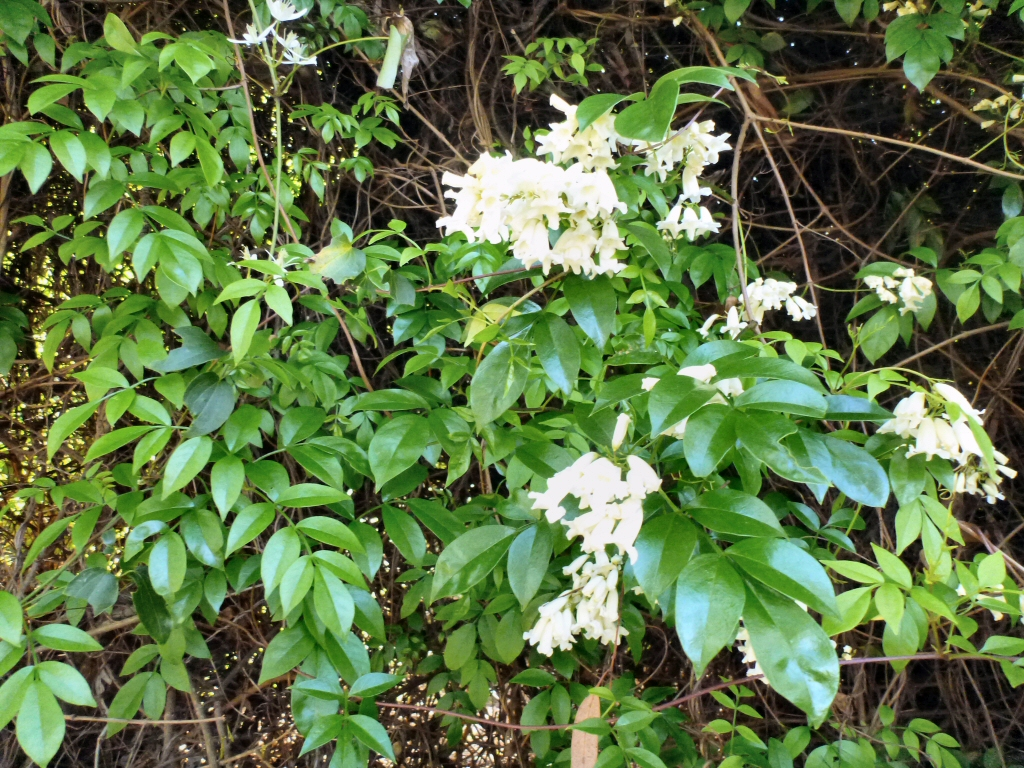
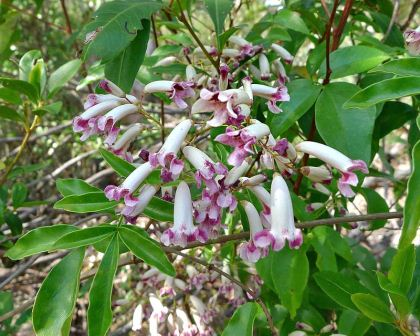
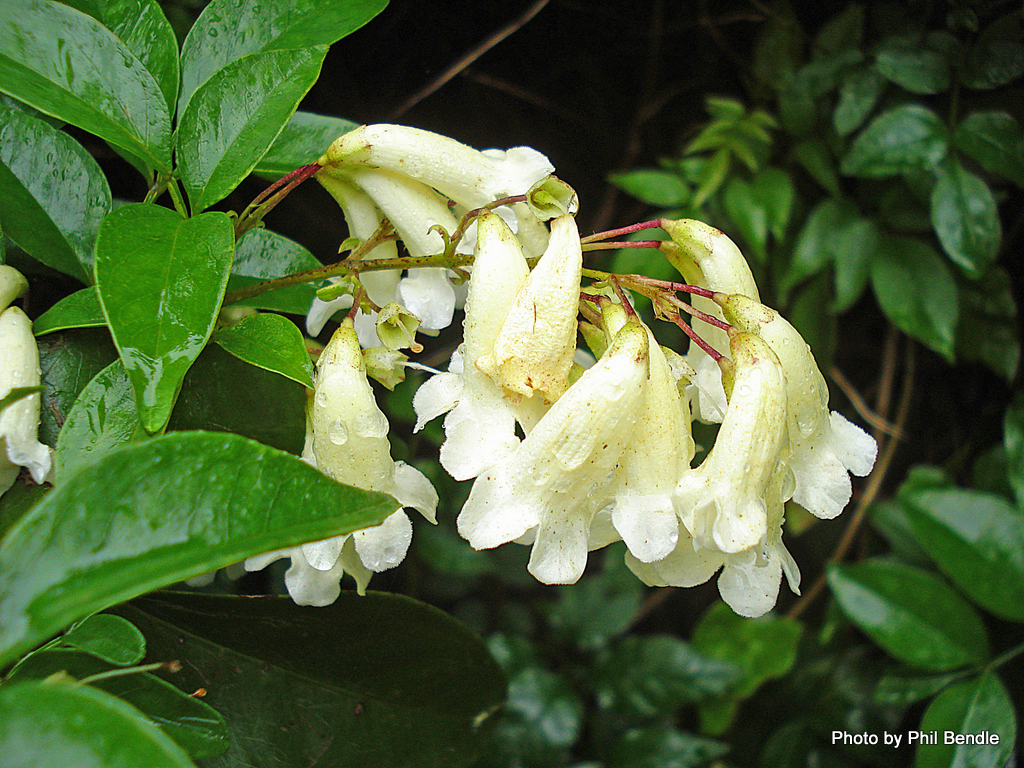
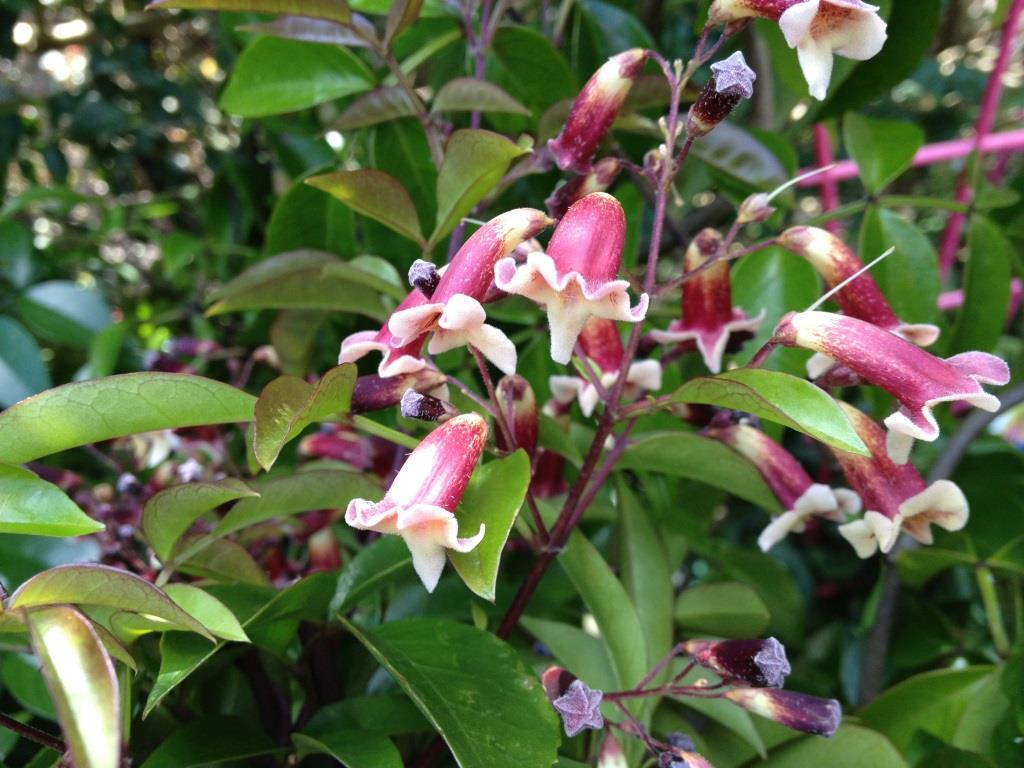
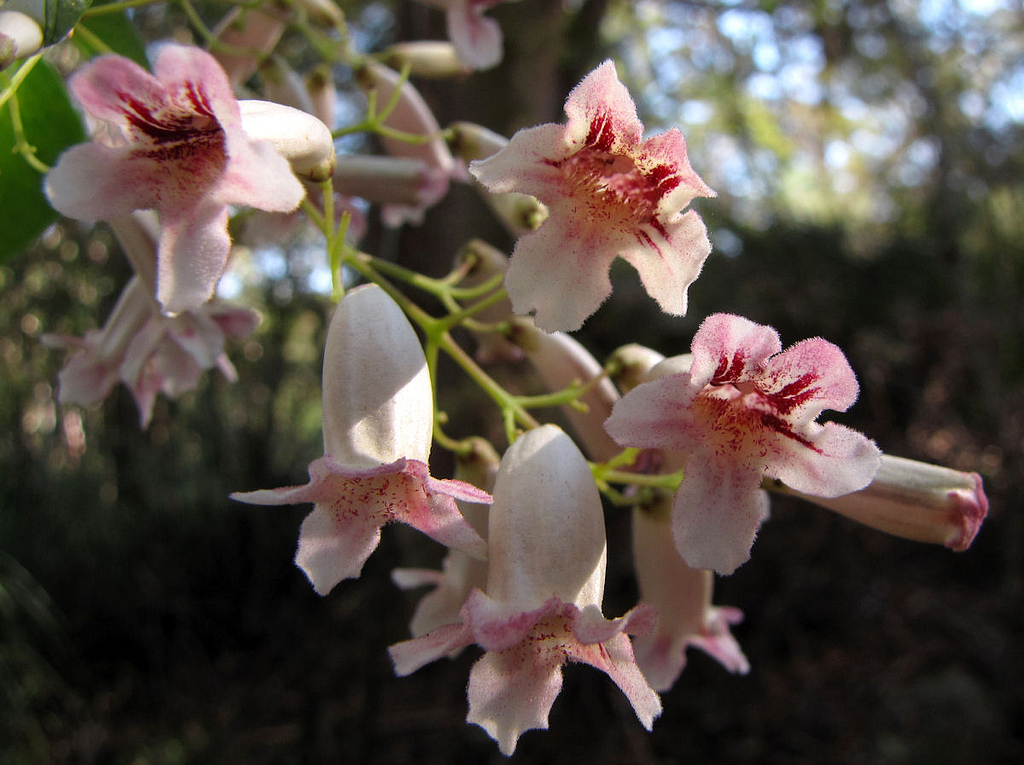
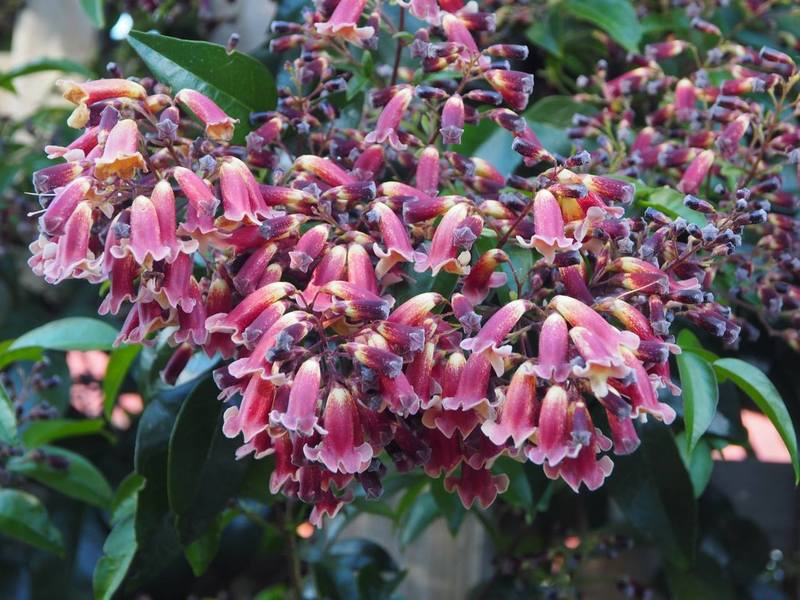
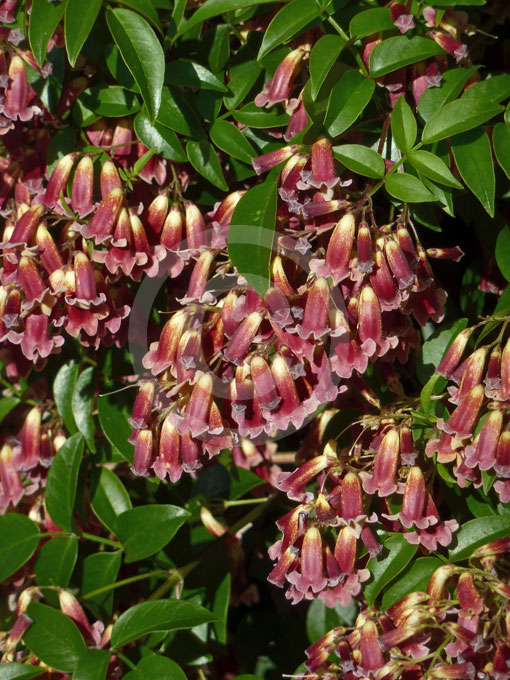
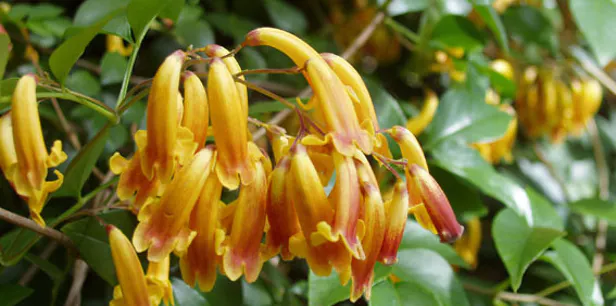
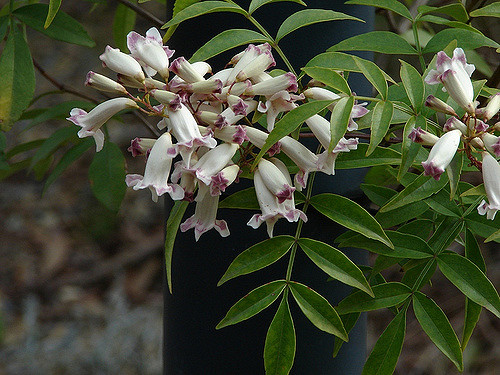
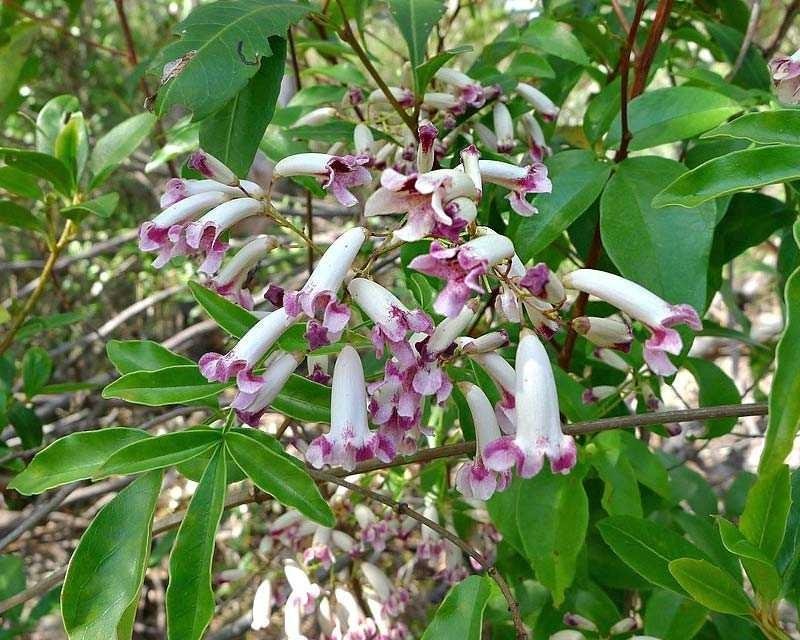
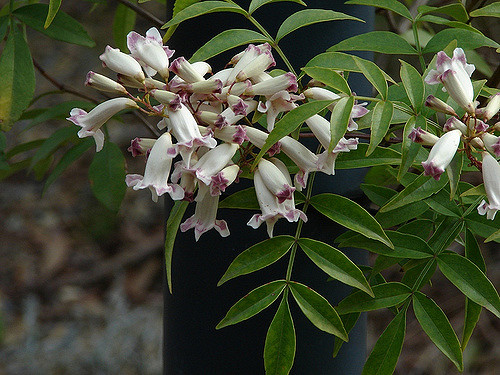
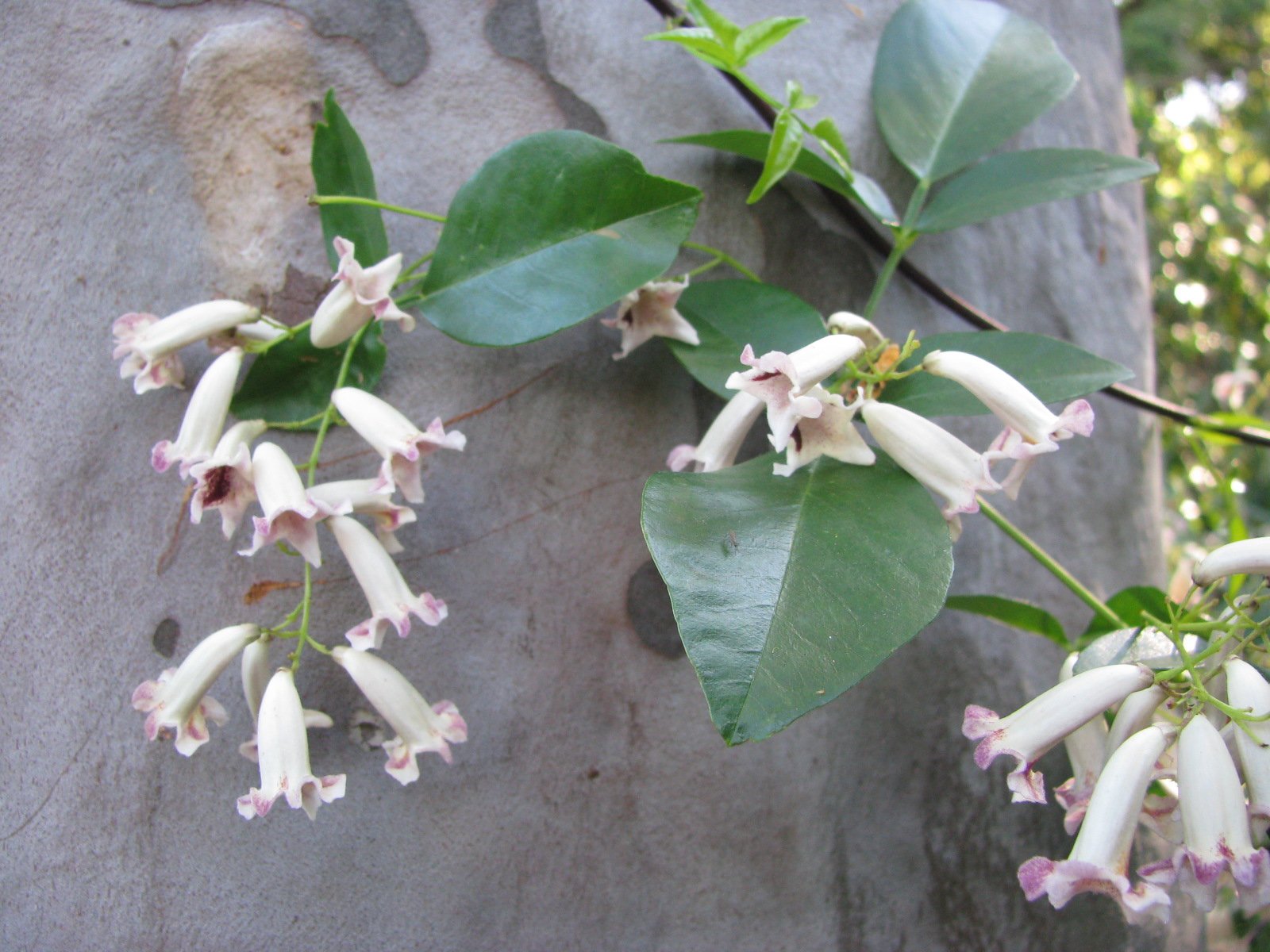
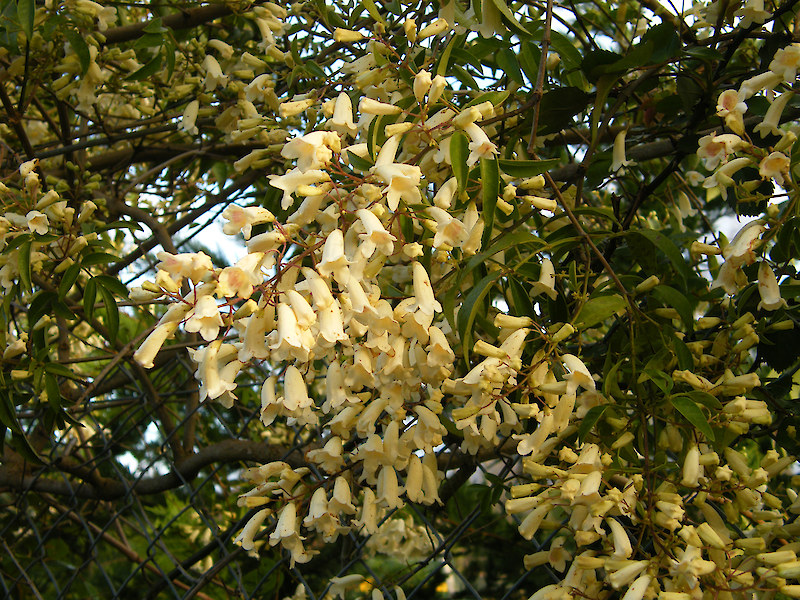
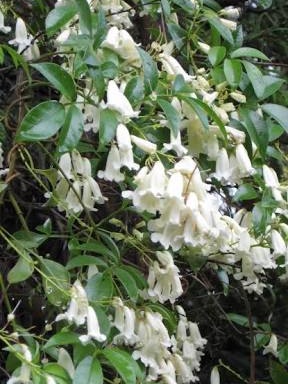
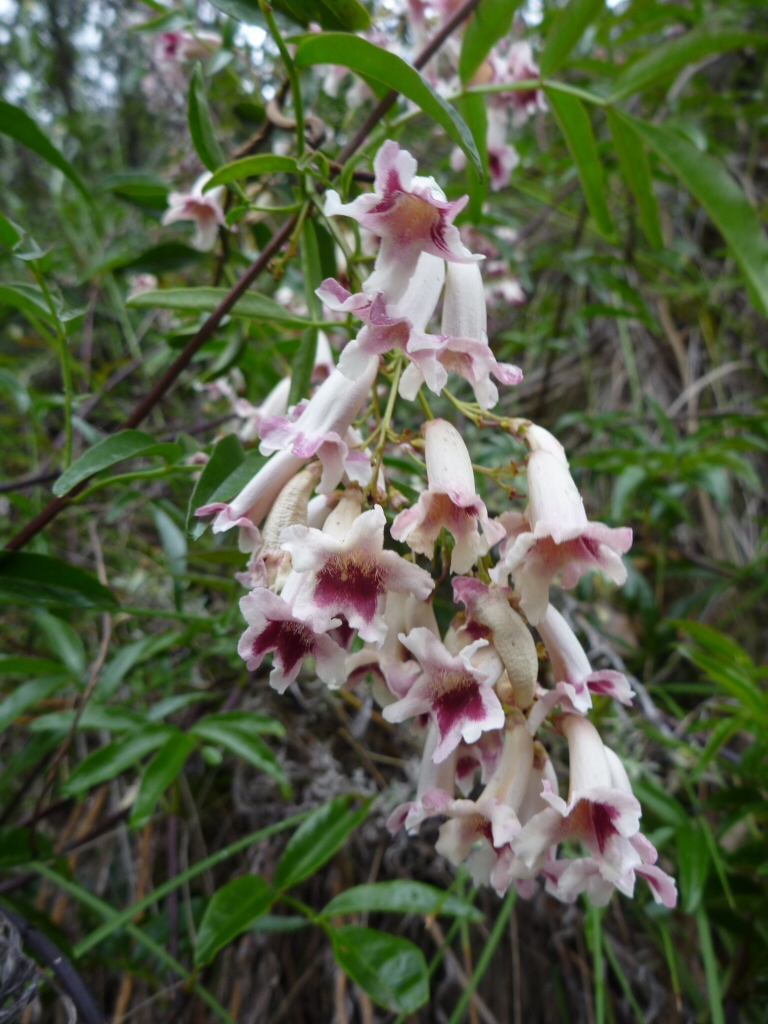
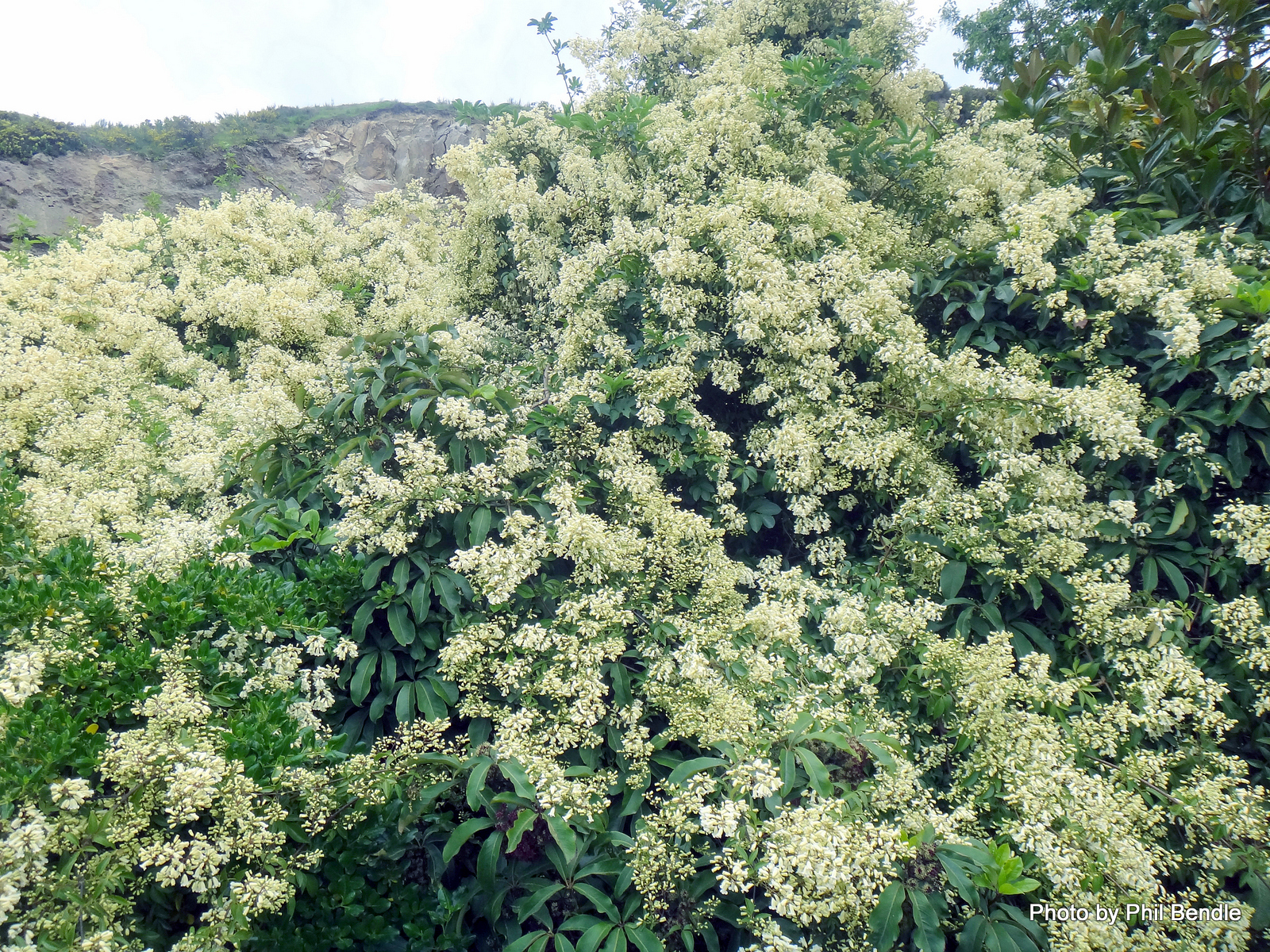
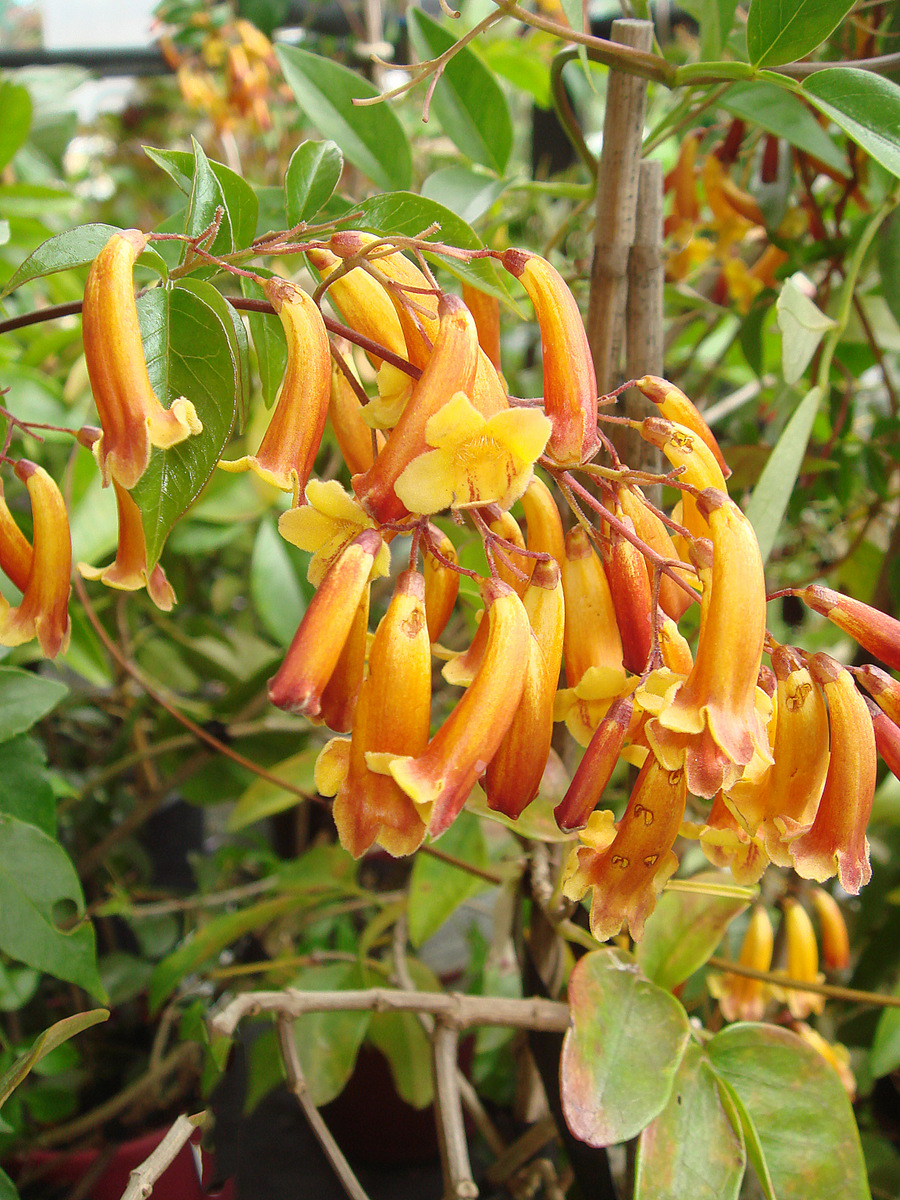
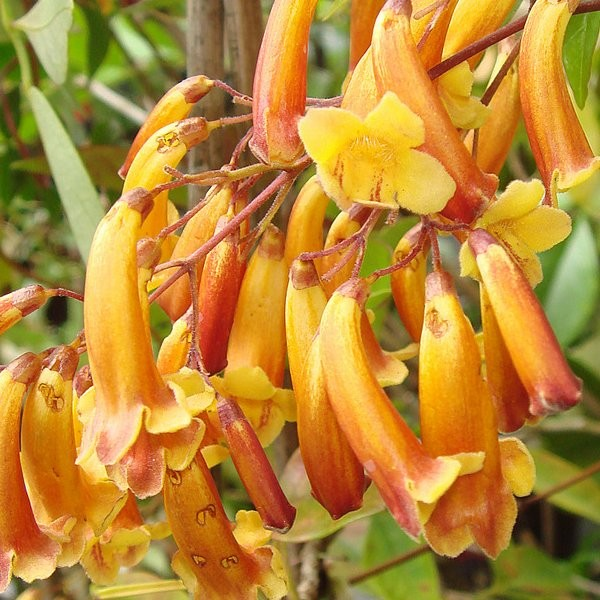
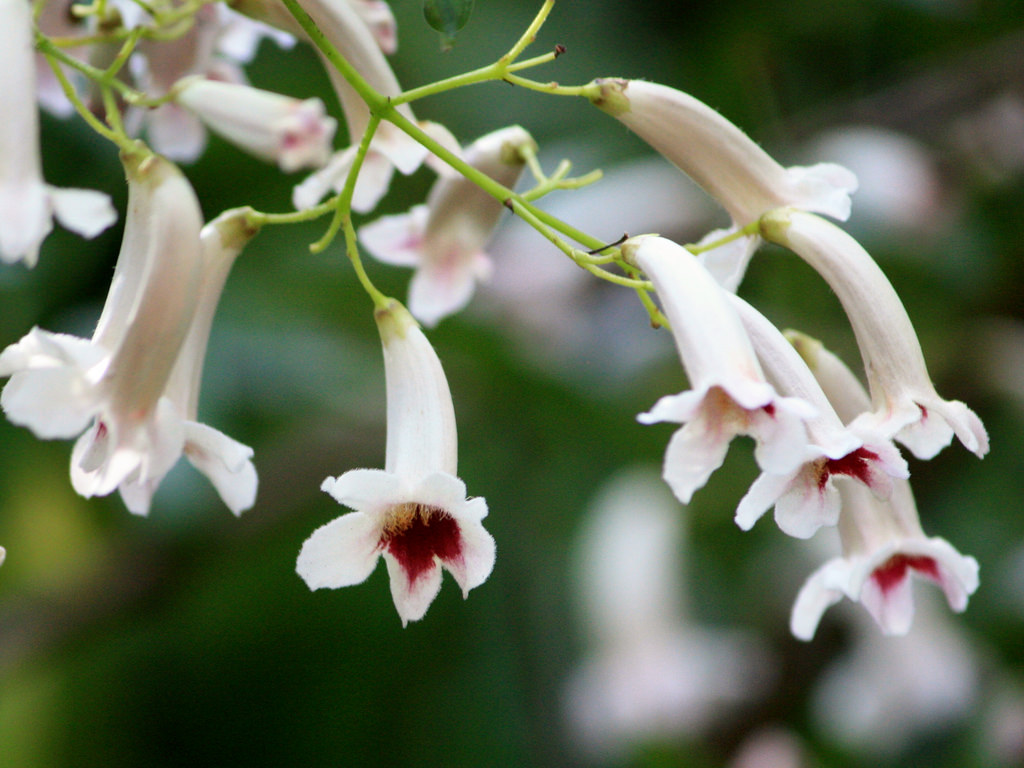
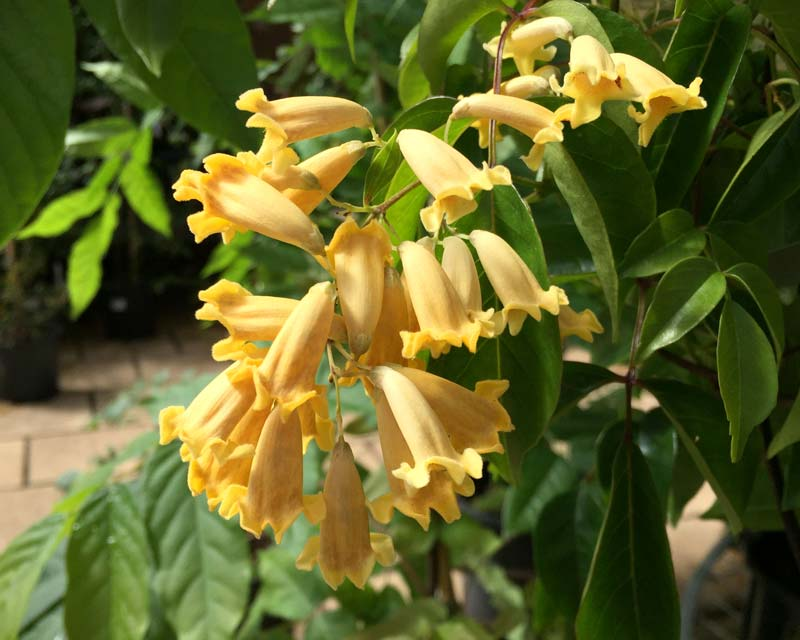
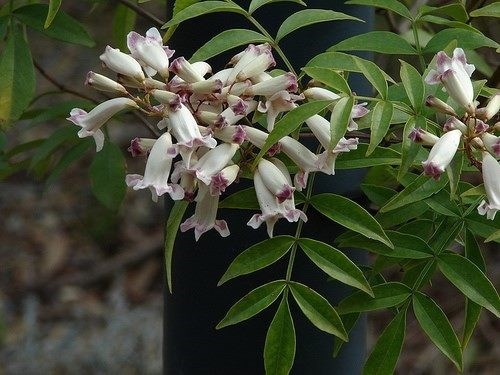
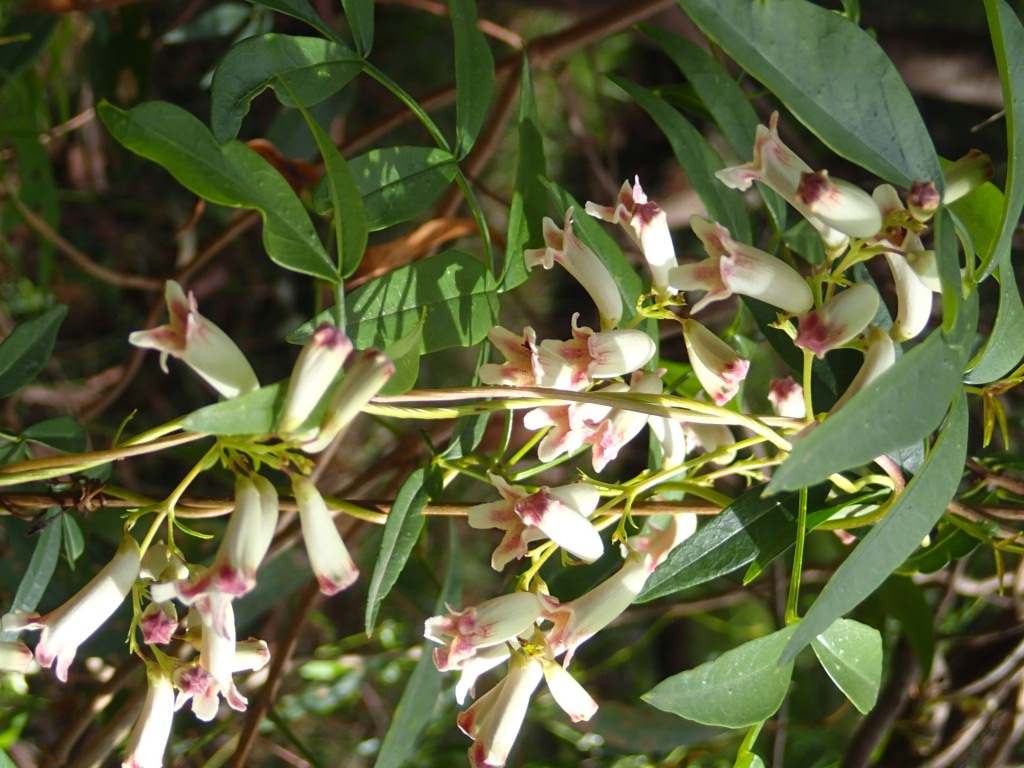
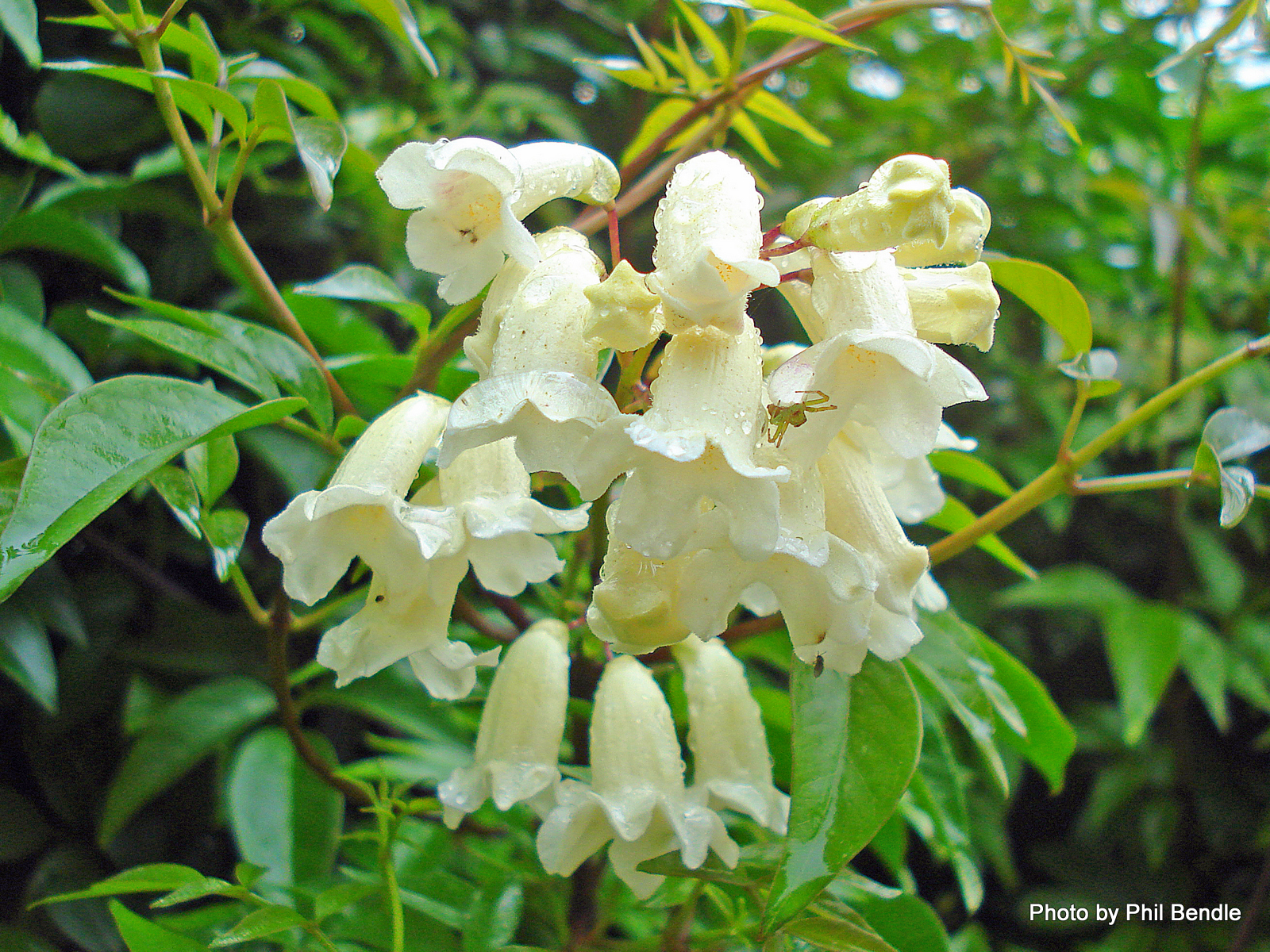
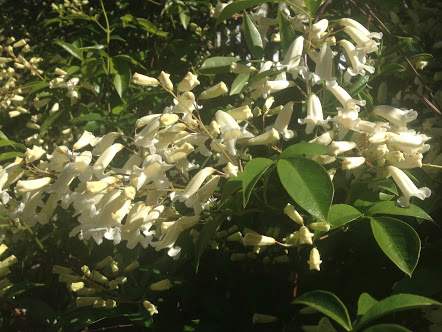
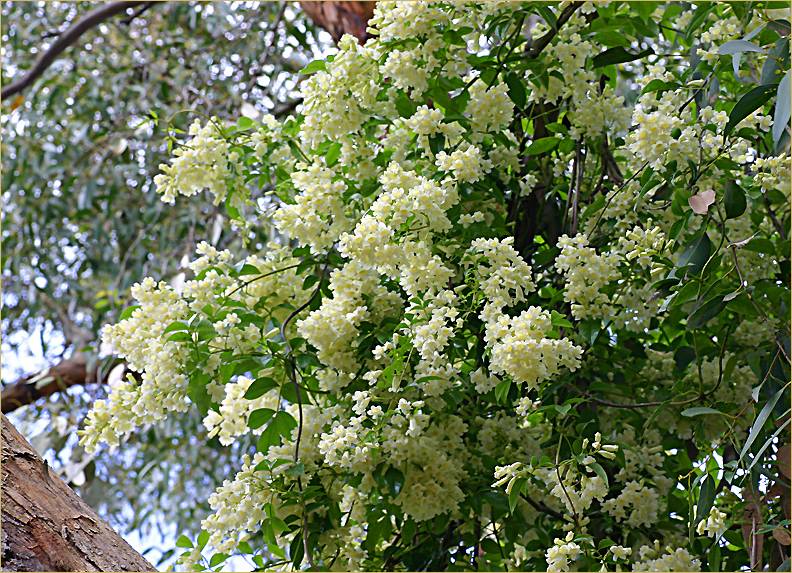
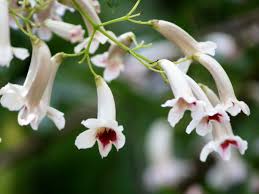
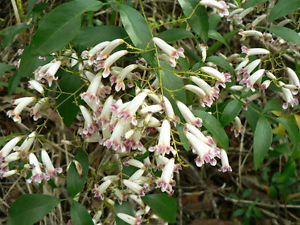
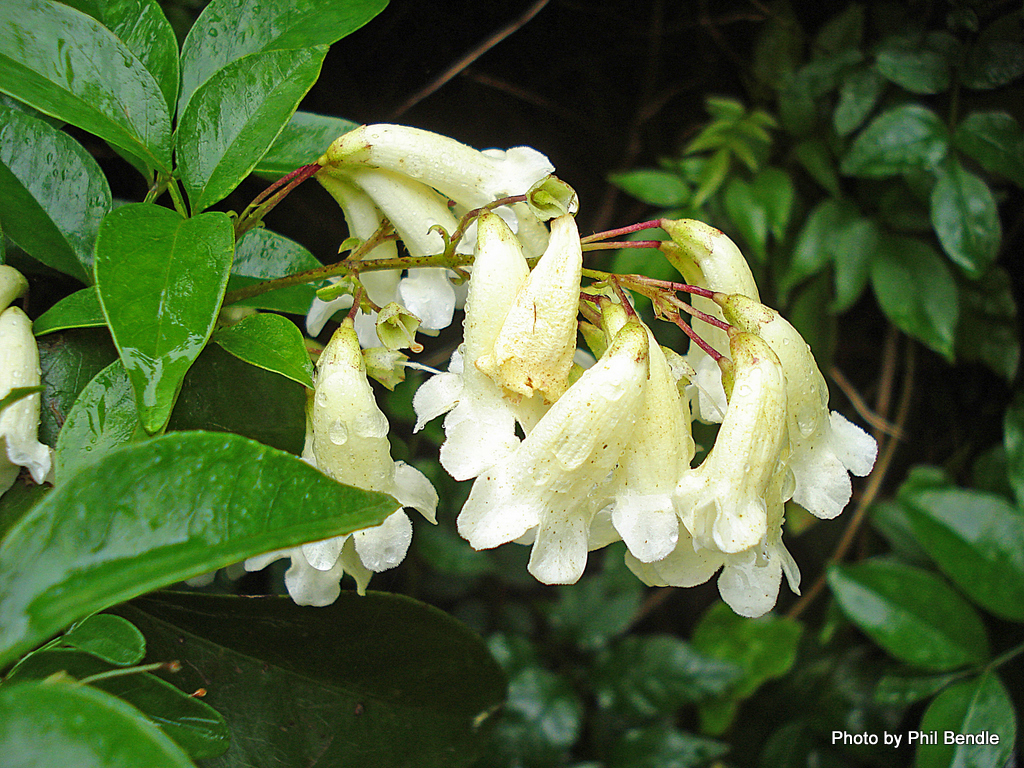
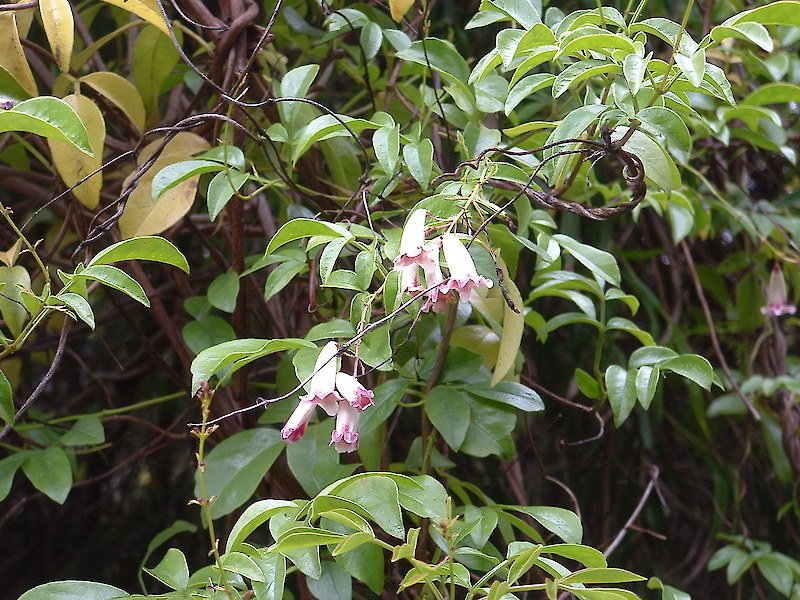
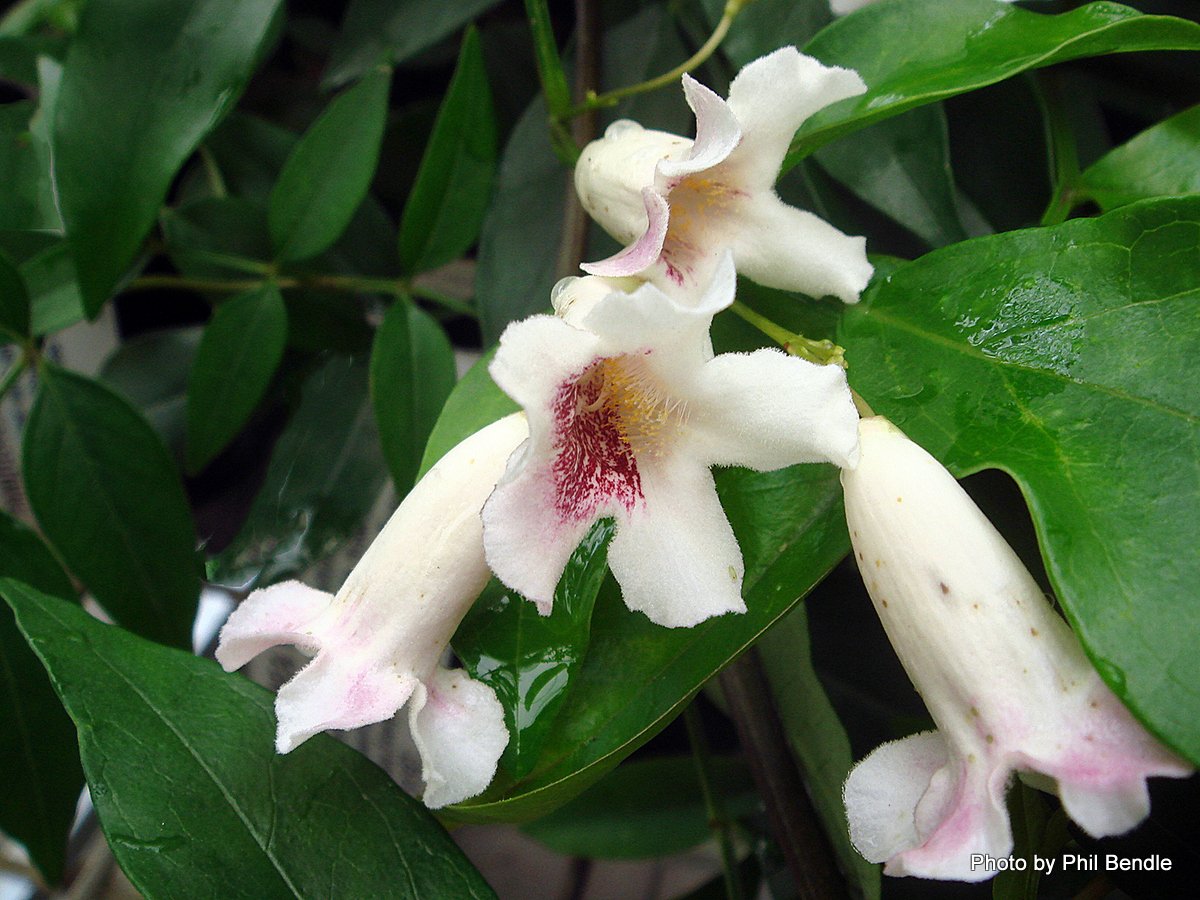
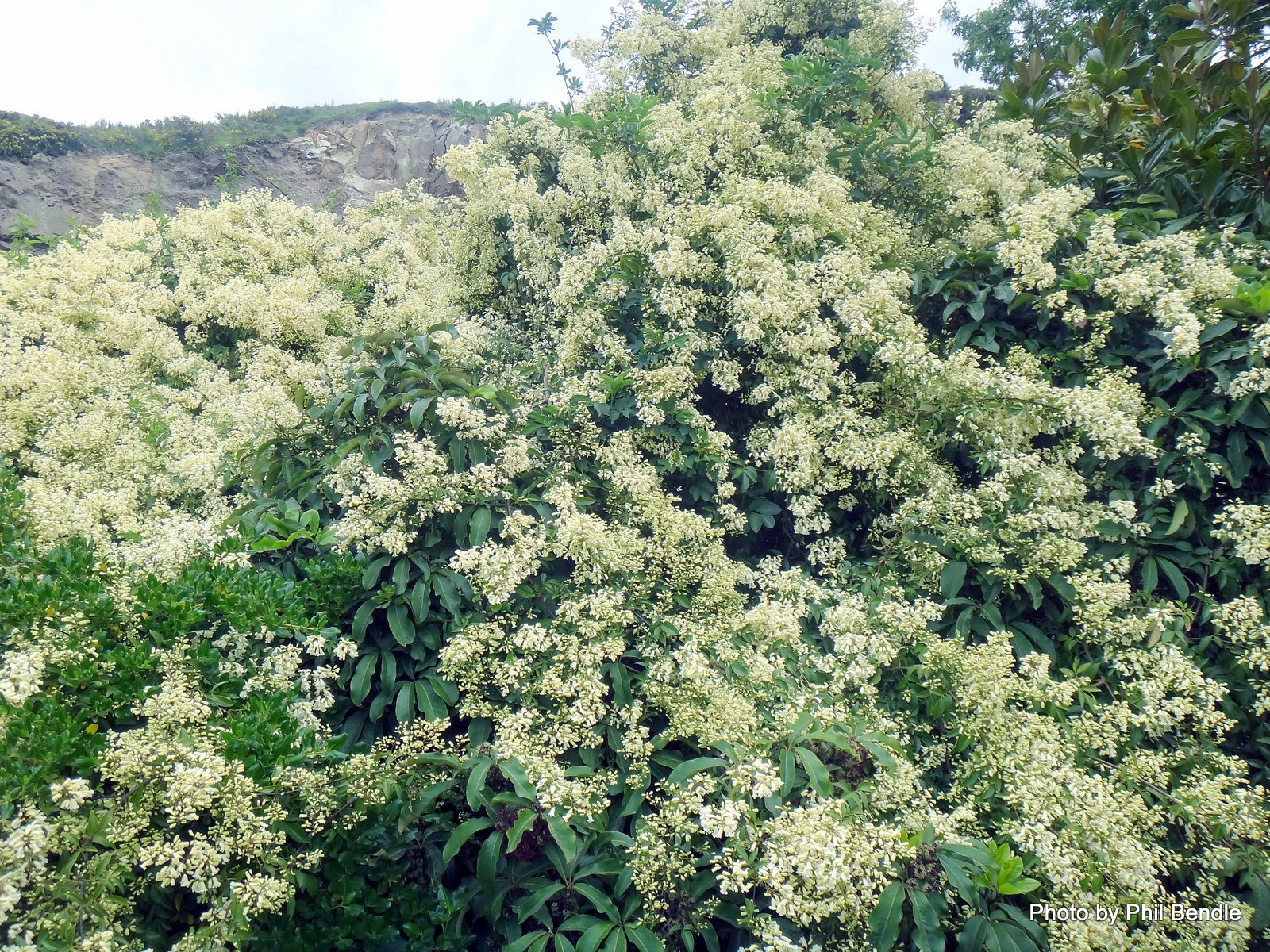
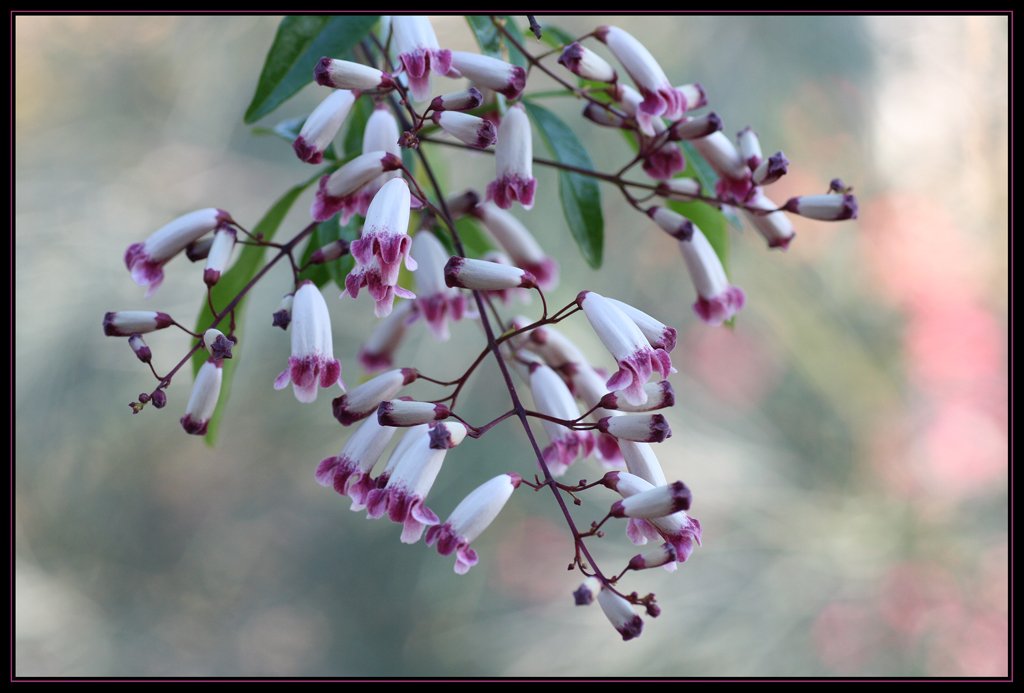
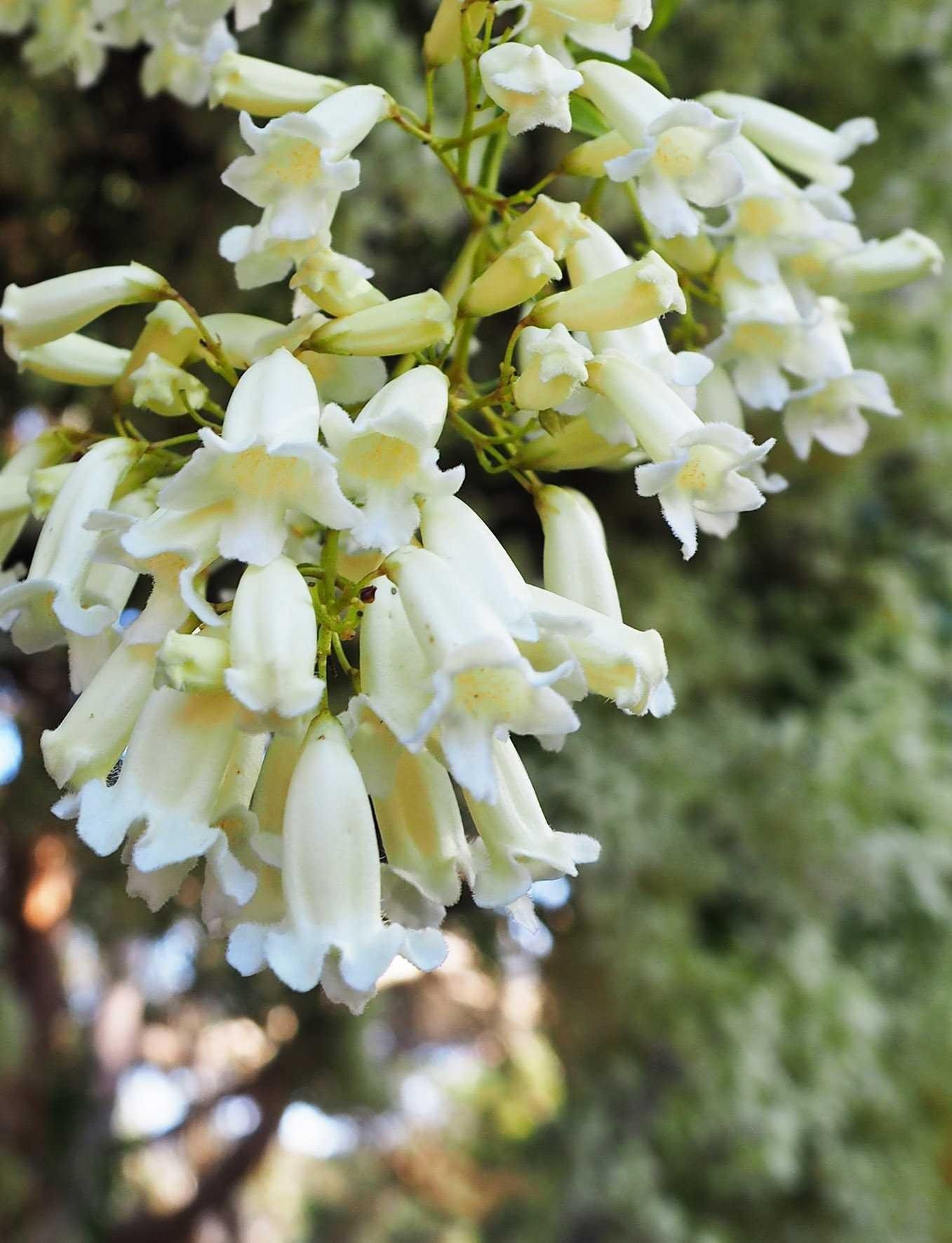
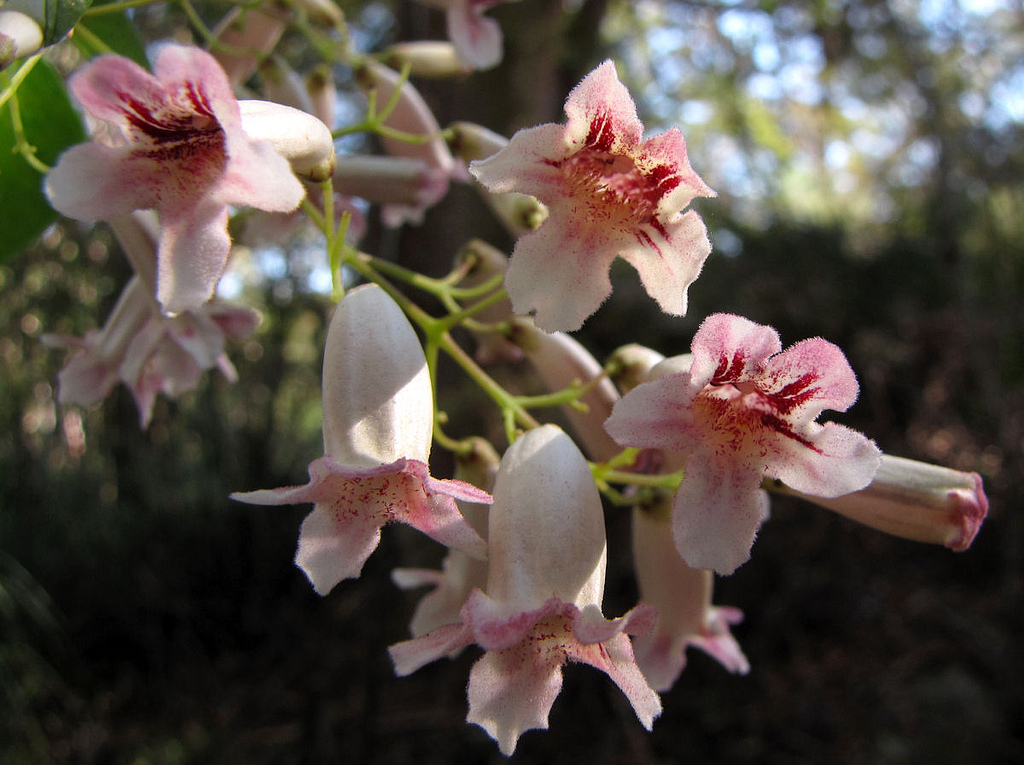
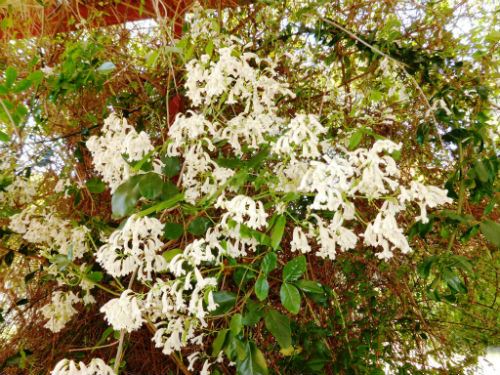
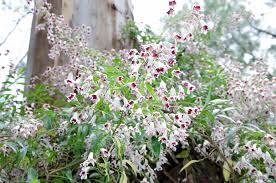
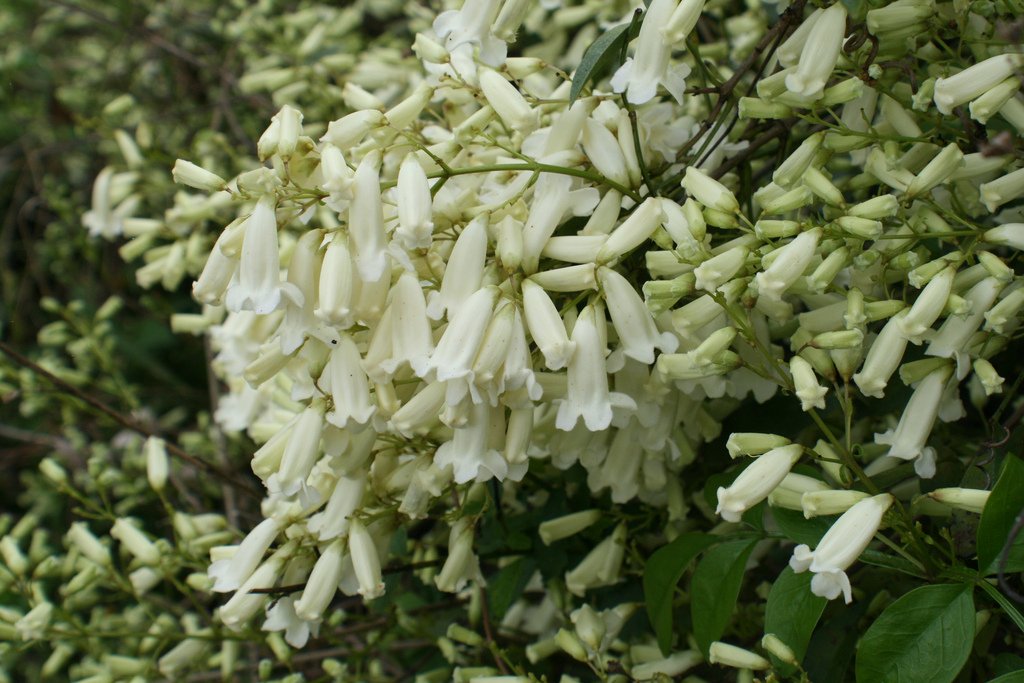
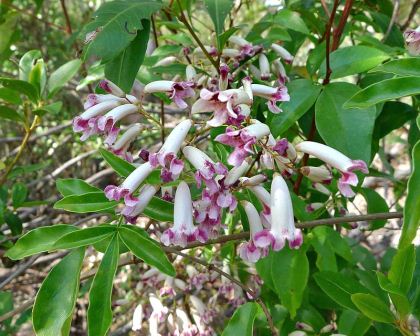
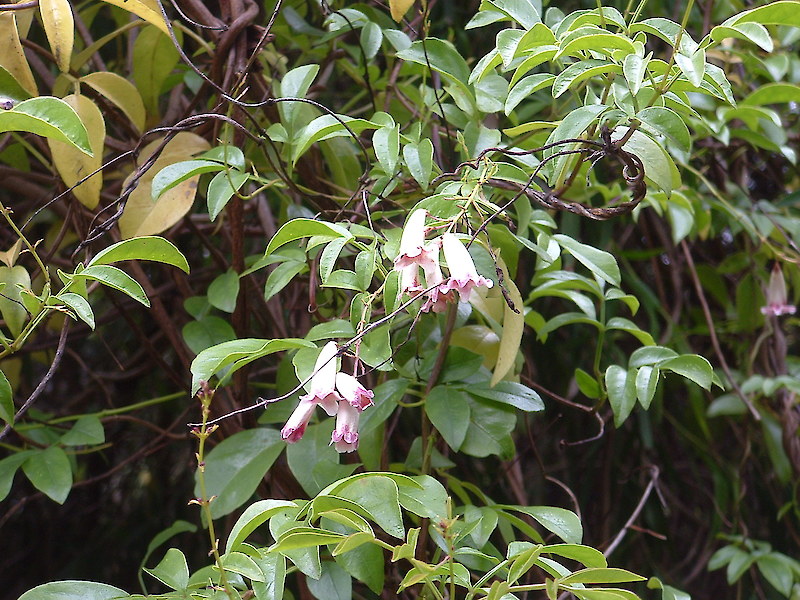
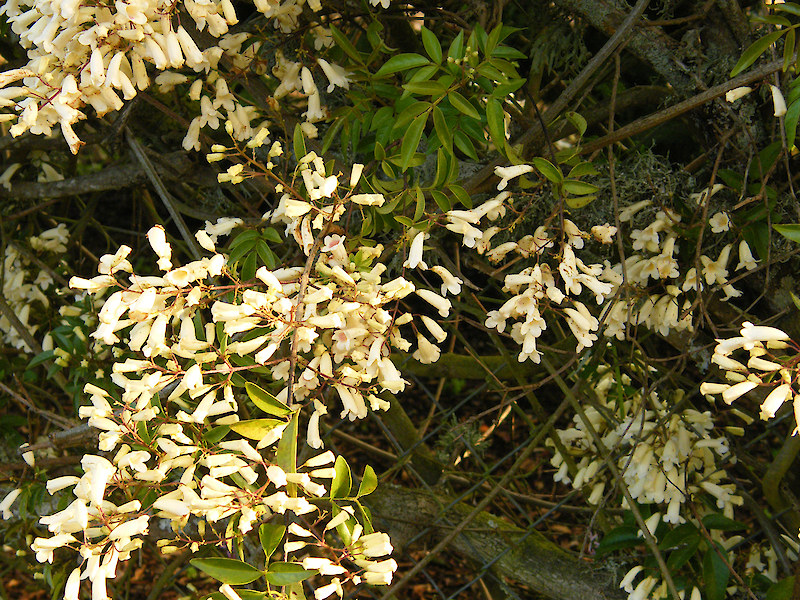
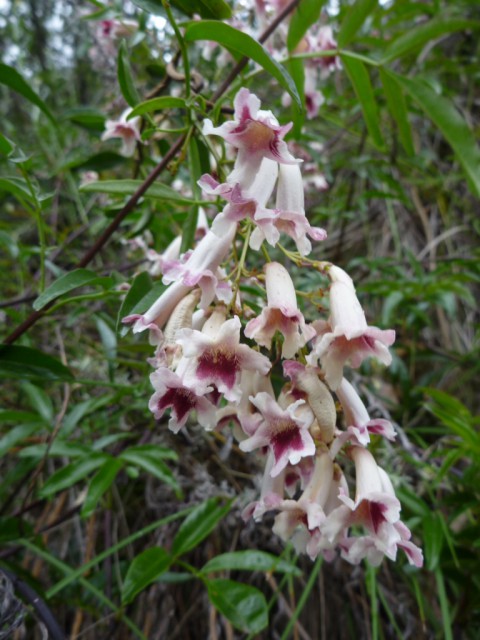
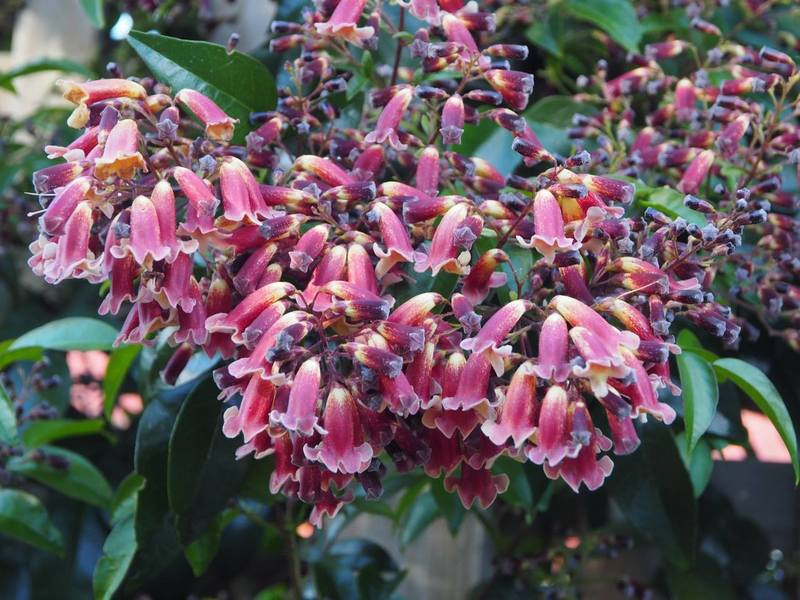
The Wonga Wonga vine ( Pandorea pandorana ) is a fast growing climbing plant which is native to Australia and parts of the South-western Pacific region. It produces masses of flowers in Spring as the warmer weather starts. There are several colours available including yellow'/gold, pink, and white /creamy white. The plant can be utilized as an attractive screen for privacy when grown over a trellis or maybe to cover a wall. It grows best when in full sun , but it will tolerate light shade, and it is very hardy and fairly drought tolerant once established. One plant can grow quite large, easily covering say a 3m x 3m area of support. In the wild, it scrambles over other vegetation and climbs up other trees and shrubs. Suited to frost-free temperate and warmer climates.

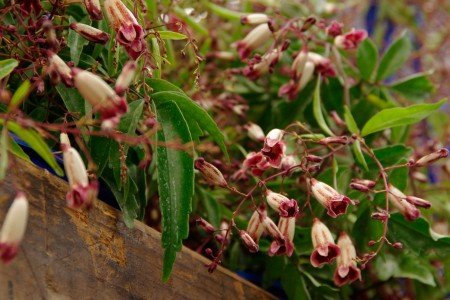
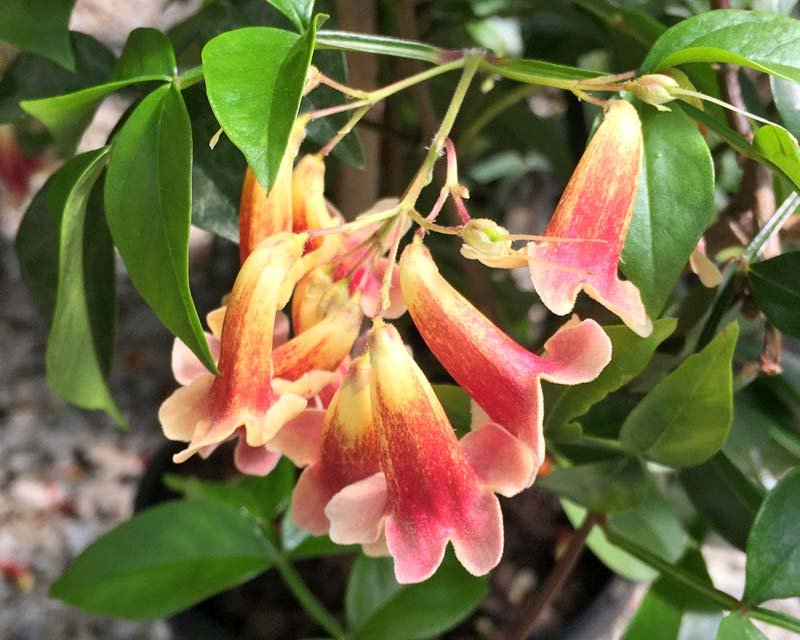
I photographed this Pandorea plant in a reserve on Sydney Harbour.[IMAGE: https://cdn.steemitimages.com/DQmZbgVjuBDDoNjfGJ1M2XDmkVgzkHKajVVQgN8iUj8GvaW/new7%20027.jpg][IMAGE: https://cdn.steemitimages.com/DQmPUhSLPpcP1Gbj45VKuMVEK8juayACGEhy3rVrUMyzsBz/new7%20026.jpg][IMAGE: https://cdn.steemitimages.com/DQmc7ih2Fy5finiEbvZLKwDBBy5eVSbSjnjzwcWBufYyAr9/new7%20025.jpg]

TAGS: [ #pandorea ] [ #plants ] [ #garden ] [ #australia ]

Replies

@steemybot | Oct. 1, 2018, 12:39 a.m. | Votes: 1 | [ VOTE ]

This post was upvoted by @steemybot, Send at least 0.01 STEEM or SBD and get an upvote. Join my discord server for free weighted upvoting for each post, just put the command !upvote before the web address of the post and you will get a free upvote within 2 mins.@steemybot our mission is to support high quality posts which will raise the value of the STEEM Blockchain.

@fadhlan86 | Oct. 1, 2018, 12:48 a.m. | Votes: 1 | [ VOTE ]

A very beautiful flower, similar to a trumpet flower, I was amazed to see it.

@madushanka | Oct. 1, 2018, 12:49 a.m. | Votes: 1 | [ VOTE ]

Glossy oval leaved, evergreen vine doing best in warmer climates or very protected areas. More vigorous than Pandora jasminoides, plant where this has ample room to climb. Spring flowers are yellow to pinkish white, dotted with purple throats. Prune tips of vine back several inches after bloom. Requires some shade in hotter areas.

[IMAGE: https://cdn.steemitimages.com/DQmdQyfWyGaicUjmFpoooBvTvwjgDKEMqx1H8D6H78Pc91F/image.png]

[IMAGE: https://cdn.steemitimages.com/DQmadNPEuoN9Fiv5bUU5osSfrdG9XjqruaUHAXU9oJEmbNA/image.png]

[IMAGE: https://cdn.steemitimages.com/DQmUPPdQ8MnoaXQm2dUPL6mTb3qQQ6Ue1Ax6qjBgii9Gsmv/image.png]

Most plants like 1 inch of water a week during the growing season, but take care not to over water. The first two years after a plant is installed, regular watering is important for establishment. The first year is critical. It is better to water once a week and water deeply, than to water frequently for a few minutes.

[IMAGE: https://cdn.steemitimages.com/DQma631AtrS3VsGEpNw8Bx475Ai1igi7hG8B3PLoU3Epfw9/image.png]

[IMAGE: https://cdn.steemitimages.com/DQmWqdZE9xcm1yMNty5d6QjVzpZqy7zAkD3CQKj7svDm6N4/image.png]

Source: https://www.backyardgardener.com/plantname/pandorea-pandorana-wonga-wonga-vine/

@bien | Oct. 1, 2018, 12:52 a.m. | Votes: 1 | [ VOTE ]

wow...that plants produces dozens of flowers..

i want that kind of flowers i wish i could find that one here in the philippines

thank for sharing and God Bless Bro!

@kingsberry | Oct. 1, 2018, 1:31 a.m. | Votes: 1 | [ VOTE ]

An easy to grow strong and vigorous, evergreen Australian native climber with pointed dark glossy green foliage, and clusters of showy bell shaped cream flowers with speckled maroon throats. It is suited to a wide range of conditions and soil types from sandy to clay. But best in fertile, compost rich, free draining soil in full sun to light shade. Prune after flowering to shape.

An easy to grow strong and vigorous, evergreen Australian native climber
Clusters of showy bell shaped cream flowers in spring
Suited to a wide range of conditions and soil types from sandy to clay.
Will climb through other native plants
Drought tolerant once established

[IMAGE: https://cdn.steemitimages.com/DQmUXAd1kxJ4RgeDf9msHJ2EdHY6iCiiC7vGeP9J66XinwN/image.png]

[IMAGE: https://cdn.steemitimages.com/DQmaBb5XtHYcyZhQFNphZhoiJSGYWffmx98Du9wtZaqkExV/image.png]

[IMAGE: https://cdn.steemitimages.com/DQmfQjNuyYaiybezVWtT2rza8teV2AFeeQ9cohspZDbTzSk/image.png]

[IMAGE: https://cdn.steemitimages.com/DQmcQ9yZQ5XtZzQH21LsRFAALwcxWCVTxLnhkUmbqHhBu12/image.png]

https://www.bunnings.com.au/140mm-wonga-wonga-vine-pandorea-pandorana_p3640674

@pardeepkumar | Oct. 1, 2018, 1:37 a.m. | Votes: 1 | [ VOTE ]

This plant produces multy colors flower . Cream colors flowers are looking very awesome. When wall will fully cover with these flowers, wall will become very beautiful .

@manishkalia | Oct. 1, 2018, 2:05 a.m. | Votes: 1 | [ VOTE ]

Wonga wonga vine is such an interesting name. This plant produces number of flowers . Cream shade flowers are very beautiful. Good plant for home and road side. Thanks

@spiritualpower | Oct. 1, 2018, 2:22 a.m. | Votes: 1 | [ VOTE ]

This plant has numbers of flowers with pretty colors . Good plant for home garden and also very good plant for planting on both sides of roads .

@theguruasia | Oct. 1, 2018, 4:05 a.m. | Votes: 4 | [ VOTE ]

@ctrl-alt-nwo,
I see this plant has vivid color flowers! It looks so great and I like that scenery of the footpath! I like this photography and the description!

Cheers~

@ctrl-alt-nwo | Oct. 1, 2018, 12:22 p.m. | Votes: 1 | [ VOTE ]

Yeah, this is the Reserve i try to walk every week. It's a 5km walk, but it is so nice there beside the Harbour with nice bush around. The land is cared for by volunteers who keep the bushland free of weeds etc for us and the wildlife to enjoy.

@theguruasia | Oct. 1, 2018, 1:49 p.m. | Votes: 3 | [ VOTE ]

@ctrl-alt-nwo,
I wish you might show us more photography of this foot path! Actually it looks very clean and amazing!

Cheers~

@betterthanhome | Oct. 1, 2018, 4:39 a.m. | Votes: 1 | [ VOTE ]

love these flowers. just 3 more weeks and I´m back in Australia. Can´t wait to smell all these flowers.

@ctrl-alt-nwo | Oct. 1, 2018, 12:19 p.m. | Votes: 0 | [ VOTE ]

These don't smell, but others do !

@desikaamukkahani | Oct. 1, 2018, 6:41 a.m. | Votes: 2 | [ VOTE ]

The term wonga wonga sounds funny.

@ctrl-alt-nwo | Oct. 1, 2018, 12:17 p.m. | Votes: 0 | [ VOTE ]

It's the name the Indigenous Australians ...Aborigines ...give to the plant :)

@pocketrocket | Oct. 1, 2018, 6:48 a.m. | Votes: 1 | [ VOTE ]

Privacy plant-I like how it sounds :-)

@saikr | Oct. 1, 2018, 8:09 a.m. | Votes: 1 | [ VOTE ]

Wonga wonga vine
Botanical Name

https://www.nationalparks.nsw.gov.au/-/media/npws/images/native-plant-profiles/wonga-wonga-vine-pandorea-pandorana/wonga-wonga-vine-01.jpg
Pandorea pandorana

Family
Bignoniaceae (jacaranda) family

Also known as
Pandorea australis, Tecoma australis

https://austplants.com.au/resources/Pictures/Main/PlantProfileImages/Pandorea%20pandorana.jpg
Where is it originally from?
New Guinea, Australia

What does it look like?
Vigorous climber with stems that become woody as they mature. Leaves have 5-7 (occasionally 3 or 9) narrow, oval, glossy, hairless leaflets (15-60 x 7-40 mm). Produces clusters of numerous fragrant, tubular flowers (17-23 mm long) that are white or cream outside, and cream or flecked with crimson or deep red inside. Very rarely, these flowers are followed by a beaked seed capsule (9 x 2 cm).

https://pics.davesgarden.com/pics/2017/06/26/Kell/870ac4.jpg
Are there any similar species?
Are there any similar species? Bower vine (P. jasminoides) is similar and is also slightly weedy, with layering stems and clusters of 5-15 flowers (to 60 mm long).
Why is it weedy?
Quick growing, layering stems, reaches low canopy and long-lived. Tolerates hot to cool temperatures and high to moderately low rainfall.
How does it spread?
Seeds spread by wind, and seeds and fragments are spread with dumped vegetation and soil movement. Gardens and parks are common sources.

http://c8.alamy.com/comp/KDGEKH/australian-wildflower-pandorea-pandorana-the-wonga-wonga-vine-a-species-KDGEKH.jpg
What damage does it do?
Forms dense layers in low canopy and prevents the establishment of native plant seedlings.
Which habitats is it likely to invade?
Disturbed shrubland and bush, mainly in warmer areas.
What can I do to get rid of it?
1. Spray (all year round): glyphosate (100ml/10L) or metsulfuron-methyl 600g/kg (5g/10L) or triclopyr 600 EC (30ml/10L) or triclopyr 120g/L (15ml/L).
2. Cut down and paint stump (all year round): glyphosate (200ml/L) or metsulfuron-methyl 600g/kg (1g /L) or a product containing 100g picloram+300g triclopyr/L (100ml/L) or triclopyr 600 EC (100ml /L) or triclopyr 120g/L (500ml/L). Dispose of cut plant material at a refuse transfer station, burn it, or bury it deeply.

source

@aaeesha | Oct. 1, 2018, 8:15 a.m. | Votes: 1 | [ VOTE ]

Wonga-wonga Vine
The Wonga-wonga vine, (Pandorea pandorana), is a fast-growing Australian native climbing plant. It can be found in eastern Australia from Queensland to Tasmania growing vigorously over tall trees. It is also a spectacular garden plant.

https://farm5.staticflickr.com/4152/4991640362_dd7cdaf5f1_b.jpg

Details
Common name: Wonga-wonga vine

Botanic name: Pandorea pandorana. This name is derived from the legend of the Greek goddess Pandora, because of the similarity of the seed capsules to Pandora’s Box.

http://www.wollicreek.org.au/wp-content/wolliupload/IMG_7273.jpg

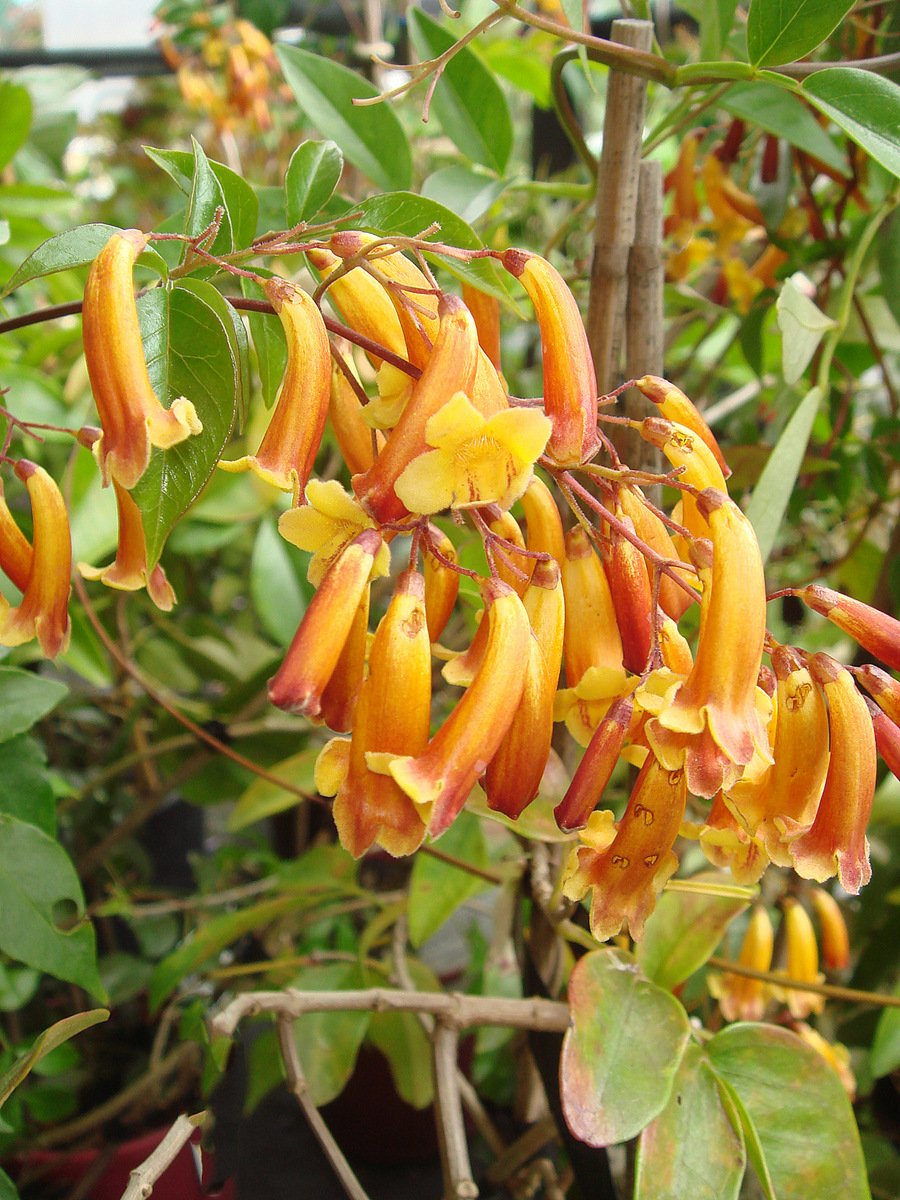
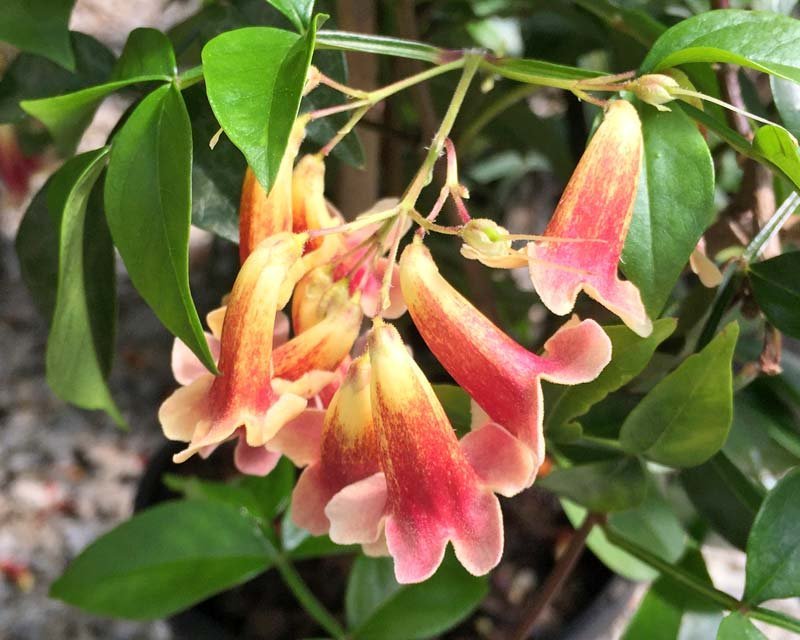
Varieties: The species has heavy clusters of white, tubular flowers often tipped with purple dots. This form can be seen in bushland areas in eastern Australia. There are however several named varieties available including:

https://www.gapphotos.com/images/LargeWebPreview/0586/0586280.jpg

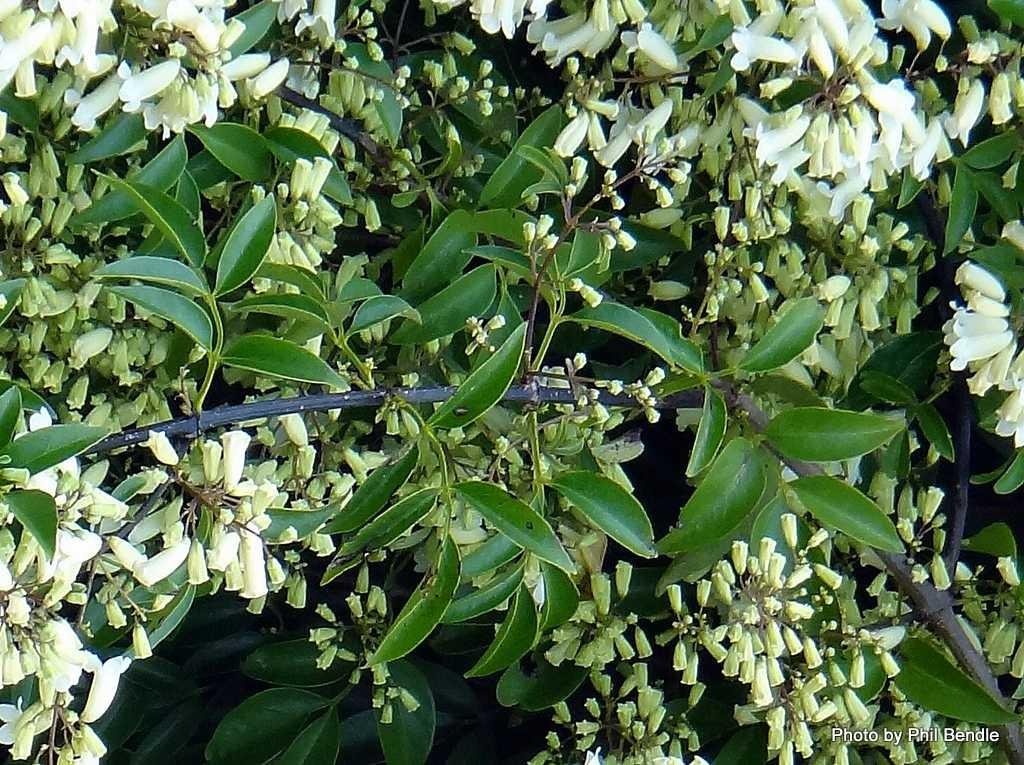
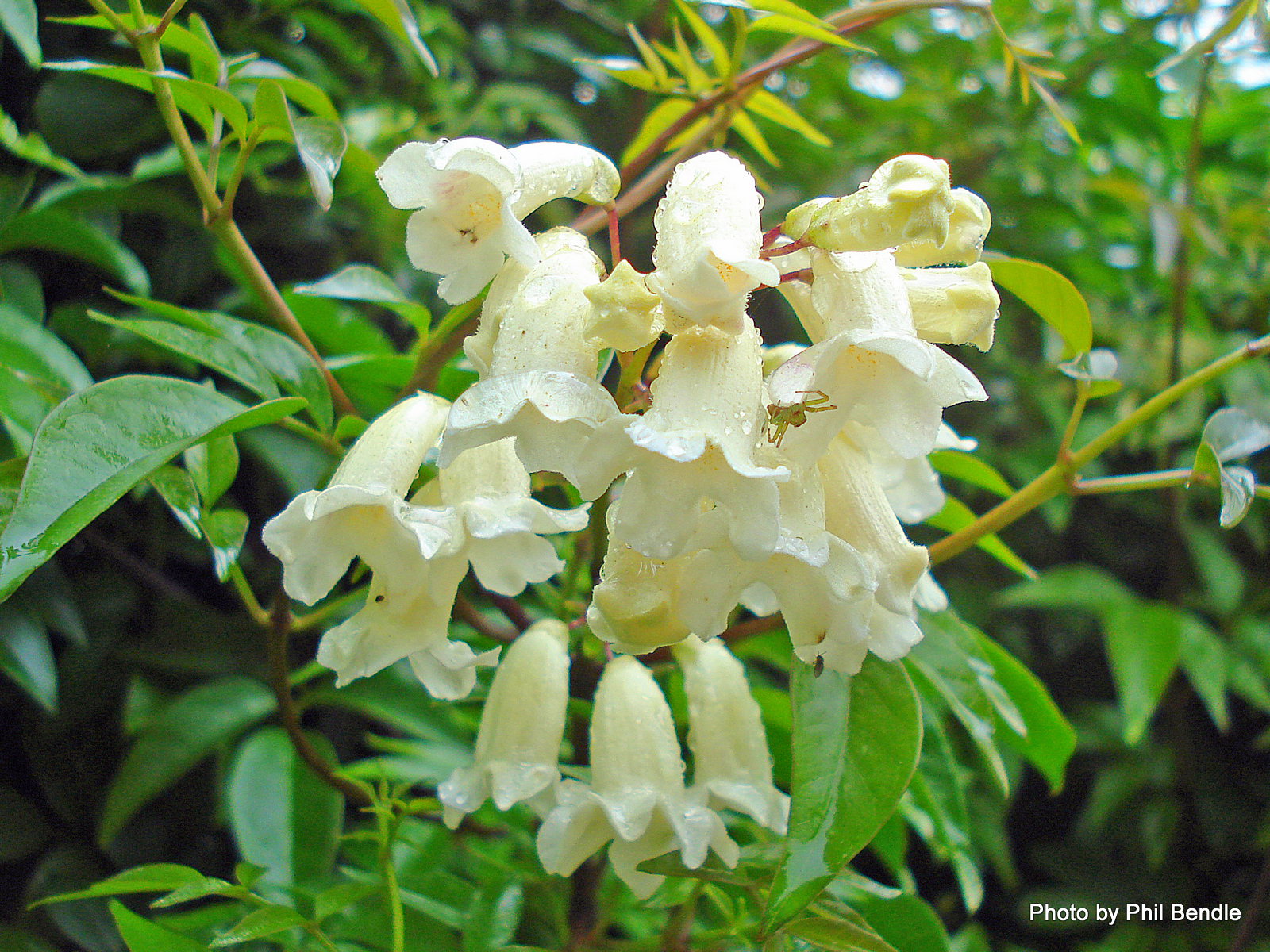
‘Snow Bells’ is a vigorous climber suited to screening. It has creamy white flowers in spring.
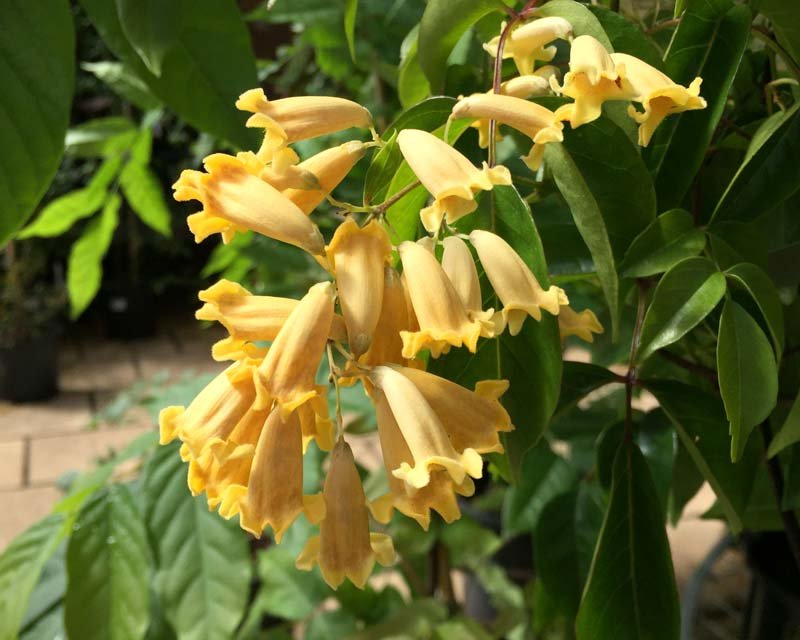
‘Golden Showers’ is a rich golden colour with brown tips to the flowers.
Other species: The other species, P. jasminoides, grows from the North Coast of New South Wales to Queensland and flowers almost continuously from August to January. There are several varieties of this species including, ‘Alba’, which has milky white flowers, and ‘Rosea’ which has a shell pink petals with a crimson throat.

Best climate: The wonga-wonga vinegrows well in all parts of Australia but needs a warm micro-climate in the colder mountain areas. P. jasminoides needs a warmer climate and grows well in Brisbane, Perth, Sydney and Townsville and in warm microclimates in Adelaide and Melbourne.

source

@cranium | Oct. 1, 2018, 8:16 a.m. | Votes: 1 | [ VOTE ]

Great photos. I like reading your blog. I take this opportunity to thank you for supporting my blog. Good luck to you and Love.

@ctrl-alt-nwo | Oct. 1, 2018, 12:18 p.m. | Votes: 1 | [ VOTE ]

No problem, buddy ! We are here to help each other.

@sarah.taylor | Oct. 1, 2018, 8:30 a.m. | Votes: 1 | [ VOTE ]

Kingdom: Plantae
(Unranked): Angiosperms
(Unranked): Eudicots
(Unranked): Asterids
Order: Lamiales
Family: Bignoniaceae
Genus: Pandorea
Species: P. pandorana
Binomial name: Pandorea pandorana
Synonyms: Tecoma australis
Common name: Wonga-wonga Vine, Wonga Vine, Spearwood Bush

http://ketenewplymouth.peoplesnetworknz.info/image_files/0000/0006/4699/Pandorea_pandorana__Snowbells_-001.JPG
Pandorea pandorana is a fast-growing highly variable species of a woody climbing vine, it is found across continental Australia, Indonesia, Papua New Guinea, the Solomon Islands, New Caledonia and Vanuatu. In New Zealand, the species has become naturalised within disturbed native vegetation growing on larger trees in forested habitats.
It has glossy green leaves arranged oppositely along the stem.

http://ketenewplymouth.peoplesnetworknz.info/image_files/0000/0006/8729/Pandorea_pandorana_-Wonga_Wonga_Vine-001.JPG

The pinnate leaves are around 8–16 cm long and have 3–9 leaflets of varying widths. The juvenile leaves are finer and have serrated margins and more finely divided into 7–13 leaflets.
Flowering occurs in spring. The tubular or funnel-shaped flowers are highly variable in colour, ranging from cream-white or all-white to maroon-throated, burgundy or even yellow-orange. Flowering is followed in summer by 3–8 cm long and 1–2 cm wide oblong-shaped seed pods, which are initially bright green before turning brown and releasing numerous papery seeds around 1-1.5 cm (0.5 in) in diameter which is released in large quantities.

http://4.bp.blogspot.com/-NsdK1lHMtXU/UFrZdermnpI/AAAAAAAArXc/Jrj4-9AbSQo/s1600/IMG_2552.JPG
Common cultivars include:
P. 'Golden Showers' is a long-flowering vigorous form with brown-tinted yellow flowers (photo below)
P. 'Ruby Belle' has a red-pink flower with cream throat.
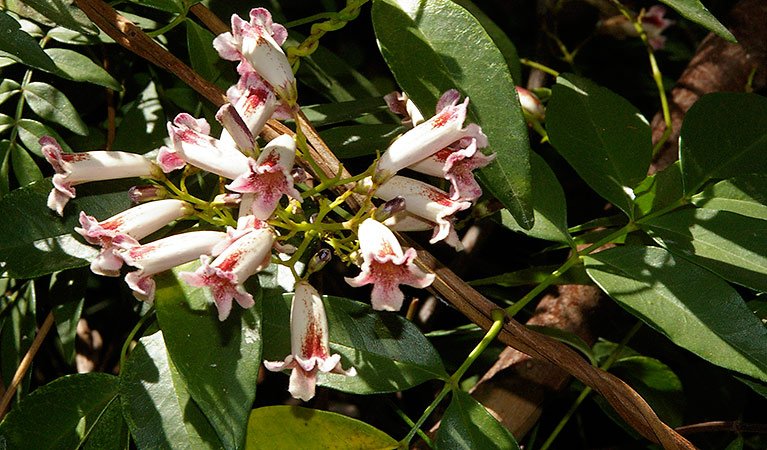
P. 'Ruby Heart' has a cream-coloured flower with a deep ruby–maroon blotch at the throat.
P. 'Snowbells', also known as P. 'alba', is a vigorous cream-white flowered form, with profuse fragrant flowers.

source

@tangera | Oct. 1, 2018, 8:37 a.m. | Votes: 2 | [ VOTE ]

Really very interesting name Wonga Wonga vine.
A variable native climber with twining branches and glossy green foliage, it flowers from winter to summer. It has masses of pendulous bell flowers, which are variable in colour, from pure white, cream with purple-maroon veining through to yellows. It is a fast growing plant, suitable for tropical to temperate regions. It will tolerate light frosts. Good for sun to part shade, and adaptable to most soils as long as they have reasonable drainage. Can be cut back hard to rejuvenate. A good butterfly

[IMAGE: https://img.esteem.ws/wkmgt79ph3.jpg]

[IMAGE: https://img.esteem.ws/3z0cnkqv4k.jpg]

[IMAGE: https://img.esteem.ws/se7tminu0j.jpg]

[IMAGE: https://img.esteem.ws/bfcfcwbjv5.jpg]

[IMAGE: https://img.esteem.ws/i66q1et60o.jpg]

Pandorea pandorana is a fast-growing highly variable species of a woody climbing vine, it is found across continental Australia, Indonesia, Papua New Guinea, the Solomon Islands, New Caledonia and Vanuatu. In New Zealand, the species has become naturalised within disturbed native vegetation growing on larger trees in forested habitats.
It has glossy green leaves arranged oppositely along the stem. The pinnate leaves are around 8–16 cm long and have 3–9 leaflets of varying widths. The juvenile leaves are finer and have serrated margins and more finely divided into 7–13 leaflets.
Flowering occurs in spring. The tubular or funnel-shaped flowers are highly variable in colour, ranging from cream-white or all-white to maroon-throated, burgundy or even yellow-orange. Flowering is followed in summer by 3–8 cm long and 1–2 cm wide oblong-shaped seed pods, which are initially bright green before turning brown and releasing numerous papery seeds around 1-1.5 cm (0.5 in) in diameter which is released in large quantities.

Source:

https://www.google.co.uk/url?sa=t&source=web&rct=j&url=http://www.terrain.net.nz/friends-of-te-henui-group/weeds/pandorea-pandorana-wonga-wonga-vine.html&ved=2ahUKEwjW68OJ5uTdAhVrAcAKHe4ACqwQFjAbegQIBBAB&usg=AOvVaw0TlzB7X1UmN-uBgllthbrv

Thanks.

@labib316 | Oct. 1, 2018, 8:43 a.m. | Votes: 1 | [ VOTE ]

The Wonga-wonga vine, (Pandorea pandorana), is a fast-growing Australian native climbing plant. It can be found in eastern Australia from Queensland to Tasmania growing vigorously over tall trees. It is also a spectacular garden plant.

Details
Common name: Wonga-wonga vine

Botanic name: Pandorea pandorana. This name is derived from the legend of the Greek goddess Pandora, because of the similarity of the seed capsules to Pandora’s Box.

Varieties: The species has heavy clusters of white, tubular flowers often tipped with purple dots. This form can be seen in bushland areas in eastern Australia. There are however several named varieties available including:

‘Snow Bells’ is a vigorous climber suited to screening. It has creamy white flowers in spring.
‘Golden Showers’ is a rich golden colour with brown tips to the flowers.
Other species: The other species, P. jasminoides, grows from the North Coast of New South Wales to Queensland and flowers almost continuously from August to January. There are several varieties of this species including, ‘Alba’, which has milky white flowers, and ‘Rosea’ which has a shell pink petals with a crimson throat.

Best climate: The wonga-wonga vinegrows well in all parts of Australia but needs a warm micro-climate in the colder mountain areas. P. jasminoides needs a warmer climate and grows well in Brisbane, Perth, Sydney and Townsville and in warm microclimates in Adelaide and Melbourne.

Description: The wonga-wonga vine has a profusion of flowers in early spring and is a dense evergreen creeper all year round.The only drawback to the wonga-wonga vine is its brief flowering time. It flowers only for two to three weeks in spring (between early August and October depending on its location).

Growing conditions: The wonga-wonga vine prefers an open, sunny position and a mild climate without heavy frosts. It will tolerate light shade. Train the twining stems in the early stages of growth. Light pruning is desirable after flowering to maintain a tidy shape. It needs little other care other than water in dry times.

Best uses: It is an ideal choice to clothe a fence or wall, disguise a shed or stump or simply create an evergreen screen.

[IMAGE: https://img.esteem.ws/j0tgm806af.jpg]

[IMAGE: https://img.esteem.ws/kcd15mymqi.jpg]

[IMAGE: https://img.esteem.ws/9ki16grvpm.jpg]

[IMAGE: https://img.esteem.ws/sjs0jw10wk.jpg]

[IMAGE: https://img.esteem.ws/eovpi62jqi.jpg]

Source:

https://www.google.co.uk/url?sa=t&source=web&rct=j&url=https://www.burkesbackyard.com.au/fact-sheets/in-the-garden/climbers/wonga-wonga-vine/&ved=2ahUKEwjW68OJ5uTdAhVrAcAKHe4ACqwQFjAaegQIAhAB&usg=AOvVaw3ZgF0GhrC4eXUFtVH4Ocwg

@singa | Oct. 1, 2018, 11:39 a.m. | Votes: 2 | [ VOTE ]

Very beautiful plant.
You always find such amazing flowers and trees,
very exotic and original.
And your photos are always very happy to consider @ctrl-alt-nwo

https://youtu.be/0wZFHl8jzLc

I found this video of these amazing flowers.
Next to them, even the birds sing )

@blazing | Oct. 1, 2018, 12:44 p.m. | Votes: 1 | [ VOTE ]

Wow the Wonga Wonga vine truly look beautiful in those shots really awesome the make the surrounding with their presence loved its name quite easy to remember too :D

@stephenkendal | Oct. 1, 2018, 1:29 p.m. | Votes: 1 | [ VOTE ]

Shared on twitter promoting good quality content on #Steemit. Stephen

Promo-Steem #steemtalent #JoinSteemit #Steemit

Wonga Wonga Vine. #STEEM #steemtalent #JoinSteemit #Steemit @Steemit

GardenersWorld #Gardening #Australia #Blogger #Photographer

https://twitter.com/StephenPKendal/status/1046753305131712514

[IMAGE: https://cdn.steemitimages.com/DQmQgT9np2Fd924s8D2sVbMz1Rv7PSwhrHyforKNZQmgJFD/20181001_142938.jpg]

@melianasagita | Oct. 1, 2018, 2:18 p.m. | Votes: 1 | [ VOTE ]

Pandorea pandorana, the Wonga-wonga vine, is a member of the Bignoniaceae family. It is a vigorous woody climber found over an extensive area of eastern Australia in many differing environments.

http://1.bp.blogspot.com/-2KL6wVjXLug/UB4KowTEvNI/AAAAAAAAA-Y/1hRHvVR3PoQ/s1600/IMGP2205.JPG

While more usually associated with moist forest habitats, it is also found in sandy soils close to the coast, in richer loams of volcanic origin, rocky situations in drier areas, and rainforest verges. It is often a persistent species in disturbed or cleared areas.

https://thumb1.shutterstock.com/display_pic_with_logo/954436/595428536/stock-photo-lovely-creamy-flowers-of-australian-wildflower-pandorea-pandorana-the-wonga-wonga-vine-a-595428536.jpg

In forest conditions the plant may be difficult to see. It grows rapidly into the canopy and quite often the only indication of its presence will be liana vines reaching into the canopy and, during spring, the fallen flowers littering the forest floor. In more open forests it is a prominent species scrambling through the undershrubs.
https://www.benaranurseries.com/media/catalog/product/cache/1/thumbnail/450x300/9df78eab33525d08d6e5fb8d27136e95/i/m/img-7_267.jpg

The leaves are easily distinguished, being pinnate and very glossy. An individual leaf consists of from five to nine leaflets that are ovate in shape and from 7 to 8 cm long.

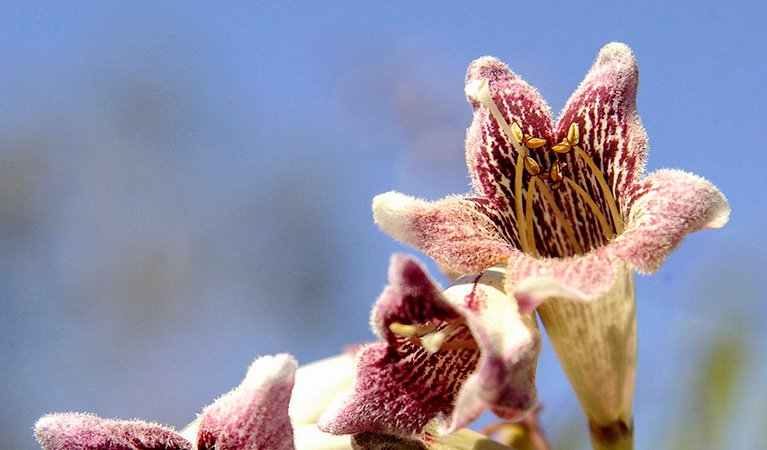
In spring the massed tubular flowers are very conspicuous. They can vary from white or cream to brown and often have maroon or purple striations in the throat of each blossom.

https://i.pinimg.com/originals/9c/38/c6/9c38c6456a2dce0e24d94c4b0b86e3ce.jpg

Seed is formed in a pod-like capsule from 4 to 7 cm long. The capsule opens to reveal copious quantities of flattened seeds, each one with a membranous, encircling 'wing'.

The original selection of Pandorea 'Golden Showers' was made by the Australian National Botanic Gardens from a naturally occurring plant of Pandorea pandorana growing near Kempsey in New South Wales in 1967. The cultivar name 'Golden Showers' refers to the golden-brown pendulous inflorescences. This cultivar will tolerate light frosts but could not be regarded as frost-hardy. If grown in cold environments it would require some protection, either by careful siting in protected positions near buildings or under a protecting plant canopy. It would be difficult to establish in 'frost hollows' where cold winter air has a tendency to pool.

source

@christian.danny | Oct. 1, 2018, 2:26 p.m. | Votes: 1 | [ VOTE ]

Glossy oval leaved, evergreen vine doing best in warmer climates or very protected areas. More vigorous than Pandora jasminoides, plant where this has ample room to climb. Spring flowers are yellow to pinkish white, dotted with purple throats. Prune tips of vine back several inches after bloom. Requires some shade in hotter areas.

Google Plant Images: click here!

Characteristics
Cultivar: n/a
Family:Bignoniaceae
Size:Height: 0 ft. to 20 ft.
Width: 0 ft. to 0 ft.
Plant Category:climbers,
Plant Characteristics:
Foliage Characteristics:evergreen,
Flower Characteristics:showy,
Flower Color:creams, yellows,
Tolerances:

Requirements

Bloomtime Range: Early Spring to Early Spring
USDA Hardiness Zone:9 to 11
AHS Heat Zone:Not defined for this plant
Light Range:Full Sun to Full Sun
pH Range:5.5 to 7.5
Soil Range:Sandy Loam to Some Clay
Water Range:Normal to Normal

Plant Care
Fertilizing
Light
Conditions : Bright Light for Houseplants

Houseplants requiring bright light should be placed within 2 feet of an eastern or western exposure window or within 2 to 5 feet of a southern exposure window.

Conditions : Full Sun

Full Sun is defined as exposure to more than 6 hours of continuous, direct sun per day.

source

@googlefighter | Oct. 1, 2018, 2:29 p.m. | Votes: 1 | [ VOTE ]

If the winter period of colder weather has left you and your garden feeling a bit worse for wear, you could be excused for hiding in the conservatory or greenhouse while Spring gets things back on course.

https://i.pinimg.com/originals/9c/38/c6/9c38c6456a2dce0e24d94c4b0b86e3ce.jpg

I find that several of my favourite spring flowering climbers came originally from Australia. Evergreen, they will all grow outside on a warm sunny wall in Cornish, coastal and urban gardens, but would, I suspect, have their flowering damaged some years by the frosts. However, even in an unheated conservatory it is business as usual.

https://c1.staticflickr.com/5/4017/4488641566_296750abdb_b.jpg
The first to flower is a plant the Australians call "the native Wisteria", Hardenbergia violacea. This is an evergreen twiner that has bunches of very pretty violet blue flowers very early in the year. Easy to grow in the ground or in pots, it has handsome long leaves and can be allowed to twine through other plants. Although it requires a leap of imagination to see it as a "Wisteria" it is a very dainty climber.

https://res.cloudinary.com/greenplantswap/image/upload/fl_keep_iptc,c_crop,g_north,h_0.9,w_1.0/fl_keep_iptc,c_fill,d_no_image_icon-720x720.jpg,dpr_3.0,f_auto,g_center,h_365,q_80,w_365/v1352596188/j1tu5woxoaopp4dmfapf.jpg

undefined

Next up, is a relative of Hardenbergia called Kennedia. There are a number of different Kennedia species, but the one I find is best in spring is Kennedia rubricunda. The Australians call several of these different Kennedia "Running Postmen" after the old style red uniforms worn by their postal workers and the habit of the plants to sprout up quickly and climb, and as soon as you see the flowers, which are a bit pea-like, and in shades of red, you can see why.
https://orig00.deviantart.net/726c/f/2008/239/1/0/wonga_wonga_vine__by_firey_sunset.jpg

The spring flower display is usually followed by furry pea-like seedpods. Again this is not a huge plant and can be accommodated in pots as well as the ground.

undefined

My third choice for spring under glass is one of the Pandorea species, Pandorea pandorana, the "Wonga-Wonga vine". The masses of cream-white, foxglove shaped flowers are delightfully marked inside with pink and have a light and pleasant fragrance

source

@rehan12 | Oct. 1, 2018, 2:44 p.m. | Votes: 1 | [ VOTE ]

More than the appearance of it I do like the name of it ;)

While it looks beautiful and it is pretty similar to Tuberose as well.

@msena | Oct. 1, 2018, 3:18 p.m. | Votes: 2 | [ VOTE ]

Pandorea pandorana, commonly known as the Wonga Wonga Vine, is a species of woody climbing vine in the family Bignoniaceae. It is found in Australia, Malesia and the southwestern Pacific region. It forms large pointed pods filled with papery seeds. It is easy to germinate, having two-lobed dicotyledons. It is a popular garden plant, common cultivars include the yellow-flowered P. 'Golden Showers', the white-flowered P. 'Snowbells', and the pinkish P. 'Ruby Belle'. The wood was used as in making spears for woomeras in the Central and Western deserts
[IMAGE: https://cdn.steemitimages.com/DQmQbkRCDxgtpvo4f4cZEGRK9YZVtSZTSzjSdzHseks3A9v/i66q1et60o.jpg]
Source

[IMAGE: https://cdn.steemitimages.com/DQmZTrdmLiLBRcJstk1sZHAFNozNaf5wGoNmBDyD9GRKCFE/image.png]
Source
The species was first described by English botanist Henry Charles Andrews in 1800 as Bignonia pandorana, before being given its current binomial name in 1928 by Steenis. Both the generic and specific name are derived from Greek mythological figure Pandora.[2] The Scottish botanist Robert Brown had described it as Tecoma australis but this name was ruled invalid. A form found in dryer inland regions was previously known as P. doratoxylon.
[IMAGE: https://cdn.steemitimages.com/DQmP38Yp2mtmreifarYiktZgAhS3uJcPr6yELmYmjEh2RX2/IMG_7273.jpg]
Source

The subspecies austrocaledonica is native New Caledonia, Vanuatu and Lord Howe Island. It is known locally as boat vine. Source

@seha76 | Oct. 1, 2018, 3:19 p.m. | Votes: 2 | [ VOTE ]

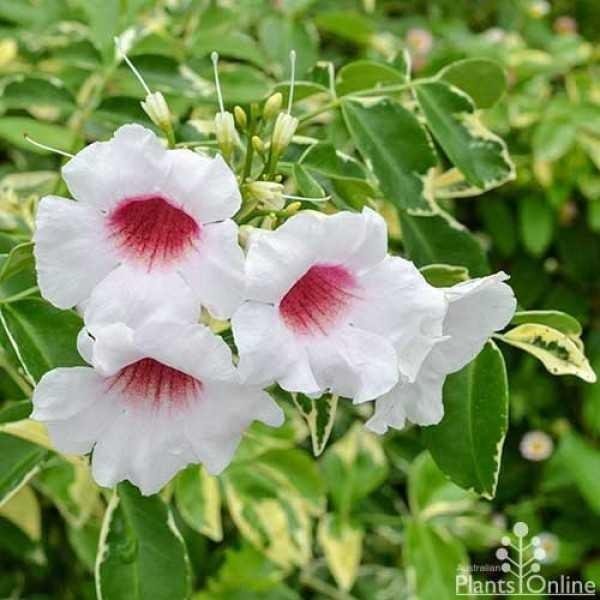
Pandorea Jasminoides (Pandorea jasminoides) is a flower plant that smells good in the evening and its fragrance is very similar to jasmine. The flower has a white and purple base color at the center, the resulting flower is shaped like a funnel.

Other Information:
[IMAGE: https://cdn.steemitimages.com/DQmZHmqy4Vxwih7YtUx3CWQwgZbjeazxdGdrca7hDKgFwcK/IMG_20181001_220900.JPG]

[IMAGE: https://cdn.steemitimages.com/DQmTbSeHhoeukPpzTnKbjhPRx3oNkH6MpgTSBWieuiFcWCN/unnamed%20(1).jpg]

[IMAGE: https://cdn.steemitimages.com/DQmY7cP7FUkpVJBDDbhFGboXWUy8JVAVksGtoreitbNgbDw/unnamed.jpg]
Recommendation: Plateau (cold weather)

Pot between 20-30 cm (medium)

Growing media using ordinary soil or humus soil

Illumination needs throughout the day

Medium water needs, flush 1x a day
Medium growth

Seedlings from stem cuttings

Moderate level of care difficulties

Source:
https://www.google.co.id/url?sa=t&source=web&rct=j&url=https://jualtanamanhias.net/tanaman-white-purple-bower-vine/&ved=2ahUKEwjioobtwOXdAhULSo8KHVMMCXcQFjALegQIBhAB&usg=AOvVaw1tEufsbtJtks6iNaoIN9Wd&cshid=1538406268778

@black-horse | Oct. 1, 2018, 3:55 p.m. | Votes: 2 | [ VOTE ]

Wonga Wonga Wine is a beautiful and amazing plant. The botanical name of this plant is Pandorea pandorana is a family of Bignoniaceae which is also known as Pandorea Australis, Tecoma Australis.
[IMAGE: https://cdn.steemitimages.com/DQmNNfY6JfHoerLcK8eN2qob8P6ibmZsr6kkExaZFXy8mLr/images%20(1).jpeg]

[IMAGE: https://cdn.steemitimages.com/DQmZsBUcq9pfh1zzakL6U1k6n5PsiwVcJQszQ8sSnuWNC2Y/dscf3203web.800x700-ms.jpg]
This plant comes from New Guinea, Australia.

This plant is also known as a tough climber with stems that become wood as adults.

The leaves have 5-7 (sometimes 3 or 9) leaflets that are narrow, oval, shiny, and hairless (15-60 x 7-40 mm).

Produces fragrant tubular flowers (length 17-23 mm) that are white or creamy on the outside, and cream or dark red or red patches inside.
[IMAGE: https://cdn.steemitimages.com/DQmcDtYr49BnLZ5yLJ7zA7aiWPBhbbLHc5hqnmgzXrcJf4M/IMG_20181001_225337.JPG]

[IMAGE: https://cdn.steemitimages.com/DQmc9TZdtkxSknpB85FaVLZoHkamqsmUeMmrykQdhDFPnUi/pandorea-pandorana_wonga-wonga-vine-1.jpg]

Source

@roman-sabil | Oct. 1, 2018, 4:17 p.m. | Votes: 2 | [ VOTE ]

Wonga-wonga Vine, Wonga Vine, Spearwood Bush is the common name of this flower.
[IMAGE: https://cdn.steemitimages.com/DQmUK32baF6C5dc7vo4WjNP1ADH7VqFgDGYxpoV4hDrM9S3/Pandorea_pandorana__Snowbells_.JPG]

[IMAGE: https://cdn.steemitimages.com/DQmbQMoyweZeWogo3NmsnFZJw5XuZcMqFZ4rZZABGyDExJf/DSC05970.JPG]
This plant develops very fast and has shiny green leaves arranged opposite along the stem.

In addition, the leaves pinnate around eight to 15 and cm and vary in width. Young leaves are smoother and have jagged and finer edges.

The flowers are funnel shapes and vary in color, ranging from beige, white, maroon-throated, burgundy or even yellow-orange.

Source:
https://www.google.co.id/url?sa=t&source=web&rct=j&url=http://www.terrain.net.nz/friends-of-te-henui-group/weeds/pandorea-pandorana-wonga-wonga-vine.html&ved=2ahUKEwiZ7ceDzuXdAhWJMY8KHfSOALAQFjAQegQIAhAB&usg=AOvVaw0TlzB7X1UmN-uBgllthbrv

@dragonking | Oct. 1, 2018, 4:18 p.m. | Votes: 1 | [ VOTE ]

[IMAGE: https://cdn.steemitimages.com/DQma631AtrS3VsGEpNw8Bx475Ai1igi7hG8B3PLoU3Epfw9/image.png]

[IMAGE: https://cdn.steemitimages.com/DQmVUMy7jxJztjWpq9M6H2yuct9cGaDZffbVs4422VzAhPi/image.png]

[IMAGE: https://cdn.steemitimages.com/DQmVHxurAx1T2gEsrJvRdMLC4XLdJ7bzybH7x8HXatfbZLr/image.png]

[IMAGE: https://cdn.steemitimages.com/DQmUEdsXy5p7QRqxHiuaPb1pFCK7NtNwsnXFecGuZK8cWnX/image.png]

A variable native climber with twining branches and glossy green foliage, it flowers from winter to summer. It has masses of pendulous bell flowers, which are variable in colour, from pure white, cream with purple-maroon veining through to yellows. It is a fast growing plant, suitable for tropical to temperate regions. It will tolerate light frosts. Good for sun to part shade, and adaptable to most soils as long as they have reasonable drainage. Can be cut back hard to rejuvenate. A good butterfly food plant.

https://www.gardeningwithangus.com.au/pandorea-pandorana-wonga-wonga-vine/

@ctrl-alt-nwo | Oct. 3, 2018, 12:54 a.m. | Votes: 1 | [ VOTE ]

Fav. comment Award !! Beautiful Pics .

@dragonking | Oct. 3, 2018, 5:38 a.m. | Votes: 0 | [ VOTE ]

Thank you sir.

@barski | Oct. 1, 2018, 6:03 p.m. | Votes: 1 | [ VOTE ]

It is interesting to see it. In the second photo I see this plant in the form of a tree. How does it wind, or crawl on other trees? Probably a good honey plant. Flowers have such a shape that they simply invite a bee.

@ctrl-alt-nwo | Oct. 3, 2018, 12:53 a.m. | Votes: 0 | [ VOTE ]

It twines its way up the stems and branches of other plants.

@cryptopie | Oct. 1, 2018, 7:39 p.m. | Votes: 1 | [ VOTE ]

It seems to be like a good vine to to let crawl on a trellis for a shade and its attractive flowers attracts bees too @ctrl-alt-nwo

@chorock | Oct. 1, 2018, 7:41 p.m. | Votes: 5 | [ VOTE ]

It looks very nice smells. It should be so nice to walk between them:)

@joythewanderer | Oct. 1, 2018, 9:13 p.m. | Votes: 3 | [ VOTE ]

Nice flowers! Enjoy spring days there, it's getting cold in Belgium now.

@sadikulaziz | Oct. 1, 2018, 10:36 p.m. | Votes: 1 | [ VOTE ]

Pandorea pandorana, the Wonga-wonga vine, is a member of the Bignoniaceae family. It is a vigorous woody climber found over an extensive area of eastern Australia in many differing environments. While more usually associated with moist forest habitats, it is also found in sandy soils close to the coast, in richer loams of volcanic origin, rocky situations in drier areas, and rainforest verges. It is often a persistent species in disturbed or cleared areas.
[IMAGE: https://cdn.steemitimages.com/DQmQbkRCDxgtpvo4f4cZEGRK9YZVtSZTSzjSdzHseks3A9v/i66q1et60o.jpg]
source of image
In forest conditions the plant may be difficult to see. It grows rapidly into the canopy and quite often the only indication of its presence will be liana vines reaching into the canopy and, during spring, the fallen flowers littering the forest floor. In more open forests it is a prominent species scrambling through the undershrubs. The leaves are easily distinguished, being pinnate and very glossy. An individual leaf consists of from five to nine leaflets that are ovate in shape and from 7 to 8 cm long.
[IMAGE: https://cdn.steemitimages.com/DQmW434TJFYyQjMdFp8Apb8qPh2avBGimPdbpJb3GSCrQzY/DSC05970.JPG]
source of image
spring the massed tubular flowers are very conspicuous. They can vary from white or cream to brown and often have maroon or purple striations in the throat of each blossom.
[IMAGE: https://cdn.steemitimages.com/DQmb7oxNXP4vhLe14wAvvMyhZn1NBMi7F9rBfqD7mdzrvfs/kcd15mymqi.jpg]
source of image
Seed is formed in a pod-like capsule from 4 to 7 cm long. The capsule opens to reveal copious quantities of flattened seeds, each one with a membranous, encircling 'wing'.
[IMAGE: https://cdn.steemitimages.com/DQmZHrZzwmkAqUYXeAstkEVrQmv9ceiSD2GJ6dtUSjevoks/wonga-wonga-vine-01.jpg]
source of image
The original selection of Pandorea 'Golden Showers' was made by the Australian National Botanic Gardens from a naturally occurring plant of Pandorea pandorana growing near Kempsey in New South Wales in 1967. The cultivar name 'Golden Showers' refers to the golden-brown pendulous inflorescences. This cultivar will tolerate light frosts but could not be regarded as frost-hardy. If grown in cold environments it would require some protection, either by careful siting in protected positions near buildings or under a protecting plant canopy. It would be difficult to establish in 'frost hollows' where cold winter air has a tendency to pool.
source of content

@manorvillemike | Oct. 2, 2018, 12:40 a.m. | Votes: 1 | [ VOTE ]

Attractive flower. Looks like a humming bird favorite.

@templeflower | Oct. 2, 2018, 2:12 a.m. | Votes: 1 | [ VOTE ]

[IMAGE: https://cdn.steemitimages.com/DQmdXSHMg6uNoheijJHW53kJ5gokQS982Wyw1FPw36sTyoL/image.png]

[IMAGE: https://cdn.steemitimages.com/DQmaR57JPzf5YhVmWTnp9N1FyUsReFgkS7z4RycqMXJLttG/image.png]

[IMAGE: https://cdn.steemitimages.com/DQmVieLQ37nyFMW5pJxfcQau9xZsPn8m1g32asHCQKXUUrw/image.png]

Pandorea pandorana is a fast-growing highly variable species of a woody climbing vine, it is found across continental Australia, Indonesia, Papua New Guinea, the Solomon Islands, New Caledonia and Vanuatu. In New Zealand, the species has become naturalised within disturbed native vegetation growing on larger trees in forested habitats.
It has glossy green leaves arranged oppositely along the stem. The pinnate leaves are around 8–16 cm long and have 3–9 leaflets of varying widths. The juvenile leaves are finer and have serrated margins and more finely divided into 7–13 leaflets.
Flowering occurs in spring. The tubular or funnel-shaped flowers are highly variable in colour, ranging from cream-white or all-white to maroon-throated, burgundy or even yellow-orange. Flowering is followed in summer by 3–8 cm long and 1–2 cm wide oblong-shaped seed pods, which are initially bright green before turning brown and releasing numerous papery seeds around 1-1.5 cm (0.5 in) in diameter which is released in large quantities.

[IMAGE: https://cdn.steemitimages.com/DQmSm9CjoVWbvph6o5UAAS9AcMmHzGPQLNoLGdgKELTtsK4/image.png]

source= http://www.terrain.net.nz/friends-of-te-henui-group/weeds/pandorea-pandorana-wonga-wonga-vine.html

@chireerocks | Oct. 2, 2018, 2:47 a.m. | Votes: 1 | [ VOTE ]

@ctrl-alt-nwo, First of all whatever details you gave it's speaking about everything, and pictures are showcasing everything. Amazing plant and if we see this plant while walking then for sure it's charm will stop us to explore it's beauty.

And in my opinion this is Artistic plant that's why this plant can produce different colourful flowers. And literally speaking if we imagine breathtaking greenery and flowers around us, that natural essence will give the experience of Paradise.

Thank you so much for your kind support. Wishing you an great day and stay blessed. 🙂

@moniristi | Oct. 2, 2018, 4:37 a.m. | Votes: 2 | [ VOTE ]

This is nice flower i really i like it . Very beautiful plant.
You always find such amazing flowers and trees,
very exotic and original.
Shared on twitter dear.
[IMAGE: https://cdn.steemitimages.com/DQmRBcBvwiJ9UmCXTUFSNrgdvvebottcF5XrXJs2W4aB1Gj/image.png]!

@moniristi | Oct. 2, 2018, 4:41 a.m. | Votes: 3 | [ VOTE ]

Wonga wonga vine
Botanical Name

Pandorea pandorana
Family

Bignoniaceae (jacaranda) family
Also known as

Pandorea australis, Tecoma australis
Where is it originally from?

New Guinea, Australia
What does it look like?
Vigorous climber with stems that become woody as they mature. Leaves have 5-7 (occasionally 3 or 9) narrow, oval, glossy, hairless leaflets (15-60 x 7-40 mm). Produces clusters of numerous fragrant, tubular flowers (17-23 mm long) that are white or cream outside, and cream or flecked with crimson or deep red inside. Very rarely, these flowers are followed by a beaked seed capsule (9 x 2 cm).
https://www.weedbusters.org.nz/site/assets/files/1225/dscf3208web.800x700-ms.jpg
Are there any similar species?
Are there any similar species? Bower vine (P. jasminoides) is similar and is also slightly weedy, with layering stems and clusters of 5-15 flowers (to 60 mm long).
Why is it weedy?
Quick growing, layering stems, reaches low canopy and long-lived. Tolerates hot to cool temperatures and high to moderately low rainfall.
How does it spread?
Seeds spread by wind, and seeds and fragments are spread with dumped vegetation and soil movement. Gardens and parks are common sources.
What damage does it do?
Forms dense layers in low canopy and prevents the establishment of native plant seedlings.
Which habitats is it likely to invade?
Disturbed shrubland and bush, mainly in warmer areas.
What can I do to get rid of it?
https://www.weedbusters.org.nz/site/assets/files/1225/2008_0114dunedin30050.800x700-ms.jpg
1. Spray (all year round): glyphosate (100ml/10L) or metsulfuron-methyl 600g/kg (5g/10L) or triclopyr 600 EC (30ml/10L) or triclopyr 120g/L (15ml/L).
2. Cut down and paint stump (all year round): glyphosate (200ml/L) or metsulfuron-methyl 600g/kg (1g /L) or a product containing 100g picloram+300g triclopyr/L (100ml/L) or triclopyr 600 EC (100ml /L) or triclopyr 120g/L (500ml/L). Dispose of cut plant material at a refuse transfer station, burn it, or bury it deeply.
What can I do to stop it coming back?
Cut stumps and stems resprout so check regularly and follow up as required to eradicate.
https://www.weedbusters.org.nz/site/assets/files/1225/dscf3203web.800x700-ms.jpg
https://www.weedbusters.org.nz/weed-information/weed-list/wonga-wonga-vine/

@shihabieee | Oct. 2, 2018, 4:45 a.m. | Votes: 2 | [ VOTE ]

Wonga Wonga Wine is a beautiful and amazing plant.
Shared on my twitter account sir.
[IMAGE: https://cdn.steemitimages.com/DQmUpHGNcpEFgmQCfxHYa9Qexv9VfNvgXeoAYTwpf1pWsVw/image.png]

@shihabieee | Oct. 2, 2018, 4:48 a.m. | Votes: 2 | [ VOTE ]

Binomial name: Pandorea pandorana
Synonyms: Tecoma australis
Common name: Wonga-wonga Vine, Wonga Vine, Spearwood Bush
http://ketenewplymouth.peoplesnetworknz.info/image_files/0000/0007/9988/DSC05970.JPG
Pandorea pandorana is a fast-growing highly variable species of a woody climbing vine, it is found across continental Australia, Indonesia, Papua New Guinea, the Solomon Islands, New Caledonia and Vanuatu. In New Zealand, the species has become naturalised within disturbed native vegetation growing on larger trees in forested habitats.
It has glossy green leaves arranged oppositely along the stem. The pinnate leaves are around 8–16 cm long and have 3–9 leaflets of varying widths. The juvenile leaves are finer and have serrated margins and more finely divided into 7–13 leaflets.
http://ketenewplymouth.peoplesnetworknz.info/image_files/0000/0006/4699/Pandorea_pandorana__Snowbells_-001.JPG

Flowering occurs in spring. The tubular or funnel-shaped flowers are highly variable in colour, ranging from cream-white or all-white to maroon-throated, burgundy or even yellow-orange. Flowering is followed in summer by 3–8 cm long and 1–2 cm wide oblong-shaped seed pods, which are initially bright green before turning brown and releasing numerous papery seeds around 1-1.5 cm (0.5 in) in diameter which is released in large quantities.
http://ketenewplymouth.peoplesnetworknz.info/image_files/0000/0006/5114/Pandorea_pandorana-003.JPG

Common cultivars include:
P. 'Golden Showers' is a long-flowering vigorous form with brown-tinted yellow flowers (photo below)
P. 'Ruby Belle' has a red-pink flower with cream throat.
P. 'Ruby Heart' has a cream-coloured flower with a deep ruby–maroon blotch at the throat.
P. 'Snowbells', also known as P. 'alba', is a vigorous cream-white flowered form, with profuse fragrant flowers.
Pandorea pandorana
http://ketenewplymouth.peoplesnetworknz.info/image_files/0000/0006/4709/Pandorea_pandorana__Snowbells_.JPG
http://www.terrain.net.nz/friends-of-te-henui-group/weeds/pandorea-pandorana-wonga-wonga-vine.html

@mrashik | Oct. 2, 2018, 4:59 a.m. | Votes: 2 | [ VOTE ]

Pandorea pandorana ( Wonga Wonga Vine )
Glossy oval leaved, evergreen vine doing best in warmer climates or very protected areas. More vigorous than Pandora jasminoides, plant where this has ample room to climb. Spring flowers are yellow to pinkish white, dotted with purple throats. Prune tips of vine back several inches after bloom. Requires some shade in hotter areas.
[IMAGE: https://cdn.steemitimages.com/DQmSbVFdzR4B3X2JaY56SmY313UmiV2KynUKqZTDgLvBrqs/image.png]
How-to : Planting Vines & Climbers

Choose the planting site for your climber carefully: its long flexible stems may need some shelter, but planting right next to a wall might keep it from the sun or water it needs. Make sure that there's room for the climber to grow when it gets tall, and remember that it will grow towards the sun unless carefully trained. Be sure you will be able to manage the plant once it becomes tall, or that if it has a mind of its own, it won't become a problem.

Select a support structure before you plant your climber. Common support structures are trellises, wires, strings, or existing structures. Some plants, like ivy, climb by aerial roots and need no support. Aerial rooted climbers are fine for concrete and masonary, but should never be allowed to climb on wood. Clematis climbs by leaf stalks and the Passion flower by coiling tendrils. Akebia and Wisteria climb by twining stems in a spiral fashion around its support.
https://farm5.staticflickr.com/4152/4991640362_dd7cdaf5f1_b.jpg
Do not use permanent ties; the plant will quickly outgrow them. Use soft, flexible ties (twist-ties work well), or even strips of pantyhose, and check them every few months. Make sure that your support structure is strong, rust-proof, and will last the life of the plant. Anchor your support structure before you plant your climber.

Dig a hole large enough for the root ball. Plant the climber at the same level it was in the container. Plant a little deeper for clematis or for grafted plants. Fill the hole with soil, firming as you, and water well. As soon as the stems are long enough to reach their support structure, gently and loosely tie them as necessary.

If planting in a container, follow the same guidelines. Plan ahead by adding a trellis to the pot, especially if the container will not be positioned where a support for the vine is not readily available. It is possible for vines and climbers to ramble on the ground or cascade over walls too. Clematis and Roses actually work quite well this way.
https://www.gardensonline.com.au/Uploads/Plant/1372/pandorea-pandorana-flowersMain.jpg
https://www.backyardgardener.com/plantname/pandorea-pandorana-wonga-wonga-vine/

@hafez | Oct. 2, 2018, 5:06 a.m. | Votes: 2 | [ VOTE ]

https://www.nationalparks.nsw.gov.au/-/media/npws/images/native-plant-profiles/wonga-wonga-vine-pandorea-pandorana/wonga-wonga-vine-02.jpgThe wonga wonga vine is a widespread vigorous climber usually found along eastern Australia. A variation of the plant occurs in the central desert, where it resembles a sprawling shrub. One of the more common Australian native plants, the wonga wonga vine produces bell-shaped white or yellow flowers in the spring, followed by a large oblong-shaped seed pod.
https://www.nationalparks.nsw.gov.au/-/media/npws/images/native-plant-profiles/wonga-wonga-vine-pandorea-pandorana/wonga-wonga-vine-01.jpg
Widespread across eastern Australia from Cape York to Wilsons Promontory, the wonga wonga vine usually occurs in coastal rainforests and moist gullies in dry woodlands, where it attaches to a host tree. In favourable conditions, the wonga wonga vine is a vigorous and fast-growing climber with a woody stem. The variation of this native vine in central Australia tolerates prolonged dry periods.
https://www.nationalparks.nsw.gov.au/-/media/npws/images/native-plant-profiles/wonga-wonga-vine-pandorea-pandorana/wonga-wonga-vine-03.jpg
The wonga wonga vine flowers in spring, and can continue to bloom throughout summer. The often purple-tinged flowers are followed by large oblong-shaped seed pods that split to disperse papery seeds. In bloom, this plant provides a radiant splash of colour to any green space.
https://www.nationalparks.nsw.gov.au/plants-and-animals/wonga-wonga-vine

@aflatunnisa | Oct. 2, 2018, 5:14 a.m. | Votes: 2 | [ VOTE ]

Wonga-wonga Vine
The Wonga-wonga vine, (Pandorea pandorana), is a fast-growing Australian native climbing plant. It can be found in eastern Australia from Queensland to Tasmania growing vigorously over tall trees. It is also a spectacular garden plant.
Details

Common name: Wonga-wonga vine

Botanic name: Pandorea pandorana. This name is derived from the legend of the Greek goddess Pandora, because of the similarity of the seed capsules to Pandora’s Box.

Varieties: The species has heavy clusters of white, tubular flowers often tipped with purple dots. This form can be seen in bushland areas in eastern Australia. There are however several named varieties available including:

‘Snow Bells’ is a vigorous climber suited to screening. It has creamy white flowers in spring.
‘Golden Showers’ is a rich golden colour with brown tips to the flowers.
http://farm5.static.flickr.com/4152/4991640362_dd7cdaf5f1.jpg
Other species: The other species, P. jasminoides, grows from the North Coast of New South Wales to Queensland and flowers almost continuously from August to January. There are several varieties of this species including, ‘Alba’, which has milky white flowers, and ‘Rosea’ which has a shell pink petals with a crimson throat.

Best climate: The wonga-wonga vinegrows well in all parts of Australia but needs a warm micro-climate in the colder mountain areas. P. jasminoides needs a warmer climate and grows well in Brisbane, Perth, Sydney and Townsville and in warm microclimates in Adelaide and Melbourne.
https://c1.staticflickr.com/7/6205/6061345009_cef738b664_b.jpg
Description: The wonga-wonga vine has a profusion of flowers in early spring and is a dense evergreen creeper all year round.The only drawback to the wonga-wonga vine is its brief flowering time. It flowers only for two to three weeks in spring (between early August and October depending on its location).

Growing conditions: The wonga-wonga vine prefers an open, sunny position and a mild climate without heavy frosts. It will tolerate light shade. Train the twining stems in the early stages of growth. Light pruning is desirable after flowering to maintain a tidy shape. It needs little other care other than water in dry times.

Best uses: It is an ideal choice to clothe a fence or wall, disguise a shed or stump or simply create an evergreen screen.
https://megoutlook.files.wordpress.com/2014/09/pandorea-pandorana-close-24-sept-2014.jpg
https://www.burkesbackyard.com.au/fact-sheets/in-the-garden/climbers/wonga-wonga-vine/

@goldcoin | Oct. 2, 2018, 5:36 a.m. | Votes: 2 | [ VOTE ]

This is really amazing flower of Wonga Vine trees . it is very beautiful. so great photography. thanks @ctrl-alt-nwo
Have a great day.

@shishiristi | Oct. 2, 2018, 5:40 a.m. | Votes: 2 | [ VOTE ]

Pandorea pandorana 'Golden Showers' nom. cult.

Pandorea pandorana, the Wonga-wonga vine, is a member of the Bignoniaceae family. It is a vigorous woody climber found over an extensive area of eastern Australia in many differing environments. While more usually associated with moist forest habitats, it is also found in sandy soils close to the coast, in richer loams of volcanic origin, rocky situations in drier areas, and rainforest verges. It is often a persistent species in disturbed or cleared areas.

In forest conditions the plant may be difficult to see. It grows rapidly into the canopy and quite often the only indication of its presence will be liana vines reaching into the canopy and, during spring, the fallen flowers littering the forest floor. In more open forests it is a prominent species scrambling through the undershrubs. The leaves are easily distinguished, being pinnate and very glossy. An individual leaf consists of from five to nine leaflets that are ovate in shape and from 7 to 8 cm long.
https://www.gardensonline.com.au/Uploads/Plant/1372/Pandorea-Pandorana-Lemon-Bells-11a.jpg
In spring the massed tubular flowers are very conspicuous. They can vary from white or cream to brown and often have maroon or purple striations in the throat of each blossom.

Seed is formed in a pod-like capsule from 4 to 7 cm long. The capsule opens to reveal copious quantities of flattened seeds, each one with a membranous, encircling 'wing'.

The original selection of Pandorea 'Golden Showers' was made by the Australian National Botanic Gardens from a naturally occurring plant of Pandorea pandorana growing near Kempsey in New South Wales in 1967. The cultivar name 'Golden Showers' refers to the golden-brown pendulous inflorescences. This cultivar will tolerate light frosts but could not be regarded as frost-hardy. If grown in cold environments it would require some protection, either by careful siting in protected positions near buildings or under a protecting plant canopy. It would be difficult to establish in 'frost hollows' where cold winter air has a tendency to pool.
http://plantthis.com.au/images/x_images/plants/24725/Pandorea-pandorana-Golden-Showers-main.jpg
The seeds of this cultivar germinate freely and many adventitious seedlings have appeared at the Gardens. Although plants can be raised from seed, this form of propagation will not guarantee flower colour. To retain the characteristics of 'Golden Showers', or for that matter any other desired colour form, vegetative propagation must be used. Tip cuttings of medium-wood material are suitable. Though found naturally in a wide range of environments, cultivation at the Gardens has shown that Pandorea 'Golden Showers', like other forms of the species, performs best in richer soils with some year-round moisture. Soils should not dry out nor should the plants be subjected to extensive soil moisture fluctuations. Plants develop to their full potential in semi-shaded situations. It is an excellent species to use on fences, pergolas or trellises. If desired for use as a climber on trees, some care must be exercised due to the constrictive liana habit as this may inhibit or strangle younger trees as they develop.

Pandorea 'Golden Showers' has proved to be pest free at the Australian National Botanic Gardens.
https://www.gardeningwithangus.com.au/wp-content/uploads/2015/12/pandorea-pandorana_wonga-wonga-vine_golden-showers-2.jpg
https://www.anbg.gov.au/gnp/gnp13/pandorea-pandorana.html

@mstaflat | Oct. 2, 2018, 6:14 a.m. | Votes: 2 | [ VOTE ]

Pandorea pandorana, Wonga Vine, is a member of the Bignoniaceae family. This woody scrambler or climber has long, twining branches with fawn coloured bark.

The leaves are pinnate with from three to seven leaflets up to 15 centimetres long. Juvenile leaves have small, numerous leaflets giving plants, at this stage, a ferny appearance.

Flowers are tubular, about two centimetres long, usually creamy-white with either brown or purple markings in the throat. Flowering is both profuse and conspicious in spring. The floral display is particularly eye-catching because the blooms are held in large terminal clusters.
https://www.gardensonline.com.au/Uploads/Plant/1372/Pandorea-Pandorana-Lemon-Bells-11a.jpg
The capsules, that follow the flowers, are oblong; tapering at both ends and contain a number of winged seeds.

There are a number of colour forms: “Snowbells” has pure white flowers and “Golden Showers” with distinctive yellow-bronze blooms are well known.

“Golden Showers” is a particularly interesting form. It comes from the forest country, west of Kempsey, northern NSW. Many years ago trip by the Armidale Group of APS came across this form in the forested country, east of Armidale. Not so long ago a researcher, from the University of New England, also came across the form in the same area. Some cuttings were collected and “Golden Shower” is growing happily in our garden.
https://s.ecrater.com/stores/86274/52688da2c56fa_86274n.jpg
P. pandorana is widespread in eastern Australia from Cape York to southern Victoria. There are also occurrences on Flinders Island in Bass Strait and in central Australia.

Propagate from seed and cuttings. Colour forms should be propagated from cuttings to maintain the flower colour.
https://davesgarden.com/guides/pf/thumbnail.php?image=2017/06/26/Kell/870ac4.jpg&widht=700&height=312
https://austplants.com.au/Pandorea-pandorana-Wonga-Vine

@ctrl-alt-nwo | Oct. 3, 2018, 12:47 a.m. | Votes: 0 | [ VOTE ]

Silly Sausage Award !! Great choice of Pics.

@mstaflat | Oct. 3, 2018, 8:01 a.m. | Votes: 0 | [ VOTE ]

Thank you....

@robiul985340 | Oct. 2, 2018, 6:21 a.m. | Votes: 2 | [ VOTE ]

Wonga Wonga Vine

https://www.watercorporation.com.au/-/media/images/residential/save-water/waterwise-plant-search/plants/pandorana01.jpg
Family: BIGNONIACEAE

Genus: Pandorea

Species: pandorana Cultivars

Vigorous, fast-growing climbers with shiny, green leaflets, woody older stems and clusters of narrow, tubular, bell flowers in winter and spring. Plants can climb as high as 6 metres and have a tendency to thicken by climbing over themselves. Prune after flowering.
https://www.watercorporation.com.au/-/media/images/residential/save-water/waterwise-plant-search/plants/pandorana02.jpg
Cultivars include 'Golden Belle' (yellow gold flowers), 'Golden Showers' (yellow gold flowers), 'Lemon Bells' (lemon flowers), 'Ruby Belle' (cream and ruby-red flowers), 'Snowbells' (creamy white flowers) and 'Springbrook Belle' (cream with purple throat). May spread in certain circumstances.

https://www.watercorporation.com.au/-/media/images/residential/save-water/waterwise-plant-search/plants/pandorana03.jpg
https://www.watercorporation.com.au/save-water/waterwise-plants-search/plants-details/pandorana

@itexpertshariful | Oct. 2, 2018, 6:24 a.m. | Votes: 2 | [ VOTE ]

Pandorea pandorana is often known as the "Wonga wonga vine". It hails from Australia where it forms a large vigorous, evergreen twiner. When growing in the wild it flowers early in the year, typically April and May. Here in the UK it can flower through until August and September, depending upon its position. It can form an excellent conservatory subject as it generally thrives in pots. The tubular flowers appear in multiple bunches and they are cream white, with pinky red markings in the throat. They also have a light scent.
http://ketenewplymouth.peoplesnetworknz.info/image_files/0000/0006/4699/Pandorea_pandorana__Snowbells_-001.JPG
Evergreen, woody climber.
Can be moved outdoors during summer in a sheltered situation.
Can cope with full sun to partial shade.
Likes regular and reliable watering until established.
Drought-tolerant once established.
Ultimate height: up to 5m.
Sold in a 19/20cm pot.
https://i.pinimg.com/originals/45/b0/e4/45b0e4f3e04bb76006bfae5f573bcb83.jpg
https://www.gardensonline.com.au/Uploads/Plant/1372/Pandorea-Pandorana-Ruby-Belle2.jpg
https://perfectplants.co.uk/plants-bulbs/house-plants/pandorea-pandorana-plant-in-a-3-litre-pot-3-cane-wonga-wonga-vine.html

@ayuramona | Oct. 2, 2018, 8:23 a.m. | Votes: 1 | [ VOTE ]

Pandorea, beautiful plant :)

@asadchughtai | Oct. 2, 2018, 8:58 a.m. | Votes: 2 | [ VOTE ]

The Wonga-wonga vine, (Pandorea pandorana), is a fast-growing Australian native climbing plant. It can be found in eastern Australia from Queensland to Tasmania growing vigorously over tall trees. It is also a spectacular garden plant.[IMAGE: https://cdn.steemitimages.com/DQmYSBMrKbnUVkaK2XKB1Y8tXL1DT1cdcnNKZ87Lj5zr5fE/unnamed.jpg]
The species has heavy clusters of white, tubular flowers often tipped with purple dots. This form can be seen in bushland areas in eastern Australia. There are however several named varieties available including:The species has heavy clusters of white, tubular flowers often tipped with purple dots.[IMAGE: https://cdn.steemitimages.com/DQmZ9R84BdkM2FLoSisytpc2Ww8TJ4GACTdSsGU2jgCg6bq/50109806.Wongawongavineinfullflight6.jpg]
The other species, P. jasminoides, grows from the North Coast of New South Wales to Queensland and flowers almost continuously from August to January. There are several varieties of this species including, ‘Alba’, which has milky white flowers, and ‘Rosea’ which has a shell pink petals with a crimson.[IMAGE: https://cdn.steemitimages.com/DQmY3paAyHC4CzVbzKBL6m4ZU9Ge3YfQFvVYufnWy8mhUho/images.jpeg]
The wonga-wonga vinegrows well in all parts of Australia but needs a warm micro-climate in the colder mountain areas. P. jasminoides needs a warmer climate and grows well in Brisbane, Perth, Sydney and Townsville and in warm microclimates in Adelaide and Melbourne.
[IMAGE: https://cdn.steemitimages.com/DQmQ9d89z3UKpbuakUCMRcRssg9DZsQYBSYayV5z8RLWvcp/s-l300.jpg][IMAGE: https://cdn.steemitimages.com/DQmQGako2QHHexKfsRDmv9KphFbFW36HEd6exbfWKEgmFFG/Pandorea_pandorana_-_Wonga_Wonga_Vine_-001.jpg]
(SOURCE)-:https://www.burkesbackyard.com.au/fact-sheets/in-the-garden/climbers/wonga-wonga-vine/

@ctrl-alt-nwo | Oct. 3, 2018, 1:21 p.m. | Votes: 0 | [ VOTE ]

You forgot to include the SOURCE for your Pics.

@asadchughtai | Oct. 3, 2018, 2:26 p.m. | Votes: 0 | [ VOTE ]

Ohhh sory i edit my cmmnt.

@mhyeasin | Oct. 2, 2018, 11:03 a.m. | Votes: 1 | [ VOTE ]

Pandorea pandorana is a fast-growing highly variable species of a woody climbing vine, it is found across continental Australia, Indonesia, Papua New Guinea, the Solomon Islands, New Caledonia and Vanuatu. In New Zealand, the species has become naturalised within disturbed native vegetation growing on larger trees in forested habitats.
[IMAGE: https://cdn.steemitimages.com/DQmSjb2nVqtJxxsWq6pGHtvRigkhLzdtkfks3g3yhJtwSAF/2008_0114dunedin30050.800x700-ms.jpg]
image source
[IMAGE: https://cdn.steemitimages.com/DQmUvPeyZFikwk1zGrLm8HWi6i5VUkFETe7hvduzsXVh3Cz/Pandorea_pandorana-003.JPG]

[IMAGE: https://cdn.steemitimages.com/DQmSaVqZjvjcYMpUYK61Gxm4F5F3SSNiQQbhDGs8NVqtDWB/Pandorea_pandorana__Snowbells_.JPG]
source
Flowering occurs in spring. The tubular or funnel-shaped flowers are highly variable in colour, ranging from cream-white or all-white to maroon-throated, burgundy or even yellow-orange. Flowering is followed in summer by 3–8 cm long and 1–2 cm wide oblong-shaped seed pods, which are initially bright green before turning brown and releasing numerous papery seeds around 1-1.5 cm (0.5 in) in diameter which is released in large quantities.
source

@zohaib336 | Oct. 2, 2018, 2:26 p.m. | Votes: 2 | [ VOTE ]

The Wonga-wonga vine, (Pandorea pandorana), is a fast-growing Australian native climbing plant. It can be found in eastern Australia from Queensland to Tasmania growing vigorously over tall trees. It is also a spectacular garden plant.
[IMAGE: https://cdn.steemitimages.com/DQmPJ8foim64CmLK7vhdoMdRoubjh1Pj1EcPwfZUXLDqwGP/wonga-wonga-vine-03.jpg]
Source

Details
Common name: Wonga-wonga vine

Botanic name: Pandorea pandorana. This name is derived from the legend of the Greek goddess Pandora, because of the similarity of the seed capsules to Pandora’s Box.
[IMAGE: https://cdn.steemitimages.com/DQmb7oxNXP4vhLe14wAvvMyhZn1NBMi7F9rBfqD7mdzrvfs/kcd15mymqi.jpg]
Source

Varieties: The species has heavy clusters of white, tubular flowers often tipped with purple dots. This form can be seen in bushland areas in eastern Australia. There are however several named varieties available including:
[IMAGE: https://cdn.steemitimages.com/DQmUxyHpmM1fSm6FuE1KmUCuTGVEw2NZFtX7vPtDXWXbbP3/wonga_wonga_vine__by_firey_sunset.jpg]
Source

‘Snow Bells’ is a vigorous climber suited to screening. It has creamy white flowers in spring.
‘Golden Showers’ is a rich golden colour with brown tips to the flowers.
[IMAGE: https://cdn.steemitimages.com/DQmWfHvXkorwk5Hp9UGwbg1pPm4VCbBbRCNNZnrtBp5Tnts/img-7_267.jpg]
Source

Are there any similar species?
Are there any similar species? Bower vine (P. jasminoides) is similar and is also slightly weedy, with layering stems and clusters of 5-15 flowers (to 60 mm long).
Why is it weedy?
Quick growing, layering stems, reaches low canopy and long-lived. Tolerates hot to cool temperatures and high to moderately low rainfall.
How does it spread?
[IMAGE: https://cdn.steemitimages.com/DQmRwz7PAuvpwpBub6XJRH9zdkCkTvzTC1bVCZnDAjBfExM/Pandorea-Pandorana-Ruby-Belle2.jpg]
Source

Seed is formed in a pod-like capsule from 4 to 7 cm long. The capsule opens to reveal copious quantities of flattened seeds, each one with a membranous, encircling 'wing'.
[IMAGE: https://cdn.steemitimages.com/DQmPRz2gzakHpBZryyyygGKDozKrzfZ9F63rD2Uz5nHJMvA/se7tminu0j.jpg]
Source

The original selection of Pandorea 'Golden Showers' was made by the Australian National Botanic Gardens from a naturally occurring plant of Pandorea pandorana growing near Kempsey in New South Wales in 1967. The cultivar name 'Golden Showers' refers to the golden-brown pendulous inflorescences. This cultivar will tolerate light frosts but could not be regarded as frost-hardy. If grown in cold environments it would require some protection, either by careful siting in protected positions near buildings or under a protecting plant canopy. It would be difficult to establish in 'frost hollows' where cold winter air has a tendency to pool.
[IMAGE: https://cdn.steemitimages.com/DQmNjf6fwfWEGLgq2enWaKBB2xff8zFapQ2C62F5rLBtnFj/pandorana03.jpg]
Source

@ctrl-alt-nwo | Oct. 3, 2018, 12:44 a.m. | Votes: 0 | [ VOTE ]

Fav. comment Award !! Well done on your selection of Pics and information.

@shoaib721 | Oct. 3, 2018, 2:43 a.m. | Votes: 0 | [ VOTE ]

Thank you

@faraz33 | Oct. 2, 2018, 2:32 p.m. | Votes: 2 | [ VOTE ]

‘Snow Bells’ is a vigorous climber suited to screening. It has creamy white flowers in spring.
‘Golden Showers’ is a rich golden colour with brown tips to the flowers.
[IMAGE: https://cdn.steemitimages.com/DQmWfHvXkorwk5Hp9UGwbg1pPm4VCbBbRCNNZnrtBp5Tnts/img-7_267.jpg]
Source

Are there any similar species?
Are there any similar species? Bower vine (P. jasminoides) is similar and is also slightly weedy, with layering stems and clusters of 5-15 flowers (to 60 mm long).
Why is it weedy?
Quick growing, layering stems, reaches low canopy and long-lived. Tolerates hot to cool temperatures and high to moderately low rainfall.
How does it spread?
[IMAGE: https://cdn.steemitimages.com/DQmRwz7PAuvpwpBub6XJRH9zdkCkTvzTC1bVCZnDAjBfExM/Pandorea-Pandorana-Ruby-Belle2.jpg]
Source

Seed is formed in a pod-like capsule from 4 to 7 cm long. The capsule opens to reveal copious quantities of flattened seeds, each one with a membranous, encircling 'wing'.
[IMAGE: https://cdn.steemitimages.com/DQmPRz2gzakHpBZryyyygGKDozKrzfZ9F63rD2Uz5nHJMvA/se7tminu0j.jpg]
Source

The original selection of Pandorea 'Golden Showers' was made by the Australian National Botanic Gardens from a naturally occurring plant of Pandorea pandorana growing near Kempsey in New South Wales in 1967. The cultivar name 'Golden Showers' refers to the golden-brown pendulous inflorescences. This cultivar will tolerate light frosts but could not be regarded as frost-hardy. If grown in cold environments it would require some protection, either by careful siting in protected positions near buildings or under a protecting plant canopy. It would be difficult to establish in 'frost hollows' where cold winter air has a tendency to pool.
[IMAGE: https://cdn.steemitimages.com/DQmNjf6fwfWEGLgq2enWaKBB2xff8zFapQ2C62F5rLBtnFj/pandorana03.jpg]
Source

The Wonga-wonga vine, (Pandorea pandorana), is a fast-growing Australian native climbing plant. It can be found in eastern Australia from Queensland to Tasmania growing vigorously over tall trees. It is also a spectacular garden plant.
[IMAGE: https://cdn.steemitimages.com/DQmPJ8foim64CmLK7vhdoMdRoubjh1Pj1EcPwfZUXLDqwGP/wonga-wonga-vine-03.jpg]
Source

Details
Common name: Wonga-wonga vine

Botanic name: Pandorea pandorana. This name is derived from the legend of the Greek goddess Pandora, because of the similarity of the seed capsules to Pandora’s Box.
[IMAGE: https://cdn.steemitimages.com/DQmb7oxNXP4vhLe14wAvvMyhZn1NBMi7F9rBfqD7mdzrvfs/kcd15mymqi.jpg]
Source

Varieties: The species has heavy clusters of white, tubular flowers often tipped with purple dots. This form can be seen in bushland areas in eastern Australia. There are however several named varieties available including:
[IMAGE: https://cdn.steemitimages.com/DQmUxyHpmM1fSm6FuE1KmUCuTGVEw2NZFtX7vPtDXWXbbP3/wonga_wonga_vine__by_firey_sunset.jpg]
Source

@shoaib721 | Oct. 2, 2018, 2:34 p.m. | Votes: 2 | [ VOTE ]

Seed is formed in a pod-like capsule from 4 to 7 cm long. The capsule opens to reveal copious quantities of flattened seeds, each one with a membranous, encircling 'wing'.
[IMAGE: https://cdn.steemitimages.com/DQmPRz2gzakHpBZryyyygGKDozKrzfZ9F63rD2Uz5nHJMvA/se7tminu0j.jpg]
Source

The original selection of Pandorea 'Golden Showers' was made by the Australian National Botanic Gardens from a naturally occurring plant of Pandorea pandorana growing near Kempsey in New South Wales in 1967. The cultivar name 'Golden Showers' refers to the golden-brown pendulous inflorescences. This cultivar will tolerate light frosts but could not be regarded as frost-hardy. If grown in cold environments it would require some protection, either by careful siting in protected positions near buildings or under a protecting plant canopy. It would be difficult to establish in 'frost hollows' where cold winter air has a tendency to pool.
[IMAGE: https://cdn.steemitimages.com/DQmNjf6fwfWEGLgq2enWaKBB2xff8zFapQ2C62F5rLBtnFj/pandorana03.jpg]
Source

The Wonga-wonga vine, (Pandorea pandorana), is a fast-growing Australian native climbing plant. It can be found in eastern Australia from Queensland to Tasmania growing vigorously over tall trees. It is also a spectacular garden plant.
[IMAGE: https://cdn.steemitimages.com/DQmPJ8foim64CmLK7vhdoMdRoubjh1Pj1EcPwfZUXLDqwGP/wonga-wonga-vine-03.jpg]
Source

Details
Common name: Wonga-wonga vine

Botanic name: Pandorea pandorana. This name is derived from the legend of the Greek goddess Pandora, because of the similarity of the seed capsules to Pandora’s Box.
[IMAGE: https://cdn.steemitimages.com/DQmb7oxNXP4vhLe14wAvvMyhZn1NBMi7F9rBfqD7mdzrvfs/kcd15mymqi.jpg]
Source

Varieties: The species has heavy clusters of white, tubular flowers often tipped with purple dots. This form can be seen in bushland areas in eastern Australia. There are however several named varieties available including:
[IMAGE: https://cdn.steemitimages.com/DQmUxyHpmM1fSm6FuE1KmUCuTGVEw2NZFtX7vPtDXWXbbP3/wonga_wonga_vine__by_firey_sunset.jpg]
Source

‘Snow Bells’ is a vigorous climber suited to screening. It has creamy white flowers in spring.
‘Golden Showers’ is a rich golden colour with brown tips to the flowers.
[IMAGE: https://cdn.steemitimages.com/DQmWfHvXkorwk5Hp9UGwbg1pPm4VCbBbRCNNZnrtBp5Tnts/img-7_267.jpg]
Source

Are there any similar species?
Are there any similar species? Bower vine (P. jasminoides) is similar and is also slightly weedy, with layering stems and clusters of 5-15 flowers (to 60 mm long).
Why is it weedy?
Quick growing, layering stems, reaches low canopy and long-lived. Tolerates hot to cool temperatures and high to moderately low rainfall.
How does it spread?
[IMAGE: https://cdn.steemitimages.com/DQmRwz7PAuvpwpBub6XJRH9zdkCkTvzTC1bVCZnDAjBfExM/Pandorea-Pandorana-Ruby-Belle2.jpg]
Source

@faizazohaib | Oct. 2, 2018, 2:40 p.m. | Votes: 1 | [ VOTE ]

[IMAGE: https://cdn.steemitimages.com/DQmZojHA7GTUMbSukaCzAU6qJvMBR2vbiSrFxqmuusuws8u/bfcfcwbjv5.jpg]

The Wonga-wonga vine, (Pandorea pandorana), is a fast-growing Australian native climbing plant. It can be found in eastern Australia from Queensland to Tasmania growing vigorously over tall trees. It is also a spectacular garden plant.
[IMAGE: https://cdn.steemitimages.com/DQmPJ8foim64CmLK7vhdoMdRoubjh1Pj1EcPwfZUXLDqwGP/wonga-wonga-vine-03.jpg]
Source

Details
Common name: Wonga-wonga vine

Botanic name: Pandorea pandorana. This name is derived from the legend of the Greek goddess Pandora, because of the similarity of the seed capsules to Pandora’s Box.
[IMAGE: https://cdn.steemitimages.com/DQmb7oxNXP4vhLe14wAvvMyhZn1NBMi7F9rBfqD7mdzrvfs/kcd15mymqi.jpg]
Source

Varieties: The species has heavy clusters of white, tubular flowers often tipped with purple dots. This form can be seen in bushland areas in eastern Australia. There are however several named varieties available including:
[IMAGE: https://cdn.steemitimages.com/DQmUxyHpmM1fSm6FuE1KmUCuTGVEw2NZFtX7vPtDXWXbbP3/wonga_wonga_vine__by_firey_sunset.jpg]
Source

‘Snow Bells’ is a vigorous climber suited to screening. It has creamy white flowers in spring.
‘Golden Showers’ is a rich golden colour with brown tips to the flowers.
[IMAGE: https://cdn.steemitimages.com/DQmWfHvXkorwk5Hp9UGwbg1pPm4VCbBbRCNNZnrtBp5Tnts/img-7_267.jpg]
Source

Are there any similar species?
Are there any similar species? Bower vine (P. jasminoides) is similar and is also slightly weedy, with layering stems and clusters of 5-15 flowers (to 60 mm long).
Why is it weedy?
Quick growing, layering stems, reaches low canopy and long-lived. Tolerates hot to cool temperatures and high to moderately low rainfall.
How does it spread?
[IMAGE: https://cdn.steemitimages.com/DQmRwz7PAuvpwpBub6XJRH9zdkCkTvzTC1bVCZnDAjBfExM/Pandorea-Pandorana-Ruby-Belle2.jpg]
Source

Seed is formed in a pod-like capsule from 4 to 7 cm long. The capsule opens to reveal copious quantities of flattened seeds, each one with a membranous, encircling 'wing'.
[IMAGE: https://cdn.steemitimages.com/DQmPRz2gzakHpBZryyyygGKDozKrzfZ9F63rD2Uz5nHJMvA/se7tminu0j.jpg]
Source

The original selection of Pandorea 'Golden Showers' was made by the Australian National Botanic Gardens from a naturally occurring plant of Pandorea pandorana growing near Kempsey in New South Wales in 1967.
[IMAGE: https://cdn.steemitimages.com/DQmb7oxNXP4vhLe14wAvvMyhZn1NBMi7F9rBfqD7mdzrvfs/kcd15mymqi.jpg]

@shoaib721 | Oct. 2, 2018, 2:45 p.m. | Votes: 1 | [ VOTE ]

Pandorea Jasminoides (Pandorea jasminoides) is a flower plant that smells good in the evening and its fragrance is very similar to jasmine. The flower has a white and purple base color at the center, the resulting flower is shaped like a funnel.

[IMAGE: https://cdn.steemitimages.com/DQmXkQhviczKG7eGqGip3u3hpNRYBvE2SjaZ8z4FBRdfsYf/image-1.png]
Source

@ahmad4 | Oct. 2, 2018, 2:54 p.m. | Votes: 4 | [ VOTE ]

Pandorea pandorana, Wonga Vine, is a member of the Bignoniaceae family. This woody scrambler or climber has long, twining branches with fawn coloured bark.
[IMAGE: https://cdn.steemitimages.com/DQmTkFCEUcg5gXSngWGPwrVP16ocTQghhvARLNZ1DMKQkbi/Pandorea%20pandorana.jpg]

The leaves are pinnate with from three to seven leaflets up to 15 centimetres long. Juvenile leaves have small, numerous leaflets giving plants, at this stage, a ferny appearance.
[IMAGE: https://cdn.steemitimages.com/DQmZsBUcq9pfh1zzakL6U1k6n5PsiwVcJQszQ8sSnuWNC2Y/dscf3203web.800x700-ms.jpg]

Flowers are tubular, about two centimetres long, usually creamy-white with either brown or purple markings in the throat. Flowering is both profuse and conspicious in spring. The floral display is particularly eye-catching because the blooms are held in large terminal clusters.
[IMAGE: https://cdn.steemitimages.com/DQmRC5KQKM7VA1wfqq7SuGKj6D8PfnBBaXR3GtHD38CE2jg/download%20(1).jpg]

The capsules, that follow the flowers, are oblong; tapering at both ends and contain a number of winged seeds.

There are a number of colour forms: “Snowbells” has pure white flowers and “Golden Showers” with distinctive yellow-bronze blooms are well known.

“Golden Showers” is a particularly interesting form. It comes from the forest country, west of Kempsey, northern NSW. Many years ago trip by the Armidale Group of APS came across this form in the forested country, east of Armidale.
[IMAGE: https://cdn.steemitimages.com/DQmW1HRoSsCHcLK9WATCEjdD9EBZTEy1CHEfLqioWSrFetr/download.jpg]

Pandorana is widespread in eastern Australia from Cape York to southern Victoria. There are also occurrences on Flinders Island in Bass Strait and in central Australia.
Source

@naim444 | Oct. 2, 2018, 3:08 p.m. | Votes: 1 | [ VOTE ]

Pandorea pandorana, Wonga Vine, is a member of the Bignoniaceae family. This woody scrambler or climber has long, twining branches with fawn coloured bark.
[IMAGE: https://cdn.steemitimages.com/DQmcvxisQCfyUMiCvfxA2qeRvVRMtXvKMME1ycTt6hLxNg5/4991640362_dd7cdaf5f1_b.jpg]
image source
The leaves are pinnate with from three to seven leaflets up to 15 centimetres long. Juvenile leaves have small, numerous leaflets giving plants, at this stage, a ferny appearance.
[IMAGE: https://cdn.steemitimages.com/DQmecaW9ZgnTwLTGcbUBNJ9SCT5EWpzg3zi8JdUbqtRYwXc/Pandorea-Pandorana-Ruby-Belle2.jpg]
image source
Flowers are tubular, about two centimetres long, usually creamy-white with either brown or purple markings in the throat. Flowering is both profuse and conspicious in spring. The floral display is particularly eye-catching because the blooms are held in large terminal clusters.
[IMAGE: https://cdn.steemitimages.com/DQmZ8zzpttvAw7JLAgWguwDpKd6Eor4Ye4Fodob2PHttX7H/se7tminu0j.jpg]
image source
The capsules, that follow the flowers, are oblong; tapering at both ends and contain a number of winged seeds.
[IMAGE: https://cdn.steemitimages.com/DQmWpUohY42bCXrxYp7ifbZRLc1RKVNbinXZxvRCHuXdQ91/Pandorea-Pandorana-Lemon-Bells-11a.jpg]
image source
There are a number of colour forms: “Snowbells” has pure white flowers and “Golden Showers” with distinctive yellow-bronze blooms are well known.
source

@benedetto | Oct. 2, 2018, 3:12 p.m. | Votes: 1 | [ VOTE ]

Pandorea pandorana, Wonga Vine, is a member of the Bignoniaceae family. This woody scrambler or climber has long, twining branches with fawn coloured bark.

https://www.nationalparks.nsw.gov.au/-/media/npws/images/native-plant-profiles/wonga-wonga-vine-pandorea-pandorana/wonga-wonga-vine-01.jpg

The leaves are pinnate with from three to seven leaflets up to 15 centimetres long. Juvenile leaves have small, numerous leaflets giving plants, at this stage, a ferny appearance.

https://austplants.com.au/resources/Pictures/Main/PlantProfileImages/Pandorea%20pandorana.jpg

Flowers are tubular, about two centimetres long, usually creamy-white with either brown or purple markings in the throat. Flowering is both profuse and conspicious in spring. The floral display is particularly eye-catching because the blooms are held in large terminal clusters.

https://www.waratahsoftware.com.au/images/flora/fi_wongawonga_p9030569.jpg

The capsules, that follow the flowers, are oblong; tapering at both ends and contain a number of winged seeds.

There are a number of colour forms: “Snowbells” has pure white flowers and “Golden Showers” with distinctive yellow-bronze blooms are well known.

https://www.gardensonline.com.au/Uploads/Product/4534/PandoreaPandorana420.jpg

“Golden Showers” is a particularly interesting form. It comes from the forest country, west of Kempsey, northern NSW. Many years ago trip by the Armidale Group of APS came across this form in the forested country, east of Armidale. Not so long ago a researcher, from the University of New England, also came across the form in the same area. Some cuttings were collected and “Golden Shower” is growing happily in our garden.

P. pandorana is widespread in eastern Australia from Cape York to southern Victoria. There are also occurrences on Flinders Island in Bass Strait and in central Australia.

http://c8.alamy.com/comp/KDGEKH/australian-wildflower-pandorea-pandorana-the-wonga-wonga-vine-a-species-KDGEKH.jpg

Propagate from seed and cuttings. Colour forms should be propagated from cuttings to maintain the flower colour.

source

@berwyn | Oct. 2, 2018, 3:20 p.m. | Votes: 1 | [ VOTE ]

The Wonga-wonga vine, (Pandorea pandorana), is a fast-growing Australian native climbing plant. It can be found in eastern Australia from Queensland to Tasmania growing vigorously over tall trees. It is also a spectacular garden plant.

https://c1.staticflickr.com/8/7186/6820415178_7c9e196594_b.jpg
Details
Common name: Wonga-wonga vine

Botanic name: Pandorea pandorana. This name is derived from the legend of the Greek goddess Pandora, because of the similarity of the seed capsules to Pandora's Box.

https://farm5.staticflickr.com/4152/4991640362_dd7cdaf5f1_b.jpg
Varieties: The species has heavy clusters of white, tubular flowers often tipped with purple dots. This form can be seen in bushland areas in eastern Australia. There are however several named varieties available including:

http://1.bp.blogspot.com/-4M7lWlX57ms/UFrZeJHgrXI/AAAAAAAArXo/c3u0yNmRzLU/s1600/IMG_2556.JPG

  • 'Snow Bells' is a vigorous climber suited to screening. It has creamy white flowers in spring.

  • 'Golden Showers' is a rich golden colour with brown tips to the flowers.

Other species: The other species, P. jasminoides, grows from the North Coast of New South Wales to Queensland and flowers almost continuously from August to January. There are several varieties of this species including, 'Alba', which has milky white flowers, and 'Rosea' which has a shell pink petals with a crimson throat.

source

@bronter | Oct. 2, 2018, 3:41 p.m. | Votes: 1 | [ VOTE ]

Family: BIGNONIACEAE

Genus: Pandorea

Species: pandorana Cultivars

Vigorous, fast-growing climbers with shiny, green leaflets, woody older stems and clusters of narrow, tubular, bell flowers in winter and spring. Plants can climb as high as 6 metres and have a tendency to thicken by climbing over themselves. Prune after flowering.

Cultivars include 'Golden Belle' (yellow gold flowers), 'Golden Showers' (yellow gold flowers), 'Lemon Bells' (lemon flowers), 'Ruby Belle' (cream and ruby-red flowers), 'Snowbells' (creamy white flowers) and 'Springbrook Belle' (cream with purple throat). May spread in certain circumstances.

source

@chocosteem | Oct. 2, 2018, 3:48 p.m. | Votes: 1 | [ VOTE ]

Pandorea pandorana is often known as the "Wonga wonga vine". It hails from Australia where it forms a large vigorous, evergreen twiner. When growing in the wild it flowers early in the year, typically April and May.

http://1.bp.blogspot.com/-4M7lWlX57ms/UFrZeJHgrXI/AAAAAAAArXo/c3u0yNmRzLU/s1600/IMG_2556.JPG
Here in the UK it can flower through until August and September, depending upon its position. It can form an excellent conservatory subject as it generally thrives in pots. The tubular flowers appear in multiple bunches and they are cream white, with pinky red markings in the throat. They also have a light scent.

https://i1.wp.com/gardendrum.com/wp-content/uploads/2015/04/Wonga-Wonga-pandorea-vine.jpg

Evergreen, woody climber.
Can be moved outdoors during summer in a sheltered situation.
Can cope with full sun to partial shade.
Likes regular and reliable watering until established.
Drought-tolerant once established.
Ultimate height: up to 5m.
Sold in a 19/20cm pot.

source

@eastmund | Oct. 2, 2018, 3:55 p.m. | Votes: 1 | [ VOTE ]

An easy to grow strong and vigorous, evergreen Australian native climber with pointed dark glossy green foliage, and clusters of showy bell shaped cream flowers with speckled maroon throats. It is suited to a wide range of conditions and soil types from sandy to clay. But best in fertile, compost rich, free draining soil in full sun to light shade. Prune after flowering to shape.

An easy to grow strong and vigorous, evergreen Australian native climber
Clusters of showy bell shaped cream flowers in spring
Suited to a wide range of conditions and soil types from sandy to clay.
Will climb through other native plants
Drought tolerant once established

source

@hungduan | Oct. 2, 2018, 4:04 p.m. | Votes: 1 | [ VOTE ]

Botanical Name: Pandorea pandorana Snowbells
Common Names: Wonga Wonga Vine , Snowbells Wonga Vine
Foliage Type: Evergreen
Native Yes
Plant Type: Climber / Creeper
Plant Habit: Climbing / Twining
Typical Availability Medium

https://toptropicals.com/pics/garden/m1/Podarki4/Pandorea_pandoreana704_194OlgaB.jpg
Description:
A Vigorous and hardy native climbing vine ideal for planting along a fence or support structure. The foliage is glossy green with fragrant white trumpet flowers appearing in abundance through Spring, Summer and Autumn. Adds a very pretty tropical display to the garden as well as being very hardy and easy to maintain.

source

@itamarr | Oct. 2, 2018, 4:07 p.m. | Votes: 3 | [ VOTE ]

Pandorea pandorana 'Golden Showers' (Yellow Wonga Wonga Vine) - A vigorous evergreen vine with dark green divided leaves that are bronze tinged when first emerging.

http://ketenewplymouth.peoplesnetworknz.info/image_files/0000/0006/8729/Pandorea_pandorana_-Wonga_Wonga_Vine-001.JPG

The yellow flowers with reddish-brown markings, looking like small foxgloves, are held on pendulous sprays over a long period from early spring (This selection blooms longer than the species). A good vine for covering chain link fences or on a trellis. Average garden irrigation. Hardy to 25 F. This plant came to us from the UCSC arboretum.

http://ketenewplymouth.peoplesnetworknz.info/image_files/0000/0006/4699/Pandorea_pandorana__Snowbells_-001.JPG

The original selection of Pandorea 'Golden Showers' was made by the Australian National Botanic Gardens from a naturally occurring plant of Pandorea pandorana growing near Kempsey in New South Wales in 1967. The cultivar name 'Golden Showers' refers to the gold and reddish-brown pendulous inflorescences.

https://farm3.staticflickr.com/2666/3888160976_287df51ee1_b.jpg

This description is based on our research and observations made of this plant as it grows in our nursery, in the nursery garden and in other gardens that we have visited. We will also incorporate comments received from others and always appreciate getting feedback of any kind from those who have some additional information about this plant, in particular if this information is contrary to what we have written or if they have additional cultural tips that would aid others in growing Pandorea 'Golden Showers'.

source

@kheightces | Oct. 2, 2018, 4:13 p.m. | Votes: 2 | [ VOTE ]

Wonga Wonga vine
Pandorea pandorana - Image courtesy of WeedbustersSpecial disposal notes: Cut stems can layer – Hang up off the ground or leave up in vegetation to dry out, dry and burn it, or take to landfill.

How to Control:
Hand pull small infestations, dig out roots.
Cut stump application: Cut stems at ground level and treat stump with (200ml glyphosate/1L water) or (1g metsulfuron/1L water) or (100ml Tordon Brushkiller/1L water) or (100ml triclopyr/1L water).
Spray if underlying vegetation not desirable (100ml glyphosate/10L water) or (5g metsulfuron/10L water).

http://2.bp.blogspot.com/-N_PI_7rDVJo/TmQ39vj4XXI/AAAAAAAAAPo/kzn_v87NHdA/s1600/flowers+002.jpg
Cut stumps and stems resprout so check regularly and follow up as required to eradicate. Dispose of cut plant material at a refuse transfer station, burn it, or bury it deeply. Remove fruits to prevent seeding.

source

@lycusa | Oct. 2, 2018, 4:16 p.m. | Votes: 2 | [ VOTE ]

Pandorea pandorana (BIGNONIACEAE) Wonga-wonga Vine
Pandorea pandorana - Wonga-wonga Vine
Photo: Robert Whyte
Vigorous woody climber that will ascend into the rainforest canopy. Compound pinnate entire leaves with 3 to 13 linear to ovate-lanceolate leaflets that have distinctive abrupt short points; juvenile leaflets have a few short teeth.

Pandorea is after the Greek god Pandora "the name of the first mortal woman, on whom all the gods bestowed gifts".

Found from fern gullies to open forest in all eastern states, SA, WA and Lord Howe Is.

source

@reicher | Oct. 2, 2018, 4:21 p.m. | Votes: 2 | [ VOTE ]

Family: Bignoniaceae
Distribution: Widespread in eastern Australia from Cape York to Wilsons Promontory usually in moist forests but also in drier environments on sand and loamy soils. Also occurs on Flinders Island and in central Australia.
Common Name: Wonga wonga vine.
Derivation of
Name: Pandorea...After Pandora of Greek mythology who allowed evil sprites to escape from a sealed box - a reference to the many seeds released from the seed pods in this genus.
pandorana.... the suffix -ana means 'relating to' (ie. relating to Pandora).
Conservation
Status: Not considered to be at risk in the wild.
General Description:
Pandorea is a small genus of 6 species, 3 of which occur in Australia. P.pandorana is well established in cultivation and several cultivars are known.

https://i.pinimg.com/originals/2c/10/16/2c10165aed96a59c86d0fc5a488025c3.jpg

source

@ristotle | Oct. 2, 2018, 4:53 p.m. | Votes: 3 | [ VOTE ]

Cardinia indigenous plant guide
Description Vigorous climber, longitudinal ridges on branches. Size (W x H) Climber to 6m+ Leaves Pairs of glossy dark green leaves divided into pairs of leaflets. Juvenile leaves 2-8cm long, 8-17 small bluntly toothed leaflets; adult - 8-16cm long, 3-9 egg-shaped leaflets 2.5-8cm x 5-30mm, longer terminal leaflet, tip tapering to a point. Flowers Long weeping sprays of tubular flowers, maroon markings in throat and on lobes, hairy inside, lobes spreading. Flower colour Cream with maroon markings Flower time September to January Growing conditions Moist to wet draining soils in moist to wet gullies and forests, or occasionally rocky exposed sites. Tolerant of light frosts. Full sun, semi-shade to dappled shade. While the canopy is in the sun, the roots will be in cool, moist soil. Commonly used for Excellent vigorous climber for a strong trellis or to grow up established trees. Roots need to be well mulched or kept cool. Other commercially available colour forms are not local to the Shire.

source

@aleks433 | Oct. 2, 2018, 7:03 p.m. | Votes: 2 | [ VOTE ]

Amazingly beautiful plants. Pandorea (Pandorea) - This is an Australian climbing plant with shiny dark green leaves, which form a very beautiful contrast with pale pink flowers, which are combined into small numerous bunches.
 If you do not give this plant to grow higher than you need, then they will never be able to achieve their beauty, but simply flood them with new shoots, forming a living wall of themselves. Pandorea jasminoides and Pandorea pandorana, also popularly called Wong-Wong, differ from each other in flower forms slightly. Pandorea jasminoides smells very nice and flowers are pink. Pandorea pandorana smell is less pronounced and the color of the flowers are almost white.
 Preferably like a sunny place, but darkened in the hours of heat, as well as protected from rain.
 Daily abundant watering and weekly fertilizer. Care is required for the shoots, they must be provided with supports.

https://dachatoday-xxmgzkls6c.netdna-ssl.com/wp-content/uploads/2017/01/Pandorea-pandorana.jpg

https://dachatoday-xxmgzkls6c.netdna-ssl.com/wp-content/uploads/2017/01/Pandorea-pandorana2.jpg

https://dacha.today/tsvetushhie-steny-pandorea/

@magnata | Oct. 2, 2018, 7:34 p.m. | Votes: 2 | [ VOTE ]

For me, this is a novelty from Australia! Thank you for the wonderful plant!

Pandorea pandorana Ruby Belle is a flowering liana originally from Eastern Australia. Pandorea pandorana usually lives in wet forests, but it also occurs in a drier environment on sandy and loamy soils. It is also found on Flinders Island and in Central Australia.
It is a fast-growing liana with large feathery leaves resembling a leaf of a fern. It blooms mostly in spring, but can re-bloom in the summer. Flowers are tubular, about 20 mm long rare for Pandorea in red with burgundy tints.
Pandorea pandorana is very hardy in temperate climates, although it can be damaged by frost in very cold winters. It adapts to any drained soil and will grow in full sun or in partial shade. It prefers good watering, but adult plants can tolerate long dry periods.

http://f-lora.ru/upload/resize_cache/iblock/407/400_400_2/40760e9b90a1a632daf3d62f9d9374a1.jpg

http://f-lora.ru/catalog/liany-vyushchiesya/pandoreya-ruby-belle-pandorea-pandorana-ruby-belle.php

@momoriso | Oct. 2, 2018, 10:27 p.m. | Votes: 1 | [ VOTE ]

very nice photography

@sgbonus | Oct. 3, 2018, 2:04 a.m. | Votes: 1 | [ VOTE ]

Pandorea pandorana
An adaptable plant, wonga wonga vine announces spring with dense clusters of light yellow, tubular flowers at the tips of its twining branches. An evergreen vine native to moist forests of southwestern Melanesian islands and the eastern quarter of Australia, it also tolerates drier soils in another native pocket in central Australia's Outback.
[IMAGE: https://img.esteem.ws/irecvk75m9.png]

Foliage has two forms: juvenile foliage is fern-like with deep finger-like lobes and matures to long, oval leaflets. From late winter and into spring, tubular, creamy light yellow flowers line the youngest stems of the vines. Each flower has spreading lobes and are spotted and streaked with purple-red in the throat. Sometimes flowering extends into the summertime. Winged seeds are released from the plump, boat-like fruits that follow the blooms.
[IMAGE: https://img.esteem.ws/piwolyghm2.png]
Grow wonga wonga vine in fertile, moist to dry, well-draining soils in full to partial sun. In hottest climes, provide partial shade. This species tolerates repeated winter frosts quite well. Vigorously growing, support is needed for this large climbing vine. Often it can reach the canopy tops of large trees. Use it as a large vine specimen on a sturdy arbor or allow it to climb into a specimen tree, where the vine's flowers will illuminate the tree canopy. Selection 'Snowbells' blooms in white, 'Golden Showers' display flowers of yellow and bronze. Variegated leaves are a hallmark of 'Charisma'.
[IMAGE: https://img.esteem.ws/ded4dr26qr.png]
References123 4

@stmit | Oct. 3, 2018, 3:24 a.m. | Votes: 1 | [ VOTE ]

Wow wonderful garden.the appreciate your valuable content. excellent photography . so good detail.
100% like and resteem

http://thesmartergardener.com/wp-content/uploads/2014/07/wonga-wonga-vine-Pandorea-pandorana.jpg

https://farm5.staticflickr.com/4152/4991640362_dd7cdaf5f1_b.jpg

@kaminchan | Oct. 3, 2018, 4:43 a.m. | Votes: 1 | [ VOTE ]

It would be nicer if we could eat these flowers as well!!

Posted using Partiko iOS

@vijayar | Oct. 3, 2018, 5:35 a.m. | Votes: 2 | [ VOTE ]

Pandorea pandorana, commonly known as the Wonga Wonga Vine, is a species of woody climbing vine in the family Bignoniaceae. It is found in Australia, Malesia and the southwestern Pacific region.

https://www.nationalparks.nsw.gov.au/-/media/npws/images/native-plant-profiles/wonga-wonga-vine-pandorea-pandorana/wonga-wonga-vine-01.jpg

It forms large pointed pods filled with papery seeds. It is easy to germinate, having two-lobed dicotyledons. It is a popular garden plant, common cultivars include the yellow-flowered P. 'Golden Showers', the white-flowered P. 'Snowbells', and the pinkish P. 'Ruby Belle'. The wood was used as in making spears for woomeras in the Central and Western deserts.

http://ketenewplymouth.peoplesnetworknz.info/image_files/0000/0006/8744/Pandorea_pandorana_-Wonga_Wonga_Vine.JPG
The species was first described by English botanist Henry Charles Andrews in 1800 as Bignonia pandorana, before being given its current binomial name in 1928 by Steenis.

https://www.dawsonsgardenworld.com.au/wp-content/uploads/2013/06/pandorea-ruby-bell.jpg
Both the generic and specific name are derived from Greek mythological figure Pandora.[2] The Scottish botanist Robert Brown had described it as Tecoma australis but this name was ruled invalid. A form found in dryer inland regions was previously known as P. doratoxylon.

source

@umamaheshwari | Oct. 3, 2018, 5:39 a.m. | Votes: 2 | [ VOTE ]

A variable native climber with twining branches and glossy green foliage, it flowers from winter to summer. It has masses of pendulous bell flowers, which are variable in colour, from pure white, cream with purple-maroon veining through to yellows. It is a fast growing plant, suitable for tropical to temperate regions.

https://cdn.pixabay.com/photo/2018/09/01/09/30/wonga-wonga-vine-3646406_960_720.jpg

It will tolerate light frosts. Good for sun to part shade, and adaptable to most soils as long as they have reasonable drainage. Can be cut back hard to rejuvenate. A good butterfly food plant.
https://c1.staticflickr.com/5/4091/4991037193_a42b70ace4_b.jpg

Scientific Name: Pandorea pandorana
Family: Bignoneaceae
Common Name: Wonga Wonga Vine
Plant Type: Climber
Height: 2 ~ 20 metres
Width: 1 ~ 9 metre
Flower Colour: White, Cream, Yellow, Gold, Purple
Flowering Time: Spring
Ph Level: Acid, Neutral
Soil Type: Sandy, Clay, Loamy, Sandy loam, Clay loam, Poor soil
Plant Environment: Flower garden, Coastal garden, Drought resistant
Climate Zone: Sub-tropical, Warm temperate, Cool temperate, Mediterranean
Light: Sunny, Light shade
Growth Habit: Evergreen, Spreading
Lifespan: Perennial
Soil Moisture: Well-drained, Moist moderate drainage
Propagation Method: Seed, Softwood cutting, Semihardwood cutting
Frost Tolerance: Tolerates heavy frost, Tolerates light frost
Plant Usage: Feature plant
Special Uses: Fast growing, Playground friendly
Attracts Wildlife: Bees, Butterflies, Other insects

source

@thytheso | Oct. 3, 2018, 5:43 a.m. | Votes: 1 | [ VOTE ]

Pandorea pandorana
Wonga Vine
Notes
Uses: Vigorous native climber with large sprays of tubular white flowers in spring, summer. Can be used as a natural climber or grown over frames as a hedge or screen.
Other cultivars available including Pandora ' Golden Showers' which has brilliant golden brown flowers.
Bird attracting.

This plant is indigenous to the following botanical regions of South Australia.

:NW: North Western

For detail on these regions refer to the user guide.

Height
3-6
m
Spread
3-8
m
Position
position-fullsun
Full Sun
position-partshade
Part Shade
Family
Bignoniaceae
Botanical Name
Pandorea pandorana
Common Name
Wonga Vine
Origin
SA, NSW, WA, Qld, NT, Vic
Habit
Climbing
Landscape
2nd line coast, Coastal cliffs, Coastal footslopes, Hills, Plains
Soil Texture
Clay, Loam, Sand
pH
Acidic, Alkaline, Neutral
Tolerates
Drought, Soil salinity
Supplementary Watering
Minimal
Flower Colour
Cream, Pink
Flowering Time
Spring, Summer
Flower Type
Tubular
Purpose
Screen, Ornamental, Shade, Habitat
Form

source

@tanuesh | Oct. 3, 2018, 5:48 a.m. | Votes: 1 | [ VOTE ]

COMMON NAME(S)
wonga wonga vine

AUTHORITY
Pandorea pandorana (Andrews) Steenis

FAMILY
Bignoniaceae

FLORA CATEGORY
Vascular - Exotic

STRUCTURAL CLASS
Dicotyledonous Lianes and Related Trailing Plants

HABITAT
Terrestrial.

FEATURES
Vigorous climber. Stems becoming woody. Leaves with 5-7 (occ 3 or 9) hairless leaflets; each 15-60 x 7-40 mm, narrow-oval, glossy. Flowers tubular, fragrant, 17-23 mm long, white or cream outside, cream or flecked with crimson or deep red inside; numerous in terminal panicles. Seed capsule to 9 x 2 cm, beaked, seldom seen.

SIMILAR TAXA
Very similar foliage to P. jasminoides, but can easily be separated when flowering, P. pandorana has numerous small flowers in large clusters, P. jasminoides has flowers to 60 mm long in panicles of 5-15.

FLOWERING
August, September, October, November

FLOWER COLOURS
Cream,White

YEAR NATURALISED
1981

ORIGIN
N Guinea, E Australia

Reason For Introduction
Ornamental

source

@surenda | Oct. 3, 2018, 5:51 a.m. | Votes: 3 | [ VOTE ]

Product Description
Pandorea pandorana ‘Alba’ White Wonga Wonga Vine

New stock just arrived.

Available now for ordering and shipping.

Pics and culturual notes to be uploaded asap.

50mm pot

source

@ctrl-alt-nwo | Oct. 3, 2018, 1:32 p.m. | Votes: 0 | [ VOTE ]

Really, are you selling them?

@surenda | Oct. 5, 2018, 3:50 a.m. | Votes: 1 | [ VOTE ]

yes

@stupendoustrio | Oct. 3, 2018, 5:54 a.m. | Votes: 2 | [ VOTE ]

Common Name(s):
Pandora vine, Wonga-wonga vine
Cultivar(s):
Alba , Rosea
Category:
Vines
Height:
20 ft.
Flower:
Fragrant, creamy yellow flowers with red or purple markings in throat
Exposure:
Sun

https://c1.staticflickr.com/5/4091/4991037193_a42b70ace4_b.jpg

source

@rakesh1 | Oct. 3, 2018, 6:13 a.m. | Votes: 1 | [ VOTE ]

Pandorea pandorana – Wonga Wonga Vine

A variable native climber with twining branches and glossy green foliage, it flowers from winter to summer. It has masses of pendulous bell flowers, which are variable in colour, from pure white, cream with purple-maroon veining through to yellows. It is a fast growing plant, suitable for tropical to temperate regions. It will tolerate light frosts. Good for sun to part shade, and adaptable to most soils as long as they have reasonable drainage. Can be cut back hard to rejuvenate. A good butterfly food plant.

Scientific Name:Pandorea pandoranaFamily:BignoneaceaeCommon Name:Wonga Wonga VinePlant Type:ClimberHeight:2 ~ 20 metresWidth:1 ~ 9 metreFlower Colour:White, Cream, Yellow, Gold, PurpleFlowering Time:SpringPh Level:Acid, NeutralSoil Type:Sandy, Clay, Loamy, Sandy loam, Clay loam, Poor soilPlant Environment:Flower garden, Coastal garden, Drought resistantClimate Zone:Sub-tropical, Warm temperate, Cool temperate, MediterraneanLight:Sunny, Light shadeGrowth Habit:Evergreen, SpreadingLifespan:PerennialSoil Moisture:Well-drained, Moist moderate drainagePropagation Method:Seed, Softwood cutting, Semihardwood cuttingFrost Tolerance:Tolerates heavy frost, Tolerates light frostPlant Usage:Feature plantSpecial Uses:Fast growing, Playground friendlyAttracts Wildlife:Bees, Butterflies, Other insects

[IMAGE: https://cdn.steemitimages.com/DQmfBwsL2mxRuKbzCP3BcVppdgL22bVLiGcBPkFa91fp53B/pandorea-pandorana-flowersMain.jpg]
Source

Wonga wonga vineBotanical Name

Pandorea pandorana

Family

Bignoniaceae (jacaranda) family

Also known as

Pandorea australis, Tecoma australis

Where is it originally from?

New Guinea, Australia

What does it look like?Vigorous climber with stems that become woody as they mature. Leaves have 5-7 (occasionally 3 or 9) narrow, oval, glossy, hairless leaflets (15-60 x 7-40 mm). Produces clusters of numerous fragrant, tubular flowers (17-23 mm long) that are white or cream outside, and cream or flecked with crimson or deep red inside. Very rarely, these flowers are followed by a beaked seed capsule (9 x 2 cm).Are there any similar species?Are there any similar species? Bower vine (P. jasminoides) is similar and is also slightly weedy, with layering stems and clusters of 5-15 flowers (to 60 mm long).
[IMAGE: https://cdn.steemitimages.com/DQmVgy6QCJc34izPi1LMDhYZQdJmbkAwx31KpXUayd6rwfF/2008_0114dunedin30050.800x700-ms.jpg].
[IMAGE: https://cdn.steemitimages.com/DQmUDX8Az4xJ6uoyui9m2fvn6n8buR1hFBSWgkayLwdzgRZ/dscf3208web.800x700-ms.jpg]
[IMAGE: https://cdn.steemitimages.com/DQmVyF184iuSFWbsyidD8AesaeS87JnrQA58W756GXYM7qq/pandorea-pandorana_wonga-wonga-vine-1-480x640.jpg]
Source

@songofskyy | Oct. 3, 2018, 10:19 a.m. | Votes: 3 | [ VOTE ]

A srong woody climber with compound leaves having small bright green, toothed leaflets. The flowers are attractive, numerous and have a scent like vanilla.

https://c1.staticflickr.com/5/4152/4991640362_dd7cdaf5f1_b.jpg

Reasonably common growing over trees on the lowland ridges to 500m, e.g. Malabar, Mt Eliza, Saddle.
https://www.benaranurseries.com/media/catalog/product/cache/1/image/1500x1000/9df78eab33525d08d6e5fb8d27136e95/i/m/img-1_1098.jpg

The species is found in Australia, Papua New Guinea, New Caledonia, and the Lesser Sunda Islands. This subspecies is also found in New Caledonia and Vanuata. The genus has 6 species in Australia, Malesia and New Caledonia.

source

@snorio | Oct. 3, 2018, 10:24 a.m. | Votes: 1 | [ VOTE ]

Botanical Name: Pandorea pandorana

Common Name(s): Wonga-wonga vine

Categories: Climbers and Creepers

Description:

Worth growing for its attractive bronze foliage, this creeper bears creamy-white flowers with purple spots; a bonus when it blooms in spring and early summer.

Family: –

Synonym: –

Botanical Pronunciation: : pan-doh-REE-ah pan-doh-RAR-nah;

source

@sanjanapriya | Oct. 3, 2018, 10:32 a.m. | Votes: 2 | [ VOTE ]

Pandorea pandorana is sometimes called the "Wonga wonga vine" in Australia where it comes from. It is a large vigorous and evergreen twiner. Hardy only in the milder west where it does well on warm walls and can look stunning grown with Wisteria. It flowers early, typically April and May, it is this early flowering habit which makes its use outdoors a bit tricky without that elusive warm wall, it also makes it a worthwhile conservatory subject (as it does well in pots) The flowers which are in large bunches are cream white, with pinky red markings in the throat, lightly scented. Grown inside it flowers slightly earlier typically.

source

@alves | Oct. 3, 2018, 12:19 p.m. | Votes: 1 | [ VOTE ]

Pandorea pandorana is a fast-growing highly variable species of a woody climbing vine, it is found across continental Australia, Indonesia, Papua New Guinea, the Solomon Islands, New Caledonia and Vanuatu. In New Zealand, the species has become naturalised within disturbed native vegetation growing on larger trees in forested habitats.
[IMAGE: https://cdn.steemitimages.com/DQmZTrdmLiLBRcJstk1sZHAFNozNaf5wGoNmBDyD9GRKCFE/image.png]

[IMAGE: https://cdn.steemitimages.com/DQmcYwp1kaE1PHEmLXQM7ntNCLwCV3ryB2haPcnDpd2wesD/image-1.png]
sources

[IMAGE: https://cdn.steemitimages.com/DQmQbkRCDxgtpvo4f4cZEGRK9YZVtSZTSzjSdzHseks3A9v/i66q1et60o.jpg]
source

Thanks sir @ctrl-alt-nwo for always sharing beautiful plants.

@astique | Oct. 3, 2018, 3:51 p.m. | Votes: 0 | [ VOTE ]

Pandorea pandorana - Wonga-Wonga Vine

Fast growing, evergreen vine
Sun to light shade
Creamy white, tubular flowers in spring
Wind resistant
Growth Rate:
Fast
Exposure:
Full sun
Partial Shade
Water Needs:
Medium
Height:
Medium
Plant Type:
Vine
Landscape Use:
Container
Espalier
Hedge/Screen
Deciduous/Evergreen:
Evergreen
Flowering Season:
Spring
Flower Color:
White
1 Gallon:
4.50
5 Gallon:
14.00
15 Gallon:
49.00
5 Gallon Trellis:
29.90
15 Gallon Trellis:
79.00

source

@alexeyy | Oct. 3, 2018, 3:59 p.m. | Votes: 0 | [ VOTE ]

Common Name: Wonga-Wonga Vine

Wonga Wonga vineDescription: Vine

Height:
Width:

Flower colour: White with Purple markings
Flowering Time: Spring

source

@alizamanjutt454 | Oct. 3, 2018, 4:03 p.m. | Votes: 0 | [ VOTE ]

Common Name:
Wonga wonga vine
Plant Type:
Evergreen vine
Family:
Bignoniaceae (The Trumpet Vine Family)
Geographic Origin:
Australia
California Native?:
No
Plant Size:
20 feet+ high
Landscape/Garden Uses:
walls and fences
Flowering Season:
Spring
Flower Color:
Yellow
Exposure:
Sun or light shade
Soils:
Most soils
Suggested Irrigation:
Regular to moderate watering
Estimated Hardiness:
Hardy to 20-25 degrees F.

https://www.benaranurseries.com/media/catalog/product/cache/1/image/1500x1000/9df78eab33525d08d6e5fb8d27136e95/i/m/img-1_1098.jpg
Vigorous vine is covered in spring with clusters of small golden yellow flowers that are flushed red in bud.

https://c1.staticflickr.com/7/6205/6061345009_cef738b664_b.jpg

Shiny divided leaves look good all year. Sun or light shade near the coast, part shade in hot summer areas, rich soils, moderate to regular watering. Hardy to 20-25 degrees F.

source

@alinaloredana | Oct. 3, 2018, 4:06 p.m. | Votes: 0 | [ VOTE ]

Fast growing climber with attractive tubular creamy flowers over most of the year. Shade and moderate frost tolerant.

Common Name
Wonga Vine
Type
Ground Cover
Plant Growth
Fast
Plant Distribution
Australia
Plant Height
1.5-3m
Plant Width
2-5m

source

@archista | Oct. 3, 2018, 4:39 p.m. | Votes: 0 | [ VOTE ]

This popular shrub comes in a PB3 and is grown in our plant nursery under the best conditions.

  • Mature height 5m and width 2m.
  • Vigorous, hardy woody perennial climber, has tubular
    white fragrant flowers in spring and summer. Great for
    covering arches or pergolas or on trellis.
  • Prefers moist to well-drained soils.
  • Prefers full sun.
  • Coastal tolerant, frost tender.
  • Native to Australia.

source

@kilee | Oct. 3, 2018, 4:45 p.m. | Votes: 0 | [ VOTE ]

Common Name:
Wonga-wonga Vine

Family Name:
BIGNONIACEAE

Genus:
Pandorea

Species
pandorana

Name Derivation
G: Named after the Greek goddess Pandora.

Growth Habit:
Climber.

Dimensions:
6 m x 4 m.

Flower:
Bunches of tubular creamy-white flowers with maroon markings in the throat and at the tips of the corolla lobe; Sept–Jan.

Climate:
Prefers moist, well-drained soils. Frost hardy.

Fruit:
n/a

Propagation:
Seed, Cuttings.

Horticulture Use:
Very showy in flower, this strong climber grows well over established trees or over a pergola. As a quick cover for unsightly sheds or fences.

Culture & Maintenance:
A hardy, fast-growing plant preferring some shade. Easily maintained. Keep well watered and mulch in spring with compost.

Foliage:
Glossy, dark green, pinnate, 5–11 lanceolate leaflets to 50 mm long.

source

@taylor10 | Oct. 4, 2018, 4:02 a.m. | Votes: 1 | [ VOTE ]

Pandorea pandorana

https://steemitimages.com/0x0/https://cdn.steemitimages.com/DQma631AtrS3VsGEpNw8Bx475Ai1igi7hG8B3PLoU3Epfw9/image.png

Pandorea pandorana, commonly known as the Wonga Wonga Vine, is a species of woody climbing vine in the family Bignoniaceae. It is found in Australia, Malesia and the southwestern Pacific region. It forms large pointed pods filled with papery seeds. It is easy to germinate, having two-lobed dicotyledons. It is a popular garden plant, common cultivars include the yellow-flowered P. 'Golden Showers', the white-flowered P. 'Snowbells', and the pinkish P. 'Ruby Belle'. The wood was used as in making spears for woomeras in the Central and Western deserts.

https://steemitimages.com/0x0/https://cdn.steemitimages.com/DQmVUMy7jxJztjWpq9M6H2yuct9cGaDZffbVs4422VzAhPi/image.png

Taxonomy
The species was first described by English botanist Henry Charles Andrews in 1800 as Bignonia pandorana, before being given its current binomial name in 1928 by Steenis. Both the generic and specific name are derived from Greek mythological figure Pandora.[2] The Scottish botanist Robert Brown had described it as Tecoma australis but this name was ruled invalid. A form found in dryer inland regions was previously known as P. doratoxylon.

The subspecies austrocaledonica is native New Caledonia, Vanuatu and Lord Howe Island.[3] It is known locally as boat vine.

Description
Pandorea pandorana ranges in habit from a scrambling plant to a vigorous vine, growing on larger trees in forested habitats. It has glossy green leaves arranged oppositely along the stem. The pinnate leaves are around 8–16 cm (3–6.5 in) long and have 3–9 leaflets of varying widths. The juvenile leaves are finer and have serrated margins, and more finely divided into 7–13 leaflets. Flowering occurs in spring. The tubular or funnel-shaped flowers are highly variable in colour, ranging from cream-white or all-white to maroon-throated, burgundy or even yellow-orange. Flowering is followed in summer by 3–8 cm (1.4–3.4 in) long and 1–2 cm (0.4–0.8 in) wide oblong-shaped seed pods, which are initially bright green before turning brown and releasing numerous papery seeds around 1-1.5 cm (0.5 in) in diameter which are released in large quantities.

http://ketenewplymouth.peoplesnetworknz.info/image_files/0000/0006/8729/Pandorea_pandorana_-Wonga_Wonga_Vine-001.JPG

Distribution and habitat
A highly variable species, it is found across continental Australia in every state.[2] It is also found in Indonesia, Papua New Guinea, the Solomon Islands, New Caledonia and Vanuatu.[3][4] It is also found on Flinders Island in Bass Strait, but not on mainland Tasmania. In New Zealand the species has become naturalised within disturbed native vegetation near parks and gardens in which it is cultivated.[5]

It occurs in many habitats, from rainforest, to dry sclerophyll forest, to dry scrub and rocky outcrops in arid regions. It can grow in either clay or sand-based soils.

Uses
The highly flexible wood of Pandorea pandorana was the most sought-after for use in woomera-cast spears among the people of the Central and Western Deserts. Its versatility allowed short pieces to be spliced together if longer ones could not be found.[6] Due to its cultural significance, a group of mythological women with slender and flexible bodies were named after it.[7]

https://www.gardensonline.com.au/Uploads/Plant/1372/Pandorea-Pandorana-Ruby-Belle2.jpg

https://en.wikipedia.org/wiki/Pandorea_pandorana

@dtube2 | Oct. 4, 2018, 4:04 a.m. | Votes: 0 | [ VOTE ]

Pandorea pandorana subsp. austrocaledonica

https://steemitimages.com/0x0/https://cdn.steemitimages.com/DQmPRz2gzakHpBZryyyygGKDozKrzfZ9F63rD2Uz5nHJMvA/se7tminu0j.jpg

Pandorea pandorana subsp. austrocaledonica is a woody climbing vine in the trumpet creeping family, Bignoniaceae. Commonly known as the boat vine, this plant is native to the regions of Lord Howe Island, Vanuatu and New Caledonia.[1] A common plant, it is found at altitudes ranging from sea level to over 500 metres above sea level.

The compound leaves have 7 to 9 leaflets when mature. Leaflets are oval to lanceolate with scalloped or toothed edges. 2 to 3 cm long, 1.5 to 2 cm wide. Leaflets are practically stalkless, though the terminal leaflet has a noticeable leaf stem. White, vanilla scented flowers form from August to November. The fruit capsule is 4 to 5 cm long, in an oblong/elliptic shape. Inside are many flat, winged seeds.

https://steemitimages.com/0x0/https://cdn.steemitimages.com/DQmPJ8foim64CmLK7vhdoMdRoubjh1Pj1EcPwfZUXLDqwGP/wonga-wonga-vine-03.jpg

This plant was cultivated as early as 1800 in England. Early reports state the seeds originally came from Norfolk Island. However, it is now considered that this plant is not indigenous to that island, and the seeds came from cultivated plants in Norfolk Island or Sydney.

https://steemitimages.com/0x0/https://cdn.steemitimages.com/DQmVHxurAx1T2gEsrJvRdMLC4XLdJ7bzybH7x8HXatfbZLr/image.png

@jacqueline2 | Oct. 4, 2018, 4:07 a.m. | Votes: 0 | [ VOTE ]

Pandorea pandorana – Wonga Wonga Vine

https://www.gardensonline.com.au/Uploads/Plant/1372/Pandorea-Pandorana-Ruby-Belle2.jpg

A variable native climber with twining branches and glossy green foliage, it flowers from winter to summer. It has masses of pendulous bell flowers, which are variable in colour, from pure white, cream with purple-maroon veining through to yellows. It is a fast growing plant, suitable for tropical to temperate regions. It will tolerate light frosts. Good for sun to part shade, and adaptable to most soils as long as they have reasonable drainage. Can be cut back hard to rejuvenate. A good butterfly food plant.

https://www.dawsonsgardenworld.com.au/wp-content/uploads/2013/06/pandorea-ruby-bell.jpg

Scientific Name: Pandorea pandorana
Family: Bignoneaceae
Common Name: Wonga Wonga Vine
Plant Type: Climber
Height: 2 ~ 20 metres
Width: 1 ~ 9 metre
Flower Colour: White, Cream, Yellow, Gold, Purple
Flowering Time: Spring
Ph Level: Acid, Neutral
Soil Type: Sandy, Clay, Loamy, Sandy loam, Clay loam, Poor soil
Plant Environment: Flower garden, Coastal garden, Drought resistant
Climate Zone: Sub-tropical, Warm temperate, Cool temperate, Mediterranean
Light: Sunny, Light shade
Growth Habit: Evergreen, Spreading
Lifespan: Perennial
Soil Moisture: Well-drained, Moist moderate drainage
Propagation Method: Seed, Softwood cutting, Semihardwood cutting
Frost Tolerance: Tolerates heavy frost, Tolerates light frost
Plant Usage: Feature plant
Special Uses: Fast growing, Playground friendly
Attracts Wildlife: Bees, Butterflies, Other insects

https://plants.ces.ncsu.edu/media/images/Pandorea-pandorana--Tatters--CC-BY-NC.jpg

https://www.gardeningwithangus.com.au/pandorea-pandorana-wonga-wonga-vine/

@jerrybanfields | Oct. 4, 2018, 4:10 a.m. | Votes: 2 | [ VOTE ]

Pandorea pandorana, Wonga Vine

https://plants.ces.ncsu.edu/media/images/Pandorea-pandorana--Tatters--CC-BY-NC.jpg

Pandorea pandorana, Wonga Vine, is a member of the Bignoniaceae family. This woody scrambler or climber has long, twining branches with fawn coloured bark.

The leaves are pinnate with from three to seven leaflets up to 15 centimetres long. Juvenile leaves have small, numerous leaflets giving plants, at this stage, a ferny appearance.

Flowers are tubular, about two centimetres long, usually creamy-white with either brown or purple markings in the throat. Flowering is both profuse and conspicious in spring. The floral display is particularly eye-catching because the blooms are held in large terminal clusters.

The capsules, that follow the flowers, are oblong; tapering at both ends and contain a number of winged seeds.

There are a number of colour forms: “Snowbells” has pure white flowers and “Golden Showers” with distinctive yellow-bronze blooms are well known.

https://upload.wikimedia.org/wikipedia/commons/7/78/Pandorea_pandorana_subsp.pandorana.jpg

“Golden Showers” is a particularly interesting form. It comes from the forest country, west of Kempsey, northern NSW. Many years ago trip by the Armidale Group of APS came across this form in the forested country, east of Armidale. Not so long ago a researcher, from the University of New England, also came across the form in the same area. Some cuttings were collected and “Golden Shower” is growing happily in our garden.

http://www.rymich.com/girraween/photos/plants/flowering/bignoniaceae/pandorea_pandorana/pandorea_pandorana_001.jpg

P. pandorana is widespread in eastern Australia from Cape York to southern Victoria. There are also occurrences on Flinders Island in Bass Strait and in central Australia.

https://c1.staticflickr.com/7/6078/6027119351_ce8bd33977_b.jpg

Propagate from seed and cuttings. Colour forms should be propagated from cuttings to maintain the flower colour.

https://steemitimages.com/0x0/https://megoutlook.files.wordpress.com/2014/09/pandorea-pandorana-close-24-sept-2014.jpg

https://austplants.com.au/Pandorea-pandorana-Wonga-Vine

@lararose | Oct. 4, 2018, 4:12 a.m. | Votes: 2 | [ VOTE ]

Pandorea pandorana

https://steemitimages.com/0x0/https://cdn.steemitimages.com/DQmVHxurAx1T2gEsrJvRdMLC4XLdJ7bzybH7x8HXatfbZLr/image.png

Common Name(s):
Pandora vine, Wonga-wonga vine
Cultivar(s):
Alba , Rosea
Category:
Vines
Height:
20 ft.
Flower:
Fragrant, creamy yellow flowers with red or purple markings in throat
Exposure:
Sun

http://www.bywongnursery.com.au/wp-content/uploads/2016/11/Pandorea-22-17-Tiffany-1.jpg

https://plants.ces.ncsu.edu/plants/all/pandorea-pandorana/

@masud1234 | Oct. 4, 2018, 4:19 a.m. | Votes: 1 | [ VOTE ]

Pandorea 'Golden Showers'

https://steemitimages.com/0x0/https://farm3.staticflickr.com/2666/3888160976_287df51ee1_b.jpg

Pandorea pandorana, the Wonga-wonga vine, is a member of the Bignoniaceae family. It is a vigorous woody climber found over an extensive area of eastern Australia in many differing environments. While more usually associated with moist forest habitats, it is also found in sandy soils close to the coast, in richer loams of volcanic origin, rocky situations in drier areas, and rainforest verges. It is often a persistent species in disturbed or cleared areas.

http://www.bywongnursery.com.au/wp-content/uploads/2016/11/Pandorea-22-17-Tiffany-1.jpg

In forest conditions the plant may be difficult to see. It grows rapidly into the canopy and quite often the only indication of its presence will be liana vines reaching into the canopy and, during spring, the fallen flowers littering the forest floor. In more open forests it is a prominent species scrambling through the undershrubs. The leaves are easily distinguished, being pinnate and very glossy. An individual leaf consists of from five to nine leaflets that are ovate in shape and from 7 to 8 cm long.

https://d3n23yfyflj0sy.cloudfront.net/wp-content/uploads/2016/01/22115022/Pandora.jpg

In spring the massed tubular flowers are very conspicuous. They can vary from white or cream to brown and often have maroon or purple striations in the throat of each blossom.

https://steemitimages.com/0x0/https://cdn.pixabay.com/photo/2018/09/01/09/30/wonga-wonga-vine-3646406_960_720.jpg

Seed is formed in a pod-like capsule from 4 to 7 cm long. The capsule opens to reveal copious quantities of flattened seeds, each one with a membranous, encircling 'wing'.

The original selection of Pandorea 'Golden Showers' was made by the Australian National Botanic Gardens from a naturally occurring plant of Pandorea pandorana growing near Kempsey in New South Wales in 1967. The cultivar name 'Golden Showers' refers to the golden-brown pendulous inflorescences. This cultivar will tolerate light frosts but could not be regarded as frost-hardy. If grown in cold environments it would require some protection, either by careful siting in protected positions near buildings or under a protecting plant canopy. It would be difficult to establish in 'frost hollows' where cold winter air has a tendency to pool.

The seeds of this cultivar germinate freely and many adventitious seedlings have appeared at the Gardens. Although plants can be raised from seed, this form of propagation will not guarantee flower colour. To retain the characteristics of 'Golden Showers', or for that matter any other desired colour form, vegetative propagation must be used. Tip cuttings of medium-wood material are suitable. Though found naturally in a wide range of environments, cultivation at the Gardens has shown that Pandorea 'Golden Showers', like other forms of the species, performs best in richer soils with some year-round moisture. Soils should not dry out nor should the plants be subjected to extensive soil moisture fluctuations. Plants develop to their full potential in semi-shaded situations. It is an excellent species to use on fences, pergolas or trellises. If desired for use as a climber on trees, some care must be exercised due to the constrictive liana habit as this may inhibit or strangle younger trees as they develop.

https://steemitimages.com/0x0/https://plants.ces.ncsu.edu/media/images/Pandorea-pandorana--Tatters--CC-BY-NC.jpg

Pandorea 'Golden Showers' has proved to be pest free at the Australian National Botanic Gardens.

https://www.anbg.gov.au/gnp/gnp13/pandorea-pandorana.html
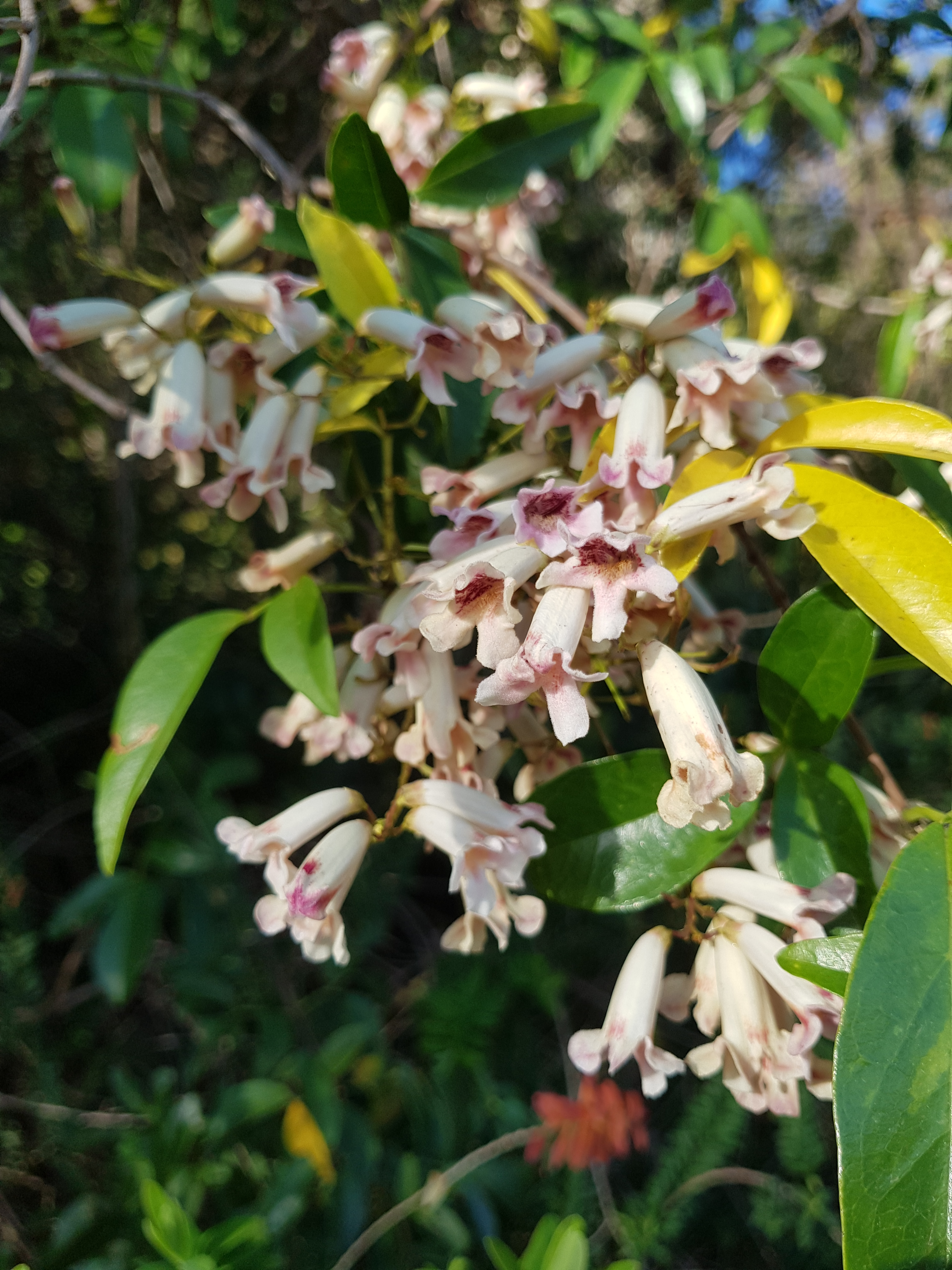
@masud91 | Oct. 4, 2018, 4:23 a.m. | Votes: 1 | [ VOTE ]

Pandorea pandorana
Wonga Vine

http://ketenewplymouth.peoplesnetworknz.info/image_files/0000/0006/5109/Pandorea_pandorana-001.JPG

Notes
Uses: Vigorous native climber with large sprays of tubular white flowers in spring, summer. Can be used as a natural climber or grown over frames as a hedge or screen.
Other cultivars available including Pandora ' Golden Showers' which has brilliant golden brown flowers.
Bird attracting.

https://steemitimages.com/0x0/https://cdn.steemitimages.com/DQmUXAd1kxJ4RgeDf9msHJ2EdHY6iCiiC7vGeP9J66XinwN/image.png

This plant is indigenous to the following botanical regions of South Australia.

:NW: North Western

For detail on these regions refer to the user guide.

https://steemitimages.com/0x0/https://cdn.steemitimages.com/DQmUEdsXy5p7QRqxHiuaPb1pFCK7NtNwsnXFecGuZK8cWnX/image.png

Height
3-6
m
Spread
3-8
m
Position
position-fullsun
Full Sun
position-partshade
Part Shade
Family
Bignoniaceae
Botanical Name
Pandorea pandorana
Common Name
Wonga Vine
Origin
SA, NSW, WA, Qld, NT, Vic
Habit
Climbing
Landscape
2nd line coast, Coastal cliffs, Coastal footslopes, Hills, Plains
Soil Texture
Clay, Loam, Sand
pH
Acidic, Alkaline, Neutral
Tolerates
Drought, Soil salinity
Supplementary Watering
Minimal
Flower Colour
Cream, Pink
Flowering Time
Spring, Summer
Flower Type
Tubular
Purpose
Screen, Ornamental, Shade, Habitat
Form
Climber.

http://plantselector.botanicgardens.sa.gov.au/Plants/Details/3026

@priya1 | Oct. 4, 2018, 4:27 a.m. | Votes: 1 | [ VOTE ]

Pandorea pandorana (Wonga-wonga Vine)
Kingdom: Plantae
(Unranked): Angiosperms
(Unranked): Eudicots
(Unranked): Asterids
Order: Lamiales
Family: Bignoniaceae
Genus: Pandorea
Species: P. pandorana
Binomial name: Pandorea pandorana
Synonyms: Tecoma australis
Common name: Wonga-wonga Vine, Wonga Vine, Spearwood Bush.

http://ketenewplymouth.peoplesnetworknz.info/image_files/0000/0012/2958/1-Pandorea_pandorana__Wonga-wonga_Vine_-002.JPG

Pandorea pandorana is a fast-growing highly variable species of a woody climbing vine, it is found across continental Australia, Indonesia, Papua New Guinea, the Solomon Islands, New Caledonia and Vanuatu. In New Zealand, the species has become naturalised within disturbed native vegetation growing on larger trees in forested habitats.
It has glossy green leaves arranged oppositely along the stem. The pinnate leaves are around 8–16 cm long and have 3–9 leaflets of varying widths. The juvenile leaves are finer and have serrated margins and more finely divided into 7–13 leaflets.

https://c1.staticflickr.com/8/7017/26797851193_42609a871d_b.jpg

Flowering occurs in spring. The tubular or funnel-shaped flowers are highly variable in colour, ranging from cream-white or all-white to maroon-throated, burgundy or even yellow-orange. Flowering is followed in summer by 3–8 cm long and 1–2 cm wide oblong-shaped seed pods, which are initially bright green before turning brown and releasing numerous papery seeds around 1-1.5 cm (0.5 in) in diameter which is released in large quantities.

http://ketenewplymouth.peoplesnetworknz.info/image_files/0000/0006/5114/Pandorea_pandorana-003.JPG

Common cultivars include:
P. 'Golden Showers' is a long-flowering vigorous form with brown-tinted yellow flowers (photo below)
P. 'Ruby Belle' has a red-pink flower with cream throat.
P. 'Ruby Heart' has a cream-coloured flower with a deep ruby–maroon blotch at the throat.
P. 'Snowbells', also known as P. 'alba', is a vigorous cream-white flowered form, with profuse fragrant flowers.

http://ketenewplymouth.peoplesnetworknz.info/image_files/0000/0006/5114/Pandorea_pandorana-003.JPG

http://www.terrain.net.nz/friends-of-te-henui-group/weeds/pandorea-pandorana-wonga-wonga-vine.html

@tania12 | Oct. 4, 2018, 4:31 a.m. | Votes: 1 | [ VOTE ]

Pandorea pandorana

https://c1.staticflickr.com/8/7017/26797851193_42609a871d_b.jpg

FAMILY: BIGNONIACEAE
BOTANICAL NAME: Pandorea pandorana,
(Andrews) Steenis. Bull. Jard. Bot. Buitenz.
10: 198 (1928)
COMMON NAME: Wonga vine
COMMONWEALTH STATUS: (EPBC Act)
Not Listed
Pandorea pandorana flowers. TASMANIAN STATUS: (TSP Act) rare

https://steemitimages.com/0x0/https://cdn.steemitimages.com/DQmUEdsXy5p7QRqxHiuaPb1pFCK7NtNwsnXFecGuZK8cWnX/image.png

Description
A hairless, climbing shrub between 2-6 m tall with twining branchlets. Leaves: The
leaves are opposite and arranged like the barbs of a feather (pinnate). They are very
variable in size and shape between 5-20 cm long. The margins can be entire or
coarsely toothed with glossy upper surfaces and pale, dull undersurfaces. Flowers:
The flowers are funnel shaped and cream with red-brown markings, often with
crimson or purple spots at the base of the 3 larger lobes. The calyx (outermost whorl
of floral parts) is 2-3 mm long. Flowering is from August to November (Flora of
Victoria). Fruit: The fruit are capsules between 4-7 cm long, the valves are leathery
and boat-shaped. The seeds are flat and surrounded by a broad transparent wing
(description from Curtis 1967).

https://steemitimages.com/0x0/https://cdn.steemitimages.com/DQmVUMy7jxJztjWpq9M6H2yuct9cGaDZffbVs4422VzAhPi/image.png

Distribution and Habitat
This species is found in all the Australian states except for Western Australia. It is
also known from New Guinea and the islands of Ceram and Lombok. In Tasmania,
Pandorea pandorana is restricted to Flinders Island, where it is found in damp gullies
and wet sclerophyll forest. (Curtis 1967).

https://steemitimages.com/0x0/https://cdn.steemitimages.com/DQmb7oxNXP4vhLe14wAvvMyhZn1NBMi7F9rBfqD7mdzrvfs/kcd15mymqi.jpg

Key Sites and Populations
Key sites for this species include the
Brougham Sugarloaf Conservation Area
and Summer Camp Gully on Flinders
Island. The number of mature individuals
in one population can be as few as 20.
Known Reserves
This species is reserved in the Brougham
Sugarloaf Conservation Area.

https://dpipwe.tas.gov.au/Documents/Pandorea-pandorana.pdf

@wilson6 | Oct. 4, 2018, 4:42 a.m. | Votes: 2 | [ VOTE ]

Wonga Wonga Vine

https://steemitimages.com/0x0/https://cdn.steemitimages.com/DQmRwz7PAuvpwpBub6XJRH9zdkCkTvzTC1bVCZnDAjBfExM/Pandorea-Pandorana-Ruby-Belle2.jpg

Natural Name: Pandorea pandorana Snowbells

Regular Names: Wonga Vine , Snowbells Wonga Vine

Foliage Type: Evergreen

Local Yes

Plant Type: Climber/Creeper

Plant Habit: Climbing/Twining

Run of the mill Availability Medium

https://c1.staticflickr.com/8/7017/26797851193_42609a871d_b.jpg

Portrayal:

A Vigorous and solid local climbing vine perfect for planting along a fence or bolster structure. The foliage is lustrous green with fragrant white trumpet blooms showing up in plenitude through Spring, Summer and Autumn. Includes an entirely tropical presentation to the garden and also being exceptionally strong and simple to keep up.

https://steemitimages.com/0x0/https://cdn.steemitimages.com/DQmPJ8foim64CmLK7vhdoMdRoubjh1Pj1EcPwfZUXLDqwGP/wonga-wonga-vine-03.jpg

https://dpipwe.tas.gov.au/Documents/Pandorea-pandorana.pdf

@max1994 | Oct. 5, 2018, 2:39 a.m. | Votes: 0 | [ VOTE ]

A variable local climber with twining branches and reflexive green foliage, it blossoms from winter to summer. It has masses of pendulous chime blooms, which are variable in shading, from unadulterated white, cream with purple-maroon veining through to yellows. It is a quickly developing plant, appropriate for tropical to calm districts. It will endure light ices. Useful for sun to part shade, and versatile to most soils as long as they have sensible seepage. Can be decreased hard to revive. A decent butterfly sustenance plant.

https://steemitimages.com/0x0/https://cdn.steemitimages.com/DQmVHxurAx1T2gEsrJvRdMLC4XLdJ7bzybH7x8HXatfbZLr/image.png

https://steemitimages.com/0x0/https://cdn.steemitimages.com/DQmWfHvXkorwk5Hp9UGwbg1pPm4VCbBbRCNNZnrtBp5Tnts/img-7_267.jpg

https://steemitimages.com/0x0/https://cdn.steemitimages.com/DQmc7ih2Fy5finiEbvZLKwDBBy5eVSbSjnjzwcWBufYyAr9/new7%20025.jpg

https://austplants.com.au/Pandorea-pandorana-Wonga-Vine

[ BACK TO TRENDING ] [ BACK TO MENU ]
CMD>