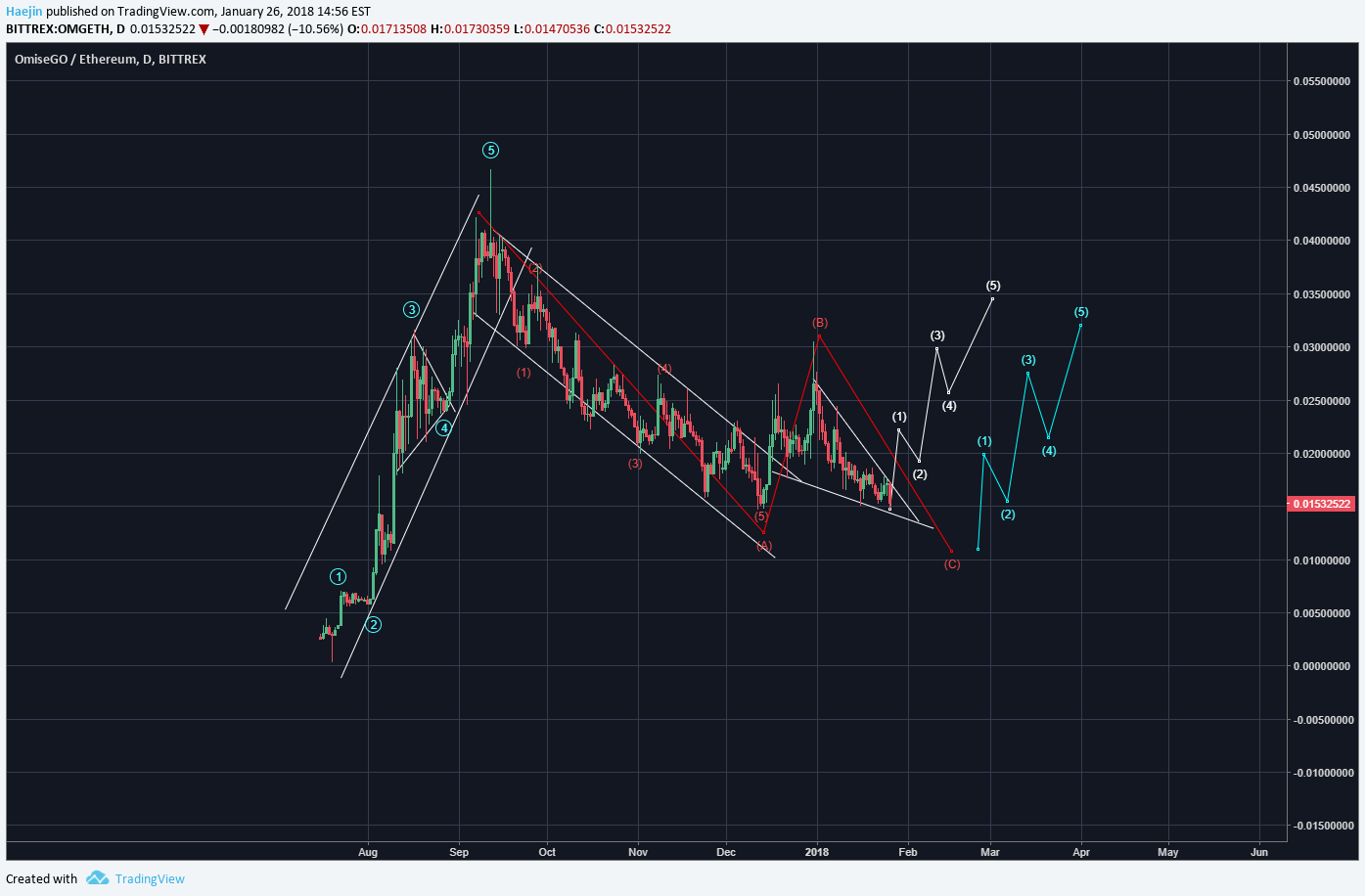
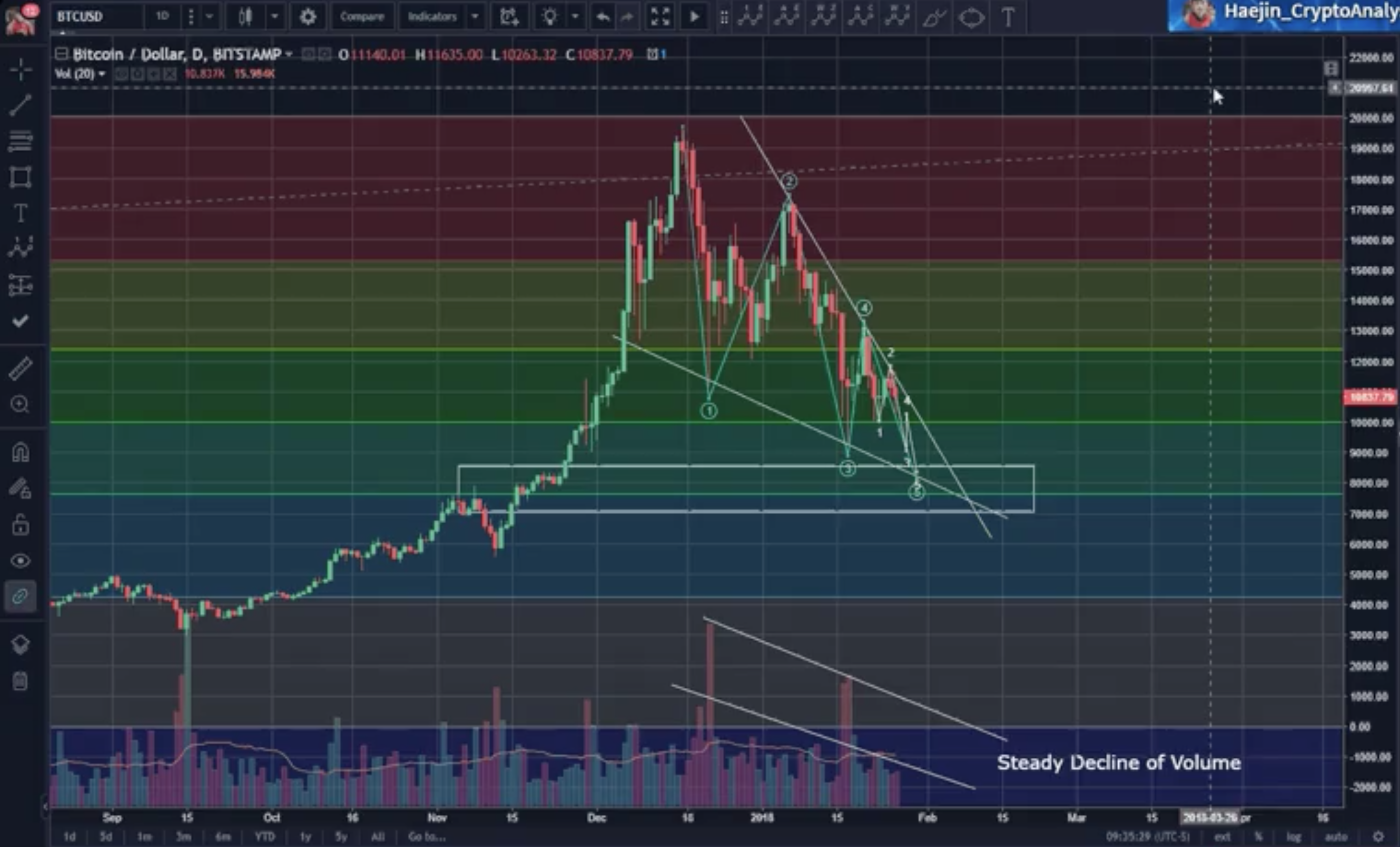
@Haejin, Shawnster, Gentlemen:) Thank you for the commentary! I now have more questions. I took the liberty of copying the page out of the EWP book. I struggle sometimes with the language in the book, so any clarification would be valued greatly:)
Questions are:
1- When the book says "a continuation message" as opposed to a "termination implication" This is implying that this pattern says the bear trend may be continuing?
2- Should the pattern become a more probably pathway, what would some indicators, outside of volume, be for this?
Apologies for the lengthy questions! I am fascinated by both EW and chart patterns and would just like to understand as best I can. I understand that TA can change with incoming prices, so this is not me trying to put any additional FUD into the space, but rather an attempt to catalog as much info from people way more familiar with this space than I. Thank you in advance for any time put forth into answering my noob questions!
http://www.elliottwave.net/educational/basictenets/basics_images/fig_10.gif
Figure 10
Leading Diagonal
When diagonal triangles occur in the fifth or C wave position, they take the 3-3-3-3-3 shape that Elliott described. However, it has recently come to light that a variation on this pattern occasionally appears in the first wave position of impulses and in the A wave position of zigzags. The characteristic overlapping of waves one and four and the convergence of boundary lines into a wedge shape remain as in the ending diagonal triangle. However, the subdivisions are different, tracing out a 5-3-5, or 5-3-5-3-5 pattern. The structure of this formation (see Figure 10) does fit the spirit of the Wave Principle in that the five-wave subdivisions in the direction of the larger trend communicate a "continuation" message as opposed to the "termination" implication of the three-wave subdivisions in the ending diagonal. This pattern must be noted because the analyst could mistake it for a far more common development, a series of first and second waves, as illustrated in Figure 5.
The main key to recognizing this pattern is the decided slowing of momentum in the fifth subwave relative to the third. By contrast, in developing first and second waves, phenomena such as short term speed of movement and breadth (i.e., the number of stocks or subindexes participating) often expands.