Welcome! We finished chapter six today
This is a milestone in our Hebrew reading & language series.
Continuing with Genesis 6:18-22
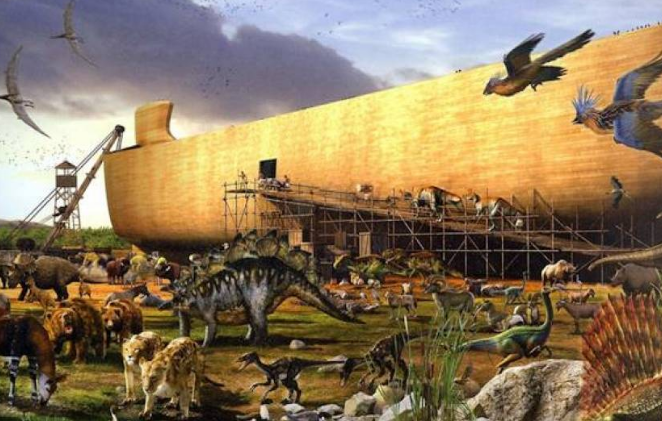
[IMAGE: https://cdn.steemitimages.com/DQmW8fVAAzq4j4uuijs6G29s8VEFGPrLyktj72F47UePaNJ/loadingark.png]
source
Last week we heard about the measurements of the ark and the levels that are to be built.
This week we read about a new covenant, who will be saved, and which kinds of living things will be arriving to come aboard.
And Noah did as God commanded.
I will be picking apart each word in Hebrew as we go today so please listen in.
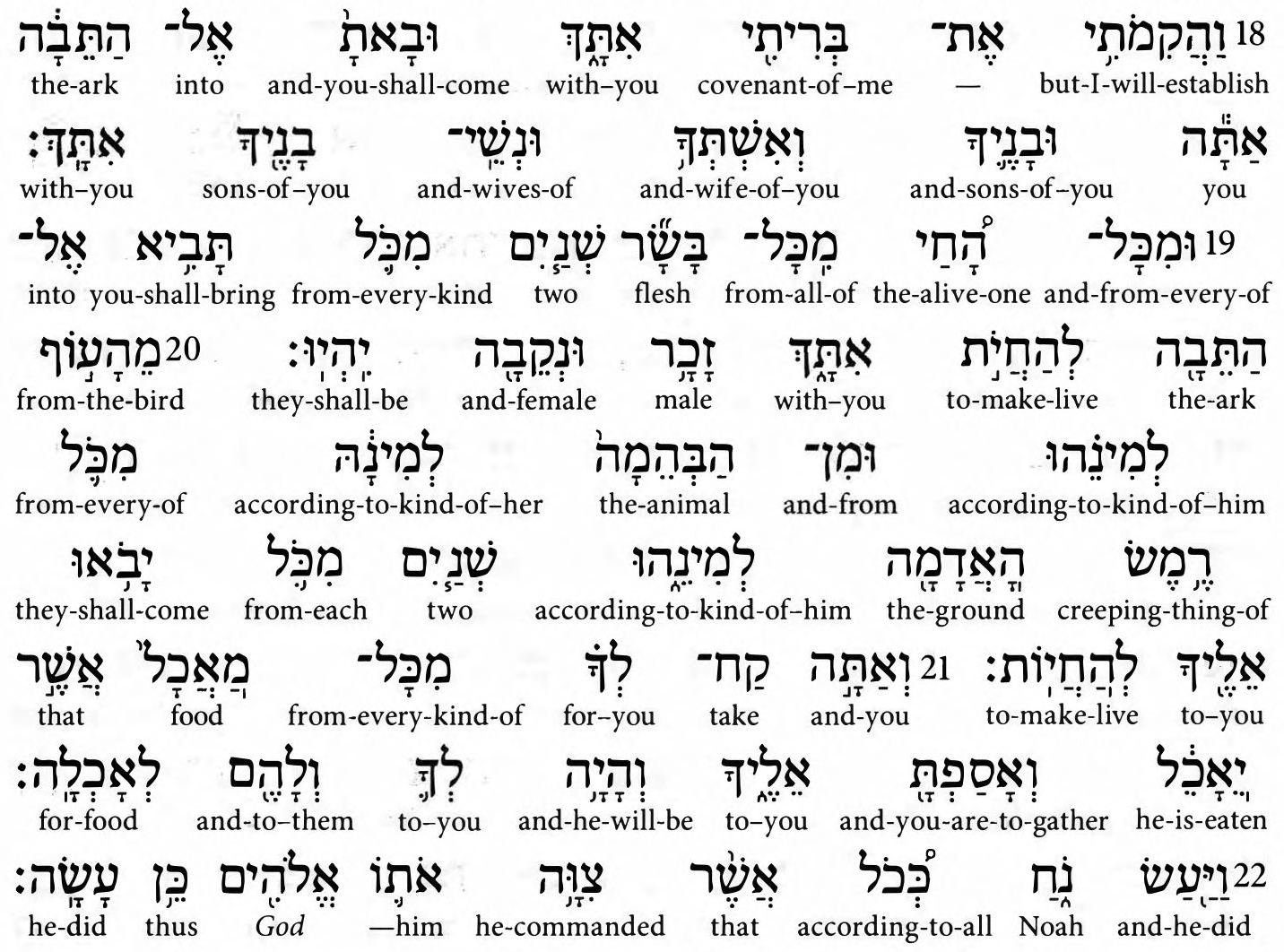
Today's reading
[IMAGE: https://cdn.steemitimages.com/DQmTuZWbBdoxHua95UGBsFUwevuZFwLPqxKauNinm2eeox4/reading030819.png]
Here are the links
Please hit the DTube video link below and read the above passage with me in Hebrew.
▶️ DTube ▶️ IPFS
Info on each letter starting at the beginning
If you are just starting, my lessons are all here starting at Alef, adding vowels (the dots and lines) as we go, the sofit formations and numerical values. Just go to my blog and scroll to the bottom or click here
Get your Hebrew Bible now!
Click here to obtain the book we are using. It is a free download - or browser usable.
Thanks for taking the time to watch and read.
Shabbat Shalom
I'm sorry I missed this video earlier, I'm trying to really make out the interpretations and apply them to sentences and conversation really, this is another well detailed teaching @Hebrew, I'm glad you're taking the book of genesis cautiously and slowly as well, this way people can adapt and learn slowly, thanks a million
Congratulations @hebrew! You have completed the following achievement on the Steem blockchain and have been rewarded with new badge(s) :
https://steemitimages.com/60x70/http://steemitboard.com/@hebrew/posts.png?201903082025You published more than 90 posts. Your next target is to reach 100 posts.
Click here to view your Board
If you no longer want to receive notifications, reply to this comment with the word STOP
To support your work, I also upvoted your post!
Hebrew is spoken by around 5 million individuals in Israel (Ethnologue). This figure incorporates the individuals who talk it as an a local language and those for whom it is a second language figured out how to differing degrees of capability. It turned into an official language of British Palestine in 1922. Today, it is the official language of the State of Israel. It is utilized for official, open and private purposes all through Israel, wih the exemption of the Arab part, where Arabic is utilized. Government schools educate in either Hebrew or Arabic, be that as it may, Hebrew is a mandatory subject through the tenth grade in all schools, even the Arabic ones. Hebrew is the mechanism of guidance at the college level too. It is the language of most papers, books, magazines, radio, and TV.
Among European Jews Yiddish fought with Modern Hebrew as an artistic language. In the years prior to the Holocaust, there were presumably 10-11 million Yiddish speakers around the world. Because of the Holocaust, social absorption in America and in the USSR, and move to Hebrew in Israel, today there an expected 3 million speakers left, the greater part of whom never again use Yiddish as their essential language. It remains the ordinary language just in a couple of Orthodox and Hassidic people group.
Hebrew started to cease to exist as an expressed language after the Jews were crushed by the Babylonians in 586 BC. Spoken Hebrew was supplanted by Aramaic, despite the fact that it was protected as the language of religion, learning, and writing. Hebrew was
restored as a verbally expressed language amid the late nineteenth and mid twentieth century as Modern Hebrew. It supplanted Arabic, Yiddish, Russian, and an assortment of different dialects spoken by Jews who emigrated to Israel.
As of late, because of restored enthusiasm for Ashkenazi culture, Yiddish language courses are being instructed in colleges and Jewish social associations. There are many papers, magazines, radio projects, and sites in Yiddish around the world. In the United States, most Yiddish speakers tended not to pass the language to their youngsters who acclimatized and communicated in English, with the conceivable exemption of some Orthodox Jewish people group, particularly in Brooklyn.