(If you're an audio/visual learner like myself and would prefer a video of me reading this post, scroll to the bottom of the post)
When it comes to difficult contentious decisions which impact what people value, it's very important to keep our emotions in check and do our best to argue from first principles. Too often when we disagree, we fall into the trap of thinking someone is either ignorant, immoral, or stupid. This post is directed at those wanting to have a rational discussion about the coming Hard Fork 21 of the Steem blockchain, which is certainly a contentious decision to be made.
I think a good starting point for the discussion is figuring out a shared understanding of value itself. Most people haven't done this. To say "We should do X because it will make Y more valuable because it improves Z" we better have a clear understanding of X, Y, and Z. All code improvements are supposed to be about making things more valuable over time. HF21 makes some claims about how it will increase value, so let's start there. I can only speak from my perspective, so I will refer to many of my posts to give further context for my perspective.
I'm operating under the assumption that you've seen my video on What is Financial Value? which, in summary, states financial value is simply a shared story we collectively choose to believe. As more people believe a story of value (special rocks, shells, tally sticks, gold, silver, coins, paper fiat, cryptocurrencies, etc), it becomes a reality. There is no intrinsic value, only some stories that are better than others based on specific context which become more widely held as shared belief.
When it comes to the Steem blockchain, let's sincerely ask what aspect of the chain we value. Is it the purchasing power of the tokens? Is it the decentralized, uncensorable blockchain which stores plain text and links to media which can not be completely censored? Is it the relationships we build through interacting with like-minded individuals around the world?
I had to figure this stuff out for myself early on. I tried to explain the basics to my friends and family:
- Explaining Steemit to My Friends: Blockchains and Cryptocurrencies
The main point being:
> "Steemit is a decentralized social media platform built on blockchain technology which pays content creators and curators in tokens of real value."
I then tried to explain that value: #SteemitIsToMe: Relationships, Reputation, and Rewards. This post covers three areas of value Steem creates for me and partly from which I make my decisions about value as a witness for the Steem blockchain:
- Relationships July 22nd, 2016: The Currency of Steemit Isn't Steem Power, STEEM, or SBD
- Reputation August 12th, 2016: Reputation Advice from Someone in the Top 0.38%
- Rewards May 20th, 2017: Last Week I Made $1,500 Worth of Cryptocurrency Blogging on Steemit. Here's How.
Over time, I also realized the problems with extrinsic motivations alone surrounding my involvement (i.e. "Get paid to post!"). I had to continue posting because I wanted to intrinsically, not because someone was putting a carrot in front of me. I did that with experiments like this:
- The Steemit $$$ Challenge: Prove To Yourself Why You Are Here
I actually hid the $$$ in the interface to focus more on the content and the relationships, and it worked. I suggest you do the same and use it to find a foundation for why you're really here.
I had to come to grips with the super linear rewards curve and how it was designed to be a lottery where some people get super lucky with big payouts and others get nothing:
- Adjust Your Expectations: Steemit Is Designed as a Lottery
HF21 (which we'll get to here eventually, I promise) brings things back to this approach just a bit from the current linear rewards curve where everyone can get something, even if they are the only ones self voting on their own content.
The next major breakthrough in understanding for me was realizing the Steem blockchain and STEEM token is where the value is, not the Steemit.com front end or Steemit, Inc or (potentially) even the content hosted on the chain.
- STEEM Is NOT Steemit. STEEM Is More Valuable Than Steemit.
> Steemit, from a purely financial/monetary perspective, distributes value because investors and speculators choose to buy the STEEM token. Investors and speculators drive all the financial value we see here.
This, I know, will be a tough pill to swallow for authors and curators. Please, pause for a moment and read that post. You may have a misunderstanding of my perspective without doing so. At the time that post was written, STEEM had a market cap of over a billion dollars. Today it's just over $100M. Where many other tokens have grown 10x in value, STEEM has declined 10x.
To me, this is a sign that what we've been doing is not working, if we consider financial rewards (i.e. that thing completely supported by the token price) as an important part of the value Steem creates for us.
To further illustrate this point, I put together some data from 148 weeks of the Exchange Transfer Report I've been doing:
[IMAGE: https://cdn.steemitimages.com/DQmNhFWm5BiukmDdoHR2FFYNnXcfLH88xETEKgySBmeJXGY/USD%20Exchange%20Transfers%20Over%20Time.png]
(click to see a larger version of this image)
In USD terms, that's a net amount of -$172,260,609 worth of value that people are cashing out of their personal Steem accounts and sending to exchanges without someone else buying the Steem and sending it back to a personal account on Steem. There are many caveats to be aware of with this data, so please see an Exchange Transfer Report to better understand the data and the limitations as to what conclusions you can come to with it. Either way, it's a strong indication to me that most people are cashing out Steem they earn (either through early mining, author/curator rewards, Steem Power inflation, or witness pay).
If you're curious which accounts have been cashing out the most over the past few years, check out this post:
- Exchange Transfer Transparency for 2016, 2017, and 2018
Hopefully at this point we've set some foundational definitions relating to value, and we've shown the current system for creating value in Steem has not be working well compared to other cryptocurrencies. Now we have a choice. Do we leave things as is and just celebrate the existing benefits we get from the Steem blockchain (again from this post you should read):
-
Zero fees.
-
3 second block confirmation times.
-
Energy-efficient DPOS algorithm.
-
Built-in, on-chain governance.
-
Account recovery (unique to this blockchain).
-
Time-locked savings via smart contracts for SBD and STEEM.
-
User-friendly wallet addresses (instead of complicated hashes).
Or should we consider we can try to change some things to create more value without sacrificing these value adds?
That, to me, is what Hard Fork 21 is all about. Doing the same thing over and over again and expecting a different result is the definition of insanity.
Let's not be insane.
There have been many months of debate about what changes should be made to the system to improve the value here. Here's how HF21 deals with many of them:
SPS: Steem Proposal System (SteemDAO)
From HF21: SPS and EIP Explained, we see this is about decentralization, sustainability, and funding valuable projects. Steemit, Inc, in my personal opinion, hasn't done the best job of managing this blockchain. I've mentioned this before here and here as well as a possible solution of my own relating to a SteemDAC which I figured talked about here: SteemDAC: A Plan We Can Start Today to Decentralize Steem Governance. Maybe this failure was due to inexperienced, centralized leadership. Maybe things will turn around if we decentralize more.
I think this is a great step forward for Steem. I think 10% funding for it to start may be a bit much and would be happer to start with something like 7% or even lower until we better understand how the funds will be used and what types of projects will get funded. That said, if HF21 comes through at 10%, I would not reject it over this detail.
To me, the SPS also addresses an interesting question for us all: Who really adds value around here?
To me, in a big way, that's the developers who build the tools we use within this ecosystem. Check out https://steemprojects.com/ to see what I mean. Check out things like https://steemmonsters.com/ which is creating a reason for people to create Steem accounts. Check out https://steem-engine.com/ where people spend their Steem to support other Steem related projects via tokenization. Take a look at tools like the Steem Wallet Chrome extension or the Vessel Wallet. Developers create a ton of value, and I think we should start rewarding them directly for their efforts, not just through their posts talking about what they are building.
Economic Improvement Proposal (EIP)
You can get details on this from Improving the Economics of Steem: A Community Proposal which outline these benefits:
> (1) Moving from a linear rewards curve to a convergent linear rewards curve. A convergent linear rewards curve would start out superlinear, providing minimal gains at first, and smoothly become linear as more votes are made. Users that are interested only in maximizing the return on their Steem Power, instead of benefitting the platform through thoughtful curation, often engage in practices such as self voting or delegation to bid bots. The proposed curve incentivises concentration of votes on to fewer pieces of content, which increases the visibility of such counterproductive behavior. Alternatively, users could choose to act more subtly by spreading stake across more, but smaller, votes at the cost of a suboptimal return. We cannot eliminate such behavior entirely, but we can make it less economically viable.
To me, the key point here is "which increases the visibility of such counterproductive behavior". Keep that in mind as it will come up again. You can learn more about this change here: Reward Curve Deep Dive. Essentially, linear voting was tried and creating more problems than it solved. I was a supporter of trying the linear curve becuase and in the beginning it was exciting to see everyone getting some little bit of reward. Unfortunately it was too easy to game the system. Instead of going back to what we had before, we're trying something new and that, to me, is a good thing. We should get more information which we can continue to iterate with.
From that Deep Dive:
> One problem with this change was that it reduced the incentive to consolidate one’s stake in a single account, which made it easier for bad actors to divide up their stake and hide their activities.
Unfortunately "bad actors" is still mostly undefined or if there is consensus on what bad action looks like, some accounts are too big in terms of Steem Power to do anything about.
> (2) Increasing the percentage of rewards that are distributed to curators. One of the problems with Steem as it stands is that there is a strong incentive to self-vote. The more rewards are distributed to curators the less incentive there is to self-vote. At the same time, if curation is improved, then those content creators who are currently submitting great content which isn’t getting seen, should stand to benefit as that content will be more likely to get unearthed.
This, I think, is one of the most contentious aspects of HF21. Humans have trouble with loss aversion and many will see this as "Hey, I'm an author and now I'm losing part of my rewards. This sucks! I'm leaving!" It is possible some quality authors will leave because of this. I'll argue they may be here for the wrong reasons as mentioned above in the The Steemit $$$ Challenge post. It's also possible we've had many other great authors who came here, posted fantastic content, got no notice or rewards what-so-ever and left. What if those authors might come back or others like them might stick around if eager curators who are now twice as motivated to find them out and promote them actually get them some attention and rewards? I think it's at least worth trying. The current author rewards system is too easily gamed, and I don't think changing the rewards curve alone will fix it. I'm concerned this will create more Steem Power rewards for bots over time, but I've been trying to get people to stop using bots for a long time with little success:
An Argument for Long-Term Rational Self-Interest Versus Short-Term Irrational Value Extraction
Side note: see the articles linked to in that article which include a year old discussion about a separate reward pool, self voting, and Operation Clean Trending which encourages downvoting crap content on trending which used bit bots. Note, that tool appears to still be up here: https://steemwhales.com/clean-trending/
And finally from the EIP:
> (3) Create a separate “downvote pool.” Downvotes are a critical component for regulating Steem, but there is no incentive to render them because they are not rewarded. In fact, they cost voting mana which disincentivizes the use of the downvote. This creates more opportunities for self-voting abuse as it reduces the likelihood that this behavior will be countered. By adding a small pool for downvotes that is consumed prior to consuming voting mana, users are more free to downvote content as a curation mechanism without losing out on potential rewards themselves.
Remember how we talked about "which increases the visibility of such counterproductive behavior"? Well this is where that comes in again. The only way to have working Proof of Brain and ensure rewards are distributed to valuable content in a meaningful way which Steem investors and speculators might respect is to use our votes effectively. That may include downvoting low-value content which, in effect, upvotes all the other higher value content. I hope we start building easy-to-use tools to automatically use some voting power to downvote content others get rewarded for finding. I'll leave this a project for the community to explore, but if you're interested please let me know. Maybe this will be a good candidate for an SPS project.
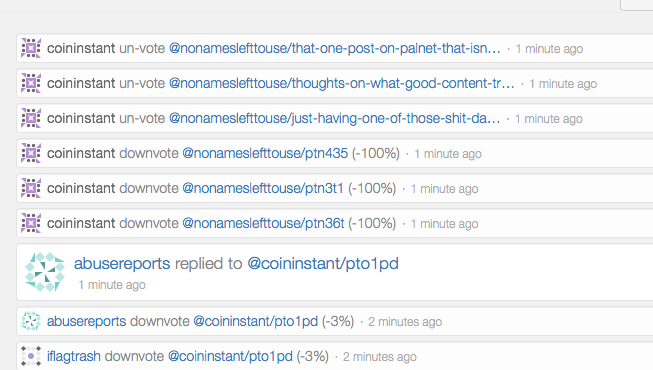
Could this cause more "flag wars"? Yes, it could. We already have accounts like @berniesanders who flag content based on personal issues with the author and not based on the quality or value of the content to the Steem ecosystem. It's possible this could increase after HF21. It's also possible that it's a real problem we have to solve today anyway. Imagine for a moment you're a huge multinational brand and you really want to get involved in blockchain technology. You want your content onchain and you look to Steem as the answer. You task your marketing team to come up with your first post and when the CEO goes to look at it, he sees this:
[IMAGE: https://cdn.steemitimages.com/DQmfDJThdYnWX4AKMhhZU5KLnvnFyj6iKyPS7uQVAdvZCrN/image.png]
Not only will that brand never use Steem again, but someone might get fired.
It's possible serious brands are already avoiding Steem because of this very issue. I know of a few investors who won't touch Steem because of this. When large accounts can control which content is seen, especially if there's nothing fundamentally "low rating" about the content (other than a personal attack on the author), then that's a big problem relating to creating value. Why would they buy Steem and Power Up to promote their content if it will just get downvoted and disappear if some people don't like them?
If you see large accounts downvoting content based on personal issues with the author, I encourage you to upvote that content and counter the downvote. Also, I'd like to see us make a change to Condenser (the Steemit front end) which allows an "I'm an adult" setting which doesn't hide downvoted posts and/or allows accounts to be whitelisted from being hidden.
Why So Many Changes at Once?
We seem to have this discussion with every Hard Fork, so I won't repeat it at length again here, but it basically comes down to this: Every single wallet, exchange, application, payment processor, and service provider that relies on a Steem node will have to do a full resync of history every time we make a hard fork because these are consensus-breaking changes. That means everyone has to agree to them or else the tools that don't upgrade will stop working. With our low token value, it's possible some exchanges might consider delisting us instead of putting in time and money to resync their nodes. That means fewer hard forks are better.
Why Aren't Witnesses Taking a Cut of Rewards?
To increase curation rewards and create the SPS pool, many think the witnesses should also decrease their pay. I'm actually cautiously in favor of this as well, even if it's just one or two percent. That said, it's important to remember within DPoS that the security of the chain is directly related to the value of the rewards given to the block producers who secure it. If that value is too low, high quality witnesses will not stick around and it will be easier to attack the chain. That said, I do respect and appreciate @smooth's comment here:
> A DPoS chain depends fundamentally on the competence and integrity of its witnesses. Putting that at risk puts the entire system at risk.
If the price of Steem goes too low and witnesses can't afford to run servers (or choose not to), the entire value proposition would be at risk for everyone. That's a systemic level risk which is important to consider.
If HF21 is adjusted to take some rewards from witnesses (while, ideally, spreading more rewards to backup witnesses to further incentive more decentralization), I'd be in support of that. As it is, I won't reject this Hard Fork if the witness pay is kept as is.
In Summary
Okay, that's probably way more than you wanted to read anyway, but those are my thoughts so far on Hard Fork 21. I will support it as a consensus witness (if I'm still in the top 20 at that time) because I think the value proposition we've created here so far is not working out well compared to other cryptocurrencies, and we should be willing to try things more often and fail fast. If we find these changes are far worse than what we have now, we can and should make new changes. What I'm not a fan of is doing nothing and expecting a different result.
That's just crazy.
As always, I'm here for your questions, comments, or concerns. Let me know what you think, but please understand, many of these conversations have been going on for more than a year now. Rehashing them again and again without taking action and trying something is mostly a waste of time, IMO.
To view what other consensus witnesses have to say about this Hard Fork, see these posts below:
- @yabapmatt - HF21 and the Steem Vision
- @blocktrades - Proposing A Worker Proposal System For Steem
- @aggroed - Is HF21 a trap?
- @thecryptodrive - My take on HF21
- @timcliff - Hardfork 21 - Steem Proposal System (SPS) + Economic Improvement Proposal (EIP)
- @clayop - HF21 설정값에 대한 세세한 이야기 + 의견수렴
There are also a lot of witness comments on this poll here: As a top steem witness, will you support a hardfork implementing the “Economic Improvement Proposal” or “EIP.”
Here's a video of me reading this post, if that's your thing:
Luke Stokes is a father, husband, programmer, STEEM witness, DAC launcher, and voluntaryist who wants to help create a world we all want to live in. Learn about cryptocurrency at UnderstandingBlockchainFreedom.com
I'm a Witness! Please vote for @lukestokes.mhth
Respectfully, I do not agree it is a shared collaborative commons. This mentality (again, I say this with respect) is one that I believe keeps Steem from success. Please allow me to make my point that Steem Power is not a shared collaborative commons, thus the inflation pool is also not a shared collaborative commons.
I find that Steem attracts a weird mix of ideologies that conflict with each other. Its trying to gain importance through appealing to traditional private investment and at the same time its trying to claim the reward pool as public property. The reward pool is not public property though, it belongs to those that have purchased Steem Power and those they decide to give it to as well.
Now, I would be fine if it did become a shared collaborative commons, but that would require Steem to make SP more about a resource credit economy than what it is now. I would say that Minds.com is a shared collaborative commons design, and people seem to enjoy it quite a lot.
Under the current design, I argue that the most logical way to look at the reward pool is as interest for stake, much like a CD. Only, in this example the CD itself is capable of being worth more than the initial investment and so the person depositing the value into the CD will support people that appear to be making their asset worth more.
When I look at Steem I see a new kind of bank account that gives me interest in multiple ways and a feature that allows me to improve the value of my stored money's buying power by contributing some of my interest toward someone or some project that can increase the buying power of my money. That's a very cool bank, but it gets better. I can retain all of my stored value but provide authority over the distribution of my interest to some other account for all kinds of benefits, creating a cool thing called the delegation economy. Now, I don't even have to buy things, just give away the authority over the distribution of interest.
Some may not like this but that concept is an entirely capitalistic design and Steem aims to use capitalism to achieve its objective of sprawling the internet.
I care about equality and I would love to see something kind of like a "shared collaborative commons" and I think SteemBasicIncome is doing a decent job of trying to make that happen on Steem. However, the reality of Steem's design is that it depends on investors in a very capitalistic way. Buyers of property have full right to their property, and capitalism is about protecting people's rights over their property. So, I argue that the owners of Steem Power have the right to do with their power whatever they want, because they paid for the right (read: not a privilege).
Somehow, Steem attracts demonetized/censored content producers seeking relief from Youtube/Twitter and also attracts authoritarians that want the power to shut certain ideas and actions down. It seems to attract the capitalist and the socialist alike. People want Steem to be a Twitter/Reddit with $0.50 rewards for memes and quick posts, while others want Steem to be this sacred and pure oracle of humankind's collective wisdom. Steem suffers from an identity crisis and I think that is the real problem.
Steem knows it needs capitalistic-minded investors to make the reward pool worth more than just monopoly money, but then it wants to tell those investors that the reward pool is a "shared collective commons" that belongs to those meriting a reward in a meritocracy. The problem with that is that to a private investor this is confusing and crazy. In their mind, they bought the Steem Power, and they have a right to their "power" and what they want to do with it.
So, I suggest that it is an illegitimate claim to tell an investor that they voted on something they should not have and stole from the pool. They purchased their votes and those votes are now their property. It shouldn't matter if they vote on an article so beautifully designed that Medium would be jealous or a silly cat picture that is original content from another site.
Steem lost Dtube because of that "original content only" mentality. Reddit is a place where one can share content from another place, and yet Steem"it" trying to imitate the design of Reddit doesn't allow this due to that "sacred oracle" argument. And I have personally seen Cheetah abusing perfectly original content from reputable sources such as @jsecoin that is on Cheetah's blacklist simply because they didn't jump through Steemcleaner's hoops to prove authenticity. The world doesn't need to see an organization use Steem to create an internet police state.
Downvoting allows someone to weaponize their stake in Steem to hinder someone else's stake. It does not only hurt content creators, but also those that voted with their purchased stake. In its current design it is also a might-makes-right design, which is not good for drawing in new participants. My largest concern, however, is my fear that downvoting will worsen the negative behavior we already see online.
Weaponizing money is not likely a good idea. Many nations would likely continue happily using USD for international negotiations, but after the US began using the dollar as a weapon to force their political ideals on other nations, gold and Bitcoin began to look attractive. The same can happen to Steem... Would you prefer investing in a network that allows richer people than you to have power over your earnings and harass you, or the place that gives everyone the positive vote for things they like?
Karma is a dapp on EOS that removed the downvote (if I recall correctly) and it was something I took note of immediately. Steem might face rough competition if other platforms provide a more pleasant experience.
All this said, I do believe we have plenty that we likely do agree with each other on. And I think that if you review the things that I write you will see that equality and the ability for a common forum are important to me. Honestly, I have made suggestions that would turn the reward pool into something I would call a shared collaborative commons. I think turning it into a common reward system would be very good, my argument is just that it is currently in a very weird mix of opposing concepts and for this reason discourages investors.
Steem needs investors to work, but it also discourages investors. The way to make the reward pool an actual shared collaborative commons and incentivize investors is to give both what they want by separating the two groups and their rewards.
Steem Discourages Investors
Investors do not want to curate, they want passive income, ROI. But we're trying to force them to be active, which is crazy. We're trying to make them have a worker mindset when they have an investor mindset. We need them because their financial investment gives value to the reward pool, making it something worth earning for content producers. We don't need them to work, we need them to stay.
Steem Discourages Content Producers
Content producers are not investors, they are workers. We are likely not motivating the Tim Pools and Joe Rogans of the world to be active on Steem likely because, while they have money, they are not of an investing mindset but a worker mindset. Steem is failing to give them what they want by trying to make them become investors. They just want to work and earn. We don't need them to invest, we need them to work.
Steem Discourages Fans
Fans are not investors, fans are readers/viewers. Once again we're trying to force people to be what they are not. We have a frustratingly unaccommodating sign-up process that requires a substantial investment for us to be able to support the content producers we like. Why would anyone bother? Donating satoshis with Bitbacker or USD through Patreon is easier. Fans don't need to be investors, and our dreams of economic world domination is not going to change that.
A Solution
I have been excited as much as everyone else by the idea of SMTs, but at some point I realized they are almost completely pointless. They are not completely pointless, because some projects will get Youtube big and want their own reward system and that's where we can keep them within the system. However, most projects won't get big enough to be able to provide enough value to the holders of their token.
The currency STEEM has a great potential for being a universal internet currency. While big social sites will likely go SMT, small communities will want to earn STEEM, which they can rely on for having a value.
So where is the solution?
Investors prop up the value of STEEM by purchasing STEEM and staking, not curating as the audience. A robust resource credit economy can incentivize investors to buy and hold SP in order to generate RCs for selling to content producers needing RCs to post to the blockchain.
Authors can be motivated to pay for RC delegations in order to receive access to Steem upvotes from fans. This system puts the financial burden not on fans but authors seeking profit. This is a more palatable approach because we know that content producers will spend money to make money.
Forcing internet audiences to become investors to participate is not going to work if the goal is mass adoption rather than a small investor's community. Would McDonald's be making money if they required customers to own McD stock before buying a burger? That just doesn't work.
Audiences need a much more approachable way to participate. Cutting down fake accounts are important, and although difficult, not impossible. We need it to be easy for audiences to upvote what they like.
Upvotes need to be equal in order to truly be "wisdom of the crowds" as some people claim Steem is. Also, to make the reward pool a true shared collaborative commons we should adopt Minds.com's approach to their reward pool. Anyone with an account can upvote content, which is also tied to a hash of a phone number to discourage bots. On Minds.com resteems, upvotes, follows all add to the "network value" that the content producer provides to the network and the tally of these actions taken on a producer's content results in a reward matching the value they add to the network. That is what I call a shared collaborative commons, my friend!
Step 1:
Investors want scarcity, if it were up to me, I'd cut the inflation down to 1%. This alone would motivate massive buy-ins from investors, making the SBD value of that 1% hugely profitable for content producers.
Step 2:
I would disconnect votes for reward share from SP staked and give every account a total of 10 votes they may make per day all with the very same weight. But I would make SP generate RCs that would be necessary for authors to broadcast posts, and I would hike up the RC cost for posts by quite a lot. That way, investors can get their ROI on dlease.io by delegating their SP.
Step 3:
I would separate the audience from all costs except comments and transactions which would need to be treated the same as posts. Resteems, follows, upvotes and whatever other social activities should be free. But all financial transactions, posts and comments should require RCs.
Step 4:
No more curation reward. Its not necessary with this system, because if the audience wants to earn STEEM as well they will need to get enough RCs or have the site gift them RC delegations in order to participate. They get to show their interest in content with upvotes, follows and resteems for free, but economic participation requires RCs.
This design allows us to get a true "wisdom of the crowd" setup, incentivize investors to come and stay, motivate authors to spend a smaller but ultimately significant amount and not ask too much out of content consumers.
All that said, if this idea was implemented the HoboDAO project would have to massively restructure how it would work. So, yeah, I'm cool with staying the course too. ;)
@fervi | June 29, 2019, 12:32 p.m. | Votes: 0 | [
VOTE ]
> When it comes to difficult contentious decisions which impact what people value, it's very important to keep our emotions in check and do our best to argue from first principles. Too often when we disagree, we fall into the trap of thinking someone is either ignorant, immoral, or stupid. This post is directed at those wanting to have a rational discussion about the coming Hard Fork 21 of the Steem blockchain, which is certainly a contentious decision to be made.
Agree
> I think a good starting point for the discussion is figuring out a shared understanding of value itself. Most people haven't done this. To say "We should do X because it will make Y more valuable because it improves Z" we better have a clear understanding of X, Y, and Z. All code improvements are supposed to be about making things more valuable over time. HF21 makes some claims about how it will increase value, so let's start there. I can only speak from my perspective, so I will refer to many of my posts to give further context for my perspective.
I agree, although it is important to stress the hypothetical nature of the situation. Just because they are supposed to do something better does not mean that it has to be that way. Mistakes are made and mistakes are paid for.
> I'm operating under the assumption that you've seen my video on What is Financial Value? which, in summary, states financial value is simply a shared story we collectively choose to believe. As more people believe a story of value (special rocks, shells, tally sticks, gold, silver, coins, paper fiat, cryptocurrencies, etc), it becomes a reality. There is no intrinsic value, only some stories that are better than others based on specific context which become more widely held as shared belief.
And yes and no. Actually, Luke said about it in the film. The financial valuation is not the same as useful.
> When it comes to the Steem blockchain, let's sincerely ask what aspect of the chain we value. Is it the purchasing power of the tokens? Is it the decentralized, uncensorable blockchain which stores plain text and links to media which can not be completely censored? Is it the relationships we build through interacting with like-minded individuals around the world?
Here we have an attempt to find a useful value for Steem.
> Over time, I also realized the problems with extrinsic motivations alone surrounding my involvement (i.e. "Get paid to post!"). I had to continue posting because I wanted to intrinsically, not because someone was putting a carrot in front of me.
So Steem's neutral and it's about writing? Wordpress! Will Luke start blogging on Wordpress? You'll find out about this in the next post. (No)
> HF21 (which we'll get to here eventually, I promise) brings things back to this approach just a bit from the current linear rewards curve where everyone can get something, even if they are the only ones self voting on their own content.
Very interesting, and if your promise doesn't come true, what will happen?
> The next major breakthrough in understanding for me was realizing the Steem blockchain and STEEM token is where the value is, not the Steemit.com front end or Steemit, Inc or (potentially) even the content hosted on the chain.
What is the value? Is BCash so highly valued by having a decentralised memo.cash platform? Steem's financial value comes from speculation. People watch Steemit.com and judge. The interface is fatal (because the interfaces on Steem are weak). After two years I came to the conclusion that the content does not matter.
Of course, they also evaluate other parameters, such as the financial situation of Steemit.com, which is low. Of course you can say - Hey, Steemit is not Steem. Technically true, but who knows about it?
> To me, this is a sign that what we've been doing is not working, if we consider financial rewards (i.e. that thing completely supported by the token price) as an important part of the value Steem creates for us.
I agree, but there's only one problem you don't talk about. You say - Hey, our efforts have failed. I will write - what efforts? You didn't do anything. Once a year you will do Hard Fork, which is a disaster.
> Hopefully at this point we've set some foundational definitions relating to value, and we've shown the current system for creating value in Steem has not be working well compared to other cryptocurrencies. Now we have a choice. Do we leave things as is and just celebrate the existing benefits we get from the Steem blockchain
And I'm starting with propaganda about how great it is here. But we're gonna try to ask some questions here.
https://steemitimages.com/DQmT5kELzm4KsaHDEA37tiD8BGxgZNkZbBde7kor4TvP4TK/still%20waiting.gif
Wow, we are the best!
- Zero fees, That's great. What about spam, which is huge on Steem? For such a small network? Let me remind you that about 3-5k people are active every day in the Steem network (including bots)
- Energy-efficient DPOS algorithm.
- Built-in, on-chain governance.
What about the centralization of the project? Let me ask you another question. Does a person have the right to vote in the Steem network? The answer is - No. Unless your name is Ned Scott.
But I'll even ask you another question. Are there any debates between users who will be hit hard by Hard Fork and people from STINC? One that has been going on for months.
Did the Witnesses ask what people think is wrong with Steem and what should be fixed? Or, as usual, not?
The truth is that DPoS is a system of totalitarian power for the witnesses and rich people who control these witnesses. But hey - energy efficiency!
> From HF21: SPS and EIP Explained, we see this is about decentralization, sustainability, and funding valuable projects. Steemit, Inc, in my personal opinion, hasn't done the best job of managing this blockchain. I've mentioned this before here and here as well as a possible solution of my own relating to a SteemDAC which I figured talked about here: SteemDAC: A Plan We Can Start Today to Decentralize Steem Governance. Maybe this failure was due to inexperienced, centralized leadership. Maybe things will turn around if we decentralize more.
So we're starting to act as the tragic situation of the platform. In my opinion it is stupid. If the platform worked very well, you can think about opening up to the community. What we need now is fast moves, which the decentralised government is not able to do. In turn the HF21 itself from what I noticed does not solve any of these problems. Or which point introduces it? The possibilities of whales are increasing.
Even Luke himself is showing good projects. Good = those that in total belong to whales and have powerful financing. Other projects no longer have money then they are not so good, they are not popular (can not afford to spend thousands of dollars on Bidbots).
So, in short, projects like Steem Monsters will earn more, and hundreds of smaller developers will see the middle finger. How nice. But let me ask you something else. I found quite an interesting interface - Steemblr. It is quite small. Will it get support or not?
> To me, the key point here is "which increases the visibility of such counterproductive behavior". Keep that in mind as it will come up again. You can learn more about this change here: Reward Curve Deep Dive. Essentially, linear voting was tried and creating more problems than it solved. I was a supporter of trying the linear curve becuase and in the beginning it was exciting to see everyone getting some little bit of reward. Unfortunately it was too easy to game the system. Instead of going back to what we had before, we're trying something new and that, to me, is a good thing. We should get more information which we can continue to iterate with.
I'm not in a position to say anything about it. It was a long time ago and it was Steem's beginning. Was it better or worse? It was different.
> Unfortunately "bad actors" is still mostly undefined or if there is consensus on what bad action looks like, some accounts are too big in terms of Steem Power to do anything about.
Yes, it's probably an irreparable error.
> This, I think, is one of the most contentious aspects of HF21. Humans have trouble with loss aversion and many will see this as "Hey, I'm an author and now I'm losing part of my rewards. This sucks! I'm leaving!" It is possible some quality authors will leave because of this. I'll argue they may be here for the wrong reasons as mentioned above in the The Steemit $$$ Challenge post. It's also possible we've had many other great authors who came here, posted fantastic content, got no notice or rewards what-so-ever and left. What if those authors might come back or others like them might stick around if eager curators who are now twice as motivated to find them out and promote them actually get them some attention and rewards? I think it's at least worth trying. The current author rewards system is too easily gamed, and I don't think changing the rewards curve alone will fix it. I'm concerned this will create more Steem Power rewards for bots over time, but I've been trying to get people to stop using bots for a long time with little success:
I agree, but not exactly. Tokens are the only thing Steem offers. Does Steem have good interfaces? No. But maybe the economy is good in the network (shops)? No. Are the projects good overall? Steem Monsters is not a very good game, but it is also not a very weak one. It's 4/10. Maybe 6/10. If you've played different card games, you'll notice it right away. If someone didn't play - maybe they like the game.
But it's practically one of the best projects on Steem.
It doesn't change the fact that 99% of users are for money. How many people turn off monetizing entries completely? After all, 50 Steem Power is enough for fun. Or maybe this fun on Steem isn't there and never was? Why the changes in the reward system?
The answer is simple - apart from propaganda, Steem offers an easy way to get Bitcoins. I used to believe in Steem myself, but it turned out to be a fraud. He was overwhelmed by his own power.
> Remember how we talked about "which increases the visibility of such counterproductive behavior"? Well this is where that comes in again. The only way to have working Proof of Brain and ensure rewards are distributed to valuable content in a meaningful way which Steem investors and speculators might respect is to use our votes effectively
Hmm ....? I would have had to look for it, but I think he said earlier that the content is not of such great value.
> Could this cause more "flag wars"? Yes, it could. We already have accounts like @berniesanders who flag content based on personal issues with the author and not based on the quality or value of the content to the Steem ecosystem. It's possible this could increase after HF21. It's also possible that it's a real problem we have to solve today anyway. Imagine for a moment you're a huge multinational brand and you really want to get involved in blockchain technology. You want your content onchain and you look to Steem as the answer. You task your marketing team to come up with your first post and when the CEO goes to look at it, he sees this:
I used to wonder myself how to solve it on the current system and I have my own thoughts. But ... I've always heard - you can create your own interface that doesn't hide posts! We solved the problem of hunger in the world.
All in all, why does he have to use Steem like you have a platform for e.g. EOS? EOS Publishing (Discussions?) or Voice.com (in the future)? And dozens of others?
> We seem to have this discussion with every Hard Fork, so I won't repeat it at length again here, but it basically comes down to this: Every single wallet, exchange, application, payment processor, and service provider that relies on a Steem node will have to do a full resync of history every time we make a hard fork because these are consensus-breaking changes. That means everyone has to agree to them or else the tools that don't upgrade will stop working. With our low token value, it's possible some exchanges might consider delisting us instead of putting in time and money to resync their nodes. That means fewer hard forks are better.
So don't make Hard Forks. They say there are cryptovalutes that they don't make, but I can't remember the name ... Bbbbbbbitcoin?
> To increase curation rewards and create the SPS pool, many think the witnesses should also decrease their pay. I'm actually cautiously in favor of this as well, even if it's just one or two percent. That said, it's important to remember within DPoS that the security of the chain is directly related to the value of the rewards given to the block producers who secure it. If that value is too low, high quality witnesses will not stick around and it will be easier to attack the chain. If the price of Steem goes too low and witnesses can't afford to run servers (or choose not to), the entire value proposition would be at risk for everyone. That's a systemic level risk which is important to consider. If HF21 is adjusted to take some rewards from witnesses (while, ideally, spreading more rewards to backup witnesses to further incentive more decentralization), I'd be in support of that. As it is, I won't reject this Hard Fork if the witness pay is kept as is.
This is a powerful problem of distributed decentralized networks, which roughly does not exist in federated decentralized networks. However, I have heard so much that I am an idiot, because Mira makes the server maintenance very low and if Steem is worth more than 1 cent then it should become a witness to server maintenance, so you can take away 90% of their pool.
@lukestokes