I've had the whole night really to process the event that transpired yesterday. Without a doubt, when I first reaction to this whole thing was emotional, being someone who has invested so much time and energy to help the blockchain and it's ecosystems. But, in the interest of setting the record straight, putting everything on the table as they say. I'm going to write everything on a post and let the immutable feature of a blockchain work it's permanence.
Yes, Steem has problems
We know that, and I'm not one to defend it blindly. I know that token distribution is not optimal, I know that the best content is not pushed to the top, I know that account creation is painfully slow, I know all of it. Anyone who has ever followed this blog knows that I've been discussing these issues for a long time and that our project @helpie has been my response to it.
But at the same time, I think we need to be fair when we have these conversations. For one, I don't know of any blockchain that is perfect, I don't know of any token distribution that solved "inequality" and mind you that the word itself is tinged with socialist/communist rhetoric which to me signals it's time to pull the hand brake lever.
Without diving to heavily on this particular aspect of "the problem", let's say that ideally a healthy economy should have equality of opportunity, but never and I do mean never, equality of outcome.
Now, regarding some of the specifics as to why the STEEM blockchain was not ideal for Dlive. I think @taskmaster4450's posts on this is spot on, and a must read for those who want to dive in detail.
Dlive stage entrance
Even though I mentioned this in my comment already, I think it's worth mentioning again. When this project first reared it's head, it did so out of the blue. As a matter of fact, I distinctly remember @netuoso being very skeptical about it, as the idea of investing that much time and resources in a gamble sounded quite strange.
However, it was not until @ned delegated some real power to @dlive that the platform itself, took off. This event happened at the beginning of this year, and that month is very important to keep in mind as you continue reading.
Now, let's apply some logic to this, and just so that I've covered any doubts that someone might have, let me preface my opinion with one detail. I may not be a developer myself, but having worked with @therealwolf over the past couple of months, and understanding the gargantuan task of developing software for a blockchain, I have a good sense of cost in the way of man hour resources these days. But, let's continue.
When @dlive launched, meaning when it started to work, only a few days had gone by since their initial announcement. The post of course can be looked up and these dates confirmed. We could effectively say that a ton of groundwork had been done before the @anonsteem account (funny detail), made it's entrance to the left of the stage.
One would think that the @dlive team just have had already a way to secure funding for such a project. After all, it would take more than a few STEEM tokens to pay for such a platform. Without even mentioning that up until yesterday, they had never powered down to pay for their costly servers. A fact that I personally appreciated, even though right now I feel quite naive. This to me further proves that funding at least the core of it, was somewhat secure for the insider team. Unless somebody can show me developers of this caliber that believe in such levels of idealistic altruism.
The Warning signs we missed
And this to me is the only silver lining here. Because as individuals who understand the core principles behind decentralization, somehow we missed all the red flags, almost all of them. Maybe we got too caught up with the letter "d" at the beginning of the name, maybe.
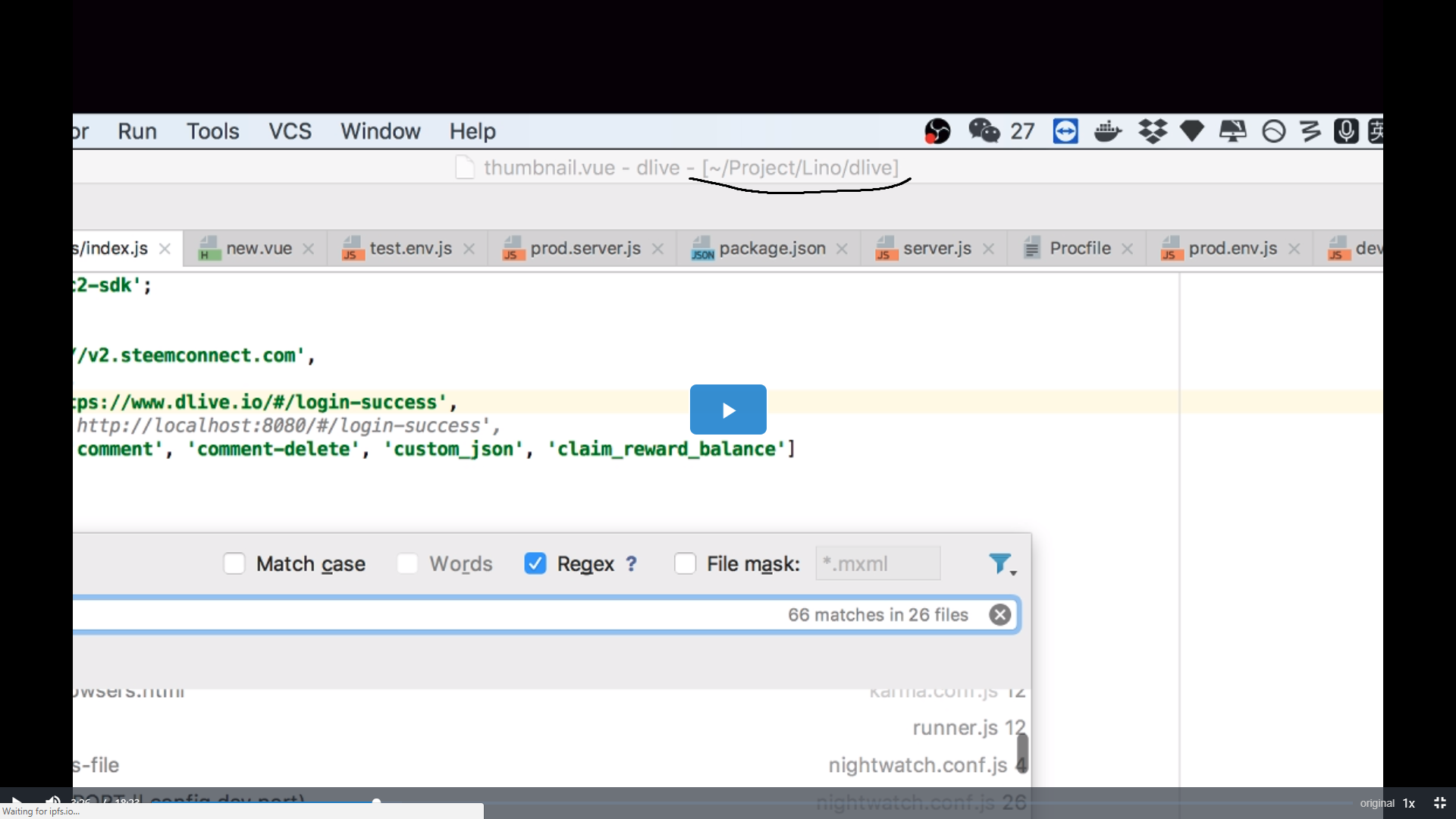
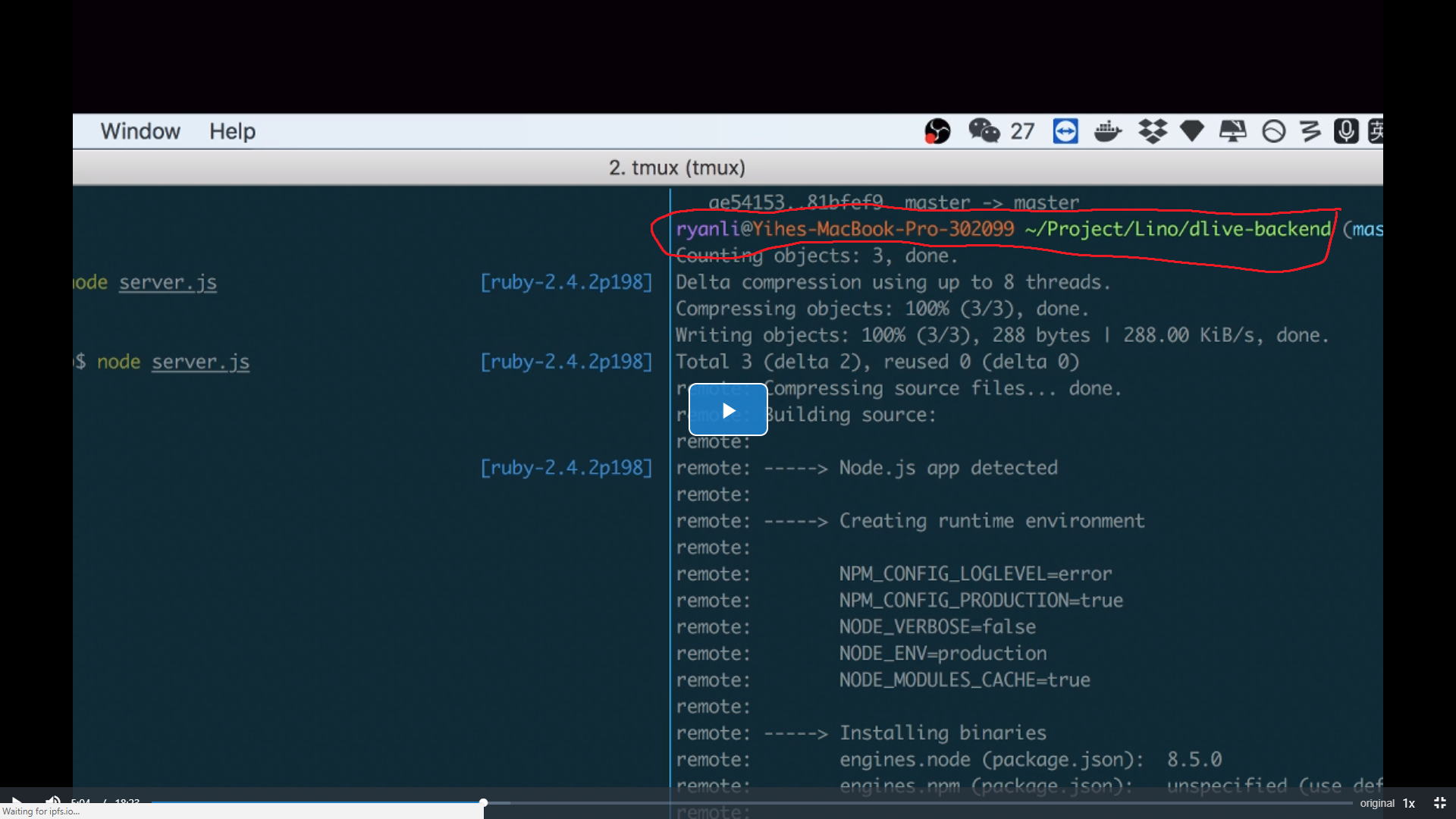
As I previously pointed out the @dlive model was edificed with minimal interactions with the STEEM blockchain. For example, no custom jsons scripts were employed that I know of, with custom memos, to store anything pertaining the @dlive ecosystem. They had and have, their own account following, their own chat, etc, all of it of course centralized.
On top of all that, they were so independent from the STEEM blockchain itself, that I was mesmerized with the fact that when the STEEM blockchain halted, @dlive continued to work as if that had nothing to do with their app. Please take a second to think about that.
So we could conclude that this was done 100% by design and not happenstance. And let's not forget their system for storing video files, again, centralized. They host all videos on their servers, and even announced they would be taking them to LINO. On that note, if you are one of those steemians who is uninterested on participating of LINO, there is a very useful post by @patrickulrich on howto liberate your content from them.
But, let's recap the red flags: Centralized Storage, Centralized Account Ledger (running in parallel to steem), Centralized Communication (streaming and internal chat).
All this without even touching on the fact that this whole project was closed source. Again, something we must ask ourselves why we ignored nonchalantly.
Undisclosed Relationships
All this and yes, there is more. As it turns out, @wilsonwei777 the CEO of LINO is @wa7 (Kent)'s best friend. They went to college together and as you might guess studied the same field. This information is easily verifiable with some basic google knowledge.
Now, as we can clearly see on this very blockchain @wilsonwei777 was heavily involved in the development on @dlive. Proof can be found on his very blog, where he was testing the streaming features as the project was about to get it's legs. And, that's not all, other members of LINO were also part of @dlive such as @cqf and @zac2116.
If you ask @wa7 about this, he might tell you that he just needed some help to get @dlive off the ground, and that would be a valid thing to say. It would, until you find pictures of the founding members of LINO like this one:
Guess who?
LINO and it's funding
It took but a few minutes to find information about this blockchain. As it turns out, it's been in the news for a while, quite a while. As a matter of fact, one of the articles that really jumps to my eyes is this one from coindesk where it clearly shows they managed to raise 20 million dollars for their blockchain project.
The date of this article, January 2018. Remember when I mentioned that the month where @dlive received it's delegation was relevant? Yes, same month. But, let's continue.
Since the funding was somewhat secured, it was time for the @dlive team to change it's focus, to start making some noise if you will, and put the word out there: LINO is coming.
They changed their mind, you say?
I thought about that too. I thought that maybe, I was being too harsh, that maybe my gut instincts where off, I'm just human after all. But, since this is the way my brain operates I kept on digging, I kept on talking to people, to friends, to trusted allies.
Right about when I was ready to say, "Well, maybe, I'm not being fair", this little piece of information made it to my screen. Please note the outlined parts.
The date of this Medium Article, March. This means that only three months after receiving the generous delegation from @ned, @dlive/LINO (they are one in the same) felt completely comfortable with stating officially on their medium account that the experiments on steem were going quite well.
I find it fascinating that they did not list any of the problems STEEM has on that medium article, and because I don't want to sound cynical, I'll be blunt. all those problems existed back then too, right?
Delegation Abuse and User Base Farming
You could say this is mainly my biggest problem with the whole thing. I remember many months ago asking @smooth if there were some guidelines regarding @steemit's delegation practices. I don't blame @smooth for not responding to me, since I'm sure he has no clue if I am of any relevance, but the question however, is relevant, and it's relevant to absolutely everyone who has invested time and money on this place.
From my understanding, my basic understanding that is, the delegations that @steemit inc has "handed" out are there solely for the purpose of enriching STEEM's ecosystem. In other words, any project that is not for STEEM, and exclusively so even, is probably not a project @steemit would be interested in supporting and understandably so.
To those who don't understand how this works, because there are those who have left some uninformed comments on that @dlive post. The "money" sort of speak, comes from us, from you, from me, from anyone who has bought STEEM tokens. If no one buys a token, if the market does not have buyers, you could hold millions in your wallet, and it would be worth the same as numbers on an excel sheet. In other words, this whole idea that nothing was lost is so uninformed it almost pains me.
But on top of that, to me the one thing we can't fail to observe is how this bait and switch tactic was designed to literally extirpate the users from @dlive onto the LINO blockchain. A lung transplant done with a spoon and a bottle of vodka. An untested, unused blockchain with no market value, at least at the moment of me writing this.
Now, this blockchain could be amazing, it ver well could be, but as I've said before. Technology is important, but users are just as important. Having the fastest most secure blockchain in the world would mean nothing if you had the same three people posting their fortnite videos every day. The obvious conclusion is that they intended to take steemians there, and "bribe" them with 100 tokens.
For their convenience however, they are transplanting their content onto LINO. As you read that last bit, think about the concept of decentralization and try to contort logically, but please, don't hurt yourself.
Insult to Injury
Again, in very much their style @dlive decides to rebrand. They need a new logo, a new look, so they went back to the user base that has given them so much, and got even more.
When the contest was announced, it was done so with some interesting rules. I believe it's important we don't dismiss the little details.
Now, I'm also not a designer by trade, but I so happen to live with one. I remember having plenty of conversations regarding this very contest, because from a designer standpoint it made absolutely no sense. Why ninja? Why yellow? Why now?
Exploring those questions is somewhat subjective, but it might be enough to say that the way branding works, at least normally, is that you try to have elements of resemblance to the overall market you are operating in. In other words, a STEEM app, looking STEEMish (made up word, I know), makes a lot of sense.
The obvious intent to detach itself from the STEEM brand by incorporating incompatible colors(purple is the opposite to yellow), seems too intentional, it cannot be just a coincidence.
On top of that, some prizes being given away in the form of fiat, also tell a story, but I need not to continue to beat on this horse.
Conclusion
As a small entrepreneur I guess I have to give it to LINO, in the sense that they played their cards right, and as far as I know got away with everything. However, as a steemian, I'm very disappointed and to a point disgusted, if I'm to be honest.
But there is a huge lesson for us here, and at least we can say that is the silver lining of this whole debacle. The community should require more transparency from now on. I don't think It's unreasonable to ask for a clear understanding of how the "backdoor deals" work, and how a delegated STAKE is supposed to be used.
A minimum set of rules should exist, as the responsibility of millions of dollars cannot fall on the decision of one person's bias. I say this respectfully but also firmly, because I want what's best for STEEM and if I have to pick between being too careful or speaking my truth, I pick the latter.
As I was getting ready to publish this post, I saw this come across my feed written by @tcpolymath. This tells me I'm not alone on these sentiments, and that requesting some clarifications is nothing anyone should feel shocked about.
At any rate, I don't want anyone to leave this post thinking that I'm signaling the end of the titanic's journey, not even close. To me this whole experience, as bitter as it may be is a huge lesson for all of us. And believe or not, at least about that, I'm grateful.
Steem on my friends.
@Helpie is now a Witness, consider supporting our efforts
> They had and have, their own account following, their own chat, etc, all of it of course centralized.
The funny thing is that very nature made them an effective and maneuverable startup application.
In fact, there aren't any digital apps on the steem blockchain which are not centralized. They all use the blockchain for signaling to the wider world and for voting signaling, but that's it. Every single one of the "successful" digital apps is pretty monolithic.
They pretty much have to be.
> So we could conclude that this was done 100% by design and not happenstance. And let's not forget their system for storing video files, again, centralized. They host all videos on their servers, and even announced they would be taking them to LINO.
Not entirely true; they have a certain portion of the replication being done through IPFS which is a distributed storage solution, but as they pointed out multiple times when talking about how the entire architecture was implemented – that's not really fast enough for streaming environments. And they're right, it really isn't. It's barely fast enough for accessing stored videos that aren't live.
So here you have to at least try to suggest a decentralized solution which fulfills the technical requirements. I like to think of myself as relatively savvy when it comes to decentralized technology and I can't think of one.
> I find it fascinating that they did not list any of the problems STEEM has on that medium article, and because I don't want to sound cynical, I'll be blunt. all those problems existed back then too, right?
Of course they didn't. You don't scare off your investors by pointing out all the things that you're discovering in the process of experimentation. That would be foolhardy. And also presumptuous, because whatever experimentation you're doing – you don't know what you're discovering until you're done discovering it.
But I'm supposed to feel like creating applications on the steem blockchain to see if it is possible to build such a thing for deployment is a bad thing, right? That being agile in your development architecture, given the noted volatility of blockchain technology and acceptance worldwide over the last many years, is a terrible thing?
I have to admit, I'm just not feeling it.
> From my understanding, my basic understanding that is, the delegations that @steemit inc has "handed" out are there solely for the purpose of enriching STEEM's ecosystem. In other words, any project that is not for STEEM, and exclusively so even, is probably not a project @steemit would be interested in supporting and understandably so.
Empirically, we can observe that your observation and understanding is simply wrong. Obviously Steemit Inc. is interested in funding any kind of digital application which interfaces with the steem blockchain, possibly with an eye to the future and the tacit expectation that such an application will remain on the steem blockchain – but if you don't find people with a real project and real intentions to use what you are promoting, even if they do exercise their freedom of choice later to move off of it, you're out of the project altogether.
It's not an issue of having DLive or having something else, it's an issue of having DLive or nothing else. After all, we're talking about delegations – and for the most part Steemit Inc. has an infinite pool of delegations to hand out. They control over half of the SP available in the entire blockchain, and in comparison to the amount of they have possessed the entire time, the amount delegated to DLive was relatively chicken feed.
If there was another project of the same sort which actually put work on the table, they would have received that kind of delegation as well.
But other than DTube, which is also received some delegation, there really weren't any other projects. So the point is improperly structured to imply that the delegation would have been used for something else.
That doesn't appear to be the case at all.
This is important when we take on your next position:
> To those who don't understand how this works, because there are those who have left some uninformed comments on that @dlive post. The "money" sort of speak, comes from us, from you, from me, from anyone who has bought STEEM tokens. If no one buys a token, if the market does not have buyers, you could hold millions in your wallet, and it would be worth the same as numbers on an excel sheet. In other words, this whole idea that nothing was lost is so uninformed it almost pains me.
This is only true if you believe that you, personally, own everything on the blockchain. It's only true if you believe that markets owe you valuation.
You can believe that, but sensible people don't.
When we are specifically talking about delegation, we are specifically talking about SP. Steem Power. That doesn't come from you and never has come from you, and you don't own it. Steemit Inc.'s SP was largely just handwaving in being at the beginning of the blockchain and never was part of your possession. If anything, that vast pool of SP exists as a negative pressure on the valuation of STEEM as a cryptocurrency/commodity. Only when it is being used as a thing to drive interaction through votes does it have a positive use in the steem ecosystem.
This is exactly the opposite of what you state.
You are correct that if no one buys a token, if the market does not have buyers, you can have millions of STEEM and SBD in your pocket and no one will want to buy it, so it has no value.
But in order to have buyers, you have to have reasons for them to buy. And I have reasons for them to buy, you need something to do with that token energy. And in this case that "what to do" was vote up and vote down videos and live streams.
Unfortunately for your position, it's not that nothing was lost, it's that in the absence of that delegation and the application spending any time on the blockchain, nothing would have been gained.
> But on top of that, to me the one thing we can't fail to observe is how this bait and switch tactic was designed to literally extirpate the users from @dlive onto the LINO blockchain.
And frankly, this is where we start getting to the real crazy. People aren't being extirpated from the steem blockchain into the LINO blockchain. When you create an account on a new blockchain, you are not burning your old account forever. You are opening a new account somewhere else, and increasing your opportunities.
This winner take all, there can be no compromises, There Is Only One Way of thinking is crazy. It's stupid. And it's the kind of thing that keeps people from wanting to create digital applications which leverage all kinds of blockchains, because it's endemic all over. It's everywhere.
And it makes sure that people don't want to work with you.
> The obvious conclusion is that they intended to take steemians there, and "bribe" them with 100 tokens.
As opposed, he says dryly, to the regular "air drops" of various tokens which are big news every 15 minutes on the steem blockchain. Those guys are certainly not trying to bribe people for their attention. With less to offer.
> I don't think It's unreasonable to ask for a clear understanding of how the "backdoor deals" work, and how a delegated STAKE is supposed to be used.
This may come as a little bit of a surprise to you, so I'll try to keep it gentle.
Your stake is yours. Your SP is yours. Your Steem Power is yours. My stake is mine. My SP is mine. My Steem Power is mine.
What you do with your stake is your business. What I do with my stake is my business. What Steemit Inc. does with their stake is literally their business. I don't have any say in yours, you don't have any say in mine, and unless either of us owns real money stock in Steemit Inc., Neither of us has any say in what Steemit Inc. does with heirs.
There is no "supposed" here. There never was. It is free choice.
Anytime I hear the word "supposed", I know that I'm dealing with someone who wants to tell me what to do with something of mine, whether it's my time, my body, my wealth, my stake – something. There is no supposed to. There is only what you want to. The moment that there is a supposed to, someone else is making the decisions for you, and if you want someone else to just make decisions for you, I'm perfectly happy to step up to the plate and tell you what you're supposed to do with your money. (Pro tip: the first thing is "give it to me." Because that is what anyone who has the power to tell you what to do with your money tells you first.)
So it's entirely unreasonable to ask for "a clear understanding" of how your stake is supposed to be used. It's also really unreasonable to ask for a clear understanding of other people's use of their stake because as some would put it, "it's not your damn business."
It's just not. It never was.
> At any rate, I don't want anyone to leave this post thinking that I'm signaling the end of the titanic's journey, not even close. To me this whole experience, as bitter as it may be is a huge lesson for all of us. And believe or not, at least about that, I'm grateful.
The steem blockchain had the use of a promising streaming digital app, demonstrating that the blockchain could be an integral part of a useful set of activities for people on the Internet at large, and incidentally may have stimulated investment into the blockchain from outside (the only real source of actual value), helping increase the value of any tokens you happened to be holding.
Now, the creators of that digital app are taking the knowledge that they gained and moving to another blockchain, where they believe the reward system is more in line with what they would like to have been doing but didn't feel was supported by the steem blockchain.
What would you rather have? Would you rather they stay on the steem blockchain and fail, as they see it? We've already acknowledged that the shortcomings they pointed out are real problems. Would you rather them never have created the application in the first place, never have made the experiment, never have provided the value that they did not just to token exchange but to the people who use their platform?
Or would you rather they just gave you their stuff? Because that's what it sounds like. It sounds like you believe that you have the power and should have the power to tell them what they can do with their stake, what they must do with their time and energy, and who they can deal with.
We have words for people like that. None of them are polite.
But people like that are common on the steem blockchain, and I find that a constant source of sorrow.
Now, my feeling is that the LINO blockchain is not going to be a great fit because while it does focus on the tipping, gifting, and subscription architectures – there doesn't appear to be a clear and easy way for consumers to get those funds into their pocket. If the implication is that most people using the blockchain will be creators, thus the reward system being largely a closed environment except for newcomers who may need to purchase stake from outside, then I fear that Lino is going to be a very short-lived experiment. As announced and as described, it's just one more micro payment system except with the drawback of requiring extra step to get money in to pay creators.
That's no way to run a railroad.
However, DLive has already proven that they can target multiple blockchains. The next obvious step would be for them to target multiple blockchains at once, using the social media network side of things to allow for the creation of communities and followers and that whole pile, on to blockchains at once. That would be an interesting thing to see, watching them transition into being a service provider with multiple choices of notification architecture.
But no one wants to have that conversation. They just want to whine about the fact that DLive made a decision that keeps them running a company and providing a service.
And that also fills me with sorrow.
> So, you're maintaining that the dlive team wasn't integral with Lino from the outset, and that they never misrepresented to Stinc that relationship? Or that their claims as to why they left Steem are entirely true and not merely vapid excuses for a departure that was intended from the outset?
>
> You can make those claims, but I doubt anyone will believe them, or agree with you.
I'm not making those claims. In fact, I'm not making any claim at all. You're the one making a claim, that those are the actual facts and that DLive is lying about it – and I'm pointing out that your evidence, the support for your position, is weak and kind of embarrassing.
Now, I would accept weaker claims, for instance "the guys at DLive knew their friends were working on a different semi-social network blockchain solution and thought they met want to jump over there at some point, so structured the code so it would be possible." I'd believe that, but that's not deception. I might believe, "the guys who run DLive are terrible business developers and get themselves into situations where rapid business shifts become necessary rather than choices." I believe that, but that's not deception.
You would have me believe that this was premeditated and engineered from the beginning – and frankly, aside from the lack of evidence, I don't see any support for the idea that the DLive guys are really that smart or good at this. Which is the problem with the conspiracy theory, in that nobody supposedly in the conspiracy seems to be smart enough to have actually coordinated the crazy results, and if they were – they would deserve points for doing so.
No, that this is the result of significant duplicity is pretty much crap.
> You seem to be doubling down on false protestations of innocence, rather than acknowledging at all that their association with Lino was concealed from Steemers, and that they simply used Steem to test their product while intentionally relaying the impression that they had no such relationship with a competing platform.
This is where I am required by law to point out that if you can make shit up, anyone can make shit up. Your claim does not carry the actual nature of reality. It's just a claim. Or rather, it's a partial claim based on invalid assumptions.
If competing with another service provided in the same space is "harm," then you can never have any more digital applications nor any more things. That DTube was supposedly undercut in terms of cost (which is hilarious on its face because, from the point of view of the customer – there wasn't a cost to either), is just competition. If DLive was able to secure funding that DTube was not, more power to them. That benefits us as the consumer. DTube either had to come up with another way to compete in a way that the consumers want or fail. If anything, DLive going to a completely different blockchain is the kindest form of competition they could've done. As I pointed out, they could have resided on both blockchains pretty trivially; the code obviously exists for both. They could have continued to be a direct competitor for DTube while providing the advantage of being able to work on the Lino blockchain at the same time. That's pointedly exactly what they didn't do.
It's what I would've done, which would've removed the need to worry about migrating accounts content at all, but that's not what they did. Like I said, not smart enough to pull off a conspiracy.
> Then they sought to lure folks they'd exposed to their product off Steem - poaching, in other words. You seem to endorse such skulduggery, rather than agree that such business practices demonstrate that trust in such outfits is ill placed. Profit isn't bad, but greed isn't good.
I'm not sure where you got the idea that there can only be one service that provides a service in the world, and competition with that service is inherently evil – but it's stupid and you should stop it right now. This is not how you grow a blockchain, it's not how you grow a social network, and it's going to do nothing but lead you to making terrible decisions on ways to do either of those things forever unless you clean up your act.
DLive has not been engaged in "luring folks" off the steem blockchain. Quite the opposite. They've given them the opportunity to migrate all the content that they have put time into and effort into to the new location, in the new architecture, so that they can continue to get benefit from all the work that had already been put in – and it's worth noting, most of that content is no longer available and eligible to receive reward on the steem blockchain. Anything older than seven days is explicitly not able to be voted on and thus unable to earn revenue for the creator. It is possibly the worst design available for video content which is often longtail-rewarded as new people stumble over via search things that had been discussed before.
That's actually giving people access to greater reward rather than less reward, and not poaching but competing.
Feel free to tell all the content creators who will be seeing some extra token in their pocket from the Lino blockchain on content that's older than a week that "greed isn't good" and they would be better off hanging out on the steem blockchain with that content doing nothing. While you're at it, convince them that they should never upload their content to multiple services, including YouTube, or multi-stream to Twitch because greed is bad, and they're only being lured away from the steem blockchain via subversion.
I think their response would be a hearty "fuck you," and it would be well-deserved.
(And for free I will throw in that if DTube wants to compete effectively with DLive on Lino, it looks to be a pretty simple and straightforward mechanism – overnight, implement a "tip jar" button under every video and preloaded with some fairly regular amounts of value (1 STEEM, 5 STEEM, 10 STEEM, 1 SBD, 5 SBD, 10 SBD, $1 US, $5 US, $10 US) and think real hard about allowing people to set up recurring subscriptions to people's content, which isn't hard to do in so much as it's just a scheduled future tip exchange and pretty easily managed. That would do everything that Lino appears to promise as it stands, while going absolutely nowhere and changing nothing else. You can have that one for free, DTube, but if you want to send me a tip ...)
> You utterly ignore how they dissed the platform in their exit post. That's denial of a scorched Earth policy, and disingenuous.
"Dissed"? They pointed out their very clear and, interestingly, very accurate problems with the way that the blockchain functions and a lot of the social interactions that occur on it. The fact that you are exemplifying exactly part of why they would prefer to go elsewhere right now is not doing their argument harm.
While I wouldn't have written that particular post as a press release for my business moving to another blockchain, the one I would've written would've been a lot more pointed, gone into a lot more detail, cited a lot more examples, and generally pointed out that while the steem blockchain at a mechanical level (assuming that we ignore the absolute debacle that going to hardfork 20 has been so far) is perfectly serviceable, at a social level it is absolutely toxic for trying to earn a living on and the vast difference between whales and everyone else thanks to the scaling of SP definitely seriously impacts the idea that you can have crowd sourced and crowd funded projects of the scale of individual video creators which are profitable in the long run. Unless you are literally playing to the content that less than 30 people are interested in, you might as well not be doing it at all – made all the more violently true by the drop in STEEM in the exchange marketplace in terms of value.
I don't really have a problem with that. You didn't like their explanation, but they certainly gave one or why they would go elsewhere. I can understand it. Even if it's not the decision I would've made, I can definitely understand it.
> Good business is good for communities and the people in them. Scams are bad, and destructive of society. Folks that do the latter are incapable of achieving the former, and smart money stays the hell away from them.
>
> And their apologists.
Good thing I'm not trying to do business by writing digital applications then, isn't it? I mean, I might have to explain why I decided to compete with another application, providing different service of a better quality, and thus during their poor, defenseless users away to my own evil platform which is intended to profit me. I might have to justify making decisions based on cost, or that I would rather work with people that I know than people whom I don't and who have proven that they're not very good at running a business. I might have to deal with people telling me I shouldn't make money, that greed is bad, and that if I'm not just giving things away at a significant cost to myself, I'm a terrible person, I'm evil, and no one should trust me or do anything with me.
Frankly, I don't know why anybody does anything on this blockchain in terms of creating new services and products. There's no way to win, 10,000 ways to lose, and if you try to leave the game – people bitch about it. It's a sucker's bet.
But I'll say this: if you want to do business with me, it will not be on a handshake. We will solidify terms of what each of us expects to get out of it, what's to be exchanged, how it's to be tested, and what happens if either of us doesn't deliver on the results. And if I don't deliver on the results, you then have a document which says, "he says this and this and this they didn't do that," and if you have evidence that I didn't do that – there won't be any of this stupid whining in public about making choices, because if it's not in the document, if it's not in the contract, if it's not in the PO, if it's not in the invoice, it ain't real.
That's how I do business. If that's a problem for you, see the answer that I suggested that those who are being "lured" from one service to another would give you for the accusation.
You want to talk about a lack of ethics? Let's talk about making up things that we want to be true about the operation of the business, scandalous things, unsupported things, and then spreading them around as if they were established fact. About criticizing a business for engaging in business. That would seem to be unethical for someone who wants to be taken seriously on the issues of money, financial responsibility, and investment – but of course, it's all completely ethical. And we should absolutely take the statements of anyone who engages in that sort of behavior completely seriously, without question, without hesitation, because doing so, because questioning the wisdom from on high, is unethical.
You go with that. Please.