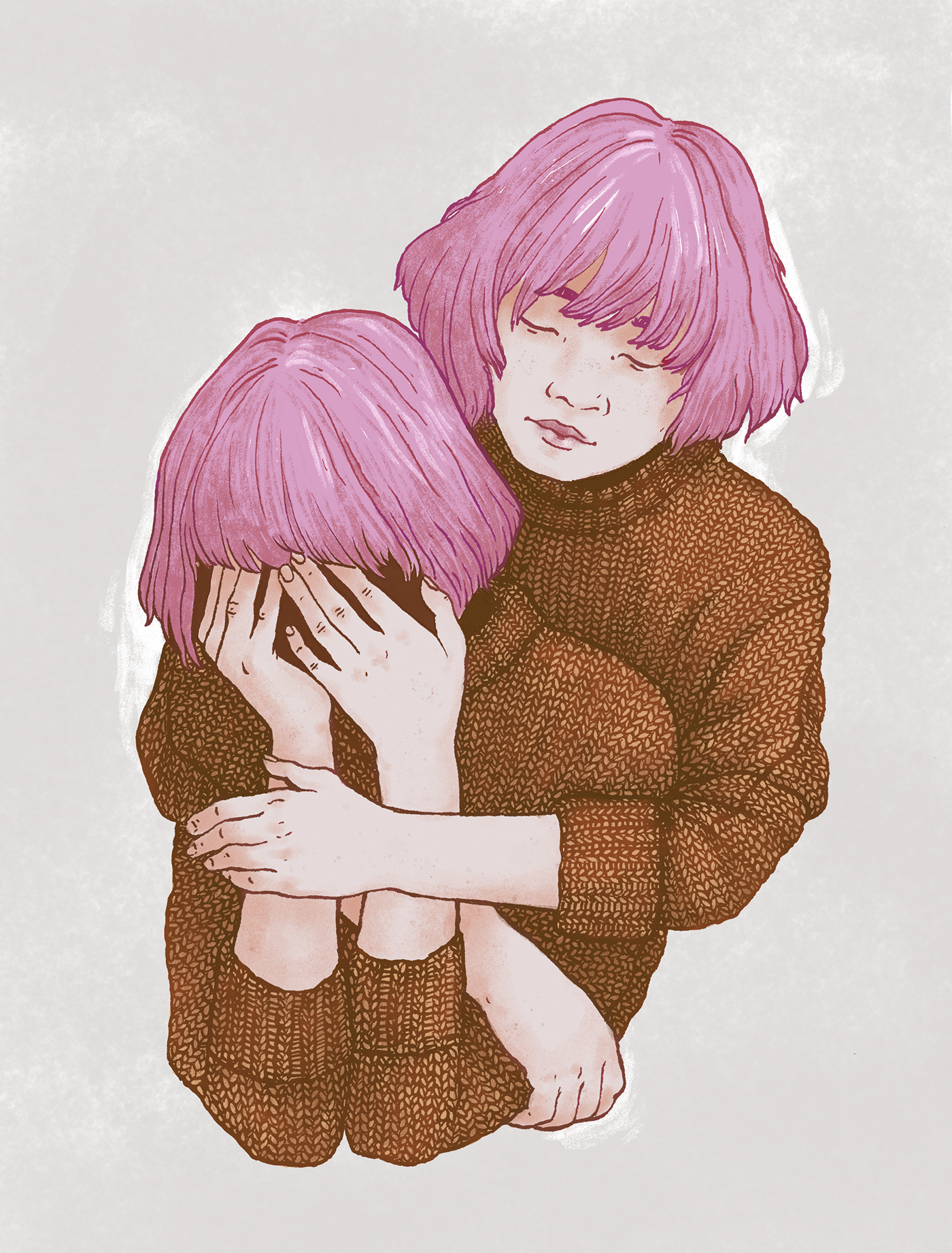
Sounds like one of those subjectivity fuck ups.
Like -- Who can know what the inner voices actually are, or how they differ from person to person.
I've read things that are similar to what you've described, sort of like the criticisms of society and parents are internalized. Pretty sure David Foster Wallace mentioned something like that in one of his shorts.
But even then, you still have "internalization".
I think it's kind of a shame to blame society and parents for internalized psychological damage -- mostly because that places the responsibility on society's part, or the blame on society's part, rather than being responsible for an internal psychic ecosystem.
Jung and Hillman are all about intra-psychic personality types // Daemons // Archetypes.
A lot of their work uses mythology as a guide for understanding these sorts of things.
A simple internal variance on this would be the shoulder devil, shoulder angel concept.
or, Inner Critic vs. Conscience?
What I think most people don't consider is how the Inner Critic probably has some really good insight to share, It's just kind of rude, and unnecessary at times.
Hillman gets into this a bit by discussing it in terms of a dialog with the subconscious.
So, If you've got an inner critic, who says that you are useless or something. You could have a dialog with that inner critic, and through that dialog [Jung refers to this as "Active Imagination"], you can actually redefine your relationship to that voice.
"You're Useless"
"Well, I could see how you would think that because of X X and X, but What I've been trying to do lately is Y Y and Y."
"Well, Y Y and Y is Useless"
" Well, da da da da da --"
And pretty soon you're in a self-exploratory dialog within your own mind, and maybe you come to an understanding with that voice, and are able to bring it's concerns to bear on the situation and take care of them, while still honoring the reasons why you were doing the actions that part of you thought was useless.
In this example.
They call it a poly-centric psyche.